You booked a sleeper for the bed. Then you went to dinner, came back, and the room had quietly turned itself into a place to sleep. Nobody knocked, and you never asked.
That small bit of magic is the whole idea behind this list. Everything below comes from Amtrak’s own descriptions and rider accounts, and some of it will change how you picture the person in charge of your car. A few items are routine. A few are things most passengers never realize anyone is doing, and one explains why this job carries more history than a coffee pot and a stack of sheets would suggest.
#21 – They Meet You at the Door Before You’ve Even Found Your Room

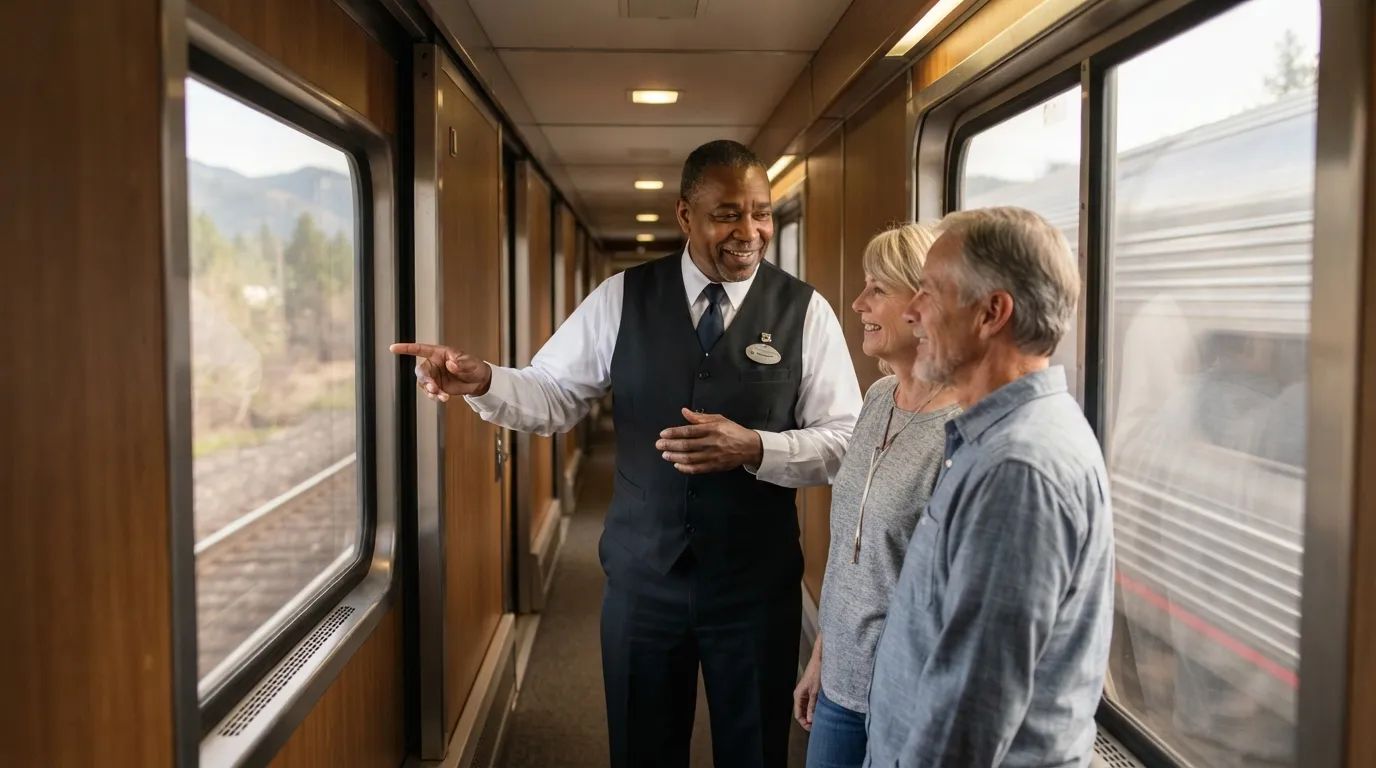
Amtrak says your dedicated attendant greets you during boarding. That’s the first handoff of the whole trip. You stop being a stranger on a platform and become one of the people in their car.
The greeting also does a quiet job. It tells the attendant who is aboard and where everyone is staying. From the moment you step on, one person is responsible for your car, and the very next thing they do saves you a lot of wandering…
#20 – The Room Tour Nobody Asks For (But Everybody Needs)

One rider on a Chicago-to-Portland trip described an attendant who stopped by early to introduce himself. He walked through the roomette’s features and pointed out the shower, the toilets, and the dining car. That’s a lot of orientation before the train has really gotten going.
It matters because roomettes rely on shared restrooms and showers. Knowing where everything is beats stumbling down a swaying corridor at night, half asleep. Next up is something that catches first-timers off guard: the luggage…
#19 – Your Bags Don’t Have to Be a Solo Mission

Amtrak’s sleeper descriptions say the attendant will help with luggage. Anyone who has ever wedged a suitcase into a roomette knows why that’s a big deal. Space is tight, and the aisle is narrow.
Sleeper space is planned down to the inch, which makes a second set of hands genuinely useful instead of just polite. Even a short walk with a heavy bag can turn into a juggling act on a moving train. And once you’re settled, the real scheduling begins…
Fast Facts
- A Superliner roomette measures about 3 feet 6 inches by 6 feet 6 inches.
- Amtrak says each roomette has room for two adults.
- Storage under the seats can’t be reached once the seats are set up as a bed.
- Some solo riders with extra bags ask the attendant to lower the upper bunk and use it as a shelf.
#18 – They Plan Your Bedtime Around Their Own Short Night

According to one passenger guide, you’ll be asked what time you’d like your bed turned down and when you’d like it put away. The same guide says your attendant will probably tell you when they plan to call it a night, and it’s a short one.
That’s a quiet puzzle. Every room in the car has its own preferences, and one person has to fit them all together. Some riders deliberately ask to be among the last rooms done each night. But the next item is where your evening really gets organized…
#17 – Dinner Reservations Come to Your Door

On routes with traditional dining service, your car attendant takes your reservation times once you’re onboard. You don’t have to go hunting for the dining car. The booking comes to you.
It’s an old-school touch most people never expect on a modern train. Another source says either the sleeping car attendant or the dining car chief stops by your sleeper for these requests. On some trains, a reservation is the only way to get a table, and the time slots themselves are a surprise…
#16 – The Dinner Seatings Are Set, and the Attendant Knows Them

One guide says reservations are required to avoid congestion at peak dining times. It lists three or four dinner slots, around 5pm, 6:30pm, 7:15pm and 8pm. Those are guideline times, not a promise for every route.
Your attendant knows which slots are filling up. They also know which ones leave your room free for bed setup. Picking the last seating may mean a later turndown. And that sets up something riders love to argue about: who you end up eating with…
Quick Compare
- Earlier seating (around 5pm): More daylight left for the window, and your room may be ready sooner.
- Later seating (around 8pm): A slower evening, though your turndown may come later.
#15 – Strangers at Your Table, Whether You Planned It or Not

Amtrak’s dining car uses communal seating, which gives you a chance to eat with a fellow rider. Another guide puts it at four passengers per table. Your reservation time decides who sits down with you.
Here’s where opinions split. Many frequent riders say the stranger across from you is the best part of the trip. Others call it the biggest drawback of the dining car. Either way, you’re passing the salt to someone you met five minutes ago, and on some routes you can skip the table entirely…
#14 – Meals Delivered to Your Room, No Dining Car Required

Lunch and dinner may be served in the dining car or by complimentary in-room service on some routes. Your attendant is the person to ask. It’s a perk that varies by train, so check what your route offers.
Some riders argue in-room dining is the real luxury of a sleeper, not the bed. Others think skipping the dining car means missing half the experience. For a lot of travelers, a private meal at your own window is the whole point. Next comes a trick that happens while you’re out of the room…
#13 – Your Bed Appears While You’re at Dinner

A longtime forum poster says the attendant usually converts the room to night mode while you’re at dinner. You leave a sitting room. You come back to a bed.
The same poster adds a caveat. It may not happen if the attendant is busy and doesn’t notice you leaving. It’s one of the main duties of the job, but it isn’t always perfectly timed. A quick word with your attendant before you head out removes the guesswork, and the morning version of this trick is even sneakier…
#12 – The Bed Flips Back to a Sofa While You Eat Breakfast

The same forum poster says the attendant converts the room back to daytime while you’re at breakfast. A passenger guide suggests the morning conversion usually happens right after you eat. Either way, the room changes while you’re away.
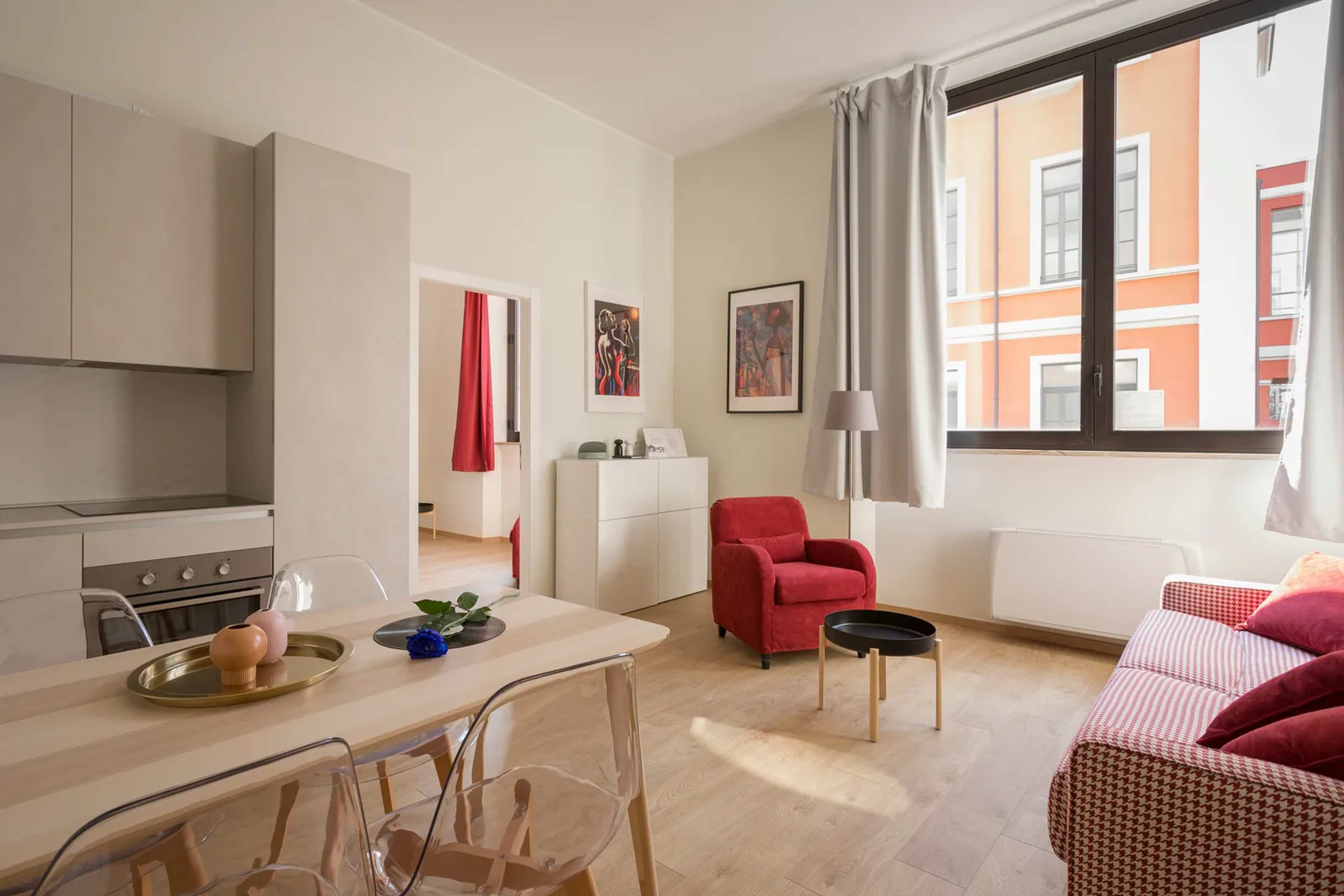
A roomette has two seats by day that become upper and lower beds by night. Flipping that setup is physical work, repeated across a whole car. One person does it for every room, every day of the trip. Next is the part of the bed that most guests never think about…
#11 – Fresh Linens and Towels, Without a Request

Amtrak says each roomette includes upgraded bedding, pillows, towels and linens. A travel agency’s FAQ adds that bed linens and soap are included. The attendant is the one who makes them show up.
That means the bed you sleep in was made up by someone who knows your car. Sheets don’t appear on their own on a moving train. Making up a bed in a space this tight is a skill in itself, and the next item is about what’s waiting for you in the morning…
#10 – Bottled Water and Coffee Are Part of the Deal

Sleeper fares include more than a bed. A travel agency’s FAQ lists dining car meals, bottled water, coffee, and help from a sleeping car attendant. It’s easy to miss that these come with the room.
Plenty of people pay for a bed and discover the rest along the way. The coffee and water are part of the ticket, not an add-on. And there’s a morning routine tied to that coffee…
At a Glance
- Amtrak lists bottles of water, fresh towels and bed linens among roomette amenities.
- The room also comes with reading lights, climate control and a garment rack.
- One rider reported free coffee, soft drinks and bottled water available throughout the trip.
- Amtrak says private room customers also get priority boarding and complimentary meals onboard.
#9 – Morning Coffee and Juice, Set Out Before You’re Awake

Sleeping car attendants typically set out coffee and juice for their passengers each morning. That’s part of the job, not a special favor. The details vary by route.
The same source notes that attendants traditionally switch rooms between day and night mode instead of leaving it to passengers. Both tasks are the kind of thing people only notice when they’re missing. The job traces back to the Pullman porters, and the next item gets very practical…
#8 – The Pillow and Blanket Fix That Riders Learn Too Late

One passenger guide advises asking your attendant for more pillows, plus an extra blanket if you tend to get cold. The writer admits to ending up with a winter coat on top of the blanket after forgetting to ask at turndown.
It’s a small lesson with a very visible consequence. A cold night in a tiny room is hard to fix once the attendant has gone off duty. The best time to ask is at turndown, not at 2 a.m. The next item is something the whole car depends on…
#7 – They Announce the Stops So You Don’t Have To Watch the Clock

Car attendants typically handle making announcements. For a sleeper passenger, that means someone else is watching the schedule. You don’t have to guess whether your stop is next.
On a long trip, it’s easy to lose track of time zones and station stops. An attendant who knows the route is a safety net. Missing your stop is a real risk when you’ve been asleep on a train, and the next item happens right on the platform…
#6 – They Help You on and Off the Train

Car attendants also assist passengers with boarding and detraining. They open and close doors and keep an eye on the car’s safe operation. It’s a physical, practical part of the job.
Platform steps and narrow stairs can be tricky with bags in hand. The attendant is often the first and last person you see. Their job starts and ends on the platform with you, and some of what they do is invisible from inside your room…
#5 – The Behind-the-Scenes Watch Over the Car’s Systems

Beyond service, a car attendant’s duties include monitoring the safe operation of onboard systems. That’s easy to forget when you’re staring out at scenery. Someone is paying attention to the car itself.
Most passengers see the coffee and the made bed and assume that’s the job. In reality, a lot of the work is quiet checking that nobody ever sees. The attendant is part of the car’s safety setup, and the next item is built for a very specific kind of traveler…
#4 – Family Rooms Mean Four Beds to Make, Not Two

For families, Amtrak’s Family Rooms span the width of the car, with space for two adults and two children (ages 2-12). The seating for four turns into two upper and two lower beds. That’s double the setup for the attendant.
Kids tend to want to sleep at different times, which adds another layer to turndown. A single family room can mean four beds to get ready at once. The next item is one most riders never see happen…
#3 – Sheets Get Swapped and Beds Get Stowed Before the Last Stop
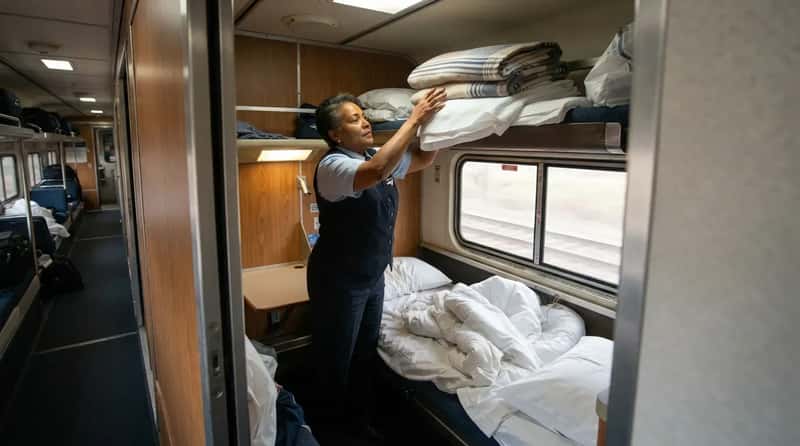
One forum veteran says the attendant is also responsible for putting the beds back up and changing the sheets and blanket before the train reaches its final destination. That’s work most passengers never see. It happens just as people are collecting their bags.
The next riders will expect a fresh room, and that doesn’t happen on its own. The strip-and-reset is part of the job on every trip. Now for something that riders say has changed the experience…
#2 – The Double Duty That Pulls Them Away From Your Call Button

In an older forum thread, one rider complained that having the sleeping car attendant also work in the diner was a real problem for early sleepers. They noted repeated ringing of call bells and suspected they weren’t the only one waiting. That’s one rider’s account, and staffing varies by route.
It shows how stretched the role can get. Some riders call it the hidden cost of the modern sleeper. On some trains, one person may be covering the dining car and the sleeping car at once. Which leads to the part of the job that explains why people care so much…
Why It Stands Out
- The Pullman Company hired only Black men as porters, and by the 1920s it employed roughly 12,000 African Americans.
- In August 1925, about 500 porters met in Harlem and organized the Brotherhood of Sleeping Car Porters.
- The union was led by A. Philip Randolph and fought Pullman for 12 years.
- In 1937, it won the first agreement between a union of Black workers and a major U.S. company.
#1 – The Stories and the Legacy Riding Along With Your Ticket

Amtrak says your attendant will share great stories of life on the rails. That’s a promise you don’t see on most travel brochures. On some scenic routes, attendants even double as tour guides.
The job has a long history. Sleeping car attendants were formerly called “Pullman porters.” Behind every turndown and every cup of coffee is one of the oldest service jobs in American travel.
So the next time you step out for dinner and come back to a bed, remember that someone was thinking about you the whole time. They greet you, book your meals, flip your room, and reset it for the next rider. When it’s done right, you never see any of it.