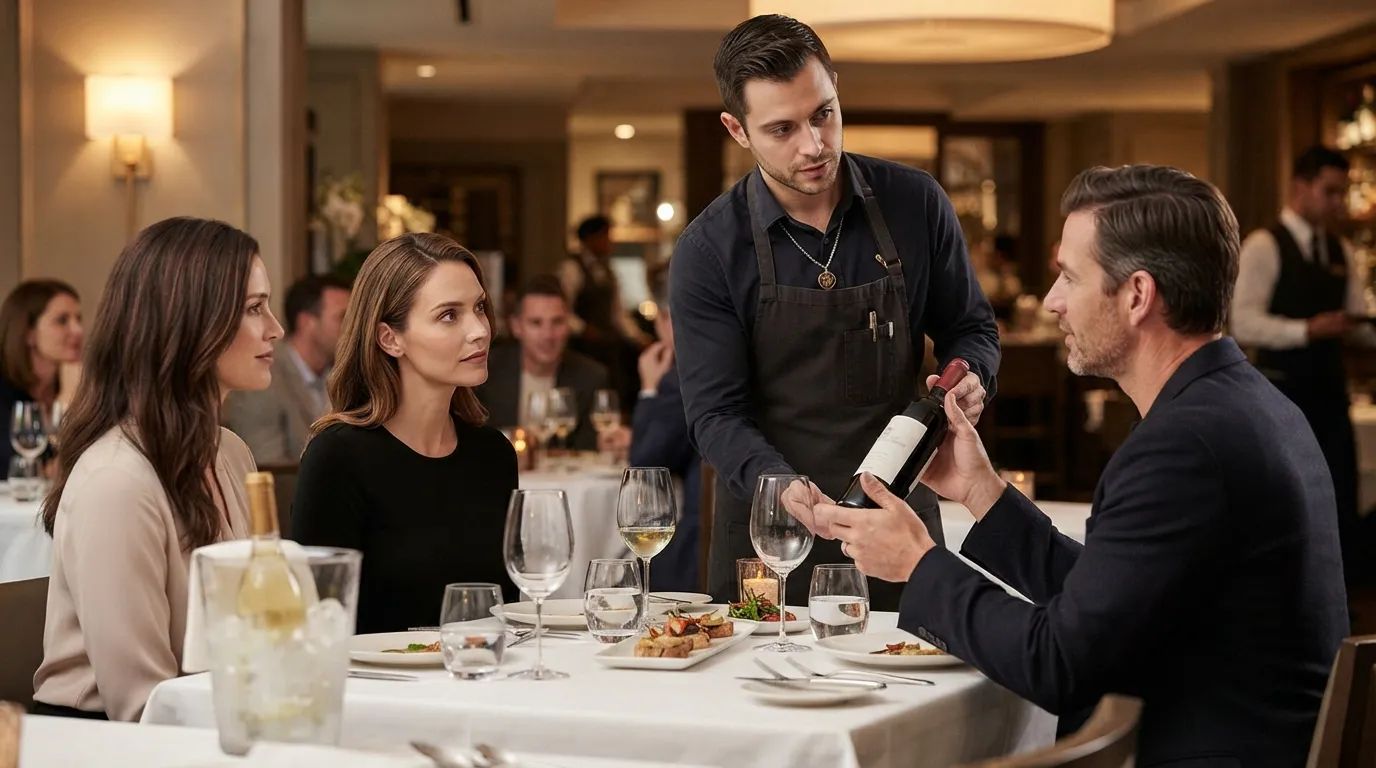
Most people assume a sommelier’s job starts the moment a bottle gets opened. It actually starts the second you walk through the door.
Long before anyone says a word about wine, a trained sommelier is already running a silent read on your table: the pace of your walk, your posture, who grabs the wine list first, whose eyes flick straight to the prices. Every recommendation that follows, every pour, every bit of small talk, is built on what they clocked in those first ninety seconds.
Most guests never notice a single one of these moves. Sommeliers around the world do this so consistently, and so quietly, that it’s practically an occupational reflex.
Here’s exactly what they’re watching for, starting with the read that begins before you’ve even sat down.
16. The First 90 Seconds After You Sit Down
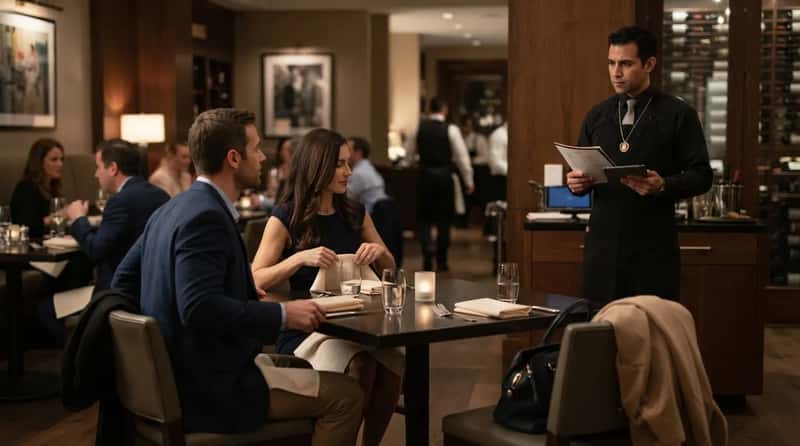
You get roughly ninety seconds to get seated, and in that window a sommelier already has a rough plan for how to approach your table.
Most guests assume service hasn’t started yet. It has, and it started the instant your party walked in.
The pace of someone’s walk, whether they pull out their own chair or wait for it, whether they scan the room or stare straight down at the table – all of it becomes data before a single word gets exchanged.
Sommeliers call this “setting the approach.” The greeting that follows, formal or casual, brief or chatty, flows directly from what got observed in those opening seconds.
One veteran sommelier compared skipping this window to refusing to steal signs in baseball – the information is right there, and not using it would be malpractice.
Most guests experience the result without ever noticing the process behind it. But the real information starts flowing the second someone reaches for the wine list, which is exactly where #15 picks up.
15. Who Reaches for the Wine List First
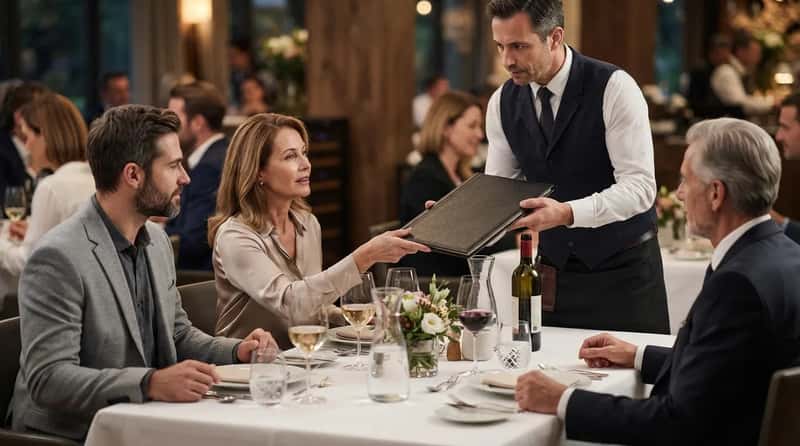
Sommeliers watch for the subtle cues right away: the head of the table’s confident posture, a curious glance toward the list, and the one guest who quietly looks away.
Who picks up the list first, and who waits to be handed it, immediately maps the social architecture of the table. It signals who considers themselves the wine decision-maker, and who has silently handed that job to someone else.
A trained sommelier tracks the handoff closely. If one guest slides the list across to another, that transfer is data: the second person is likely the real wine authority at the table, regardless of where they’re sitting or who made the reservation.
In formal service, the list is offered to the host first, sometimes with both hands or on a covered tray, while the sommelier mentions one or two house highlights before stepping back. That handoff is a two-way read: the sommelier is watching to see who accepts it, who passes it along, and whose eyes follow it around the table.
Quick Compare
- Host grabs the list instantly – confident, comfortable making the call
- List gets passed to another guest – the real decision-maker sits elsewhere
- List offered first, on a tray or with both hands – a formal cue the sommelier watches closely
- Nobody reaches for it at all – the table is waiting to be guided
That first grab for the list is interesting on its own. What happens once someone actually opens it is even more revealing, which is exactly what #14 is about.
14. How You Handle the Wine List
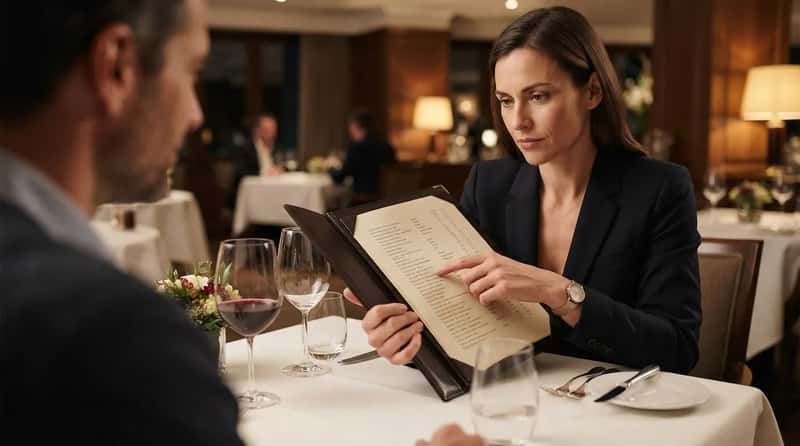
The wine list is basically a prop, and how you hold it gives you away. Confident open, or a straight flip to the back page?
Sommeliers are trained to catch the tiny tells: the hesitation when a bottle looks a little too expensive, the way certain guests scan only the reds and skip everything else entirely.
A guest who flips straight to a familiar region is signaling comfort over adventure. A guest who lingers on an unfamiliar page is either curious, or quietly panicking.
Flipping straight to the back usually signals budget awareness. Lingering on one page usually signals genuine interest in that specific style.
Then there’s the deliberate non-reader, the guest who sets the list down after fifteen seconds and looks up for help. That single move can mean total confidence or complete disinterest, and sommeliers learn to read the difference fast.
The scan speed matters too. Move quickly through the whole list and stop cold in one section, and you’ve just told the sommelier exactly where your interest lives.
Just as telling as what you look at is where your eyes go the moment prices come into view, and that’s the subject of #13.
13. The Price Glance
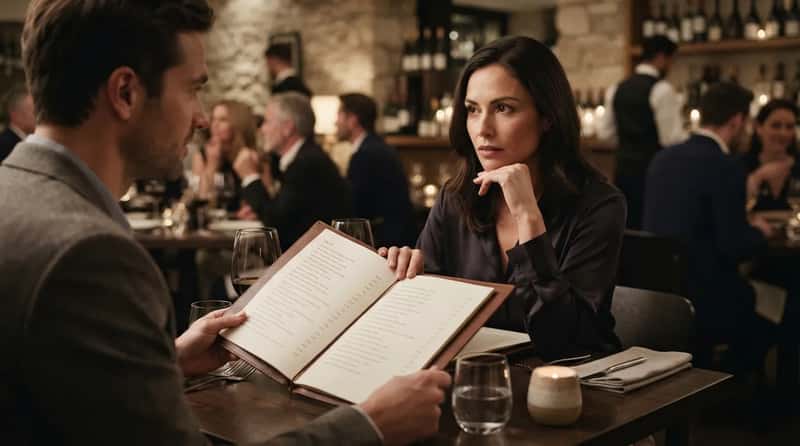
A guest who needs guidance but won’t ask for it often has a giveaway habit: scan the grape variety, then jump straight to the price. That’s often the entire decision process, start to finish.
The price glance is one of the most universally recognized tells in the industry. A guest who reads the wine name first, then slides right to the price, is running a different mental math than a guest who reads full descriptions and checks price last.
Experienced sommeliers use this to calibrate, not to judge. Recommending something far outside the observed comfort zone isn’t sophistication, it’s bad service, and it can turn an easy evening awkward fast.
Get the read wrong, and you’ve just suggested a $600 bottle to a table that wanted the $80 one. That kind of miss is embarrassing for everyone at the table, not just the sommelier.
Some guests try to signal budget without saying a number out loud. Pointing at a bottle and saying “something like this” is one of the clearest, most appreciated signals a guest can send, and no dollar figure ever has to hit the table.
Budget awareness leads to something more intimate: reading what the occasion actually is, which is what #12 unpacks.
12. The Occasion Signal
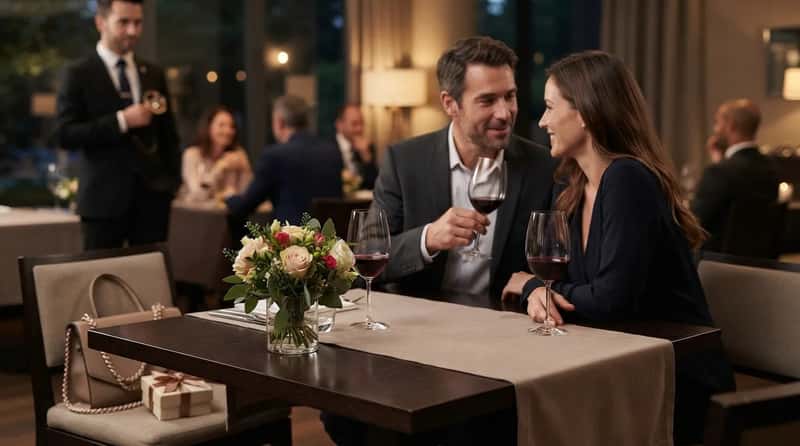
A sommelier reads the whole table before recommending anything – what’s on the plates, what the mood feels like, whether the group wants something safe or something worth talking about later.
Occasion is one of the most powerful filters in the job. A birthday and a business dinner call for completely different pacing and completely different bottles, even when the guests’ stated preferences are identical on paper.
The signs are rarely spoken out loud. Flowers on the table, a wrapped box tucked under a chair, or the way two people greet each other at the door all feed the read before anyone orders a thing.
A couple who arrive mid-conversation and lean toward each other reads completely differently from a couple who sit down carefully and fold their napkins in silence.
First dates, anniversaries, quiet breakup dinners – sommeliers are trained to catch the emotional cues, not just the behavioral ones. The bottle that soothes a nervous first date is almost never the bottle that fits a twenty-year anniversary.
Once the occasion is in focus, attention shifts to the social dynamics at the table, specifically, who’s actually in charge. That’s #11.
11. The Table’s Social Hierarchy
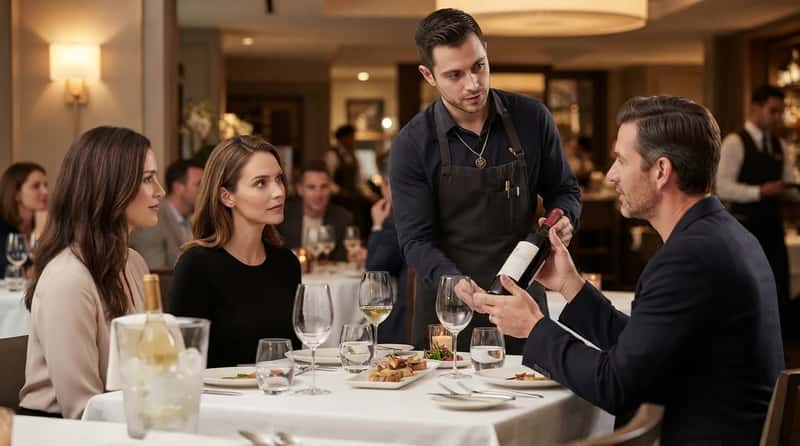
Every table has a hidden hierarchy, and a sommelier needs to map it fast. The person who made the reservation, the person who speaks first, and the person everyone glances at before answering are often three completely different people.
In a group, there’s usually a designated “wine person,” not necessarily the host, just the one with the most comfort talking about it. A skilled sommelier spots that person quickly and routes the detailed conversation their way, while still keeping the rest of the table engaged.
At a Glance
- The reservation holder isn’t automatically the wine decision-maker
- A quiet glance toward one guest before answering usually reveals the real “wine person”
- Group tables often have an unspoken point person separate from the host
- Misreading the hierarchy sends the recommendation to the wrong person entirely
Get this mapping wrong and the whole interaction feels off, a recommendation aimed at the wrong person, a question directed at someone who never wanted to answer it.
Reading the table’s real needs, not just its stated ones, is the entire foundation of the job. Correctly identifying who holds what role is step one, before a single grape variety ever gets mentioned.
The hierarchy shapes the conversation. But the energy of the table, the mood that fills the air before anyone even speaks, shapes everything else. That’s #10.
10. The Room’s General Energy
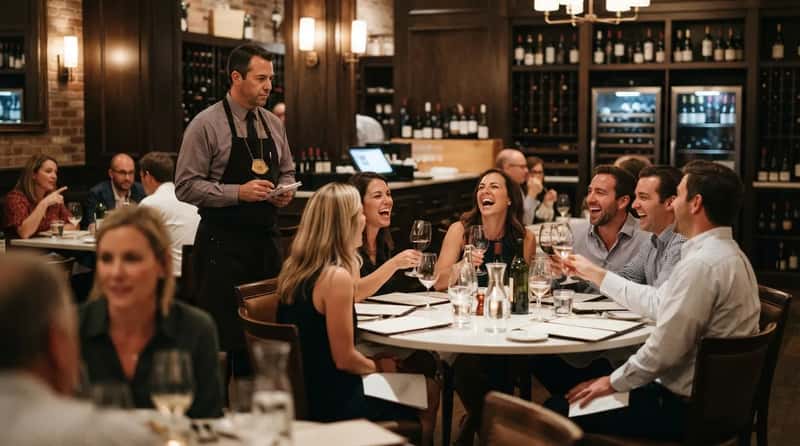
Clayton Fox, sommelier and wine director at R’evolution in New Orleans, calls this “reading the general energy” of a table – is it happy and boisterous, quietly serious, or the kind of table that just wants its existing opinions confirmed?
Energy is contagious, and sommeliers learn to clock it before they even approach. A loud, laughing party of six needs something completely different from four guests who haven’t looked up from their menus once.
Both are valid tables. Both require a completely different calibration, and the read happens before the greeting is even said out loud.
Laughter and noise usually mean the table is open to exploring something new. Hushed tones and open laptops usually mean keep it quick, keep it efficient, don’t linger.
The energy read also tells a sommelier whether to bring personality into the interaction or dial it all the way back. Misjudging which is which is one of the most common service errors in fine dining, and the source of some of the worst dinner stories guests tell afterward.
Energy sets the tone. But one specific signal buried inside that energy, posture, carries its own distinct message, as #9 reveals.
9. Posture and Physical Ease
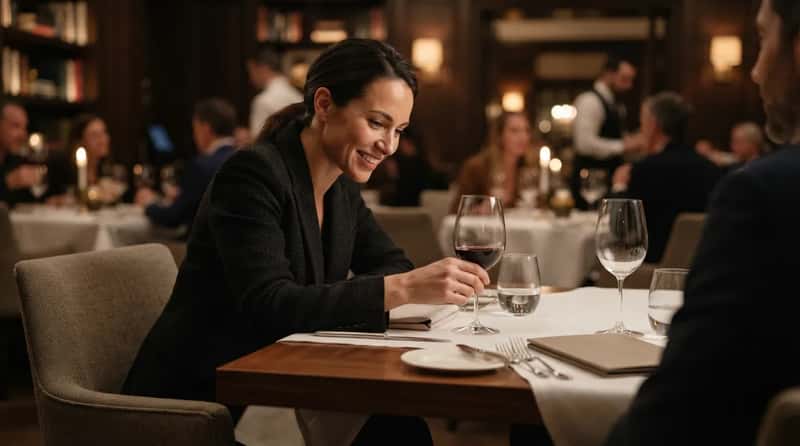
Relaxed shoulders and a lean toward the table signal openness to an adventurous pairing. Stiff posture and a phone in hand mean keep it safe, keep it fast.
A guest leaning back with arms unfolded is usually telling you they have time. That posture invites a longer conversation, maybe even a nudge toward something further off the beaten path on the list.
The opposite is just as easy to spot. A guest perched at the edge of their seat, spine straight, shoulders raised, is communicating urgency even while being perfectly polite, they want good service, but they want it quickly.
A ten-minute story about a biodynamic producer in the Loire Valley is the last thing that guest wants to hear.
Posture shifts through the meal matter too. A table that started tense and slowly loosened up by the first course is opening up in real time, a useful signal, though never treated as gospel on its own.
Posture tells a sommelier about pace. Eye contact tells them something even more specific, and that’s the territory of #8.
8. Eye Contact (or the Deliberate Lack of It)
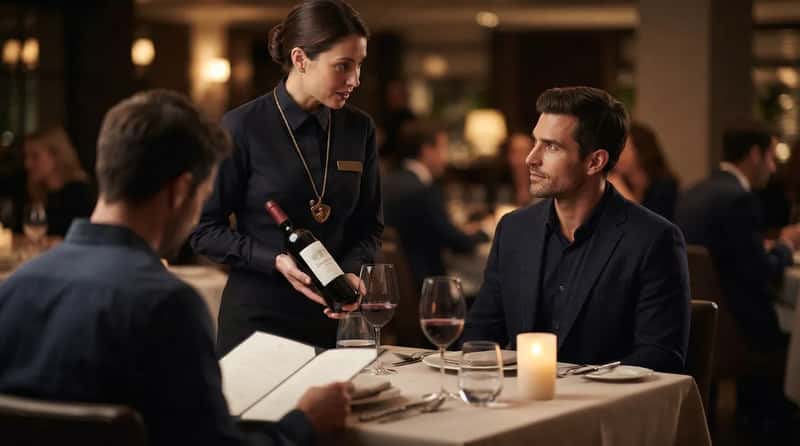
A table where nobody makes eye contact with each other is telling its own story. Read it correctly, and the smart move is something easy and familiar, not a challenging natural wine that needs a ten-minute explanation nobody asked for.
Direct, confident eye contact toward the sommelier is an invitation: I’m open to this conversation. Brief, darting eye contact, or none at all, says the opposite: keep this transactional.
Neither is rude. Both are useful information, and experienced sommeliers treat them that way.
At a group table, the pattern of eye contact between guests matters too. Guests who glance at each other before answering are seeking group consensus; guests who answer quickly and independently are comfortable deciding solo.
Holding eye contact long enough to actually notice someone’s eye color is a technique some floor staff use deliberately, a small way of making the attention feel genuine instead of routine.
Eye contact is direct. The signals guests send each other, the name-drops, the casual “last time we were in Burgundy,” operate on a completely different level. That’s #7.
7. The Wine Knowledge Name-Drop
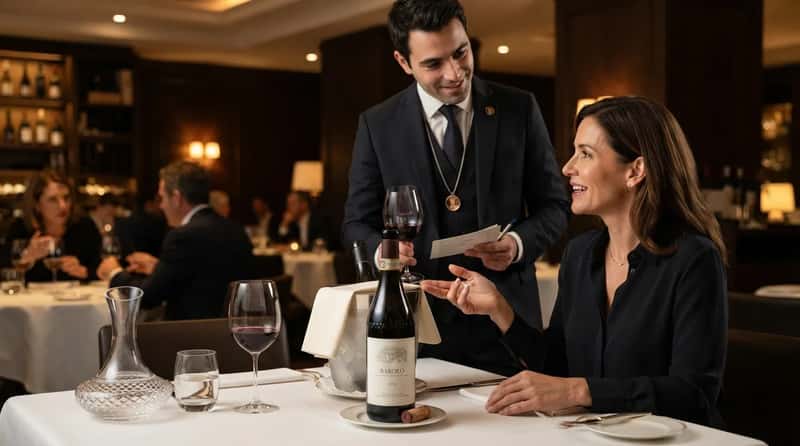
Sommeliers have long noticed that guests who arrive already fixed on a specific bottle rarely need to be sold on anything. Often the real motivation is simpler: they want to impress the table.
The name-drop is a well-known signal. It sounds like, “We had a beautiful Barolo at the producer last spring,” or “I’ve been curious about that négociant’s new releases.” Dropped casually before the sommelier has said a word, these comments are never random.
They’re a request: acknowledge this. The right response isn’t to test the claim, it’s to engage with it and let the conversation build from there.
Experienced sommeliers know the right posture is humble and honest, not competitive, even when a guest’s knowledge sounds slightly exaggerated.
The opposite version is just as readable. A guest who offers “I don’t really know wine” with a nervous little laugh is handing over explicit permission to take the lead and keep it simple.
Verbal cues are explicit. What guests do on their phones during the wine conversation is a quieter, increasingly common signal, which brings us to #6.
6. The Phone Check Mid-List
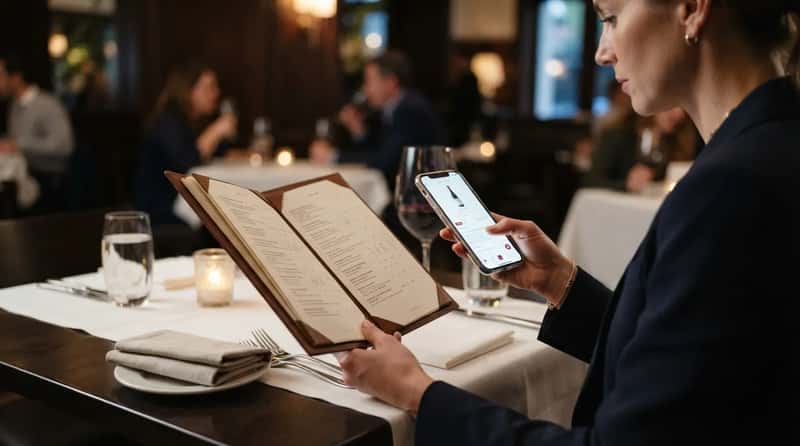
Some guests check their phones mid-scan of the list, and most sommeliers don’t mind at all. It usually means the guest actually cares about getting this right.
A decade ago, that phone check might have read as rude or disengaged. Today, most experienced sommeliers read it as the opposite, a guest cross-referencing a wine app or checking a producer is genuinely invested in the outcome.
Worth Knowing
- Quick glance at a notification – just a distraction, not disinterest
- Phone held up next to the list – active research on a producer or vintage
- Screen turned toward a dining companion – seeking group consensus before deciding
- No pause at all – the guest already trusts their own judgment
Sommeliers who read this correctly don’t interrupt. They give the moment room, then re-engage, a small pause that usually earns a faster, more confident decision from the table.
The phone check happens before the pour. What happens once the wine actually enters the meal tells the sommelier something different, and that leads to #5.
5. Whether the Food Order Comes Before the Wine
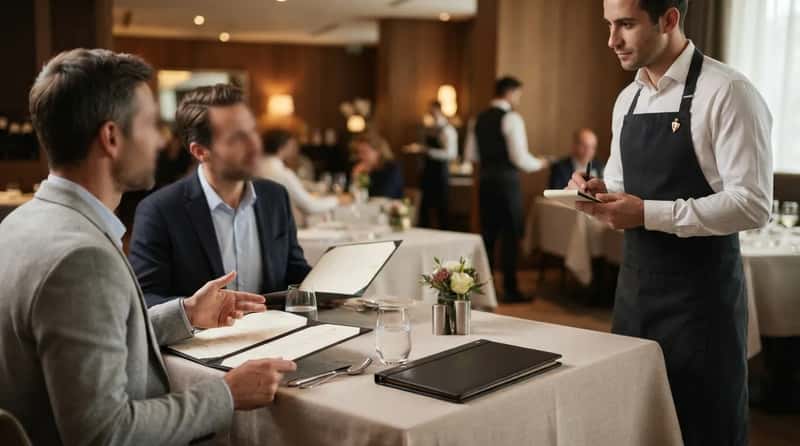
After a table is seated, the sommelier often waits until the food order is placed before approaching. A good one listens first, for budget signals, flavor preferences, dietary notes, and only then makes the recommendation.
A guest who orders food first and turns to the wine list afterward is handing over an enormous amount of useful information. The protein, the cooking style, the sauce all narrow the pairing options fast, and a sharper recommendation follows almost automatically.
A guest who orders wine before food is signaling something else entirely, they already know what they want, and the meal will build around the bottle rather than the other way around. That’s not wrong, it just calls for a different kind of engagement.
Matching tannin, acidity, and body to the texture on the plate is the whole point of the exercise, and that calibration is only possible once the sommelier knows what’s actually coming out of the kitchen.
The food-wine relationship is about precision. But whether a guest wants adventure or safety is a separate, bigger read, and it’s what #4 examines.
4. The Safe-or-Adventurous Signal
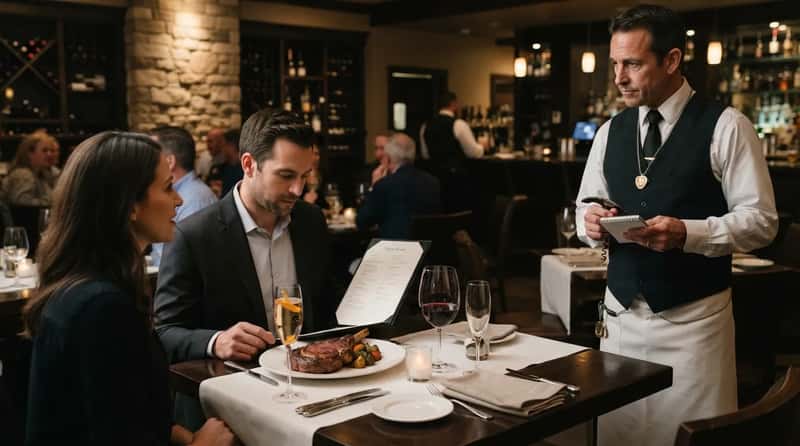
Many sommeliers start by asking guests what they usually drink, then whether they feel like being adventurous tonight. But most have already made a quiet guess before the question even leaves their mouth.
The safe-versus-adventurous axis is one of the most useful filters in the entire job. A guest who ordered a classic steak, a recognizable Champagne cocktail from the bar, and flipped straight to the Napa Cabernet page is telling you exactly what they want.
Recommending a Georgian amphora wine at that moment is a mistake, no matter how interesting the bottle is on its own terms.
Spotting the guest who wants guidance but is afraid to ask takes patience, a casual sample here, a friendly question there, a little extra “getting to know you” time. These guests, it turns out, are often the ones who enjoy the story behind a wine the most.
The adventurous guest usually signals themselves directly, with a question like, “What’s something on here I wouldn’t already know?” That sentence is a green light, plain and simple.
Safe versus adventurous is a preference signal. But what a table does mid-recommendation, who interrupts, who nods, who looks skeptical, is a live read that never stops. That’s #3.
3. Real-Time Feedback During the Recommendation
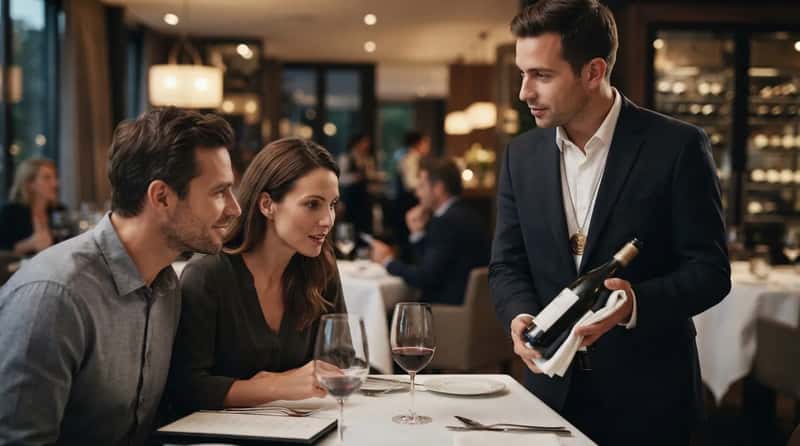
The real skill on the floor has almost nothing to do with wine knowledge. It’s about reading the room, adapting on the fly, and knowing exactly when to keep talking and when to stop.
Mid-recommendation body language is a live calibration tool. A guest who leans in the moment a specific region gets mentioned is telling the sommelier to go deeper there. A guest who nods politely and looks away wants the conclusion, not the lecture.
A follow-up question signals real engagement. A glance toward a dining companion before committing to a bottle is a guest checking for approval, and the sommelier who spots that glance, and pauses to let it happen, closes the recommendation far more smoothly than one who plows straight through.
Not every guest wants a conversation at all. A guest who picks a bottle independently and declines discussion has made their preference clear, the sommelier confirms, pours, and steps back.
Real-time feedback shapes the interaction moment to moment. But there’s one signal that shapes everything from the very start, the reason every other read on this list matters at all, and that’s #2.
2. Whether the Guest Wants to Be Taught or Simply Served
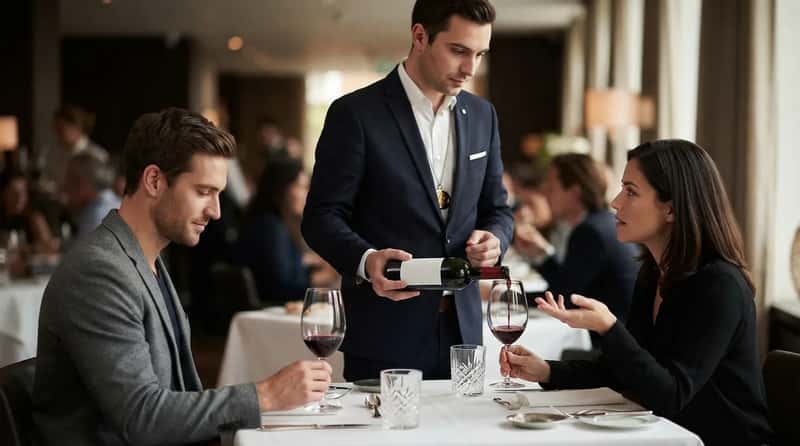
Not every guest wants an explanation. Some just want to enjoy the wine without any ceremony attached to it, and balancing those two groups is something sommeliers navigate at every single table, every single shift.
This might be the single most consequential read on the whole list, because getting it wrong sours the entire evening. A guest who wants to learn and gets a clipped, transactional pour feels dismissed.
A guest who just wants their glass filled, and instead gets a five-minute lecture on volcanic soil, feels trapped at their own table.
The “teach me” signals are fairly consistent: sustained eye contact, a direct question about the list, a lean-in the moment the sommelier starts talking. The “just serve me” signals are just as clear, a short nod, a quick return to the table’s conversation, zero follow-up questions.
A skilled sommelier turns technical knowledge into a short, tailored story that connects the wine to the meal without ever dominating the table. The word that matters most there is tailored, the story for a curious guest is never the story for a guest who just wants their glass full.
Everything before this final point is a detail. The last thing sommeliers read is the one every other signal on this list exists to serve, and it’s the one most guests would never suspect.
1. Whether the Table Trusts Them
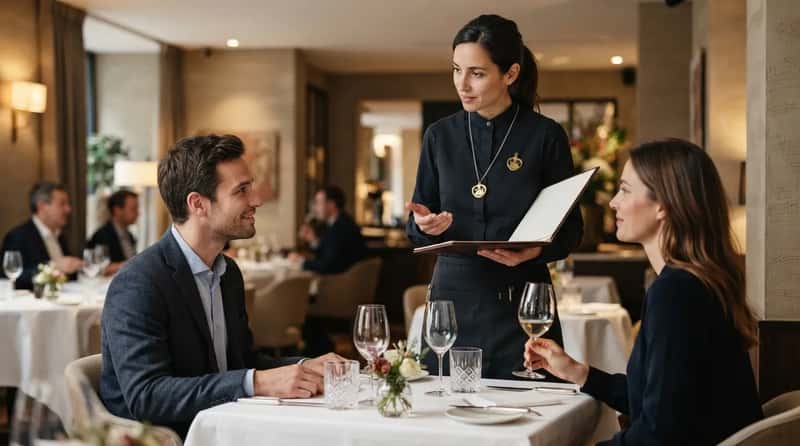
Trust is the end goal of every single read on this list. Every glance at posture, every tracked eye movement, every noted flicker toward the price column exists to get a guest to one place: comfortable enough to actually take the recommendation.
Without trust, the finest wine list in the world produces nothing but anxiety.
I observe guests – their mood, the occasion. I want them to feel comfortable, never judged, so they can relax and enjoy.
Agnese Morandi, head sommelier, Table by Bruno Verjus, Paris
Fast Facts
- Table by Bruno Verjus holds two Michelin stars and ranked No. 8 on The World’s 50 Best Restaurants list in 2025
- Agnese Morandi was named Best Sommelier of Italy in 2015 and won the Berlucchi Best Sommelier award in 2024
- Restaurant R’evolution in New Orleans carries a roughly 10,000-bottle international wine cellar
Clayton Fox at R’evolution favors genuine connection over formality, he introduces himself simply as the person who handles the wine. A colleague of his skips the sommelier pin altogether, so it never intimidates a guest before the conversation even starts.
These choices aren’t accidental. They’re strategic reads applied in reverse, the sommelier adjusting their own signals to match exactly what the table needs to see.
The best sommeliers make you feel confident, never tested. That feeling, the sense that the person handling your wine is genuinely on your side, is the hardest thing to learn in the entire job, and the most powerful thing they deliver.
Morandi puts it simply: “I make it exclusive for each guest. I’m here for them, and we will always find delicious possibilities and choices together.” That promise only becomes possible because of everything she read before she ever said a word.
The Bottom Line
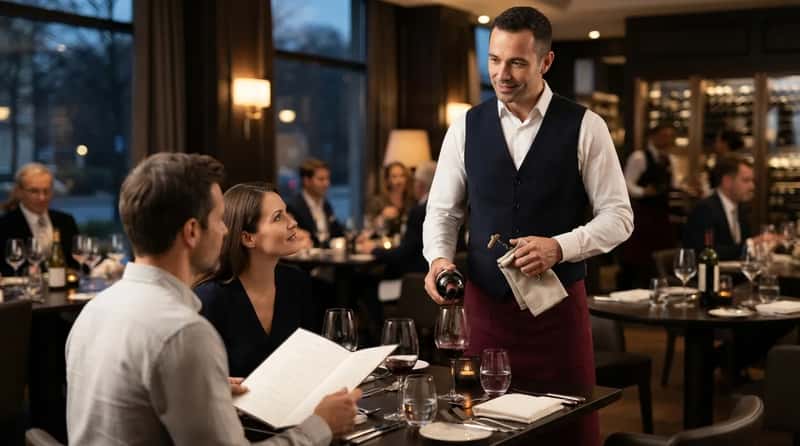
Sommeliers are running a sophisticated, real-time behavioral read from the second a table sits down, posture, eye contact, list-handling, hierarchy, whether the table wants a lesson or a quiet pour.
Most guests never notice the choreography behind it. It’s a ritual sommeliers around the world share, each one quietly orchestrating the room to fit the people actually sitting in it.
The goal was never to judge anyone at the table. It was always to find the right wine, for the right moment, for the right people.
Next time a sommelier walks up to your table, know the read is already well underway, and that every signal you’re sending, without meaning to, is already being put to good use.
Have you ever caught a sommelier reading your table? Drop your story in the comments.
17. The One Line That Makes Every Sommelier Work Harder For You
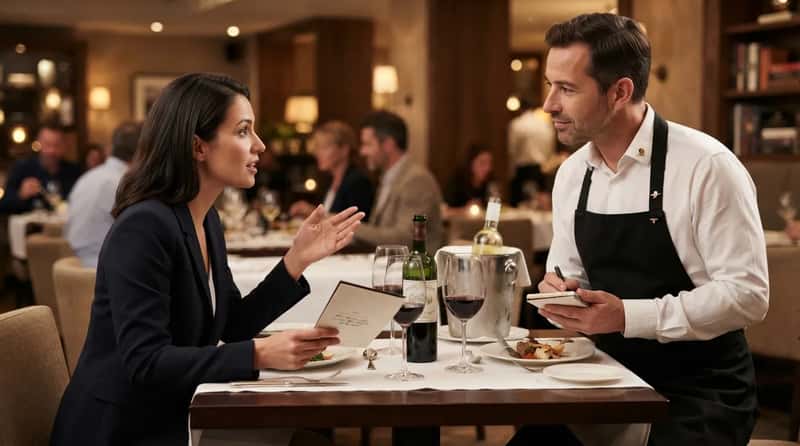
Every signal on this list flows one direction: you send a cue, the sommelier reads it. There’s one move that flips that entirely, and almost no diner ever uses it.
Instead of waiting to be read, hand the sommelier a concrete anchor they can work from immediately.
- Name two bottles you’ve genuinely loved by name, not vague terms like “something bold” or “something dry.”
- State a real price ceiling out loud, such as “let’s stay around $90,” instead of hoping the price glance gets read correctly.
- Ask one direct question: “What would you pour yourself tonight, at this price, with this meal?”
- Say yes to the first suggestion unless something feels genuinely off, second-guessing signals distrust and often triggers a safer backup pick instead of their best idea.
This combination does in ten seconds what an entire ninety-second silent read is built to approximate. It removes the guesswork, and it’s typically rewarded with the sommelier’s most interesting bottle of the night, not the safest one on the list.