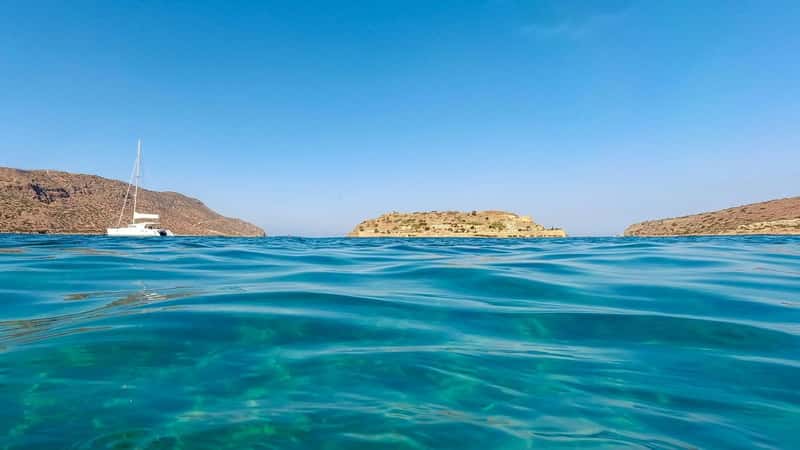
Greece Trip: Day 9. Crete: Spinalonga, Elounda & Agios Nikolaos – Image for illustrative purposes only (Image credits: Unsplash)
Crete – A drive along the northeastern coastline brings visitors to the harbor at Elounda. From that point, a short boat crossing leads to Spinalonga Island. The destination combines striking natural setting with a layered record of military construction and later medical isolation.
Reaching Elounda by Road
The route follows the shoreline through typical Cretan scenery of low hills and sea views. Drivers pass small settlements and agricultural plots before arriving at the waterfront town. Elounda itself functions as a practical base with docking facilities that support regular boat departures.
Local operators schedule trips throughout the day, weather permitting. The harbor area includes basic services for passengers preparing for the short voyage. Timing the visit for morning hours often reduces waiting time at the pier.
The Crossing to Spinalonga
Boats depart from Elounda and cover the distance to the island in roughly ten to fifteen minutes. The water remains relatively sheltered, offering clear sightlines toward the rocky outline ahead. Passengers gain an initial view of the fortifications that dominate the island’s profile.
Upon approach, the scale of the stone walls becomes apparent. The structures date to the Venetian period when the island served defensive purposes. Modern visitors disembark at a small landing area before entering the preserved grounds.
The return schedule allows time for exploration without rushing the return leg. Operators coordinate departures to align with daylight conditions and passenger numbers.
Spinalonga’s Dual Historical Role
Construction under Venetian control turned the island into a fortified outpost intended to guard nearby coastal routes. The walls and buildings reflect engineering priorities of that era focused on defense and supply storage. Later periods brought different uses as control of the region shifted.
In the twentieth century the island operated as a leper colony, one of the last active sites of its kind in Europe. Residents lived in adapted structures within the fortress perimeter until the facility closed in the middle of the century. The transition from military site to medical isolation area left visible traces in the layout of pathways and housing.
Today the island stands as an archaeological and historical preserve. Guided or self-directed walks allow examination of the remaining walls, gateways, and interior spaces. Information panels on site outline the sequence of uses without requiring prior specialized knowledge.
Extending the Visit to Agios Nikolaos
Many travelers combine the Spinalonga excursion with time in Agios Nikolaos, a nearby coastal town. The location provides additional waterfront promenades and local amenities after the boat return. Road connections between Elounda and Agios Nikolaos remain straightforward for those continuing by car.
The combined itinerary fits comfortably within a single day for most visitors. It balances the concentrated historical focus on the island with broader exposure to the region’s everyday coastal character.