
Slowly approaching the railing that overlooked what is considered the oldest temple ever built by humankind, I couldn’t help but feel like a single drop in the vast ocean of human history. As if this were a meeting point between the remains of the oldest civilization on earth and the modern world above it. As the warm arid breeze of the Southeastern Turkish plateau reached my face, it was impossible not to imagine the millennia that have passed in this exact spot.
The archaeological site of Göbekli Tepe was excavated in the 1990s and has since been recognized as the earliest known temple, built more than 7,000 years before the Pyramids of Giza, making it around 12,000 years old!
Walking along the raised platform that now protects the site, I found myself face-to-face with the four circular enclosures, the iconic T-shaped pillars rising from the ground beneath the modern metal supports. Our guide began explaining, “We are not 100% sure why they built this.
Theories change all the time. What we do know is that they were still hunter-gatherers. So maybe big monuments were invented first and kept people in one place, which may have given them the idea of farming.” Everyone in the group was almost still as they stared out at the scale of the site.
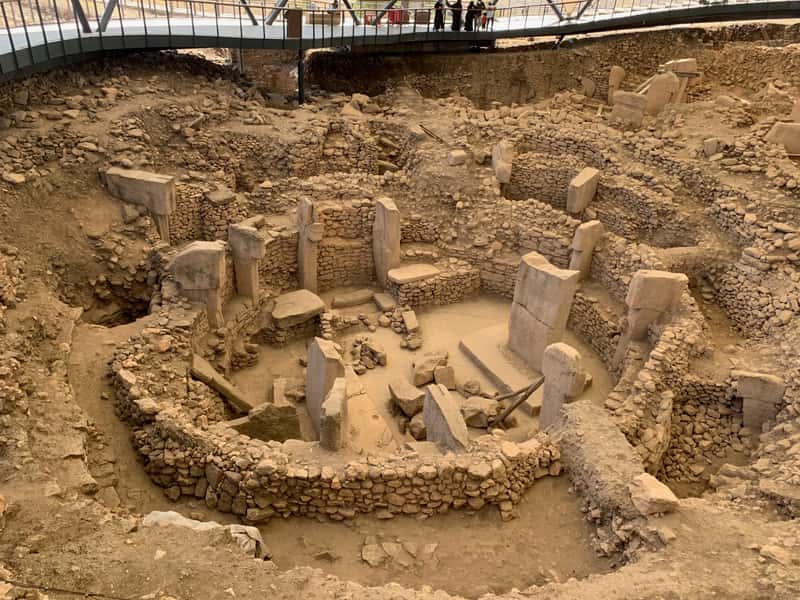
Having just exited the modern high-tech museum that now sits just outside the site, I couldn’t help but wonder what life looked like at this time. When the Ice Age was just ending, what was their world like? And why carve such grand artworks, images, and symbols here?
He continued: “Only 5% to 10% has been excavated. The other 90% is still under us. That is why this is a hill. Everything underneath is most likely older.” I turned around to remember how much higher we were than the surrounding landscape, the rolling hills spanning in every direction. There was a sense of excitement and wonder on my face as I imagined the years of excavations to come and what secrets they might uncover.
Şanlıurfa: The City of Sacred Pools and Winding Streets
Located about 40 miles from the Syrian border, Göbekli Tepe sits near the modern city of Şanlıurfa, where we stayed during our visit. The city itself contains layers of history, including its potential as the Biblical birthplace of Abraham and its ancient status as the city of Ur (though Iraq disputes its claim to the city).
In the markets, dried peppers and tomatoes hung from the ceiling, metal coffee cups carved with intricate patterns were stacked high, and triangle-shaped piles of spices lined the sidewalks. After walking up a small set of wooden stairs to a terrace overlooking the streets, plates of Urfa kebab —the spicier version of the original — arrived, alongside salads, baskets of bread, and roasted vegetables.
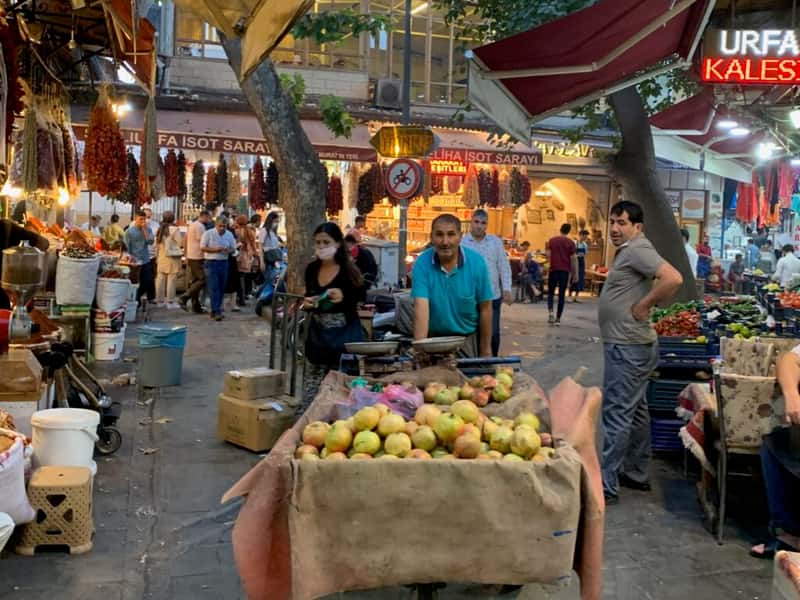
Our guide was eager to show us the best of the city, including a visit to several tea houses in elaborately decorated courtyards. With confused and admiring glances from locals, we drank multiple rounds of çai from little tulip-shaped glasses and strong Turkish coffee from tiny mugs.
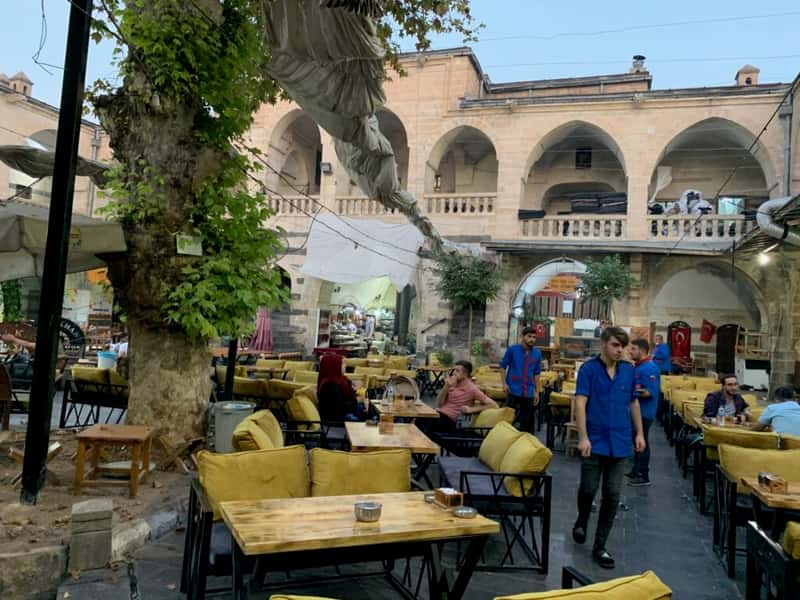
Exploring the old town of Şanlıurfa, we made our way through the winding streets, the Islamic architecture reflected in every carved wooden balcony and door leading into dark courtyards.
We encountered friendly locals who said “assalam aleikum” at every turn, and we noticed stray cats roaming free and being fed by the community. Bakeries were hidden in narrow alleys, with stacks of fried dough, cookies, and other treats in their windows. The scents of sugar, cinnamon, and cardamom waft down the streets.
The Pools of Abraham
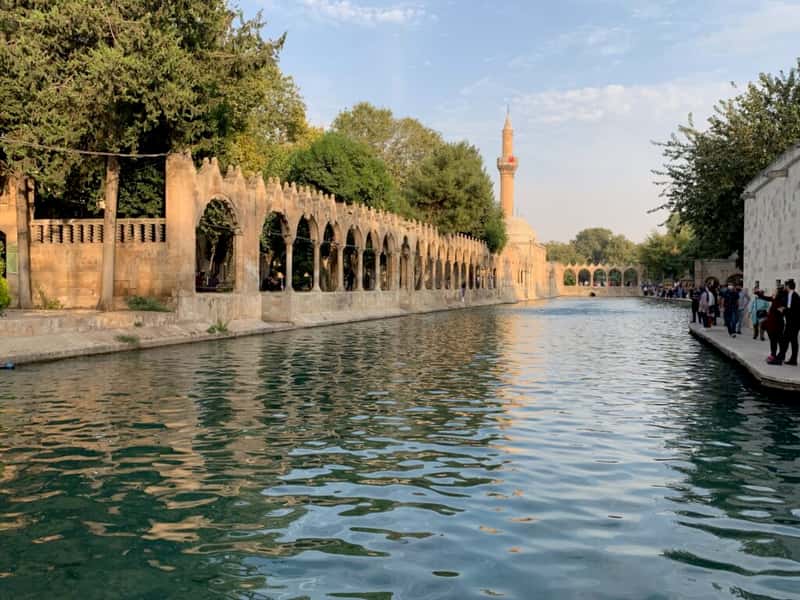
Walking towards the mosque complex where the Pools of Abraham (Balıklıgöl) are located, I could feel the weight of this place’s importance. After making sure we were dressed appropriately, our guide led us toward the pools, surrounded by warm sandstone buildings and trees. The water itself was a vibrant shade of teal, with the holy carp swimming through it.
According to local tradition, this was the birthplace of Abraham, while other accounts link it to the story of Nimrod, Abraham, and the Tower of Babel. Either way, today the mosque is holy to the city, as well as the fish that cannot be touched, caught, or eaten. Today, the pool-sides are filled with families and locals who toss food to the fish while children play on the perfectly clean sandstone floors.
The Ottoman-Era Hotel
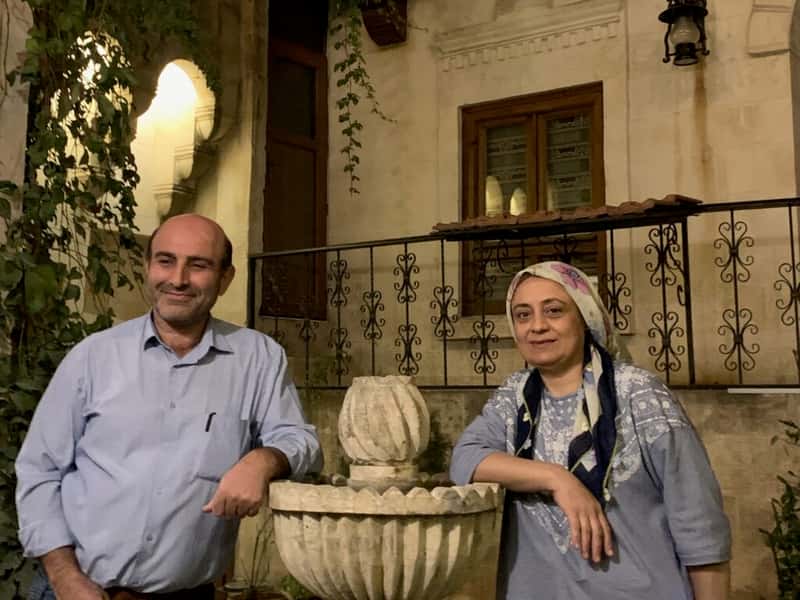
Not too far away was our hotel, once the home of an aristocratic family. Our hosts, a couple proud to have foreign visitors, shared photographs from the 20th century of the home, showing how it has been preserved across generations.
At the center of the courtyard lay a stone fountain, with the second-story balconies hanging over from each side. With vines draping down the building and the scent of shisha pipes lingering in the air, it felt like stepping back into the Ottoman era.
A New Beginning
Face-to-face with Gobekli Tepe itself, after years of waiting for that moment, I realized it wasn’t an experience of closure. I came to Şanlıurfa seeking to check off a bucket-list item, a way to complete a mission. However, I felt as though a greater journey of research, adventure, and curiosity had just begun.
While travel often promises greater clarity and deeper understanding of a place and of ourselves, this trip did quite the opposite. It reminded me of how much of our human history and stories we don’t know, and how much remains to be discovered. In a world so obsessed with accuracy and absolute truth, these places show that we don’t know everything about who we are, where we came from, and how we got here.