
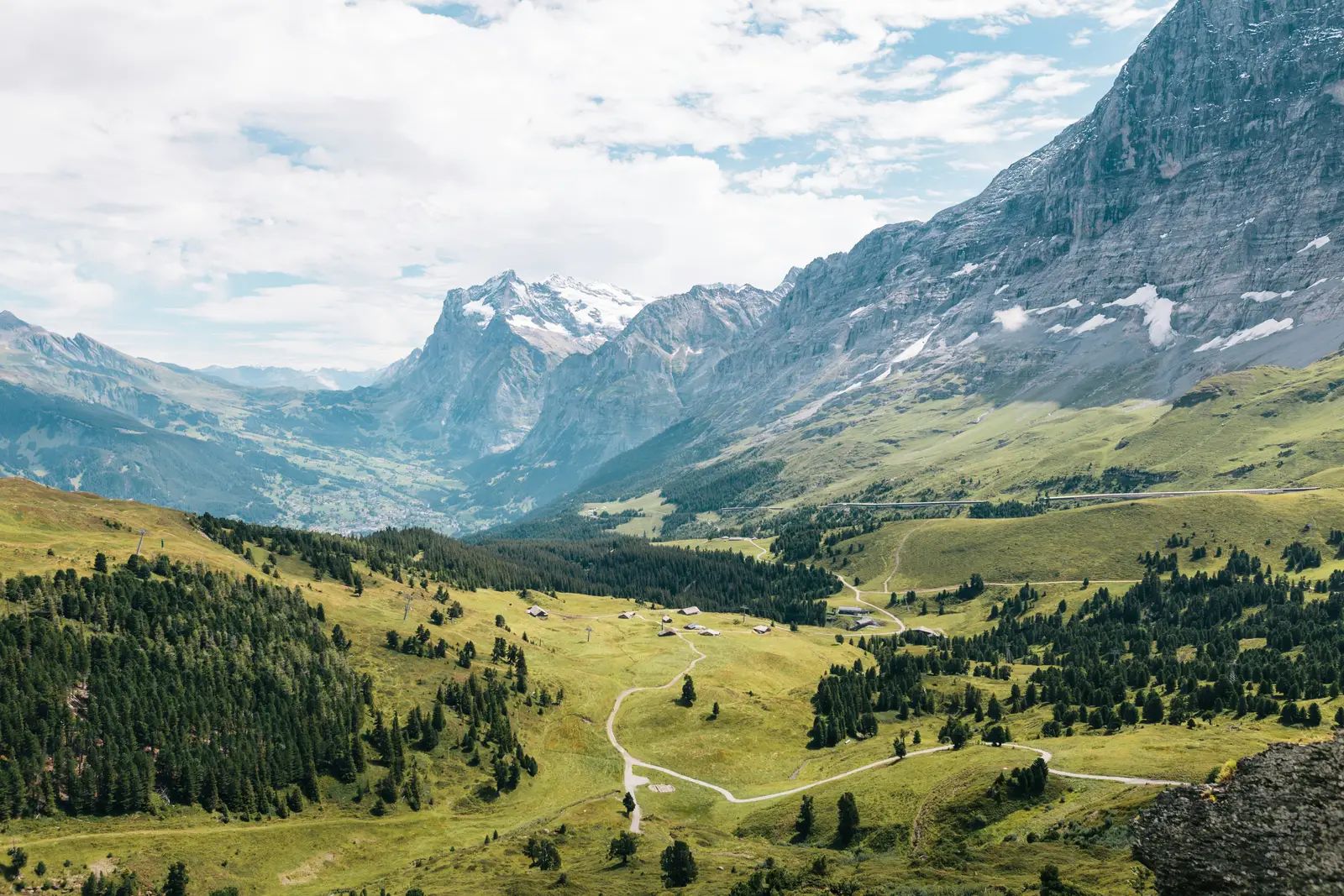
Switzerland offers some of Europe’s most dramatic alpine scenery, yet many of its standout landscapes remain inaccessible by road or vehicle. Travelers who rely solely on trains, buses, or cars often miss the most striking vistas. A recent account from a month-long visit highlights how footpaths open up these remote areas across the country. ([1])## Why Roads Fall Short in the Alps The Swiss Alps cover roughly 60 percent of the nation, creating a network of peaks, lakes, and glaciers that roads rarely reach. Public transport connects many trailheads, but the final stretches to prime viewpoints demand walking. This setup preserves the wilderness character of the terrain while rewarding those willing to continue on foot. Visitors who stay near popular hubs like Interlaken encounter plenty of options, yet the same pattern holds nationwide. Limiting exploration to one region overlooks trails in eastern ranges or western valleys that deliver comparable or superior perspectives. The result is a more complete experience when hikers venture farther afield. ## Practical Access Without a Car Switzerland maintains an extensive public transport system that links directly to many trail starts. Cable cars and gondolas often handle the initial elevation gain, leaving only moderate walking segments to reach overlooks or lakes. This combination keeps hikes feasible for a wide range of fitness levels. Several routes feature optional extensions that add distance or elevation for those seeking longer days. Shorter out-and-back options exist for families or time-constrained travelers. In every case, the infrastructure supports day trips from major towns without private vehicles. ## Examples of Rewarding Foot-Only Perspectives One trail in the Alpstein range leads to a high viewpoint overlooking jagged peaks and a distant valley lake. The path begins after a short cable-car ride and requires less than an hour of walking to reach the main overlook. Continuing downhill opens additional scenes of the water below. Another route near the Bernese Oberland circles a vivid turquoise lake with mountain backdrops. Gondola access reaches the lower shore, but the upper loop trail provides the clearest sightlines and a sense of seclusion. Clockwise travel aligns the best views early in the outing. ## Planning Considerations for Current Conditions Advance reservations for certain lifts have become standard at popular sites, especially during peak seasons. Checking availability ahead prevents last-minute changes. Morning starts often improve both visibility and crowd levels on exposed ridges. Trail conditions vary with weather, and some paths include steep or assisted sections with cables for safety. Moderate difficulty ratings apply to most recommended routes, though extensions can increase the challenge. Public transport timetables align well with typical hiking hours. ## Lasting Value of Foot Travel Hiking in Switzerland delivers more than scenery. It connects travelers to the country’s alpine infrastructure and the quiet moments that roads bypass. Those who invest the time on foot return with perspectives unavailable from any parking area or station platform.
Switzerland's Best Views Require a Hike

Matthias Binder
September 11, 2026 · 3 min read
🔥 Would you like to save this?
We’ll email this post to you, so you can come back to it later.
Matthias Binder
Matthias a curious globetrotter who collects moments from night markets, coastlines, and tiny mountain villages. Plans trips around local food, scenic trains, and the best views at golden hour.
View Profile & ArticlesMore from Matthias Binder

Captive-Born Cheetahs Released in South Africa Are Now Raising Their Own Young in Game Reserves
1 min read
Vermont Sheep Thrive in Apple Orchard Pastures
1 min read
Whitsundays Offers Ideal Long Weekend Getaway
1 min read

If You Can Comfortably Afford These 5 Trips, You’re Doing Better Than Many Americans
1 min read