Rising from the flat coastal plain just south of Da Nang, the Marble Mountains look almost unreal at first sight—five limestone and marble hills emerging abruptly from the landscape, like a geological afterthought. Nestled within this cluster is Tam Thai Pagoda, one of the most atmospheric and spiritually dense sites in central Vietnam. Visiting it early in the morning, when a light mist still clings to the rock and softens every outline, turns the experience into something deeply evocative, halfway between landscape and meditation.
Tam Thai Pagoda is not a single monument but part of a layered system of temples, caves, stairways, and viewpoints spread across the Marble Mountains. What makes it special is not just what you see, but how you move through it. The ascent is gradual, sometimes demanding, and intentionally non-linear. Paths branch off, steps disappear into rock, and openings reveal themselves slowly. It’s a place that resists being rushed, and rewards those willing to linger.
A Temple Embedded in Stone
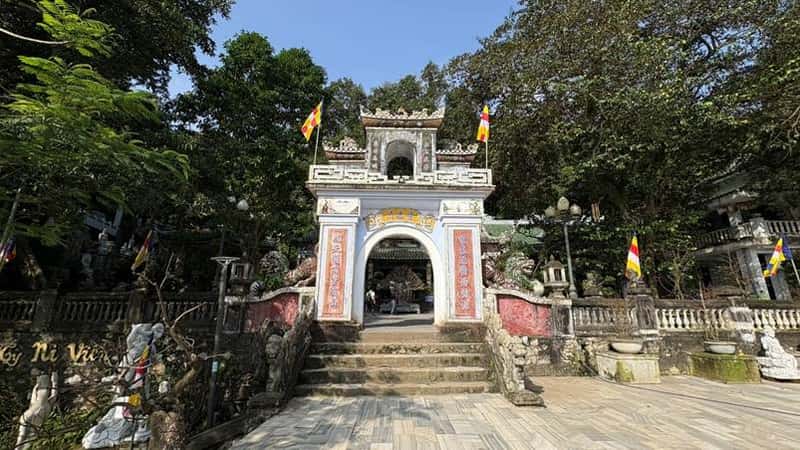
Tam Thai Pagoda itself dates back to the 17th century, though it has been rebuilt and restored multiple times. Architecturally, it’s very high, impressive: its power comes from placement. Built directly into the mountain, it feels less like a structure imposed on nature and more like something that has quietly emerged from it. You can spot it from below and feel intimidated but also drawn to it. At least I did.
The pagoda sits at a midpoint between earth and sky, where the noise of the outside world fades almost completely. Even when other visitors are present, the atmosphere remains hushed. Incense burns steadily, and the soundscape is reduced to footsteps, wind, and the occasional echo from within the caves. There’s a tangible sense of continuity here, of rituals repeated over centuries without spectacle.
The Relationship with the Marble Mountains

One element that helps make sense of Tam Thai Pagoda’s location is the deep, historical relationship between the Marble Mountains and the material they are made of. Known locally as Ngũ Hành Sơn, these hills have been quarried for centuries for their marble and limestone, used in sculpture, architecture, and devotional objects throughout the region. The workshops at the base of the mountains—still active today—are a continuation of this tradition: raw stone extracted from the land transformed into statues, altars, and everyday objects.
In this context, the presence of temples like Tam Thai feels less coincidental and more symbolic. Building places of worship directly into the mountains can be read as a gesture of gratitude and respect toward the material itself—a way of acknowledging what nature provides before it is shaped by human hands. The mountain is both a resource and a spiritual entity. The pagoda, carved into stone rather than placed upon it, seems to act as a mediator between extraction and reverence, between using the land and honoring it. This tension—between material abundance and spiritual restraint—is part of what gives the site its quiet depth, and visitors feel grounded rather than decorative.
Caves as Spaces for Reflection
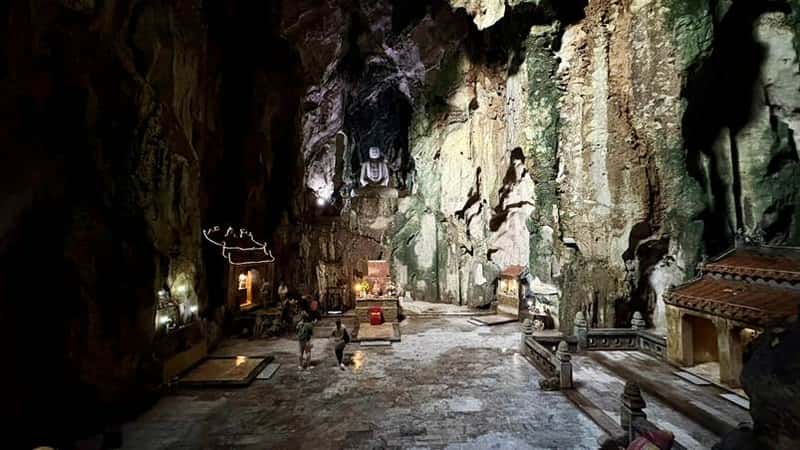
One of the most striking aspects of the Tam Thai area is the system of caves that punctuate the ascent. These are not simply cavities to pass through, but carefully integrated spiritual spaces. Entering them feels like stepping into a different register: light dims, temperature drops, and sound becomes internalized.
Inside, small shrines, statues, and altars appear in unexpected niches. Water drips from above, stone surfaces catch light in subtle ways, and the boundary between natural formation and human devotion blurs. These caves invite reflection almost automatically. The experience is less about belief and more about presence—being attentive to space, breath, and movement.
Paths, Effort, and Viewpoints
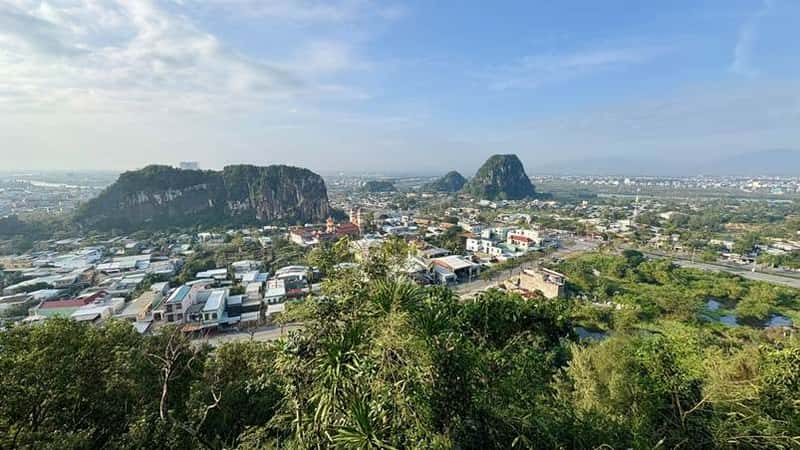
What makes Tam Thai and the surrounding mountains so engaging is the variety. There isn’t a single route, but multiple paths leading to different belvederes and observation points. Some stairways are gentle and shaded; others are steep, exposed, and physically demanding. Choosing a path becomes part of the experience, a small act of commitment.
The effort is always repaid. From the higher viewpoints, the landscape opens dramatically: Da Nang stretching toward the sea, rice fields and neighborhoods below, and beyond them a ring of green hills that look almost imagined rather than real. In the early morning haze, these hills seem to float, layered in soft gradients of green and gray. The effect is surreal and strangely calming, as if the landscape were less a place than a mental image brought into focus.
Spiritual Density Without Formality
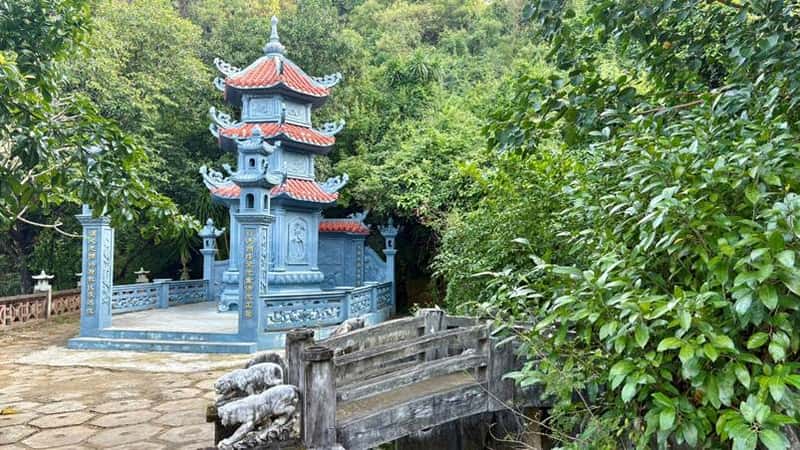
One of the most compelling qualities of Tam Thai Pagoda is how much spirituality is embedded in small details rather than grand gestures. Shrines appear in corners, incense bowls sit quietly along paths, and carved figures emerge from stone walls without announcement. There’s no single focal point demanding attention; instead, meaning accumulates gradually.
You don’t need to understand Buddhist symbolism in depth to feel that the place is charged. It’s an environment designed to slow you down, to make you look closely, and to move with intention. In that sense, it’s less a destination and more a process.
Practical Information: Getting There and Eating
Tam Thai Pagoda is located just outside Da Nang, easily reachable by taxi, ride-hailing apps, or scooter. The entrance area at the base of the Marble Mountains is lined with marble shops selling sculptures, decorative objects, and souvenirs—marble in every possible form, often beautifully worked. It’s visually interesting, but not the place to plan a meal.
There are a few small stalls and basic options where you can grab something simple, but the choices are very limited. For breakfast or a proper meal, Da Nang city is a far better option, both before and after the visit. The mountains are best experienced unhurried, but not as a food destination.
Wear good shoes: the steps can be steep and uneven, and some paths require real effort. Water is essential, especially later in the day. Arriving early in the morning is strongly recommended—not just to avoid heat and crowds, but for the atmosphere. The light mist and quiet hours transform the entire experience.