Every time a plane touches down, most of us barely look up from our phones. We trust the pilot, the technology, the process. Flying has become almost mundane – until you realize that some airports around the world are operating in conditions that would make even a seasoned aviator grip the controls a little tighter.
These are not just bumpy runways or inconvenient crosswinds. Some of these places demand split-second decisions, one-shot landings, and nerves that most people simply don’t possess. Let’s dive in.
1. Tenzing-Hillary Airport, Lukla, Nepal – The World’s Most Infamous Runway
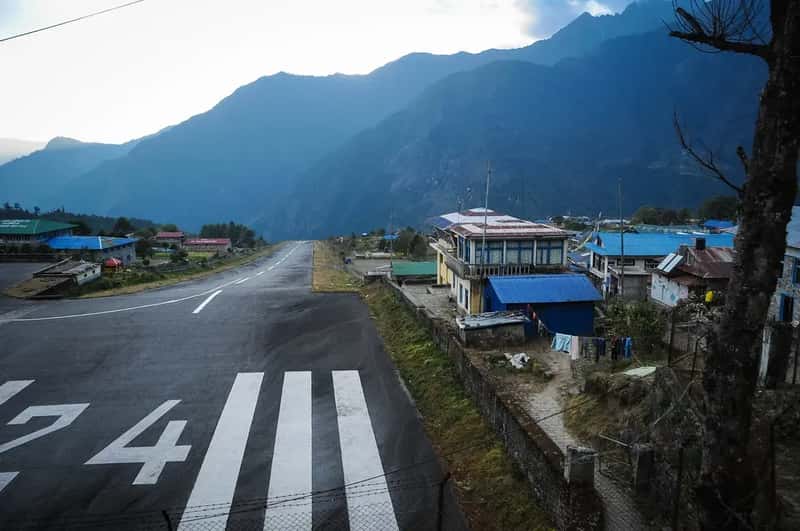
Honestly, no list like this can begin anywhere else. Tenzing-Hillary Airport has gained worldwide fame because it was rated the most dangerous airport in the world for more than 20 years by a program titled “Most Extreme Airports,” broadcast on The History Channel in 2010. That reputation has not faded.
The dangerous airport has earned its fearsome reputation through a combination of extreme factors: an impossibly short runway measuring just 527 meters, a 12% gradient slope, unpredictable Himalayan weather, and a cliff drop at the end of the strip. Think of it like a ski jump – except the penalty for error is not a fall into soft snow.
Due to the difficulties of successfully landing at the airport, the Civil Aviation Authority of Nepal sets high standards, according to which only experienced pilots who have completed at least 100 short-takeoff-and-landing missions, have over one year of STOL experience in Nepal, and have completed ten flights into Lukla with a certified instructor pilot, are allowed to land at the airport.
2008 and 2012 marked the years when the airport saw two of its deadliest accidents, where 18 and 19 people were killed, respectively. In recent seasons, Lukla’s Tenzing-Hillary Airport has handled record levels of traffic, with a single day in late 2024 seeing 184 flights, including more than 150 helicopter operations into the region. The danger has not slowed anyone down.
2. Paro International Airport, Bhutan – Only a Handful of Pilots Are Cleared to Land
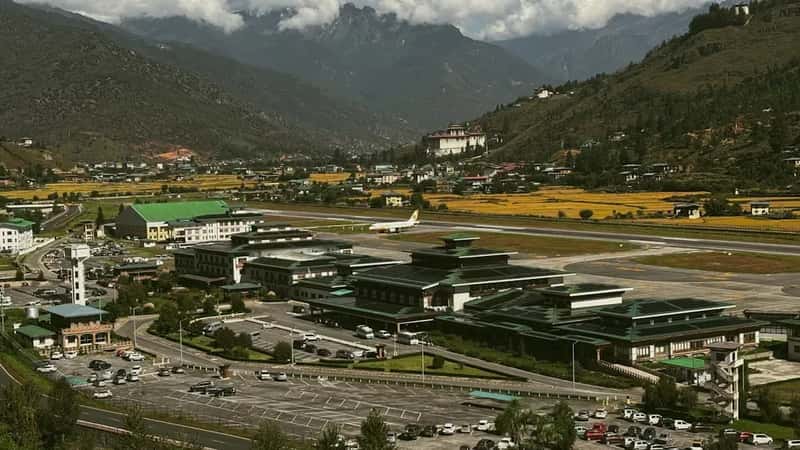
Bhutan is one of the world’s most secretive and enchanting kingdoms – and getting there by plane is a test of aviation skill that very few pilots can pass. With surrounding peaks as high as 5,500 metres, it is considered one of the world’s most challenging airports, and only a very small number of pilots are certified to land at the airport.
Situated at an elevation of 7,364 feet above sea level and surrounded by peaks reaching 18,000 feet, the complex approach requires pilots to weave between hillsides and manoeuvre over residential areas before executing a tight turning manoeuvre to align with the runway. Operational restrictions at Paro are among the most stringent worldwide: landings occur only during daylight hours with optimal visibility conditions, and as of 2020, only approximately 20 pilots worldwide held certification to land at this challenging airport.
Strong wind conditions at Paro mean all incoming flights need to make it there before midday to avoid the churn of thermals from the warm ground. Factor in monsoon season, in June and August, when winds from China whip across the Bay of Bengal and funnel days of heavy rain, thunderstorms, and monstrous hailstones into Bhutan. Remarkably, despite all of this, no accidents have been recorded at Paro in official aviation safety databases.
3. Toncontin International Airport, Tegucigalpa, Honduras – A 45-Degree Turn Before Touchdown
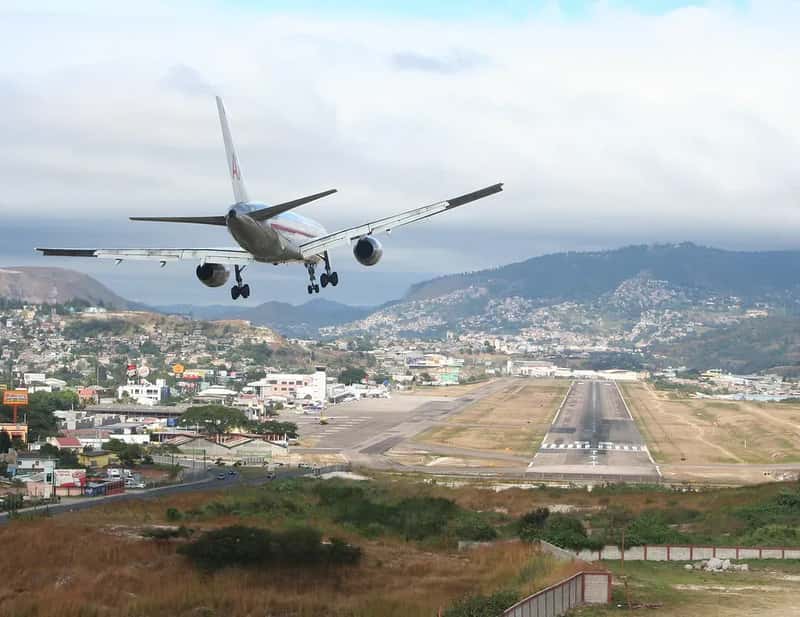
If you have never heard of Toncontin, consider yourself lucky – and also consider what pilots must go through to land there. The approach to Toncontin Airport, located near the capital of Honduras, has long been considered to be one of the most dangerous in the world, especially in inclement weather conditions. The mountainous terrain surrounding the small airport forces pilots to make a dramatic approach that’s anything but head-on, with a steep descent and a sharp turn prior to lining up with the runway.
In 1989, a Boeing commercial plane crashed into a mountainside on approach, killing 132 people. At least 5 more planes have since followed suit and crashed in or around the airport. Following several incidents, including a fatal 2008 crash involving a TACA Airlines Airbus A320, authorities implemented significant safety improvements, including extending the runway slightly and installing enhanced navigational aids.
Ranked as the second most dangerous airport in the world by History Channel, the approach to Toncontin International Airport is considered as one of the most difficult in the world, especially in inclement weather conditions. A new airport is currently being constructed in Comayagua to replace Toncontin International Airport.
4. Courchevel Altiport, France – The Runway That Doubles as a Ski Jump
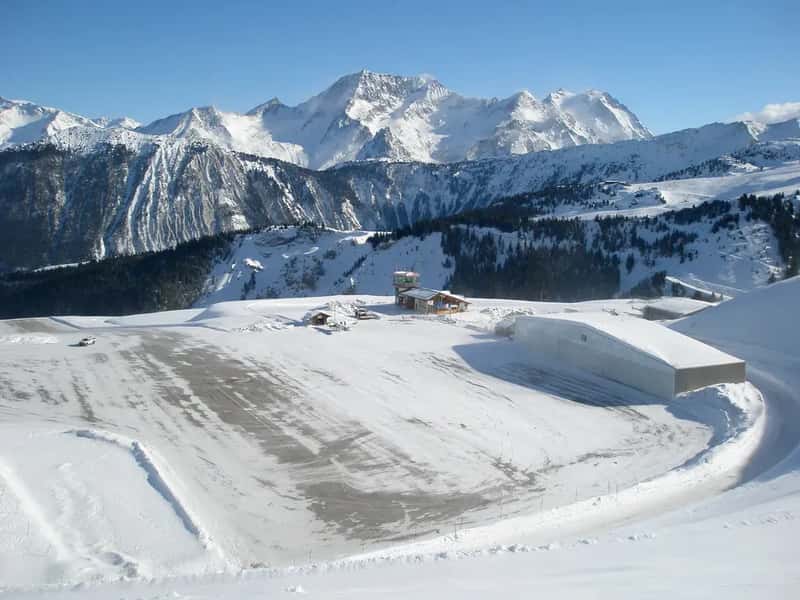
Picture the French Alps in winter. Breathtaking, right? Now imagine being a pilot tasked with landing a plane on a runway barely longer than a city block, with a cliff on one end and mountains everywhere else. Located in the middle of the French Alps, Courchevel is only reachable through deep Alpine valleys and is considered one of the most challenging airports in Europe. The runway measures just 1,722 ft long and has an 18.6% gradient with a distinct hill in the middle, and there are no lights or instrument aids.
There are no second chances: the facility has no go-around procedure for landings due to the surrounding mountainous terrain. Add in rapidly shifting weather patterns and the constant threat of snow, wind, and ice, and this airport will test the abilities of even the most experienced pilots.
After a Pilatus PC-12 was heavily damaged in a February 2024 crash at Courchevel Altiport, French investigators determined that the pilots’ lack of experience in mountainous terrain contributed to the aircraft’s nosegear striking the slope during landing. So yes – this is very much a present-day concern, not just historical drama.
5. Princess Juliana International Airport, St. Maarten – Where Planes Fly Over Your Head on the Beach
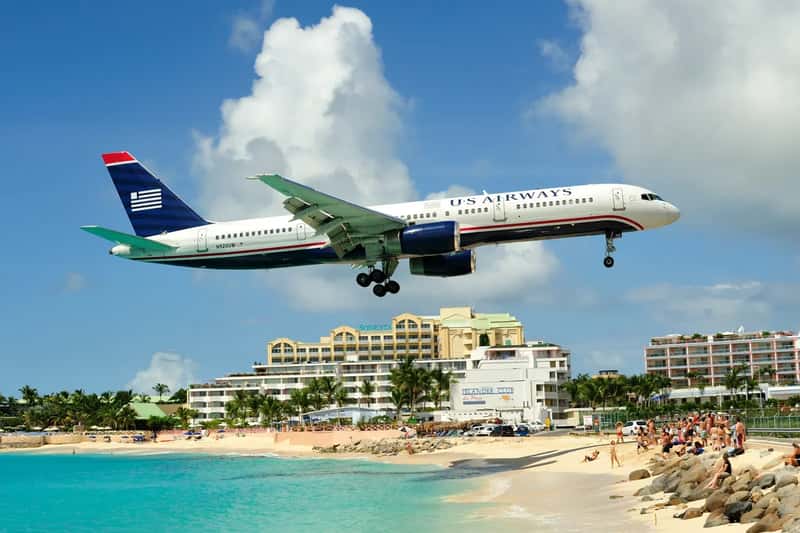
This one you may genuinely have seen on social media. The videos are almost unbelievable. Regarded as one of the busiest airports in the Caribbean and the most dangerous in the world, the extremely short runway at Princess Juliana Airport means that planes have to approach the runway at about 60ft above a crowded beach area.
It’s not without danger though: in 2017 a New Zealand woman died from injuries sustained by jet blast from a departing aircraft. Numerous signs warn about the danger, as the force of the jet blast from an aircraft can knock you down or send you flying a few feet in the air, causing severe injuries. People still stand there for the thrill. Let’s be real – that is a little insane.
One of the main challenges of Princess Juliana International Airport is its proximity to Maho Beach. The runway begins just a few meters from the beach, requiring precise navigation by pilots to ensure the safety of beachgoers and aircraft passengers. The airport’s management has implemented various safety measures and protocols, including warning signs and barriers on the beach, as well as public announcements to alert beach visitors of approaching aircraft.
6. Juancho E. Yrausquin Airport, Saba – The Shortest Commercial Runway on the Planet
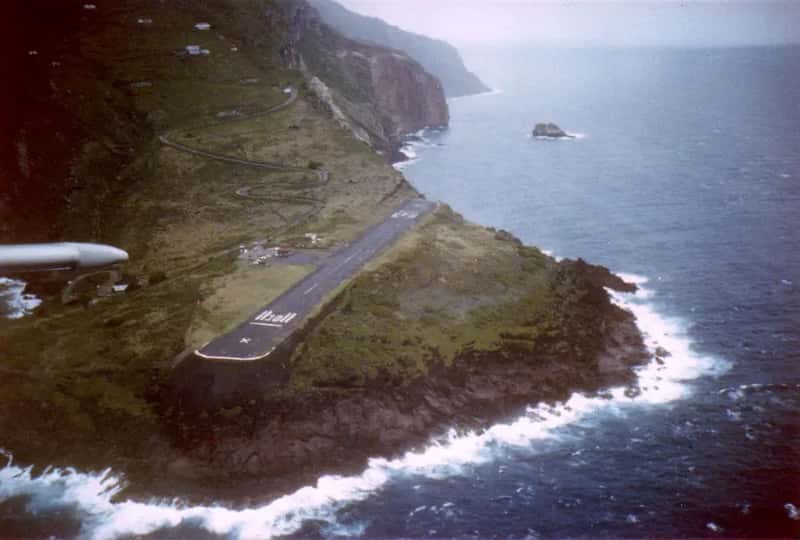
The tiny Dutch Caribbean island of Saba is stunning. Getting there by air, however, is a different kind of experience entirely. The Caribbean island of Saba hosts what is widely recognised as the world’s shortest commercial runway. Measuring just 1,300 feet (400 meters) in length – less than one-quarter of a typical commercial runway – Juancho E. Yrausquin Airport presents extraordinary landing challenges. Both runway ends terminate in cliffs dropping directly into the Caribbean Sea, leaving no margin for error during landing or takeoff operations.
On one side, the runway is flanked by a steep volcano, while plunging sea cliffs surround it on the other side and at both ends. Only a select group of specially certified pilots receive authorisation to operate at this challenging location. Aircraft size restrictions limit operations to small propeller planes typically seating fewer than 20 passengers.
Despite these intimidating conditions, the Aviation Safety Network records no accidents at this facility, testifying to the effectiveness of strict operational protocols. It’s almost miraculous, given how the place looks from above. I think that says a lot about what proper training and strict rules can achieve.
7. Madeira International Airport (Cristiano Ronaldo Airport), Portugal – Built on 180 Concrete Columns Over the Sea
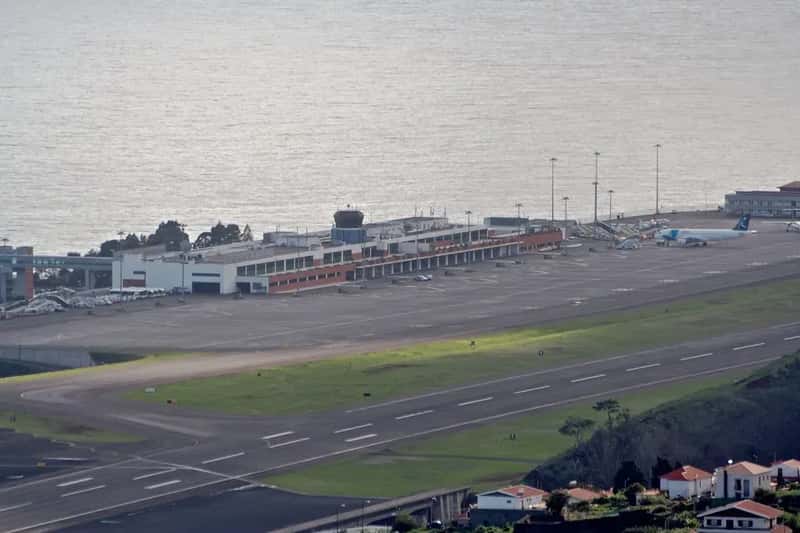
Yes, this is a real airport named after a football legend. More importantly, it is a real airport built on columns extending over the Atlantic Ocean. Madeira International Airport Cristiano Ronaldo, formerly known as Funchal Airport, on the Portuguese archipelago of Madeira in the Atlantic Ocean is considered one of the most dangerous airports in the world due to its spectacular construction. The original runway was only 1,600 m long, but was extended to 2,781 m after a fatal plane crash in 1977 when 164 people died. The runway extension is supported by 180 columns, partly over the ocean, which have to withstand serious shock loading during landings.
The Madeira Airport features a runway so narrow that pilots must fly toward the mountains and execute a sharp turn to ensure a safe landing, which can appear quite alarming from inside the cabin. Navigating this approach can be a test for pilots of all experience levels.
Videos of aircraft getting tipped over during the final approach into Madeira – either planting hard onto the runway or executing a rapid go-around – are no joke, and the airport has had regular incidents of aircraft battling the weather, running out of runway, and crashing into the sea. Strong crosswinds coming off the Atlantic are a constant factor that turns an already complex landing into something extraordinary.
8. Gibraltar International Airport – Where Planes Share a Runway With a Highway
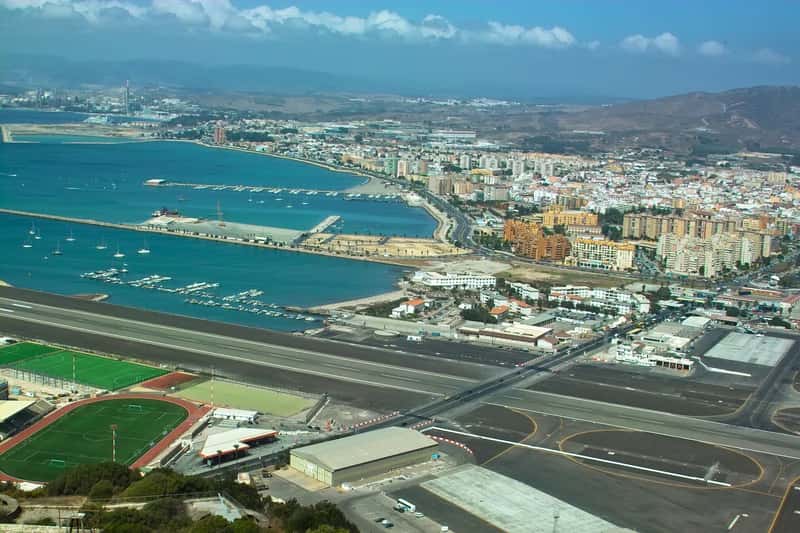
Here is a scenario that should not exist: a commercial aircraft lands and, in doing so, stops traffic on a major road. This is not fiction. The runway at Gibraltar’s airport crosses the main road in and out of the British Overseas Territory, and consequently traffic has to be closed every time a plane lands or departs. The resultant traffic jams have led to the construction of a tunnel under the runway, but the project has been plagued by delays and is still not complete.
It’s the strong turbulence and wind shear around the Rock of Gibraltar and across the Bay of Algeciras that makes landings here a challenging affair and particularly uncomfortable. Diversions and go-arounds are common, especially in winter.
The runway also has water on both ends, thereby forcing pilots to land at an appropriate touchdown zone – otherwise risk overshooting the runway. Flying toward a gigantic limestone monolith on a landing approach is never easy on the nerves, but in the 6.2-square-kilometer British overseas territory of Gibraltar there’s nowhere else to put an airport except in the shadow of the Rock. It’s a fascinating place – just breathe calmly on approach.
9. Barra International Airport, Scotland – The Only Airport That Uses a Beach as Its Runway
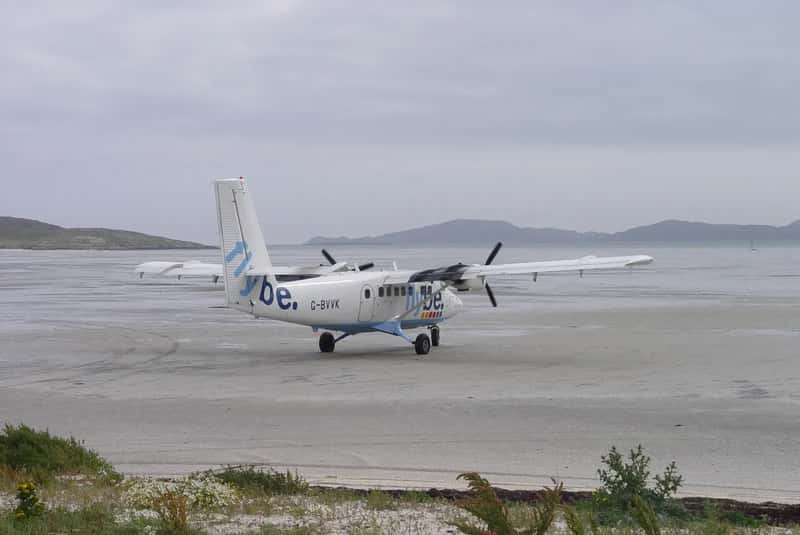
It sounds like something out of a quirky travel documentary, but it is entirely real. Barra International Airport presents a truly unique aviation experience as the only commercial airport worldwide using a beach as its runway. The airport’s three runways are completely submerged during high tide, meaning flight schedules must coordinate precisely with tidal patterns. This unusual arrangement creates a perpetually changing landing surface affected by weather, water conditions, and sand compaction.
When planes aren’t using it, you can pick cockles on this tidal runway in the Scottish Outer Hebrides. That line never gets old. The idea that you could be collecting shellfish in the morning in the exact spot where a commercial aircraft will be landing in the afternoon is genuinely surreal.
The combination of Atlantic weather, tidal unpredictability, and a constantly shifting landing surface makes Barra a unique challenge for pilots. It is remote, raw, and utterly unlike anything else in commercial aviation. From crafty crosswinds to troublesome tailwinds, the wind can significantly affect the takeoff and landing of a plane. At Barra, the ocean adds an entirely new variable to that equation.
10. Matekane Air Strip, Lesotho – The Runway That Ends at the Edge of a Cliff
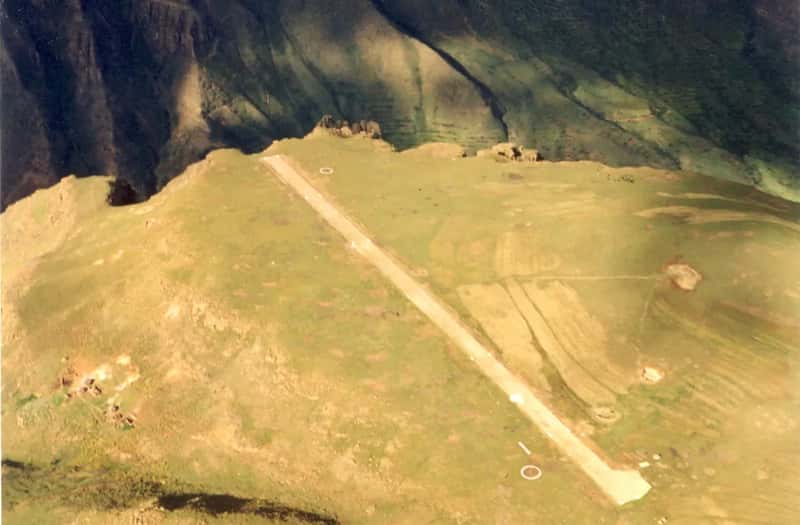
Save this one for last – because it is arguably the most viscerally terrifying of them all. Located in the small, landlocked mountain kingdom of Lesotho in southern Africa, this airstrip is not for the faint of heart. The remote airstrip located in Lesotho, Africa has been labelled as the scariest runway in the world and measures just 1,300 ft. When taking off from Matekane, planes don’t have enough time to start flying so have to drop down the face of a 2,000 ft cliff until they become airborne.
This 1,300-foot-long runway is not long enough for planes to reach the necessary speed for takeoff. It’s situated 7,500 feet in the air and the end of the runway is also the edge of a cliff with a 2,000-foot drop. Since planes cannot reach their required speed, they often drive right off the runway and take flight after falling.
Lesotho is one of the least developed countries in the world, and the dangerous runway is often used by charities and doctors who visit inaccessible villages in the mountainous country. That context matters. People use this terrifying strip of tarmac not for adventure tourism, but to deliver aid to communities that can be reached no other way. The airport features a runway that hangs off the edge of a cliff, requiring skilled pilots to navigate the challenging approach and landing procedures. The airport’s remote location and high altitude present additional challenges for operations, including limited accessibility and weather-related disruptions.
Final Thoughts
What this list reveals is something genuinely humbling about human engineering and human nerve. These airports exist in places where airports arguably should not exist – and yet, people build them, fly into them, and do so with remarkable frequency. The pilots who master these approaches are operating at a level of skill that most of us will never fully appreciate from seat 24B.
It’s also worth noting that danger, as defined here, is not simply about crash statistics. Determining which airports qualify as “most dangerous” involves analysing multiple risk factors rather than simply counting accident statistics. Many airports with challenging conditions have excellent safety records precisely because pilots and air traffic controllers exercise extreme caution when operating at these locations.
So the next time your plane descends and the runway feels closer than expected – just remember, somewhere in the Himalayas or on the cliffs of Lesotho, a pilot is doing something that would make your landing look like a Sunday stroll. What do you think – would you dare board a flight into any of these airports? Let us know in the comments.