
Every year, governments update their travel advisories, issue stern warnings, and in some cases tell citizens outright: do not go. Travel has always involved an element of risk, yet certain destinations continue to draw millions of visitors despite serious security concerns. The paradox is fascinating: places marked with government warnings and elevated threat levels still see steady streams of tourists seeking authentic experiences, adventure, or simply affordable vacations.
Travel advisories can help travelers better plan their international trips, not only by helping them choose safer destinations, but also by helping them understand which parts of different countries pose risks and what sort of risks to keep an eye out for. In its assessment, the State Department considers multiple factors, such as crime, terrorism, civil unrest, access to health services, likelihood of a natural disaster, current events, and more. What follows are twelve destinations where the warnings are real, the visitor numbers remain high, and the gap between the two tells a story worth understanding.
1. Mexico: Cartel Country with World-Class Beaches

Mexico sits near the center of this conversation because the contrast is so stark. The U.S. State Department keeps Mexico at Level 2 overall, even while several states carry tougher warnings. At the same time, Mexican government-backed reporting said the country welcomed 45.04 million international tourists in 2024, a 7.4 percent jump from the year before. Those are enormous numbers for a destination whose safety headlines never really go quiet.
The Cartel Jalisco Nueva Generación and the Sinaloa Cartel remain the two most powerful criminal enterprises, and at least a dozen other major cartels operate across various states. Violence in Mexico is highly localized and varies significantly by region. While historically concentrated in known high-risk areas, insecurity has increasingly affected major tourist destinations such as Cancún, Tulum, and Puerto Vallarta. Travelers tend to route around the danger rather than ignore it, sticking to well-known resort zones and using private transfers.
2. Egypt: Ancient Wonders Under Modern Warnings
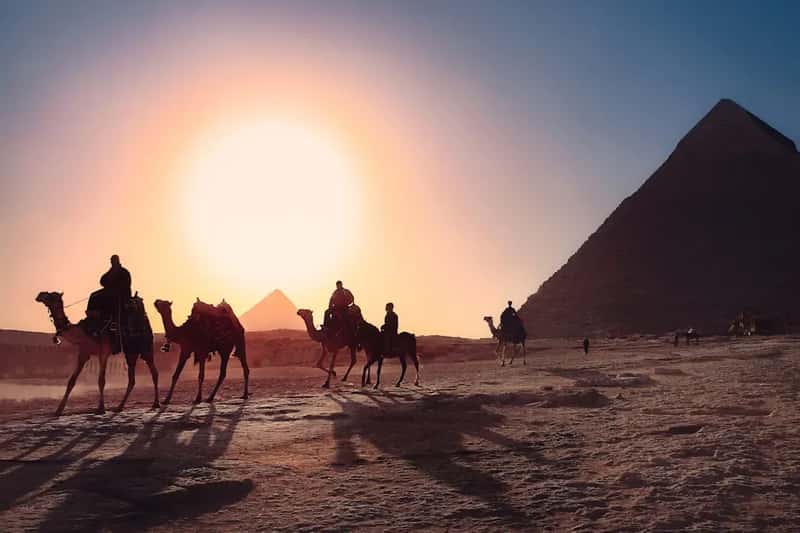
Egypt is one of those places where the warning and the fantasy have been traveling together for years. The State Department currently places Egypt at Level 2, citing terrorism, crime, and health concerns, while certain areas remain under much stronger warnings. Yet official Egyptian government reporting says the country welcomed nearly 19 million tourists in 2025 after already hitting a record 15.7 million in 2024.
A place like Egypt keeps pulling people because few destinations offer this much visual and historical payoff in one trip. Egypt’s official tourism platform still sells the country on exactly that scale, from ancient sites to beach escapes and river journeys. Even cautious travelers know the difference between a tightly managed Cairo-Luxor itinerary and wandering casually into areas the advisory tells you to avoid. The pyramids, the Red Sea, and the Nile remain among the most compelling draws in all of travel.
3. Turkey: Geopolitical Friction Meets Irresistible Tourism
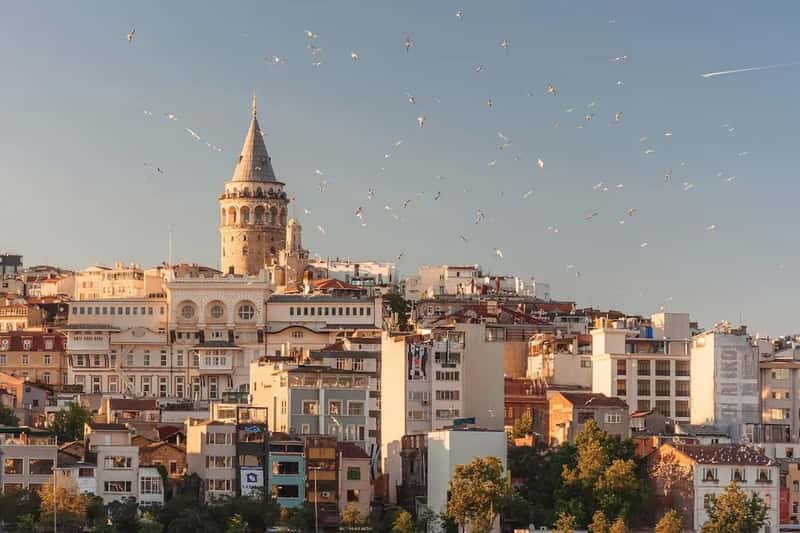
Turkey stays busy because it solves several travel cravings at once. The State Department lists the country at Level 2 due to terrorism, armed conflict, and arbitrary detentions, with southeastern areas flagged at higher risk. Even so, official Turkish government communication said visitor numbers reached 62.2 million in 2024. That is an extraordinary figure, placing Turkey among the most-visited countries on earth.
Turkey offers rich history and diverse landscapes, but safety conditions vary across the country. Tourist areas in cities like Istanbul, Antalya, and Cappadocia are generally safe, though petty crimes such as pickpocketing and scams can occur, especially in crowded places. Travelers are advised to remain vigilant in busy tourist spots and public transport hubs, as there are various active terrorist groups in the country. Some regions, particularly near the Syrian border in the southeast, carry a higher risk due to ongoing conflicts, terrorism, and political instability.
4. South Africa: Safari Dreams and Urban Realities

South Africa has always sold a bigger kind of trip, and that is part of why people keep saying yes. The State Department rates it Level 2 due to crime, terrorism, unrest, and kidnapping, warning that violent crime is common and more frequent in some downtown areas after dark. Yet South African Tourism said the country welcomed a record 10.48 million international arrivals in 2025, while South Africa’s government portal says 2024 had already reached 8.92 million arrivals.
With reportedly high rates of sexual assault and among the highest crime indices globally among analyzed destinations, South Africa demands extra vigilance from travelers. The country’s safety challenges extend far beyond street crime. Adding to these concerns is the country’s high traffic fatality rate of 24.5 deaths per 100,000 people and a subpar healthcare index. Still, safari, coastline, Cape Town, and the Winelands together form a travel package that very few destinations can match.
5. Colombia: A Transformed City Scene with Dangerous Edges
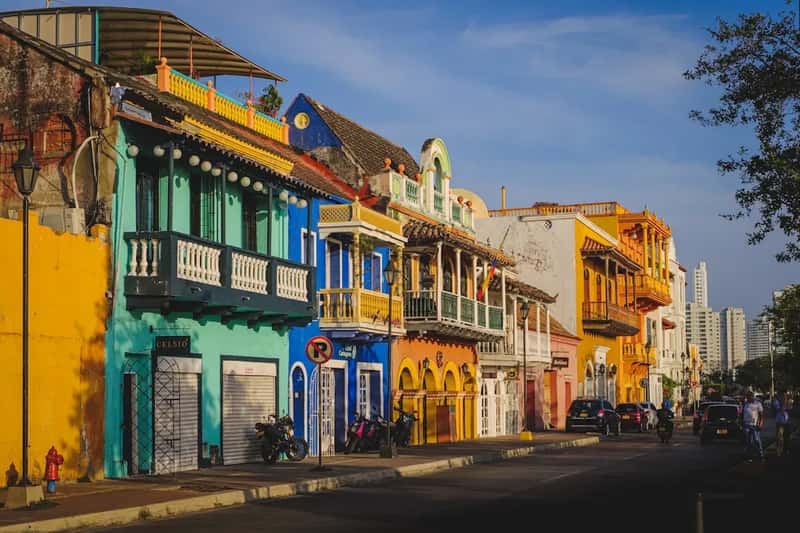
Colombia holds a Level 3 “Reconsider Travel” advisory as of March 2026, with risk indicators covering crime, kidnapping, unrest, terrorism, and natural disaster. Violent crime is common in many areas of Colombia, including murder, assault, and robbery. Other crimes, such as drugging, extortion, kidnapping, and armed break-ins at hotels and tourist accommodations also occur frequently in some regions. Street crime occurs throughout Colombia and can quickly become violent.
Major cities like Bogotá and Medellín have transformed significantly in recent decades, giving Colombia a genuine urban tourism draw despite the persistent advisory level. Travelers should avoid border regions with Venezuela, rural areas in Arauca and Norte de Santander, and parts of Cauca, where the ELN guerrilla group remains active. Urban tourist areas are generally safe with standard precautions. The country’s coffee region, Caribbean coast, and vibrant food culture keep drawing visitors willing to stay informed and exercise caution.
6. Iraq: Ancient History in a High-Risk Environment

Iraq makes the list of the most dangerous countries to visit due to the high risk of attack. It is not considered safe for travelers, with ongoing violence. People in Iraq live under threat daily, with the ambushing of government buildings and places of worship being commonplace, along with regular bombings.
Armed groups are known for their attacks on visitors, along with kidnapping, with groups asking for high ransoms. There are areas in Iraq that have limited government control, and within these zones, foreign nationals are incredibly vulnerable. Terrorist attacks are an ongoing threat in Iraq, where even peaceful demonstrations and protests can turn violent with little warning. Despite all of this, a small number of history and archaeology enthusiasts make their way to Mesopotamia each year, drawn to Babylon, Erbil, and the ancient ruins of Ur.
7. Ukraine: War Zone Tourism and the Cost of Curiosity

Ukraine, once a bustling tourist destination, is now among the most dangerous countries to visit. The country is currently under enormous stress due to the ongoing war with Russia, and in addition to active conflict, faces corruption and serious overall instability. Without a doubt, Ukraine is the most dangerous country in Europe right now.
Russia’s full-scale invasion of Ukraine continues, and even non-frontline regions remain subject to Russian missile and drone attacks. Russian shelling, missiles, and drones have killed civilians across multiple regions including Zaporizhia, Kherson, Donetsk, Kharkiv, Dnipropetrovsk, Sumy, Chernihiv, and the city of Kyiv. Some visitors still travel to Kyiv and western cities like Lviv, citing solidarity or journalistic purpose, but the risks are severe and largely unavoidable.
8. Libya: Dark Tourism at Its Most Extreme

The U.S. State Department’s advisory is unambiguous: do not travel to Libya for any reason due to crime, terrorism, unexploded landmines, civil unrest, kidnapping, and armed conflict. Unexploded landmines, cluster munitions, and unexploded ammunition are a hazard throughout the country. Outbreaks of violence between competing armed groups can occur with little warning and have the potential to impact visitors. The capital, Tripoli, and other cities have witnessed fighting among armed groups, and hotels and airports frequented by foreign nationals have been targeted in these attacks.
Despite this, the innate danger and the growing pull of “dark tourism” have made Libya an underground destination for a very small number of travelers. The most recent data shows about 100,000 tourists a year. Some are drawn by the ruins, the isolation, or the idea of seeing a place most people are warned to avoid. A British tourist was held for seven hours at gunpoint at an army checkpoint in Libya as recently as 2024, a reminder that even brief encounters with authorities can turn catastrophic.
9. Syria: Cautious Reopening After Decades of Conflict
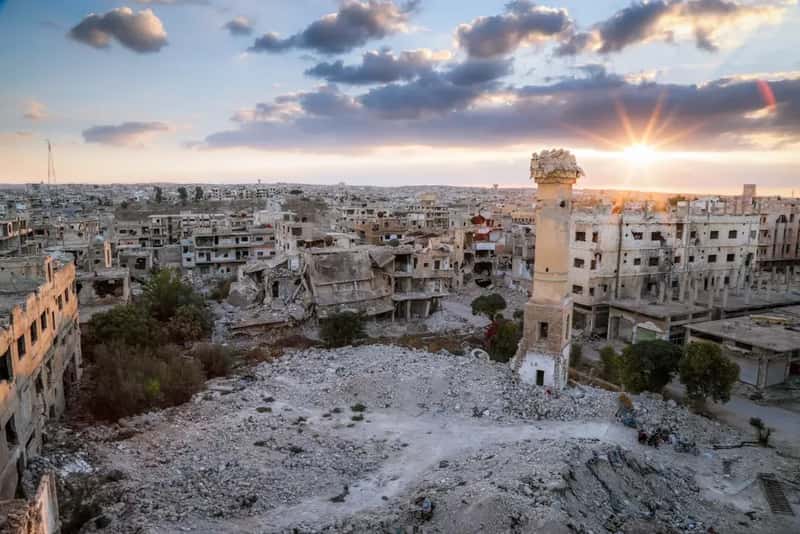
The U.S. State Department continues to advise against all travel to Syria. No formal tourism industry infrastructure is in place, meaning tourists participate in activities entirely at their own risk. Emergency response and medical treatment are not available in most of the country. Sources estimate that before Assad left in December 2024, the Syrian conflict caused over 500,000 deaths, with hundreds of thousands more wounded, arbitrarily detained, or forcibly disappeared since the conflict started in 2011.
After several years of near-total closure, Syria is welcoming tourists again, as some parts of the country are gaining significant stability and becoming safer for travelers. Itineraries for 2025 already include the liberated Saydnaya Prison, where Assad’s regime tortured and executed political prisoners, and cities like Aleppo and Homs. Some argue that visits to sites like these can have a positive impact in recognizing and remembering the regime’s crimes while helping the world better understand the Syrian refugee crisis. Whether this constitutes meaningful memorial travel or simply risk-seeking is a question each visitor has to answer honestly.
10. Jamaica: Paradise with a Level 3 Advisory

For Jamaica, the U.S. Department of State has issued a Level 3 “Reconsider Travel” advisory. Safety concerns include violent crime, particularly in urban and rural areas outside tourist resorts. Government guidance recommends avoiding certain regions, especially those away from major tourist hotspots, and travelers are advised to stay within resort areas and avoid unregulated activities such as illegal street tours.
Jamaica requires more caution than many Caribbean destinations due to higher crime rates in certain areas. Tourist zones like Montego Bay, Ocho Rios, and Negril maintain dedicated security, but travelers should stay within resort areas at night. The State Department recommends avoiding certain neighborhoods in Kingston and Montego Bay. Resort areas and organized tours remain generally safe with standard precautions. The island’s appeal, beaches, music, culture, and food, remains powerful enough that most visitors accept the terms of cautious tourism willingly.
11. Haiti: The Hardest Case on the List

Haiti remains at the center of concern with a Level 4 “Do Not Travel” warning, the highest advisory issued by the U.S. government, due to ongoing gang violence, kidnappings, and civil unrest. Deteriorating law enforcement capabilities, limited medical infrastructure, and frequent safety threats have made routine travel increasingly dangerous.
In many high-risk countries, the primary concerns include armed robbery, kidnappings, gang violence, and a pattern of crimes that disproportionately affect visitors unfamiliar with local dynamics or security red flags. Haiti represents the most acute version of this problem. A handful of volunteers, journalists, and aid workers still make their way into the country, but leisure travel in any conventional sense has effectively ceased. The occasional adventurous traveler who attempts it does so knowing full well that consular support is severely limited and emergency evacuation is far from guaranteed.
12. Iran: Cultural Richness Behind Serious Legal Risks
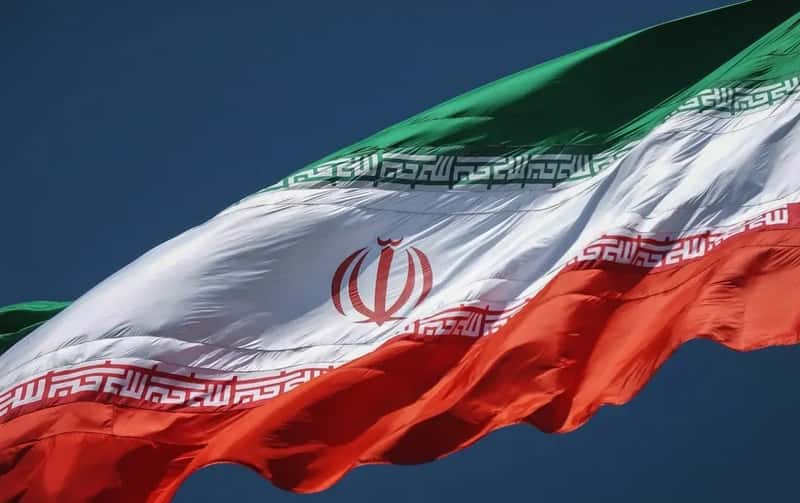
U.S. citizens in Iran are often specifically targeted for unlawful kidnapping, arrest, and detention by the government, frequently under claims that they represent a threat to national security. Travelers to Iran face a crime index of 49.5 and elevated traffic fatalities per 100,000 people. The Islamic Republic presents travelers with a combination of political instability, strict laws that can ensnare foreigners, and limited consular assistance from Western governments. The risk of wrongful detention remains a persistent concern for international visitors, particularly those from countries with strained diplomatic relations with Iran.
Despite these documented dangers, Iran attracts a consistent stream of travelers each year, largely because the country’s cultural, architectural, and historical heritage is genuinely extraordinary. Persian bazaars, Zoroastrian fire temples, the ruins of Persepolis, and the elegant city of Isfahan remain among the most visually striking sights in the entire Middle East. Travel to high-risk destinations like Iran should be treated as a high-risk operation, requiring constant situational awareness and careful planning, not as routine travel or leisure trips. Those who go are often veteran travelers who have weighed the calculus carefully, though no amount of preparation removes the very real possibility of arbitrary detention.
What unites all twelve of these destinations is a tension that no advisory can fully resolve: the places with the most complicated histories tend to also be the ones with the most compelling reasons to visit. The warnings exist because the dangers are real. The visitors keep coming because the pull, whether historical, cultural, or simply human, is real too. Staying informed, planning carefully, and understanding exactly what you’re accepting when you book the flight matters more than any single entry on any list.