For decades, a U.S. passport was treated as the finish line, not a starting point. That calculus is shifting. A growing number of high-net-worth Americans are now shopping for a second passport the way they might shop for a vacation property, treating global mobility and tax diversification as part of a broader wealth strategy rather than a reaction to crisis.
The numbers back up the anecdotes. U.S. nationals accounted for nearly a third of all applications processed globally by citizenship advisory firm Henley & Partners in the first quarter of 2026 alone. Here are the five programs drawing the most attention from that crowd right now.
St Kitts and Nevis: the original economic citizenship model

St Kitts and Nevis remains the benchmark against which every other program is measured. St Kitts and Nevis hosts the oldest and one of the most respected citizenship by investment programs in the world, having started back in 1984, with over 20,000 individuals becoming citizens since then. That long track record matters to wealthy applicants who worry about a program disappearing or losing credibility a few years after they apply.
The country has also been modernizing its back end rather than resting on its reputation. The Government of Saint Kitts and Nevis launched a National Biometric Enrolment and Passport Modernisation Programme effective from April 14, 2026, implemented by the Ministry of National Security, Citizenship and Immigration. Combined with visa-free access to the UK and the Schengen area, it is easy to see why advisors still lead with this option for clients who want a proven system over a novel one.
Antigua and Barbuda: a Caribbean favorite with a lower entry point
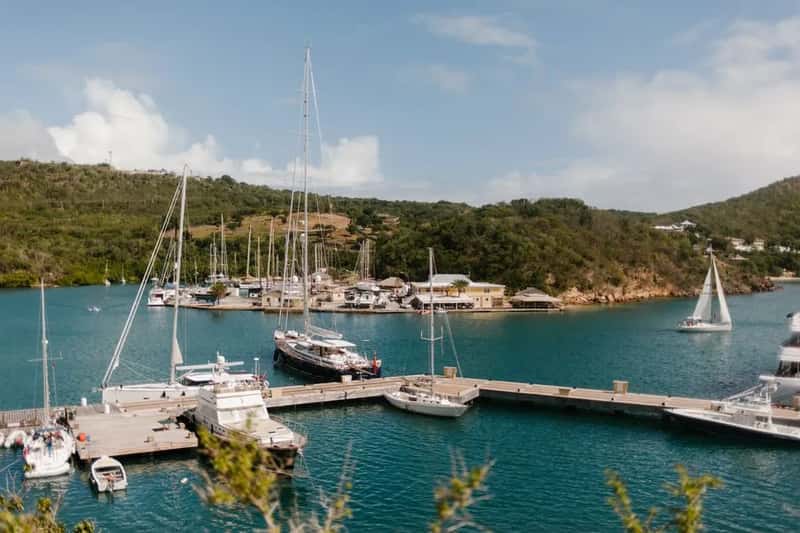
Antigua and Barbuda has positioned itself as one of the more accessible Caribbean options without feeling like a discount product. Antigua and Barbuda offers one of the most competitive citizenship programs in the Caribbean, with options starting from USD 230,000. That figure lines up with what other advisory sources report as the standard donation route into the country’s National Development Fund.
Newsweek’s reporting on the current wave of American interest specifically flagged this program as a template for how the Caribbean is pitching itself. While Europe remains a very popular option for Golden Visas providing temporary residency abroad, many Americans are looking at the Caribbean as an “efficient and accessible” way to get a second passport, according to Henley & Partners. Antigua and Barbuda tends to come up first in those conversations because processing is fast and the family inclusion rules are generous.
Grenada: the E-2 visa gateway back into the United States
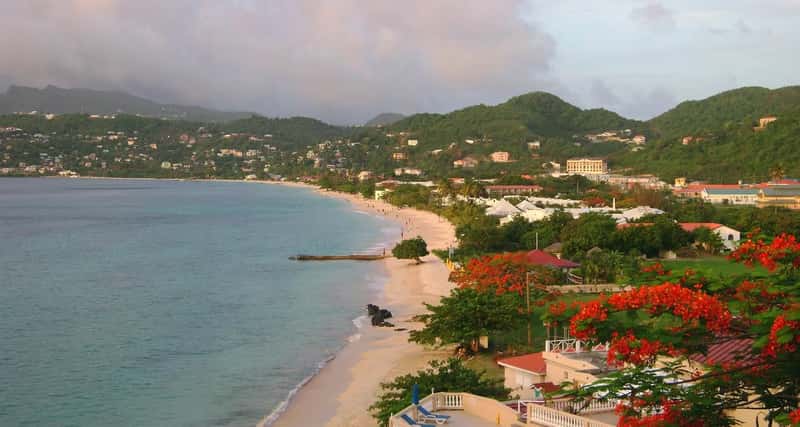
Grenada occupies an unusual niche because it is one of the few citizenship by investment countries with a bilateral treaty that grants its citizens access to the U.S. E-2 investor visa. That detail alone has made it a favorite among Americans who want a second passport but have no intention of cutting ties with the U.S. market. Combined with visa-free travel to the UK and Schengen area, Grenada functions less as an escape hatch and more as a business tool for people who already operate across borders.
Grenada is known for its E-2 US visa access, alongside St. Kitts and Nevis, which remains well known for being the oldest CBI program. The investment thresholds sit in a similar range to other Caribbean nations, and due diligence has tightened in recent years as the region works to keep pace with U.S. and EU compliance expectations. That tightening is generally viewed as a positive by serious applicants, since it protects the value of the passport over time.
Vanuatu: the fastest passport on the market

Vanuatu has built its entire pitch around speed and a strikingly clean tax structure, and it appears to be working. A Vanuatu passport provides access to 118 countries, including Hong Kong, Singapore, Russia, and several Latin American destinations, and applicants can include a spouse, dependent children under 25 in full-time education, and parents or grandparents over 50, with no visit or residence requirement. For Americans juggling business schedules across time zones, that lack of a residency obligation is often the deciding factor.
The tax picture is arguably even more attractive than the travel document itself. Vanuatu’s tax system offers what one industry researcher called the “cleanest fiscal proposition” for investors, with no personal income tax for residents and citizens, no capital gains or wealth taxes, and no inheritance or gift taxes. Pricing has also become more competitive: the minimum investment sits at $115,000, discounted to $90,000 until the end of 2026. That combination of price, speed, and tax neutrality explains why Vanuatu keeps showing up on shortlists compiled for American clients.
Türkiye: citizenship with a foothold in a major economy

Turkey occupies a different category entirely, offering something the Caribbean nations cannot: direct access to a large, diversified domestic economy alongside the passport itself. The Turkish program allows individuals to gain lifelong citizenship and access to a global financial hub, with visa-free travel to over 111 countries including Russia, Singapore, Jordan, and Hong Kong. For Americans with existing business interests in the Middle East, Central Asia, or the broader Mediterranean, that geographic positioning carries real weight beyond the travel perks.
Turkey also comes with a longer-term angle that few competitors can match. Turkey is a European Union candidate with the prerequisite to join later, and Turkish citizens are also eligible for the US E-2 investor visa, giving access to American markets. The standard route requires a real estate purchase, with Henley & Partners noting that Türkiye requires a minimum real estate investment of USD 400,000. That is a higher barrier than most Caribbean programs, but for investors who want tangible property alongside a passport, it tends to feel like a two-for-one rather than a straight expense.
Why the interest is accelerating now
None of this is happening in a vacuum. The number of citizenship by investment applications from US clients has increased by three to four times according to recent industry tracking, and the timing lines up with broader anxieties around healthcare costs, tax policy, and geopolitical instability. A recent Gallup survey found that 47% of American adults worry about whether they will be able to afford necessary healthcare in 2026.
There is also a tax argument that keeps surfacing in advisory conversations. This trend reflects growing concerns about the unique U.S. practice of citizenship-based taxation, which requires Americans to pay U.S. taxes regardless of where they live. One consultancy quoted its CEO describing the shift in blunt terms: “In 2016, American interest in citizenship or residency by investment was minimal. Today, it represents our largest market globally, with many high-net-worth individuals seeking legitimate paths to tax efficiency.” That said, obtaining a second passport does not automatically end U.S. tax obligations. Renouncing citizenship is a separate, more drastic step that carries its own exit tax implications for anyone with substantial assets.
What this shift actually means going forward
These five programs are not identical products competing for the same customer. St Kitts and Nevis and Antigua and Barbuda appeal to buyers who want a trusted, well-worn path. Grenada serves a narrower but very practical need for people who want to keep a foot in the U.S. business world. Vanuatu and Turkey sit at opposite ends of a speed-versus-substance spectrum, one prioritizing a fast, tax-neutral exit and the other offering a genuine economic foothold.
What ties them together is a broader recalibration among wealthy Americans about what a passport is actually for. It is no longer just a travel document. It has become a planning tool, alongside a trust or an offshore account, used to diversify risk rather than to make a dramatic break from the United States.