Most travelers only think about the flight in. Then a check-in agent or an immigration officer asks a simple question: how are you leaving? That one question can hold up a trip that is otherwise fully planned.
The rule exists mostly to prevent overstays. Airlines have their own reason to care, since most onward checks happen at airline check-in and the gate, because carriers face liability if a passenger is refused entry[1]. Below are five countries where proof of onward travel comes up in 2026, along with what each one actually expects.
Costa Rica

Costa Rica is one of the clearest examples. The US State Department’s entry list for the country includes a return ticket or proof of onward travel to another country[2]. The official tourism board also says the ticket can be a pre-purchased bus ticket or flight out of the country[3], and proof of passage on a cruise ship[3] counts too.
The check isn’t limited to airports. One 2026 guide says the rule applies at all entry points, including airports and land borders[4]. Travelers on a one way ticket should be careful, because airlines may require proof of onward travel before letting you board your flight to Costa Rica[5]. Overland travelers coming from Nicaragua or Panama face the same question at the border.
The Philippines
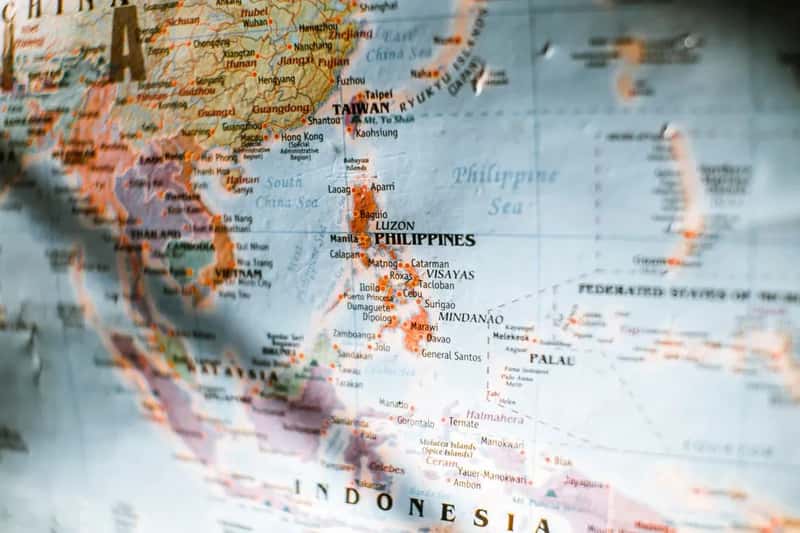
The Philippines lets many nationalities in without a visa, and that’s where the ticket rule matters. The default stay for the largest group of nationalities is 30 days on arrival[6]. Travelers without a visa should expect that the departure ticket must usually be dated within the permitted visa free stay[7].
Enforcement tends to start with the airline. One 2026 guide notes that airlines frequently enforce it at check-in, and immigration can ask on arrival[8]. Officers may also ask about money and lodging, since they can request proof of sufficient funds and confirmed accommodation[9]. Every foreign visitor also needs to complete the free eTravel registration within 72 hours before departure[10].
New Zealand

New Zealand is different because the rule is written into official guidance. Visitors from visa waiver countries are required to provide travel tickets or evidence of onwards travel and funds, and Immigration New Zealand can decide to ask for this on arrival[11]. Those visitors can stay up to 3 months, or 6 months if they’re from the UK[12].
There’s a small wrinkle worth knowing. If your next stop also has an onward rule, you may be asked to see that ticket too[12]. Immigration’s own operations manual lists confirmed or open dated tickets[13] as acceptable evidence, yet one 2026 guide says open dated tickets and vague plans to buy later are usually not accepted[14]. A confirmed booking is the safer choice.
Thailand
Thailand shows up on nearly every 2026 list of strict destinations. One guide sorts it into a group where airlines and immigration both check routinely[15], alongside Indonesia, the Philippines, Costa Rica, Peru and New Zealand. Another notes that Thailand and its regional neighbors ask for proof of onward travel at airport immigration even for visa free travelers[16].
A caveat applies here. Most of the detail comes from travel industry guides rather than a Thai government notice, and one source admits that not all countries enforce the rule equally, with some checking religiously and others rarely asking[17]. So check with your airline before departure, since it’s usually the first gatekeeper. Airlines have a strong incentive, with one guide citing fines of $3,000 or more per passenger[17].
China

China’s requirement applies to a specific route: visa free transit. The 240 hour (ten day) transit program covers travel to a third country or region, and it comes with the condition that you must have a confirmed onward ticket or itinerary, and enter through 1 of 64 approved ports[18]. Within that window, visitors may travel freely within the 24 provinces permitted for visa free transit[18].
China has also been running a broader visa free policy for short stays. For Canadian citizens, visas are not required for 30 days from 17 February 2026 to 31 December 2026[18], covering tourism, business and family visits. Eligibility differs by passport, so confirm your own nationality’s terms before booking.
Before You Fly

Keep a confirmed booking that leaves the country inside your permitted stay, and have it easy to pull up on your phone. Costa Rica’s guidance says showing your ticket on your phone is typically fine[5]. Then check your destination’s official immigration page, since rules can change with little notice.