Every March, the World Happiness Report lands with a familiar cast of characters at the top, yet the story behind each ranking is anything but repetitive. The 2026 edition, published by the Wellbeing Research Centre at Oxford in partnership with Gallup and the UN Sustainable Development Solutions Network, once again puts a handful of small, high-trust nations at the very top of the list. This year’s report leans heavily into how social media, generational shifts, and community bonds shape the way people rate their own lives on a simple zero-to-ten scale.
What makes this year’s top five interesting is not just who made the cut, but how they got there. A tiny Central American nation has muscled its way into the group for the first time, while the usual Nordic suspects continue to prove that generous welfare systems and social trust are hard to beat. Here is a closer look at the five countries currently topping the world happiness charts and the everyday habits, policies, and cultural quirks that seem to keep their citizens so content.
1. Finland: The Nine-Year Champion
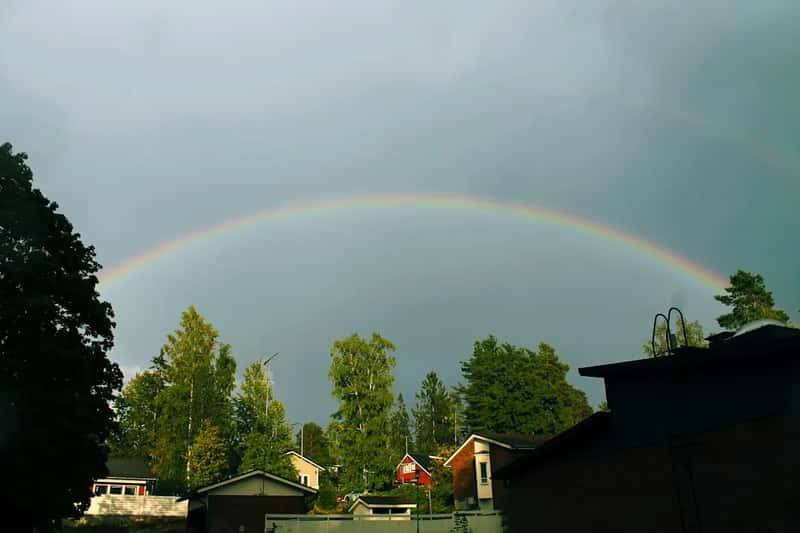
Finland has done something no other country has managed since the report began: hold the top spot for nine consecutive years. Finland leads the world in happiness for a record ninth year in a row, with Finns reporting an average score of 7.764 out of 10 when asked to evaluate their lives.[1] That kind of consistency is not an accident. It reflects a society built around universal healthcare, free education through university, and a social safety net that most Finns simply take for granted rather than celebrate.
Ask a Finn why their country keeps winning and you will likely get a shrug rather than a victory lap. Researchers point to something less flashy than fireworks: a deep, quiet trust in institutions and neighbors alike. In 2025, Finland ranks first for the eighth running year, showing that strong community ties, high social trust, and a close connection to nature create a sense of well-being.[2] Add long summer daylight, widespread access to lakes and forests, and a culture that genuinely values work-life balance, and the ingredients for sustained contentment start to make sense.
2. Iceland: Small Population, Big Resilience

Iceland climbed into second place this year, swapping positions with Denmark from the previous ranking. Iceland secures second place in the 2026 World Happiness Report, scoring highly for strong social cohesion and resilience, and despite its remote location, residents report feeling well supported and safe.[3] With a population smaller than many mid-sized cities, Iceland benefits from the kind of tight-knit social fabric that is nearly impossible to replicate in larger, more anonymous societies.
Icelanders also enjoy one of the world’s most generous parental leave systems and near-universal access to healthcare, both of which reduce the everyday anxieties that chip away at life satisfaction elsewhere. The country’s isolation, often assumed to be a drawback, seems instead to reinforce community reliance. When your nearest neighbor might be the person who helps you dig out of a snowstorm, trust becomes less abstract and more practical, and that practical trust shows up clearly in the survey data year after year.
3. Denmark: Equality as a Daily Habit

Denmark slipped one spot to third in 2026, but its formula for happiness remains largely unchanged. Denmark ranks third with its strong sense of community and good work-life balance, and people report high levels of satisfaction, particularly due to social security and equality.[3] The Danish concept of hygge, that cozy, unhurried appreciation for simple comforts, is often cited abroad, but the more substantial driver is structural: heavily subsidized childcare, strong labor protections, and a tax system designed to flatten extreme disparities in wealth.
Danes also tend to report shorter working hours than many of their European peers, which leaves more room for the kind of social connection that researchers consistently link to higher life evaluations. Bicycles outnumber cars in many Danish cities, public transit is reliable, and the general expectation that the state will catch you if you fall removes a layer of financial stress that weighs on citizens in less equal societies. It is this combination of safety net and free time that keeps Denmark near the summit year after year.
4. Costa Rica: Proof That Wealth Isn’t Everything

Perhaps the most striking story in this year’s report belongs to Costa Rica, which broke into the top five for the very first time. Costa Rica ranked fourth, marking the first time the Central American nation has entered the top 5.[4] This is a genuinely historic achievement, and it upends the assumption that only wealthy Western economies can produce deeply satisfied populations. Costa Rica ranks fourth, entering the top five for the first time and achieving the highest ranking ever for a Latin American country.[5]
What Costa Rica lacks in GDP per capita compared to its Nordic competitors, it more than makes up for in social connection and a sense of freedom. Costa Rica’s score is supported by strong freedom-to-choose metrics and a broader social-emotional profile that outperforms what GDP alone would predict.[6] The country’s famous “pura vida” outlook, its investment in public healthcare and education rather than a military, and its unusually strong extended-family networks all seem to compensate for what it lacks in raw economic firepower. It is, as researchers note, the clearest example yet that happiness is not purely a rich-country story.
5. Sweden: Stability Paired With Flexibility
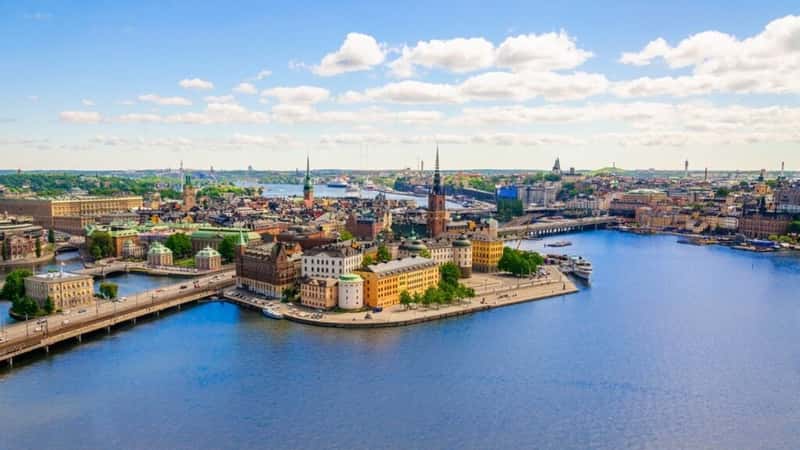
Rounding out the top five is Sweden, a country that has hovered near the summit of these rankings for as long as the report has existed. Sweden ranks fifth in the World Happiness Report, just behind Costa Rica, and combines economic stability with social equity, while flexible working arrangements and a good education system contribute to high levels of life satisfaction.[3] Swedish parents, for instance, are entitled to a lengthy shared parental leave, and flexible scheduling is common enough that balancing career and family rarely feels like an either-or decision.
Sweden’s economic model, often described as a mix of free-market capitalism and a robust welfare state, gives citizens both opportunity and a cushion against hardship. Public trust in institutions runs high, corruption is rare by global standards, and the education system consistently ranks among the best in Europe. Combined with generous parental benefits and strong labor protections, these factors help explain why Sweden keeps landing among the world’s most content nations, even as newer entrants like Costa Rica shake up the rest of the leaderboard.
What Ties These Five Countries Together
Despite their differences in geography, language, and income level, these five nations share a few unmistakable traits. This report highlights the importance of social support, trust and community in shaping life evaluations.[7] Every one of them scores exceptionally well on perceived freedom to make life choices and on the belief that someone would help them in a time of need, two factors that matter just as much as raw wealth when researchers crunch the numbers.
It’s also worth noting who is conspicuously missing from this list. The 2026 rankings mark the second year in a row that none of the English-speaking countries, New Zealand, Ireland, Australia, United States, Canada, and the UK, appear in the top 10.[1] That absence has fueled plenty of debate among researchers, some of whom point to declining youth wellbeing and heavier social media use in those countries as part of the explanation. The report’s authors have been careful to note that this isn’t about blaming technology outright, but rather about how it’s used and by whom.
The Bigger Picture Behind the Rankings

It helps to remember what these rankings actually measure. The survey uses nationally representative Gallup World Poll responses and asks adults to evaluate their lives on a scale from 0 to 10, from the worst possible life to the best possible life.[6] Researchers then use six variables, including GDP per capita, social support, healthy life expectancy, freedom, generosity, and perceptions of corruption, to help explain why some countries consistently outperform others, even though the ranking itself is based purely on self-reported life evaluations.
None of this means happiness is simple or that any government can copy-paste Finland’s policies and expect identical results. Culture, history, and geography all play a role that no spreadsheet can fully capture. Still, the pattern across these five countries is hard to ignore: strong social safety nets, high institutional trust, and a genuine sense of community consistently outperform sheer economic output when it comes to how people actually feel about their lives.
The lesson from this year’s report isn’t that people need to move to Helsinki or Reykjavik to find contentment. It’s that happiness, at a national scale, tends to grow wherever trust, fairness, and connection are treated as public priorities rather than private luxuries. Costa Rica’s rise proves that point better than any Nordic welfare state ever could, and that alone makes this year’s rankings worth paying attention to.