What makes a place exotic? Think landscapes you can barely imagine, wildlife found nowhere else, and cultures so distinct they feel pulled from another realm. Honestly, these destinations hold secrets that go far beyond typical vacation spots. Let me tell you, the world’s truly exotic corners don’t reveal themselves easily.
Sure, tropical beaches and clear waters are beautiful. However, the most exotic places on Earth offer something more elusive: a genuine sense of discovery. They’re locations that force you to reconsider what’s normal, where isolation has forged species and cultures unlike anything you’ve encountered. These are not just beautiful places; they’re reminders that our planet still harbors profound mysteries. Let’s dive in.
Madagascar: Where Evolution Took A Different Path
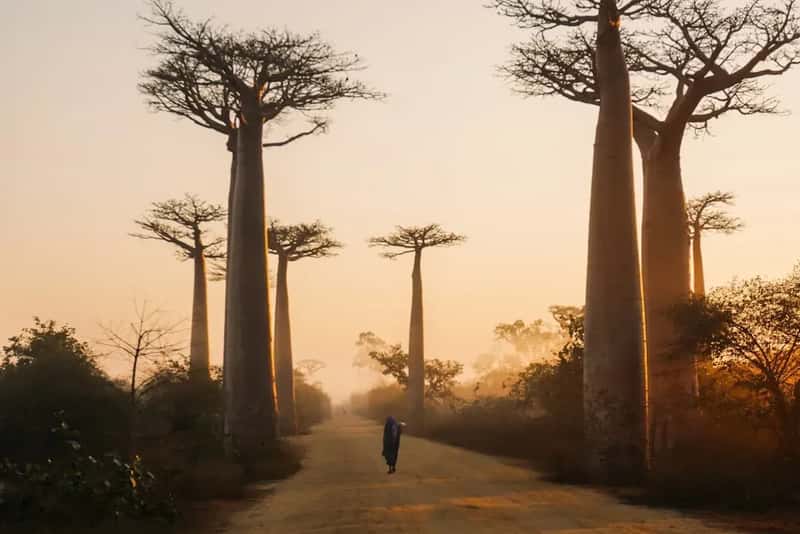
Madagascar stands apart as one of nature’s most radical experiments. Geographically isolated, Madagascar has developed unique ecosystems with many endemic species – 95% of the country’s reptiles, 89% of its plants, and 92% of its mammals (including more than 100 species of lemurs) are found nowhere else. Let’s be real, that’s extraordinary biodiversity packed onto one island roughly the size of Texas.
The famous ring-tailed lemurs, the iconic Avenue of Baobabs standing like ancient sentinels, and the otherworldly limestone formations called Tsingy create an almost surreal landscape. With 316 873 visitors recorded over the year, Madagascar is increasingly attracting travelers in search of nature, of authenticity and unique experiences.
Available statistics indicate that 248,140 international tourists visited Madagascar in the first three quarters of 2025, representing an increase of 9.13% compared to the same period in 2024. So tourism numbers are growing, which signals that more people are waking up to what this place offers. Still, the island feels undiscovered compared to mainstream destinations.
Bhutan: A Nation Measuring Happiness Over GDP
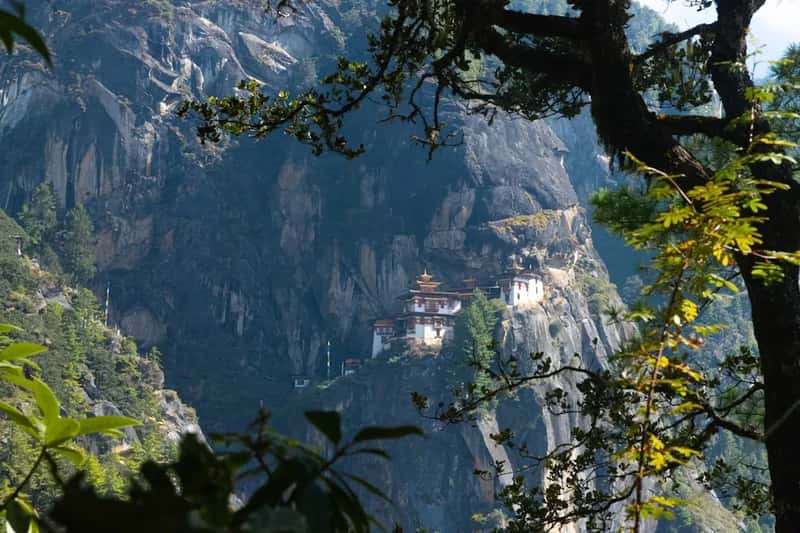
Tucked in the Himalayas between India and China, Bhutan operates on a philosophy that most governments would consider radical. The term ‘Gross National Happiness’ (GNH) was coined by Bhutan’s 4th King, Jigme Singye Wangchuck, in the late 1970s, who asserted, that ‘Gross National Happiness is more important than Gross Domestic Product.’ This isn’t marketing fluff. Progress in Bhutan is gauged using the Gross National Happiness Index, which incorporates nine domains and 33 indicators.
It’s hard to say for sure, but I think Bhutan’s approach makes it genuinely exotic in how it values cultural preservation and environmental stewardship above economic growth. International visitors to Bhutan are required to pay a Sustainable Development Fee (SDF) of US$100 per night. This “high-value, low-volume” tourism strategy maintains the country’s cultural integrity while limiting mass tourism.
The GNH Index value increased from 0.743 in 2010 to 0.781 in 2022. The country genuinely walks its talk, balancing development with traditions that stretch back centuries. Towering monasteries clinging to cliff faces, prayer flags fluttering in mountain winds, and a society where happiness is a constitutional priority all contribute to Bhutan’s otherworldly charm.
Papua New Guinea: The World’s Linguistic Treasure
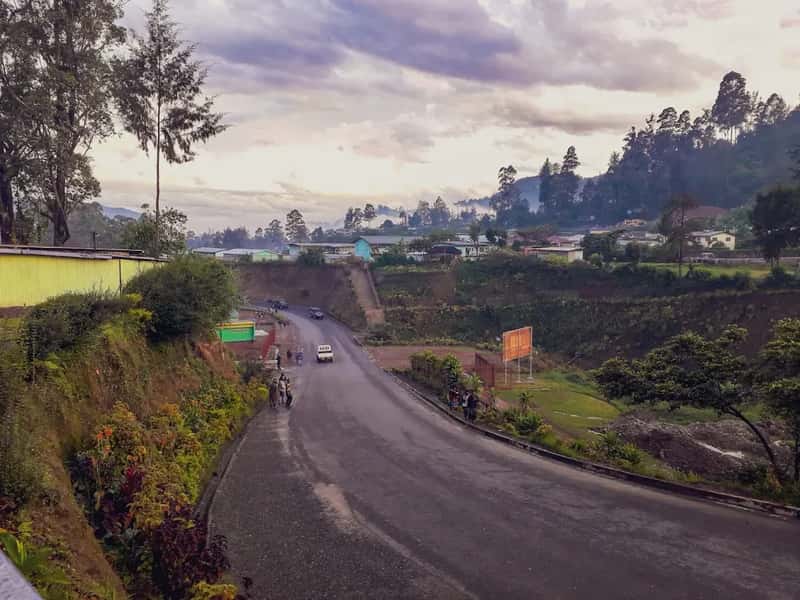
Here’s the thing: Papua New Guinea doesn’t just hold a few languages. Papua New Guinea has more languages than any other country, with over 820 indigenous languages, representing 12% of the world’s total, but the majority are spoken by fewer than a thousand people, and an average of only 7,000 speakers per language. Roughly more than one in ten of all languages on Earth exist in this single nation.
There are over 7,000 living languages globally, meaning that more than 10% of the world’s living languages are spoken in Papua New Guinea. The rugged mountains and dense rainforests have kept communities isolated for millennia, allowing distinct languages and cultures to flourish independently. PNG is considered the most culturally and linguistically diverse country .
I know it sounds crazy, but the average citizen actually speaks three languages fluently. Traditional villages maintain practices unchanged for centuries, and over 600 tribes with unique customs coexist. The biodiversity rivals the linguistic variety, with countless species of birds of paradise and other unique fauna that exist nowhere else.
Namibia: Desolate Beauty In Earth’s Ancient Desert
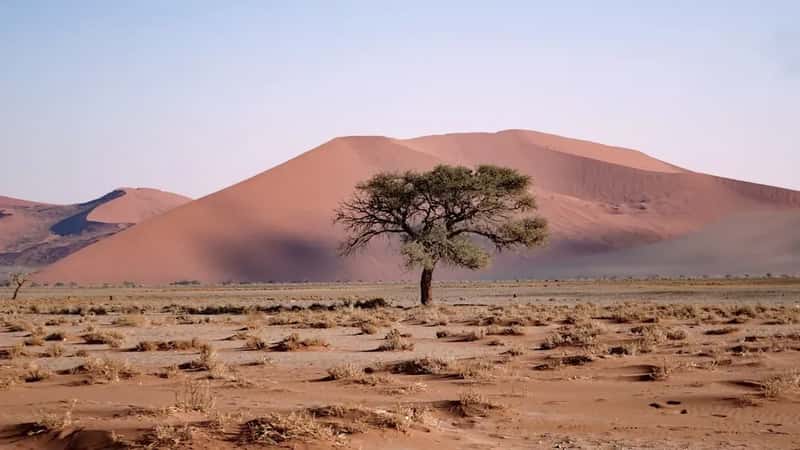
Considered the oldest desert , by at least 55 million years. Namibia’s Namib Desert presents landscapes so stark and beautiful, they feel almost alien. The dunes of Namib can reach a height of 350 meters, making it one of the highest dunes . These towering orange dunes shift constantly, sculpted by wind into forms that defy description.
Sossusvlei and Deadvlei offer some of the most photographed desert scenes on the planet. Dead acacia trees, blackened and preserved for nearly a millennium, stand frozen against white clay pans and red dunes. Home to just three million people and bigger than Texas, this is the world’s second least-densely populated country (after Mongolia). The emptiness feels wonderful, almost meditative.
Setting off at dawn, we reached the site before the crowds (a relative term here, as Namibia welcomed just 560,000 visitors in 2024). The Skeleton Coast, scattered with shipwrecks and shrouded in fog, adds an eerie dimension. Desert-adapted elephants, oryx, and other wildlife have evolved remarkable survival strategies in these harsh conditions, creating encounters you won’t find anywhere else.
Socotra, Yemen: The Most Alien-Looking Place On Earth
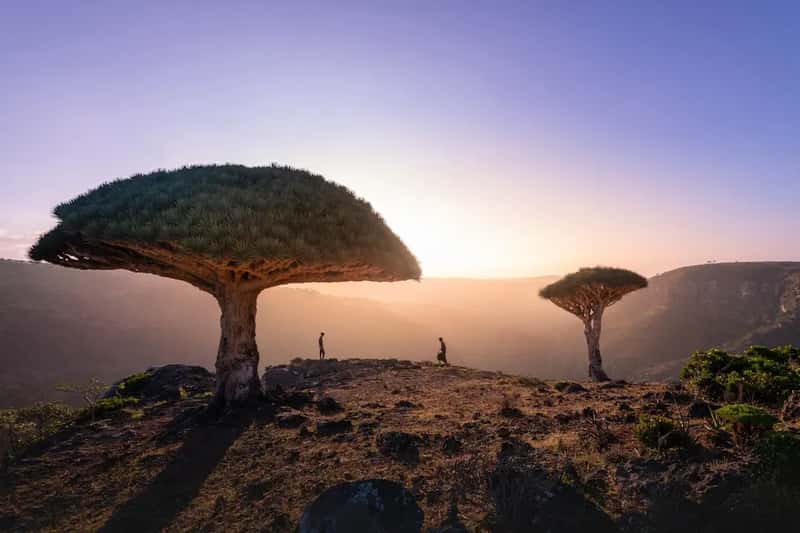
Often described as “the most alien-looking place on Earth,” Socotra is an archipelago of four islands in the Arabian Sea. The main island boasts some of the world’s strangest-looking flora, with the iconic Dragon’s Blood trees being the most famous example. These umbrella-shaped trees with red sap look like they belong on another planet entirely.
The isolation of this archipelago has created a biological treasure trove. Nearly a third of plant species found here exist nowhere else on Earth. Bottle trees, desert roses, and bizarre succulents dot landscapes that range from white sand beaches to mountainous interior regions. The cultural traditions of the Socotri people add another layer of intrigue to this remote outpost.
Access remains challenging, which has inadvertently protected Socotra’s unique environment. Limited infrastructure means visitors experience the island as it has existed for centuries. It’s a place where nature experiments freely, creating forms and species that challenge our understanding of what’s possible in botanical evolution.
Final Thoughts
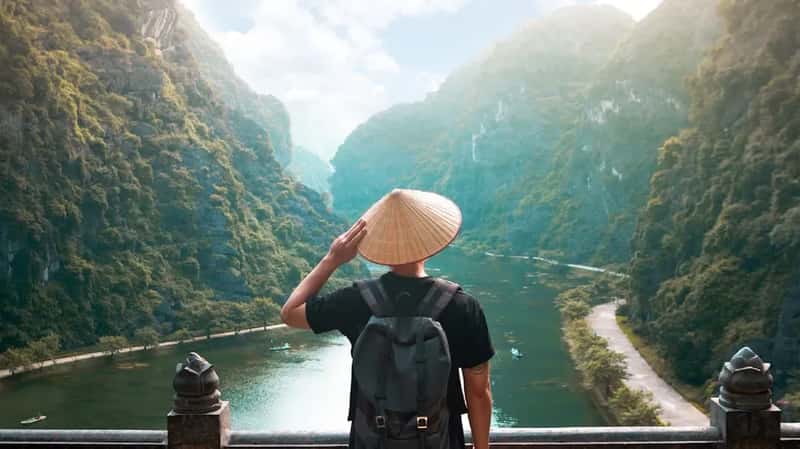
These five countries offer experiences that transcend ordinary tourism. They’re places where nature has been allowed to follow its own trajectory, where cultures have developed in relative isolation, and where the passage of time reveals itself in ways both subtle and profound. From Madagascar’s lemurs to Bhutan’s happiness philosophy, from Papua New Guinea’s linguistic wealth to Namibia’s desert silence and Socotra’s alien flora, each destination challenges our perceptions.
What strikes me most about these exotic corners is their fragility. Climate change, modernization, and increasing tourism all threaten to alter what makes them special. Yet they persist, offering glimpses into what our planet can become when left to its own devices. Have you considered visiting any of these extraordinary places? Each offers not just a journey to somewhere different, but a chance to see our world through entirely new eyes.