When people think about wealthy nations, the United States usually comes to mind first. But here’s the thing: wealth per person tells a completely different story than overall GDP. Some of the world’s wealthiest countries per capita are tiny, almost unknown places that most people couldn’t point to on a map. These nations have cracked the code on combining small populations with massive economic output, creating per-person wealth that puts America’s numbers to shame. Let’s dive into the real rankings based on GDP per capita, and trust me, you’ll be surprised by what you discover.
Luxembourg: The Undisputed Champion

Luxembourg takes the crown as the richest country per person on Earth, with a GDP per capita exceeding $135,000. This tiny European nation, smaller than Rhode Island, has built its fortune on being a global financial hub and tax haven for multinational corporations. The country’s strategic location between France, Germany, and Belgium has made it an ideal headquarters for countless international businesses seeking favorable tax conditions. What’s truly mind-blowing is that nearly half of Luxembourg’s workforce commutes in from neighboring countries, meaning the wealth is concentrated among an even smaller resident population than the numbers suggest.
Ireland: The Celtic Tiger Still Roaring

Ireland ranks second globally with a GDP per capita of around $106,000, a remarkable achievement for a nation that was once one of Europe’s poorest. The Irish economic miracle stems largely from aggressive corporate tax policies that attracted tech giants like Apple, Google, and Facebook to establish European headquarters in Dublin. Ireland’s pharmaceutical and technology sectors account for roughly three-quarters of its export economy. Critics argue these numbers are somewhat inflated by multinational profit-shifting, but the prosperity is real enough for Irish citizens who’ve seen living standards skyrocket over the past two decades.
Singapore: Asia’s Prosperity Powerhouse

Singapore’s GDP per capita hovers around $88,000, making it the wealthiest nation in Asia by a massive margin. This city-state transformed itself from a struggling port city in the 1960s to a global financial center through strict governance, zero tolerance for corruption, and strategic economic planning. Singapore’s success comes from its position as a critical shipping hub, with about one-fifth of the world’s cargo containers passing through its ports annually. The government’s sovereign wealth fund manages hundreds of billions in assets, and strict meritocracy policies ensure talent rises regardless of background, creating an environment where business thrives.
Qatar: Energy Wealth Concentrated
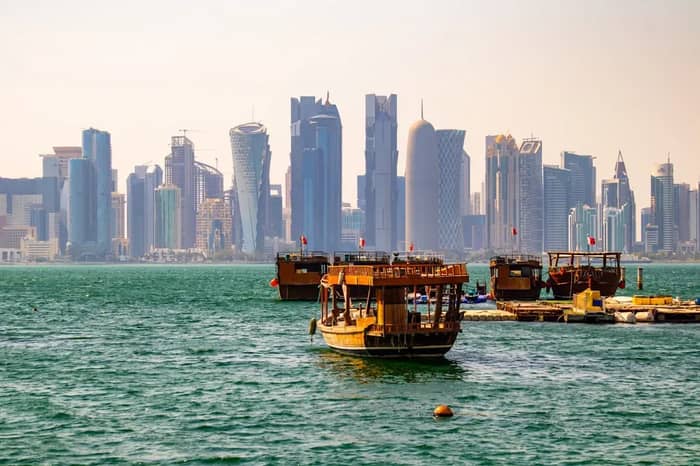
Qatar claims the fourth spot with a GDP per capita of around $85,000, fueled almost entirely by natural gas reserves. The tiny Persian Gulf nation sits atop the world’s third-largest natural gas reserves, and liquefied natural gas exports have made its roughly 2.9 million residents extraordinarily wealthy on paper. Petroleum and natural gas still account for over 70 percent of government revenue. The catch here is that only about 300,000 Qatari citizens actually exist among the population, with the rest being foreign workers who don’t share equally in the wealth distribution, making the per-citizen wealth even more staggering than the headline numbers suggest.
Switzerland: Precision, Privacy, and Prosperity

Switzerland rounds out the top five with GDP per capita around $82,000, built on centuries of banking secrecy, precision manufacturing, and political neutrality. Beyond banking, Switzerland dominates high-value exports like pharmaceuticals, watches, and specialized machinery that command premium prices worldwide. The country’s success also stems from world-class infrastructure, exceptional education systems, and a business-friendly regulatory environment that balances worker protections with corporate flexibility in ways most nations struggle to achieve.
Wealth doesn’t have to be a curse when managed responsibly. The Norwegian Government Pension Fund Global, funded by North Sea oil revenues, has grown to over $1.6 trillion according to 2024 figures, making it the world’s largest sovereign wealth fund. Unlike many oil-rich nations that squandered their resources, Norway invested its proceeds into a fund that will support future generations long after the oil runs dry. The country balances its petroleum wealth with strong manufacturing, fishing, and renewable energy sectors, creating economic resilience that few resource-dependent nations achieve.
Where Does the U.S. Actually Rank?

The United States ranks somewhere between 8th and 12th globally, depending on the measurement methodology, with GDP per capita around $76,000 according to 2024 World Bank figures. America’s massive economy generates incredible total wealth, but divided among 335 million people, the per-person numbers don’t compete withthose of these smaller, more concentrated economies. The U.S. faces challenges these tiny nations don’t encounter, including vast geographic distances, diverse regional economies, and obligations as a global superpower that drain resources into military spending and international commitments. Still, for a nation of its size and complexity, maintaining per-capita wealth in the top dozen globally represents a significant achievement that often gets overlooked in discussions about economic decline.
The reality is that per-capita wealth tells a fundamentally different story than total economic might. These small, strategically positioned nations have leveraged unique advantages like natural resources, geographic location, favorable tax policies, or centuries of accumulated financial expertise to create extraordinary prosperity for their citizens. The lesson here isn’t that bigger is better, but that smart economic policies, strong institutions, and sometimes just plain luck can create wealth concentrations that defy expectations. What surprises you most about these rankings? Tell us in the comments.