There’s a particular kind of retirement daydream that involves palm trees, slow mornings, and a bank account that finally stops shrinking every month. For a long time, that dream came with a catch: you either paid a fortune for comfort or you saved money by giving up things like reliable internet, decent hospitals, or a grocery store that carried more than three brands of anything. That trade-off has largely disappeared.
A combination of stronger global infrastructure, mature expat communities, and genuinely competitive healthcare systems means retirees today can spend a fraction of what they would in the United States or Western Europe while still having fast wifi, English-speaking doctors, and a Costco run within reach. The six countries below represent some of the clearest examples of that shift, each with its own visa path, price point, and personality.
Portugal: European polish at a fraction of the price

Portugal keeps showing up on retirement shortlists for a simple reason: it delivers a Western European lifestyle, complete with EU healthcare standards and centuries-old architecture, at prices that would be unthinkable in France or Germany. In June 2026, the cost of living in Portugal is 31 percent lower than in the USA, including rent, and almost 27 percent lower than in the UK, according to Numbeo. Outside Lisbon, a couple can genuinely live well without stretching their budget thin. A couple can comfortably live in a small town in Portugal for €1,500-2,000 for a month.
The main entry route for retirees is the D7 visa, sometimes called the Passive Income Visa. As of 2026, the D7 Visa income minimum is approximately €920/month (€11,040/year) for a single applicant. Beyond the paperwork, the appeal is the everyday texture of life there. English is widely spoken in coastal towns, healthcare is EU-standard, and crime rates are among the lowest in Europe. Processing isn’t instant, though; expect the visa route to take several months before you’re settled.
Mexico: proximity, comfort, and a familiar rhythm

Mexico remains the default choice for a lot of North American retirees, and the reasons haven’t really changed in years. The appeal is clear: proximity to the U.S. and Canada (often just a few hours’ flight), a low cost of living, excellent healthcare in major cities, and a huge and welcoming expat network. Day to day spending stays modest even in comfortable circumstances. A couple can retire in Mexico with a monthly income of $2,000 to $2,500, and a single person can live in Mexico for about $1,500 to $2,000 monthly.
Modern conveniences aren’t a compromise here, either. You can live a very comfortable life here on a modest budget, and many everyday conveniences (like malls, Costco/Walmart, cinemas, high-speed internet) are readily available, especially in areas with big expat communities. Healthcare has real depth of options too. The country features a two-tiered healthcare system where legal residents can join the public systems, IMSS or INSABI, for very low-cost care, while many expats prefer the private system, which offers excellent facilities, English-speaking doctors, and immediate access to specialists at a fraction of U.S. costs. For those wanting flexibility before committing to residency, tourists get generous breathing room. With up to 180 days visa-free entry for tourists, Mexico also offers flexibility for “snowbirds” who want to split time north and south.
Panama: the dollar economy built for retirees

Panama has spent decades actively courting foreign retirees, and it shows in how the system is built. Panama’s Pensionado visa grants permanent residency based on a lifetime pension of at least USD 1,000 (PAB 1,000) per month, plus USD 250 per dependent. Approval also comes with a legal safety net most countries don’t offer. Law 6 of 1987 gives Pensionados and retirees some of the world’s strongest legally mandated discounts, including reduced prices on medicines, restaurants, utilities, airline tickets, hotels, and entertainment, enforced by the consumer-protection agency ACODECO.
Because the country runs on the U.S. dollar, there’s none of the currency anxiety that can complicate budgeting elsewhere. Panama has one of the most stable economies in Latin America, and it uses the U.S. dollar as legal tender alongside the Panamanian balboa, which helps reduce currency volatility for retirees receiving pensions from abroad. Daily costs vary a lot by region, but living well doesn’t require a big budget. A couple can live comfortably on $2,000-3,000 per month. Healthcare access is strongest near the capital, so location matters more here than in some other countries on this list.
Costa Rica: pura vida with public healthcare included
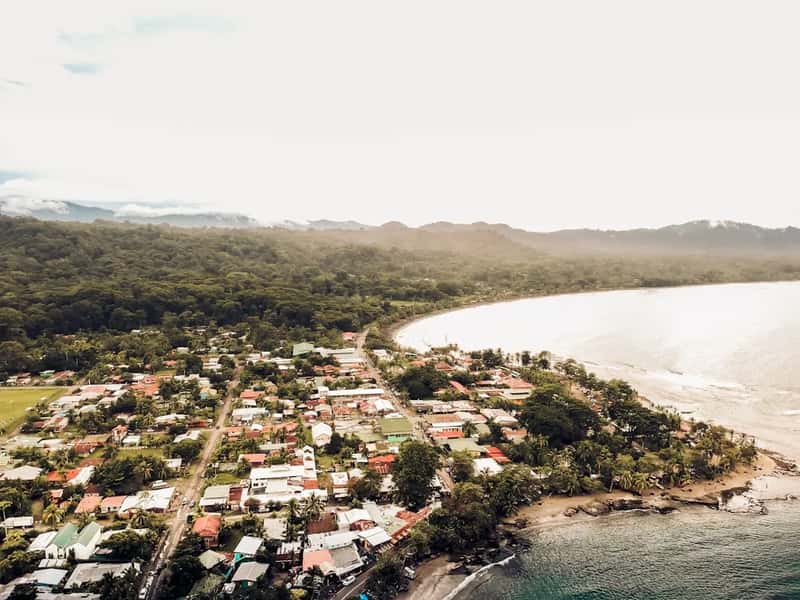
Costa Rica pairs a laid-back reputation with a healthcare system that genuinely outperforms expectations. Costa rica’s universal healthcare system ranks among the world’s best, consistently outperforming many developed nations including the United States, and Pensionado visa holders gain immediate access to this system through mandatory CCSS enrollment. The system’s global standing isn’t just marketing either. This system consistently ranks among the world’s top healthcare providers, placing 36th globally according to World Health Organization assessments, notably higher than the United States ranking.
Qualifying for residency is straightforward on paper. The Pensionado visa is designed for retirees with a monthly pension of $1,000 or more from a single source, such as Social Security or a private pension. Public healthcare contributions stay modest relative to what that coverage delivers. The CAJA Costarricense de Seguro Social (CCSS) is the country’s universal healthcare system, and legal residents including Pensionado visa holders can enroll for monthly contributions of approximately $100 to $200 USD based on declared income. Most people end up spending more than the visa minimum in practice, since a genuinely comfortable lifestyle typically runs somewhat higher than the bare qualifying threshold.
Malaysia: Southeast Asia’s quiet healthcare standout

Malaysia doesn’t get talked about as much as Thailand, but retirees who’ve looked closely often end up preferring it. While Thailand and Bali dominate the conversation, Malaysia quietly offers what may be the strongest overall package for retirees in the region: widespread English proficiency, world-class private hospitals at a fraction of Western costs, modern infrastructure in Kuala Lumpur that rivals Singapore, and a multicultural society. The healthcare pricing gap is especially striking. Malaysia’s private hospitals rank among Asia’s best, with English-speaking staff and costs 60-80% lower than equivalent care in the US or Europe, and a doctor’s visit runs $10-20.
The visa landscape has tightened noticeably since the pandemic-era relaunch, and it’s worth knowing that going in. Before 2021, Malaysia My Second Home was a straightforward proposition: show roughly RM 500,000 in liquid assets ($110,000), prove RM 10,000 a month in offshore income, place a fixed deposit in a Malaysian bank, and receive a 10-year renewable social visit pass. The current structure asks for more. The program underwent a major overhaul in 2021 with significantly higher financial requirements, and the current 2026 structure features two tiers: Silver (5-year pass) and Gold (15-year pass, introduced in late 2024). Daily living costs, though, remain genuinely low. A couple lives comfortably on $1,500 to $2,200 per month including rent, food, and private healthcare.
Colombia: affordability with an eternal spring climate

Colombia has quietly become one of the more talked about retirement destinations in Latin America, and much of that reputation centers on Medellín. Medellín is slightly pricier than some other Colombian options but still very affordable, with some calling it the best cost-of-value city, and an eternal spring climate. That climate consistency is a genuine draw for retirees tired of harsh winters or brutal summers, since the temperature barely shifts across the calendar year.
Healthcare and lifestyle quality tend to land well above what the price tag would suggest. Both these countries offer good healthcare and lifestyle for a low cost. Modern comforts are easy to find in the bigger cities, where shopping centers, reliable internet, and a growing international community have made the transition smoother for newcomers than it might have been a decade ago. Compared with pricier Latin American options like Panama, Colombia tends to appeal most to retirees who want lower costs without sacrificing a genuine city life, museums, restaurants, and a real urban pulse rather than a quiet beach town.