English rarely gets treated as a foreign language anymore in large parts of the world. In some countries it sits quietly behind a dozen other languages, popping up mainly in classrooms or courtrooms. In others, it has slipped into daily conversation so thoroughly that people barely notice they are switching between their mother tongue and English within the same sentence.
The six countries below represent a mix of histories, from former British colonies to nations that simply decided, decades ago, that English fluency was worth the investment. What ties them together is that English is not just taught there. It gets used, out loud, in shops, offices, classrooms, and living rooms.
Philippines

English holds co-official status in the Philippines alongside Filipino, a legacy of the American colonial period that began after the Philippine-American War in 1902. The two official languages in the Philippines are Filipino and English, with at least 75% of the population showing competency in Filipino and 47% showing competency in English according to a 2023 poll by Social Weather Stations. That is not a small number when you consider how many people that represents across more than a hundred million residents.
Children start young. Children in the Philippines start learning English in the first grade of elementary school, from age six and up. The result shows up in daily life through “Taglish,” where speakers switch fluidly between Tagalog and English within the same sentence or conversation. In the 2025 EF English Proficiency Index, the Philippines holds the number two rank in Asia, excluding native-speaking Singapore, and 28th globally, placing it ahead of other major outsourcing hubs like India and Vietnam.
Singapore

Singapore’s relationship with English is unusual because it is a country with four official languages, yet one of them has quietly become dominant in ordinary households. English functions as the de facto lingua franca and medium of administration, education, and commerce, even though Malay is designated as the national language. That gap between symbolic status and actual daily use is worth pausing on.
Census data backs this up clearly. According to Singapore’s 2020 Census, English became the language most frequently spoken at home among residents aged five and over, rising from 32.3% in 2010 to 48.3% in 2020. Workplaces follow the same pattern, since the majority of Singaporeans use English most frequently at work, which aligns with the language’s lingua franca status. Locals also have their own casual register, Singlish, which layers English with grammar and vocabulary borrowed from Malay and various Chinese dialects.
Nigeria
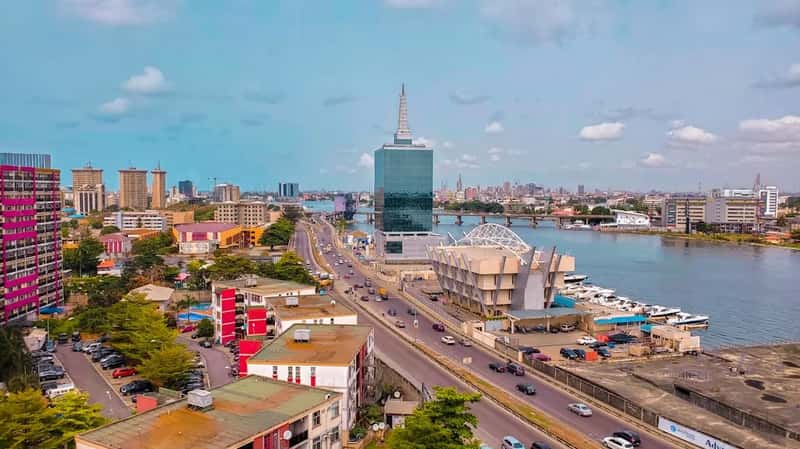
Nigeria presents a slightly different picture, one where English holds formal authority while a homegrown creole handles most real conversation. The country has only one official language, English, despite having over 500 languages spoken across its regions. Government documents, court proceedings, and university lectures all run in standard English by policy.
Step outside those formal settings, though, and the language shifts. The reality is rather like having two common languages: English for formal settings, pidgin for everyday life. Nigerian Pidgin has grown into something enormous in its own right, since Nigerian Pidgin is the most spoken language in Africa in 2025, with 121 million speakers, ranking it 14th globally, ahead of Egyptian Arabic, Hausa, and Swahili. Because it is built on an English vocabulary base, most Nigerians move between the two forms without much friction.
South Africa

South Africa recognizes twelve official languages, a constitutional choice that reflects the country’s complicated history rather than any single dominant tongue. Even so, English is one of twelve official languages, and though it is the first language of a relatively small share of the population, it dominates business, higher education and national media. That imbalance between native speakers and practical influence is one of the more distinctive features of South African life.
Regional patterns tell an interesting story too. English is the second-largest language, at 14.4% of the provincial population, in KwaZulu-Natal after isiZulu. Meanwhile English is the primary language used in parliamentary and state discourse, though all official languages are equal in legal status. Walk into a Johannesburg boardroom or a Cape Town university lecture hall and English is almost certainly the language you will hear, even if it was nobody’s first language growing up.
Netherlands
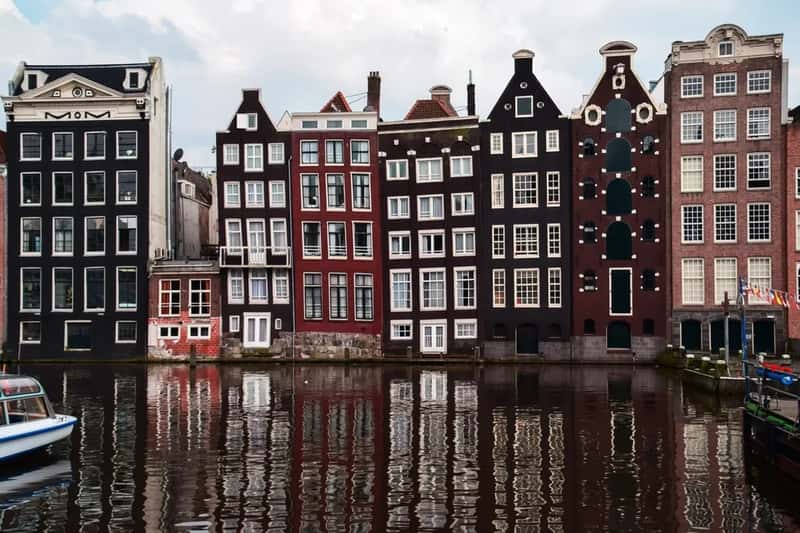
The Netherlands does not have English as an official language at all, yet it consistently tops global proficiency rankings ahead of countries where English actually holds official status. The Netherlands is the most proficient English-speaking country on Earth, topping the EF EPI 2025 with a score of 624, where English is taught from primary school and is near-universal in business, higher education and daily life. That score puts it comfortably in the index’s highest proficiency tier.
Media habits play a large role in why this happened. Dutch television rarely dubs foreign content, so children grow up hearing English constantly from cartoons to news broadcasts. Visit any Dutch city and the practical effect is obvious, since walking into any shop, university lecture hall, or government office in Amsterdam, you will find English spoken with almost native ease. Universities have leaned into this too, offering large numbers of degree programs taught entirely in English rather than Dutch.
India
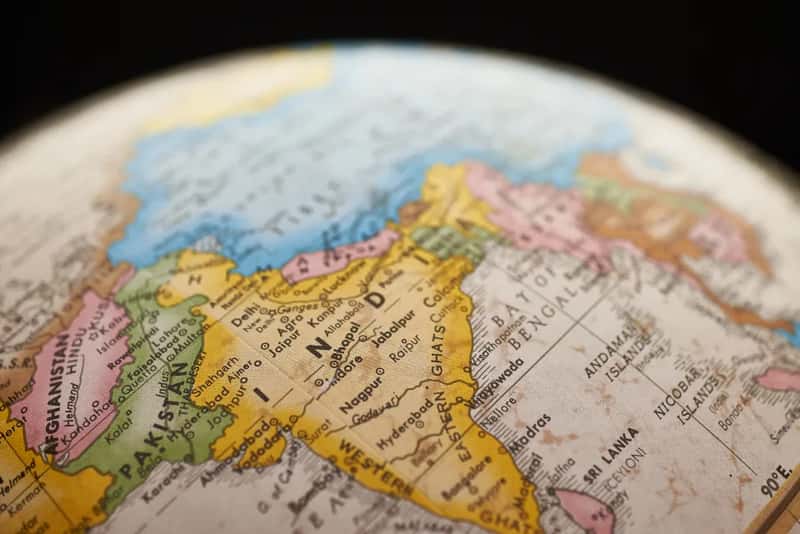
India’s case is shaped by sheer scale. English is one of the country’s official languages alongside Hindi, a status that dates back to British colonial administration and has persisted because no single Indian language could realistically replace it nationwide without stirring regional tension. It functions as the working language of the Supreme Court, much of the federal bureaucracy, and higher education, particularly in fields like law, medicine, and engineering.
What makes India notable is not the percentage of English speakers, which remains a minority of the overall population, but the raw number those percentages translate into. Even a modest share of a population exceeding 1.4 billion people produces one of the largest English-using communities on the planet, concentrated heavily in cities, corporate offices, and call centers. English also serves as a practical bridge language between Indians who speak different regional mother tongues, filling much the same role that Nigerian Pidgin or Singlish plays elsewhere, just with more formal backing.
Common threads across these six nations

Looking at these countries side by side, a pattern emerges that has little to do with geography and everything to do with history and necessity. Former British and American colonial ties explain why English took root in the Philippines, Nigeria, South Africa, Singapore, and India in the first place. The Netherlands stands apart as proof that colonial history is not required, since a small domestic language market combined with heavy media exposure can produce similar results through education alone.
What all six share is a practical reality rather than a symbolic one. English in these places is not reserved for tourists or diplomats; it shows up in market stalls, office memos, television schedules, and casual conversation among people who technically share a different native language. That everyday, unglamorous use is really what separates a country where English is spoken from one where English is merely taught.