Retirement math in the United States has gotten harder to make work. The average Social Security check now sits at roughly two thousand dollars a month, and for a lot of people that number simply does not stretch far enough against American rent, groceries, and healthcare premiums.
Across the Atlantic, though, a handful of European countries still offer something increasingly rare: a genuinely comfortable lifestyle on that same modest monthly income. The details vary quite a bit from one country to the next, from visa rules to tax treatment to the price of a decent apartment, but the six destinations below have earned their reputations for a reason.
Portugal

Portugal has spent the better part of a decade building a name as Europe’s most welcoming country for retirees stretching a fixed income. The country offers the lowest income bar of any major Western European visa, with the D7 passive-income visa asking only €870 a month of stable income, alongside the cheapest cost of living in Western Europe and public healthcare for residents. That threshold sits comfortably below the average Social Security check, leaving real breathing room in the monthly budget.
Where you settle matters enormously. Lisbon’s overall cost of living, including rent, runs 30 to 50 percent lower than places like New York City or San Francisco, and smaller cities push those savings even further. Living in Braga or Coimbra costs approximately $1,400 to $1,700 per month, and while Portugal costs more than Southeast Asia or Latin America, it offers EU healthcare access, a mild climate, and English widely spoken. There is also a well-established American community there now, which makes the adjustment period noticeably less lonely for new arrivals.
Spain

Spain trades a bit of Portugal’s affordability for stronger infrastructure and a livelier day-to-day pace, and for many retirees that trade is worth it. Spain functions as the runner-up for infrastructure and sunshine, with its Non-Lucrative Visa requiring around €2,400 a month, while healthcare access remains among the best in Europe. The visa threshold is higher than Portugal’s, but a typical Social Security benefit still clears it for a single retiree in most regions.
Coastal cities like Valencia and Malaga have become particular favorites among American arrivals. Living in Valencia or Malaga costs approximately $1,500 to $1,900 per month, and even the upper end still leaves a monthly surplus on the average benefit, while Spain’s infrastructure and healthcare are among Europe’s best. Private supplemental insurance is common among expats, typically running somewhere in the range of seventy to a hundred and ten euros a month, which is a reasonable price for peace of mind on top of the public system.
Greece

Greece has quietly become one of the most talked-about retirement destinations in Europe over the past year, and the numbers back up the buzz. International Living’s 2026 Global Retirement Index placed Greece at number one for the first time in the index’s 35-year history, citing a combination of climate, healthcare access, housing affordability, and an increasingly retiree-friendly residency landscape. Part of the appeal is tax related, too, since Greece offers one of Europe’s most attractive tax regimes for retirees, with a 7% flat tax on foreign pension income subject to qualification, and healthcare access remains strong while the cost of living stays lower than Italy or France.
On the ground, that translates into real affordability. In Chania, a furnished two-bedroom, two-bathroom apartment in a nice area rents for around $860 per month. A single retiree living modestly in a smaller city or on one of the islands can often keep total monthly expenses, rent included, well under fifteen hundred dollars, leaving a meaningful cushion from an average Social Security check.
Italy

Italy sits at a slightly higher price point than its southern European neighbors, but the tradeoff is a healthcare system and cultural depth that few countries can match. Italy’s public health service is among the best in the world, and its Elective Residence Visa, which requires around €2,583 a month of passive income, is built for retirees who won’t work. That income requirement is steep for a single average Social Security recipient, though couples combining two modest benefits, or retirees with a pension on top of Social Security, often clear it without issue.
Location makes a real difference in Italy more than almost anywhere else on this list. Move to a town of under 20,000 people in the south and you can access a 7% flat tax on foreign income for 10 years, and costs run notably higher in the north, with Milan around €2,500, than in the south, so location matters a great deal. Southern regions like Puglia, Calabria, and Sicily offer a slower pace and dramatically lower housing costs than the country’s northern cities.
Croatia
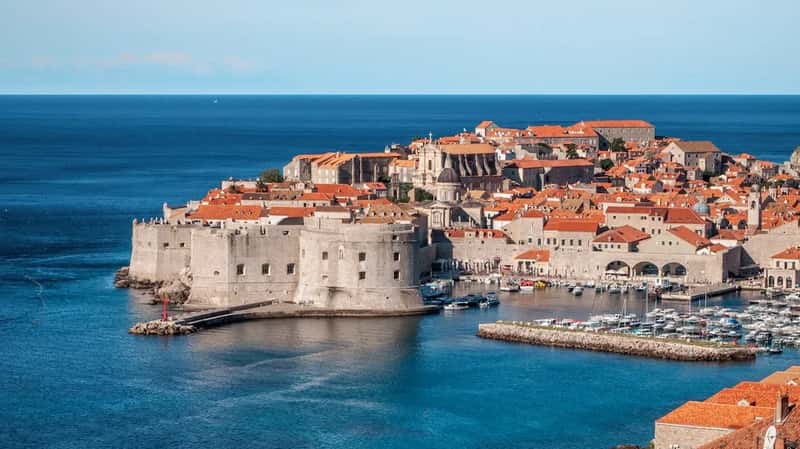
Croatia has become one of the more interesting additions to the European retirement conversation in the past couple of years, largely because it manages to combine EU membership with prices that still feel distinctly Eastern European. The country’s residence permit for financially independent persons requires proof of stable passive income, private accommodation, and health insurance, but the bar sits well below what’s asked in Spain or Italy. Among the cheapest places to retire in Europe are Bulgaria, Romania, Albania, inland Portugal, parts of Spain, and Croatia outside its peak coastal zones.
The Adriatic coastline gives Croatia a climate and scenery comparable to Italy’s, but at a noticeably gentler price, especially once you move away from Dubrovnik and the busiest summer resort towns. Inland cities and the Istrian peninsula, in particular, offer a mix of affordable rents, walkable historic centers, and a slower, more manageable pace of life for retirees on a fixed budget. Healthcare quality varies by region, so most expats supplement the public system with a modest private policy for added coverage.
Bulgaria

Bulgaria is, by most measures, the least expensive country in the European Union, and that fact alone makes it worth a serious look for anyone trying to stretch Social Security as far as it will go. According to Eurostat’s data, in 2024 Bulgaria’s overall price level was 39% below the EU average, the lowest in the EU. The country also completed a major transition in January 2026, since Bulgaria officially adopted the euro in January 2026, which has made managing finances there noticeably simpler for foreign residents.
The residency path is refreshingly accessible too. The Bulgaria retirement visa allows foreign retirees to live in the country legally, provided they can demonstrate a stable passive income of at least USD 800 per month from pensions, annuities, or investments outside Bulgaria. On top of that, a 10% flat tax on worldwide income including pensions, a cost of living roughly half that of Western Europe, EU membership, and a mild climate with over 300 days of sunshine per year make Bulgaria an unusually generous option for retirees whose Social Security check is on the smaller side.