Something remarkable is happening across parts of the world: religion is quietly losing its grip on entire societies. According to WIN/Gallup International global polls, the share of people identifying as “not a religious person” has grown substantially over decades, and as of 2026, around 30% of people globally describe themselves as non-religious, while roughly one in ten declare themselves “convinced atheists.” Yet this global shift is far from uniform. Pew Research data suggests that people living in Europe, North America, and East Asia are distinctly less religious, while countries in Africa, the Middle East, South Asia, and Latin America remain among the most devout. The following six countries represent some of the clearest, most documented examples of societies where faith has retreated furthest from everyday public life.
1. China – The World’s Least Religious Nation
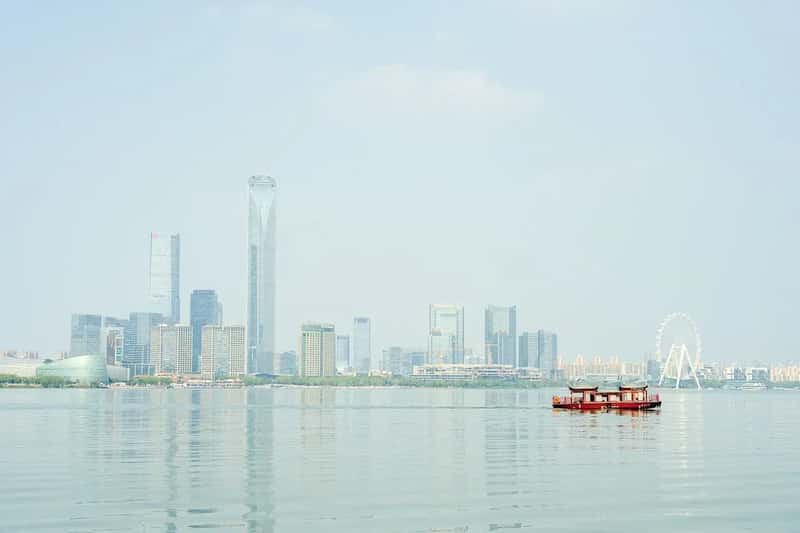
China holds the distinction of being the least religious country in the world, with less than 10% of its residents stating that they feel religious. This is an extraordinary figure for the world’s most populous nation, and it reflects decades of deliberate state policy. In the Asia-Pacific region specifically, only 3% of Chinese individuals consider religion important in their lives, placing it at the very bottom of global religiosity rankings by a significant margin.
China ranks as the sixth most atheist country by non-religiousness rate at roughly 52%, though combined with low reported religious importance, its overall secular profile is arguably the most pronounced of any large nation. The legacy of Communist Party governance, which historically discouraged religious practice and promoted atheism as an official ideology, has shaped generations of citizens who treat faith as largely irrelevant to daily life. China, Estonia, the Czech Republic, and Japan have all developed significant populations of unaffiliated or atheist individuals, but China’s scale makes its secularism a global outlier.
2. Czech Republic – Europe’s Most Atheist Nation
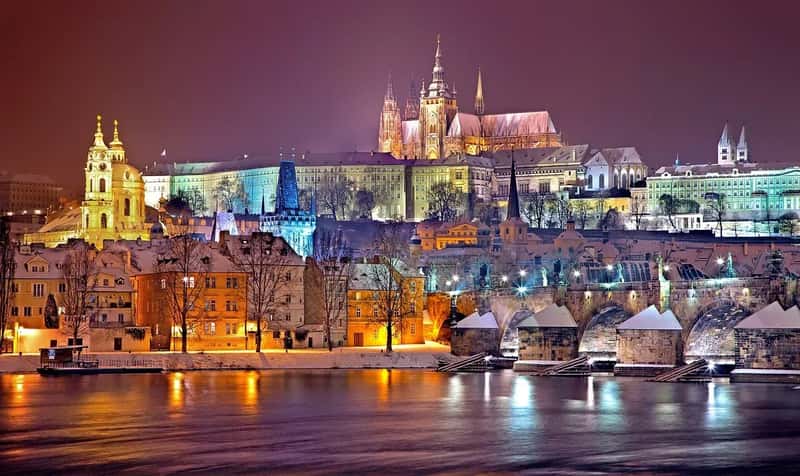
The Czech Republic leads Europe as a notably atheist country, with a non-religiousness rate of roughly 78%, while Estonia and Japan follow with around 60% each. That figure is striking given the Czech Republic’s historically Catholic roots, but the reasons behind it are well documented. The nation experienced a significant decline in religious affiliation largely influenced by its history of Communist rule, which promoted atheism as the dominant ideology, and the country’s embrace of secularism, combined with social and cultural shifts, has led to a society where the majority identifies as non-religious.
Most people in Uruguay, the Netherlands, and New Zealand had no religious affiliation as of 2020, joining China, North Korea, the Czech Republic, Hong Kong, Vietnam, Macao, and Japan – which were already in this category by 2010. The Czech Republic, however, stands distinctly apart within Europe. Among EU countries, it reports some of the highest rates of people with no belief in any sort of spirit, god, or higher power, and generations that grew up under state-enforced atheism passed that secular worldview onward through family culture, schools, and public discourse.
3. Sweden – Secular by Prosperity and Policy
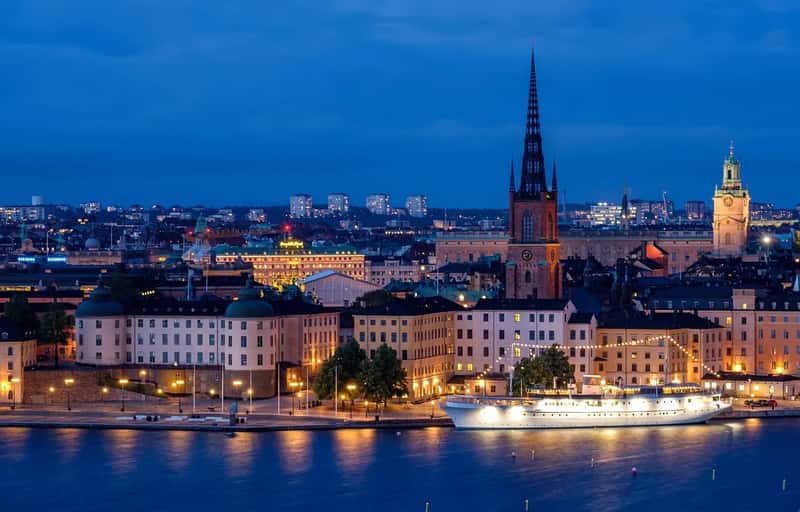
Sweden is widely regarded as among the most secular countries in the world. Surprisingly, a majority of its citizens retain formal membership in the Lutheran Church, but active religious practice is exceptional. Religion has long been treated as a cultural heritage rather than an individual identity, and public life is highly secular. The country’s progressive social policies and focus on individual liberty have steadily reduced the influence of religion in Swedish society. A 2023 Pew Research Center survey found that 52% of Swedish adults are religiously unaffiliated, with only 10% of this group affirming belief in God.
According to the theory advanced by political scientists Pippa Norris and Ronald Inglehart, higher levels of economic development and social welfare correlate with declining religiosity, as individuals in secure environments prioritize self-expression over survival-oriented religious beliefs – Sweden exemplifies this pattern, with its postwar GDP expansion and universal provisions for healthcare, education, and unemployment benefits fostering a societal shift away from faith-based coping mechanisms. In 2000, the Church of Sweden counted over 7.3 million members, comprising nearly 83% of the population; by 2024, membership had dropped to around 5.4 million, or roughly 51%. That said, recent years have shown some complexity: despite its secular reputation, the Swedish Church saw a record number of new members in 2024, but also a record number of people choosing to leave.
4. Estonia – Post-Soviet Secularism in the Baltic
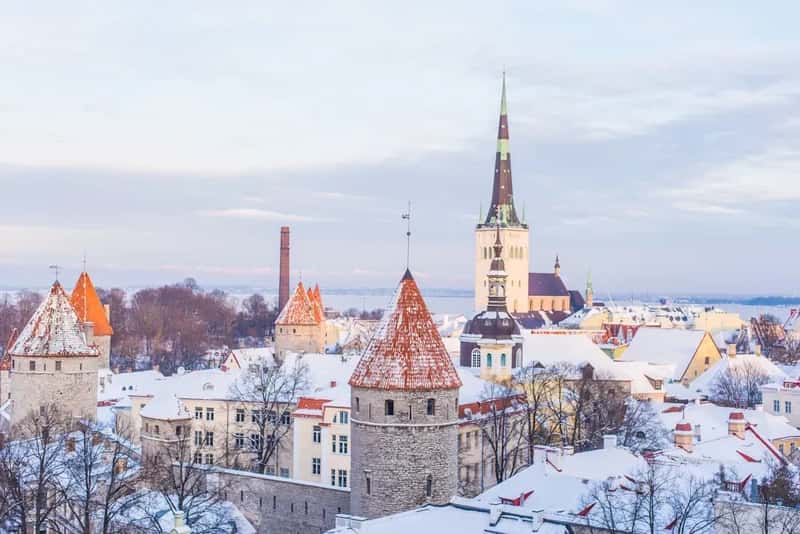
Estonia is one of the least religious nations globally. The widespread secularization there is mainly due to the historical significance of Soviet domination, which made Estonians non-religious or atheist. Religious practices have no significant impact on politics or the day-to-day life of its citizens. Estonia ranks third among the most atheist countries in the world, with a non-religiousness rate of around 60%, placing it well above most other European nations in terms of irreligion.
Countries like the Czech Republic and Estonia, which were once under Communist rule, have seen a significant decrease in religious adherence as state-imposed atheism and secular ideologies took precedence. Unlike Western European nations where secularization developed gradually through economic modernization, Estonia’s break from religion was accelerated and institutionalized by decades of Soviet governance. Well over 70% of Estonia’s people do not identify with a traditional religion, and the country reflects a broader trend across many nations in its region. The post-Soviet transition to democracy brought political freedom, but not a religious revival.
5. Japan – Culturally Religious, Spiritually Detached

In the Asia-Pacific region, Japan stands alongside China as one of the most secular countries, with only about 10% of individuals considering religion important in their lives. What makes Japan particularly fascinating is the nature of its secularism. Japanese citizens often participate in religious traditions but do not necessarily consider themselves religious. The mix of Shinto and Buddhist customs forms a cultural rather than spiritual identity, and many in Japan identify as religiously unaffiliated, making it one of the least religious societies in the Asia Pacific region.
Japan, along with Hong Kong and South Korea, is known for its rapid economic growth and technological advancements, and has witnessed a decline in religious identification as societal values shifted towards a more secular and individualistic outlook. Essentially, religion in Japan is practiced as custom, not conviction – weddings and New Year visits to shrines happen widely, but active belief in a deity is rare. Japan, with around 60% of its population being non-religious or atheist, stands out as a country with a significant irreligious population, significantly contrasting with the largely religiously inclined broader Asian region.
6. The Netherlands – From Pillar Society to Secular Majority
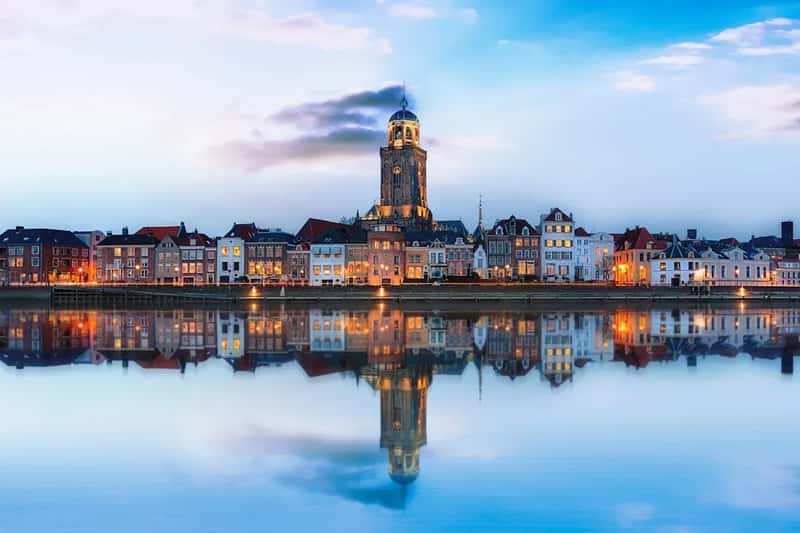
The Netherlands stands out for being highly liberal in social policies and tolerant of religion. Rates of church attendance dropped drastically over the past few decades, and a significant portion of the Dutch are now classified as nonreligious. In this nation, secularism is deeply rooted in public life, from schools to hospitals. With a non-religiousness rate of roughly 44%, the Netherlands completes the top ten ranking of most atheist countries globally.
In the Netherlands, nonreligious people make up a growing share of the population. Faith is often considered a private matter, and religious services are sparsely attended. Independent surveys and longitudinal studies confirm a steady rise in secular attitudes in the Netherlands, with the nonreligious proportion climbing from about half to a clear majority in recent decades. The country once organized virtually all social institutions – schools, hospitals, trade unions – along religious lines in a system known as “pillarization.” That structure has dissolved almost entirely, leaving behind a society where personal belief, if it exists at all, is kept firmly out of public view.
The Broader Pattern Behind Religious Decline
Research published in Nature Communications shows that secular transition happens in three steps: first, public ritual participation declines; second, the importance of religion to individuals declines; and third, people shed religious affiliation. This sequence plays out across very different cultures and histories, from post-communist Eastern Europe to prosperous Scandinavia to rapidly modernizing East Asia. From 2010 to 2020, the share of the population affiliated with any religion dropped by at least 5 percentage points in 35 countries, with particularly steep declines in Australia, Chile, Uruguay, and the United States.
It is widely believed that most societies become increasingly secular as a result of economic growth, social development, and advancements in areas such as jobs and education rather than through any dedicated ideological campaign. Each of the six countries profiled here tells a slightly different story – Soviet suppression, welfare-state prosperity, rapid modernization, or the quiet drift of postmodern individualism – but the destination is strikingly similar. Across the 38 OECD countries in 2024, a median of just 36% of adults said religion is important to their daily lives, a figure that speaks to how thoroughly secularism has become the default condition of wealthy, developed nations.