Moving abroad for retirement sounds romantic until you start thinking about what happens if you break a hip or need a cardiologist at two in the morning. Safety and healthcare quality are the two factors that quietly override everything else on a retiree’s checklist, more than sunshine, more than cheap rent, more than the promise of a slower pace of life. The good news is that a handful of countries manage to deliver both in equal measure, backed by real institutional data rather than travel-blog enthusiasm.
The countries below were chosen because they consistently appear in credible safety benchmarks like the Global Peace Index alongside strong marks for healthcare access, whether through public systems, well-regarded private hospitals, or a workable blend of the two. None of them ask retirees to trade a peaceful, low-crime life for substandard medical care, which is exactly the compromise so many other popular destinations still force people to make.
Portugal: A Top-Ten Peaceful Nation With a Public Health System That Works

Portugal has become something of the gold standard for retirees who want safety without giving up modern medicine. The country ranks seventh in the 2025 Global Peace Index, reflecting its high level of societal safety, low violent crime, and stable international relations. That ranking is not a fluke either, since Portugal has held a spot near the top of the index for years running, and violent crime against foreigners remains genuinely rare outside isolated incidents.
On the medical side, retirees who secure residency gain access to the national system rather than being left to fend for themselves. Living in Portugal as a long-term resident grants you access to the country’s national healthcare service (SNS), social security, education, and various other government services. Many expats pair that public coverage with modest private insurance, since residents access the public SNS system with optional private insurance from €50–€100 per month. Combine that with a D7 visa income threshold that’s far lower than most Western pensions, and it’s easy to see why Portugal keeps topping expat retirement surveys.
Spain: World-Class Medicine Behind an Already Excellent Safety Record

Spain rarely gets left out of any serious conversation about retiring abroad safely, and for good reason. It shares the same broad Western European safety profile as Portugal, with low violent crime, stable institutions, and a culture where older adults are treated with visible respect rather than being pushed to the margins of society. Spain, Mexico, Portugal, France, and Uruguay are the best countries for Americans to retire for quality of life, according to the GCS Retirement Index for US Citizens.
What sets Spain apart is the strength of its healthcare infrastructure specifically. Spain (WHO #7) sits among the highest-ranked healthcare systems in the world according to World Health Organization comparisons, offering universal public access once legal residency is established. These countries perform well in indicators such as the affordability of healthcare, safety, and migrant acceptance, which matters enormously for retirees who plan on aging in place rather than flying home for every procedure. Regional hospitals in cities like Valencia, Alicante, and Barcelona routinely handle complex care, so retirees are not confined to a single capital for serious treatment.
Costa Rica: A Demilitarized Democracy With Universal Coverage Built In

Costa Rica occupies a unique position in Latin America because it simply does not have an army to worry about, and that decision, made back in 1948, still shapes the country’s stability today. Costa Rica abolished its military in 1948 and has the longest continuous democracy in Latin America, and the Global Peace Index consistently ranks it among the safest countries in the region. That political durability translates into everyday calm for retirees settling in towns like Grecia, Atenas, or the Central Valley.
The healthcare setup is arguably even more reassuring than the safety record. From day one, you and your spouse are enrolled in the public healthcare system (CAJA), which covers doctor visits, hospital stays, surgery, and prescriptions. Enrollment isn’t optional once you hold residency, but most retirees see that as a feature rather than a bug, since it costs 7% to 11% of declared income, often $70 to $220 a month, with full coverage and no copays. Many still layer on private insurance for shorter wait times, and two hospitals, CIMA and Clinica Biblica, hold JCI accreditation, giving retirees a genuine private-sector backstop.
Panama: Dollarized Stability With Hospital-Grade Private Care
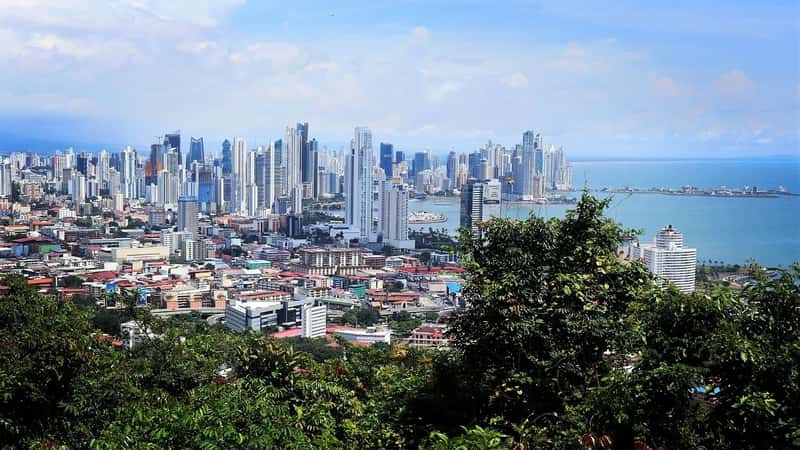
Panama trades a national public health scheme for something else entirely: a dollarized economy, a famously generous retiree visa, and private hospitals that rival anything in North America. The country’s Pensionado program has been drawing retirees for decades, and Panama also requires $1,000 a month but grants immediate permanent residency with no three-year wait, and offers lifetime retiree discounts on flights, hotels, restaurants, and medical services. That combination of speed and everyday savings is hard to match anywhere else in the region.
Where Panama differs sharply from its Central American neighbor is on the public healthcare question. Panama has no universal public healthcare system for retirees, but private care in Panama City is strong, and Hospital Punta Pacifica, affiliated with Johns Hopkins, holds JCI accreditation. Retirees who settle outside the capital, in places like Boquete or Coronado, generally keep international coverage on hand so they can reach specialists in Panama City when needed. The tradeoff pays off for many, since health tourism is a growing industry, and prices for procedures are generally 40-70% below US costs according to Patients Beyond Borders.
Uruguay: South America’s Quiet Democracy With European-Style Medical Care
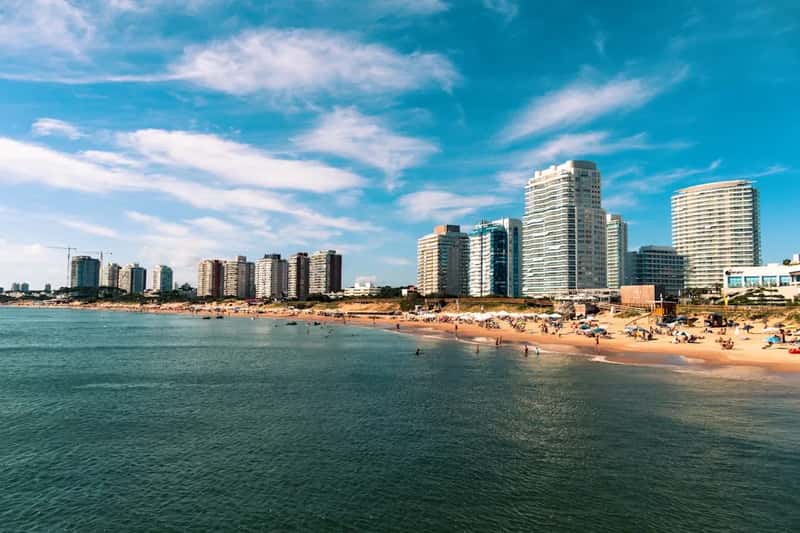
Uruguay tends to fly under the radar compared to flashier destinations, yet it consistently earns some of the strongest safety marks in the entire hemisphere. When it comes to safety, Uruguay is one of Latin America’s safest countries, with low crime rates, political stability, and a strong democracy, and the country has good public services, clean water, and modern amenities. Montevideo offers the widest range of services, while smaller coastal towns like Punta del Este give retirees a quieter alternative without sacrificing infrastructure.
Healthcare in Uruguay runs on a distinctive model that many expats find surprisingly seamless. Uruguay offers high-quality, affordable healthcare through a Mutualista system, a private, membership-based model, and it ranks fourth on the GCS Global Retirement Index. Physicians trained abroad are common, which eases communication for English-speaking retirees, and the country has well-equipped and modern medical facilities with many English-speaking doctors who have been trained in Europe and the United States, with reasonably priced prescription drugs. Add in a decade-long tax exemption on foreign income, and Uruguay quietly becomes one of the more financially sensible choices on this list.
Malaysia: Southeast Asia’s Safest Bet for JCI-Accredited Hospital Care
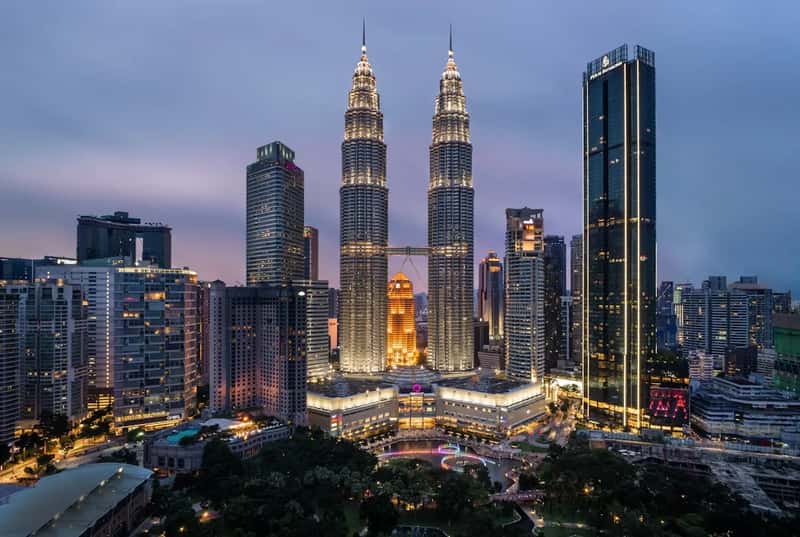
Malaysia stands apart from the other five countries here simply by being in Asia, yet it holds its own on safety in a way few regional neighbors can match. Malaysia sits 10th on the Global Peace Index but ranks lower for travelers because of petty-crime rates in tourist zones. Retirees who settle in Penang or Kuala Lumpur, rather than dense tourist corridors, generally report a calm, orderly daily life with functioning infrastructure and widespread English proficiency left over from the colonial era.
Medically, Malaysia punches well above its cost of living. Thailand and Malaysia are top choices in Asia with JCI-accredited hospitals, and private care in Kuala Lumpur rivals Western facilities at a fraction of the price. The long-standing Malaysia My Second Home program remains the main path to residency, though in recent years the national MM2H terms were tightened, now requiring a higher monthly income and larger deposits, which put it out of reach for many. Even so, the state of Sarawak offers a more relaxed MM2H with lower requirements, keeping the door open for retirees who don’t meet the national thresholds.
What Ties These Six Countries Together

None of these destinations made the list purely on cost, and that’s intentional. Each one pairs a genuinely low-risk environment, verified through independent indices rather than marketing copy, with a healthcare pathway that doesn’t require retirees to gamble their savings on a medical emergency. Whether that’s Portugal’s SNS, Costa Rica’s CAJA, or Panama’s JCI-accredited private hospitals, the common denominator is predictability. Retirees know roughly what they’ll pay and roughly what standard of care they’ll receive, which removes one of the biggest sources of anxiety in any move abroad.
The other shared thread is political and social stability, which sounds abstract until you consider how much daily peace of mind it actually buys. A demilitarized Costa Rica, a Portugal that ranks among Europe’s calmest societies, a Uruguay with one of Latin America’s most durable democracies, none of these are accidents of geography. They reflect decades of institutional choices that happen to benefit exactly the kind of retiree who wants stability more than excitement.