A U.S. passport still opens more doors than most, letting Americans wander through dozens of countries with nothing more than a stamp at the border. That reputation, though, has started to soften a bit in recent years. Somewhere between assuming every major destination welcomes Americans without paperwork and actually boarding a flight, a fair number of travelers get caught off guard by a visa requirement they never saw coming, sometimes for countries that feel like they should be simple.
Some of these places are longtime tourist favorites. Others are close political allies. What they have in common is a visa rule that quietly persists, or in some cases has recently returned, even as the rest of the world seems to be loosening its border rules for Americans.
Brazil

For years, Brazil let American tourists show up with just a passport, but that changed for good reason tied to diplomacy rather than tourism policy. As of April 10, 2025, all U.S. nationals need a visa to enter Brazil, with an option for an e-visa for qualified applicants. It was framed largely as a matter of fairness, since the move restores the principle of reciprocity, as these same nations still require Brazilians to obtain visas, and is expected to generate significant consular fee revenue.
Even as Brazil has opened its doors to a handful of new countries this year, Americans have not been included in that relaxation. Brazil removed visitor visa requirements for citizens of eight countries, including China, France and Ireland, effective March 4, 2026, but American travelers were left off that list. The e-visa itself is not a huge hurdle, with an application fee of $80 and processing that typically takes five to ten days, but it does mean planning ahead rather than booking a flight to Rio on a whim.
China

China has spent the last couple of years dramatically expanding visa free access for dozens of nationalities, which makes it easy to assume Americans have been swept up in that wave too. They have not. The United States is not among the countries on the unilateral visa-free list, so an American flying to Beijing or Shanghai for a vacation or a business meeting must still obtain a Chinese visa before departure.
There is a narrow workaround for travelers passing through on the way somewhere else. The 240-hour visa-free transit policy is the one that opens China to American travelers, and U.S. passport holders are explicitly included in that transit program. For anyone actually staying in the country rather than connecting through it, the standard route is a tourist visa, and Americans currently benefit from a flat $140 fee regardless of whether they want a single, double, or multiple entry visa, with the popular ten year multi entry visa costing the same as a single entry one.
India

India draws millions of American visitors every year for everything from Himalayan treks to family visits, and nearly all of them need paperwork sorted out before departure. India does not offer visa on arrival for U.S. citizens, so travelers must obtain a visa before traveling, with the e-visa being the most convenient option. Skipping this step is not really an option, since border officials will simply turn travelers away without the proper authorization.
The good news is that the process itself is relatively quick and inexpensive compared with many other visa systems. The 30-day e-Tourist Visa costs $25 during April through June or $40 the rest of the year, while a one-year multiple entry version runs $40 and a five-year multiple entry visa is $80. Processing is usually handled within three to five business days, so a little advance planning is really all that stands between an American traveler and a ticket to Delhi or Mumbai.
Vietnam

Vietnam has become one of Southeast Asia’s most talked about destinations, thanks to its food scene, coastline, and increasingly popular digital nomad crowd. Despite that popularity, it remains one of the countries where American travelers still need a tourist visa, alongside India, Indonesia, Nepal, and China.
What tends to surprise people is how straightforward the process actually is once they start it. Vietnam’s e-visa system allows applicants to complete everything online, upload a passport photo, and receive approval within a matter of days, which is a far cry from the embassy visits some travelers picture when they hear the word visa. It is one more form to fill out, not a complicated bureaucratic maze, but it is still a requirement that catches first time visitors off guard.
Indonesia

Bali alone pulls in enormous numbers of American tourists each year, which makes it easy to assume Indonesia falls into the same visa free category as many of its Southeast Asian neighbors. It does not. Indonesia is listed among the countries where American citizens still need a tourist visa before arrival, alongside China, India, Vietnam, and Nepal.
Indonesia does offer a visa on arrival option at several major airports, which softens the inconvenience considerably compared with countries that require everything sorted out weeks in advance. Travelers can typically pick this up at the airport counter for a fee and a short wait in line rather than dealing with an embassy appointment back home. Still, it is a step that a surprising number of people forget to budget time and cash for when they are focused on booking flights and hotels instead.
Egypt

The pyramids and the Nile draw a steady stream of American visitors every year, and many assume a country this dependent on tourism would have simplified entry for U.S. travelers completely. Egypt is among the destinations where Americans still have to apply for a visa, alongside countries like China, Iran, Ghana, and Venezuela.
Egypt has made the process considerably easier than that framing suggests, with both an e-visa option available before departure and visa on arrival counters at major airports for travelers who prefer to handle it on the ground. Neither option involves the kind of lengthy back and forth some other countries require. It is simply one more line item to check off, and one that a lot of first time visitors do not realize applies to them until they are already at the check-in counter.
Australia
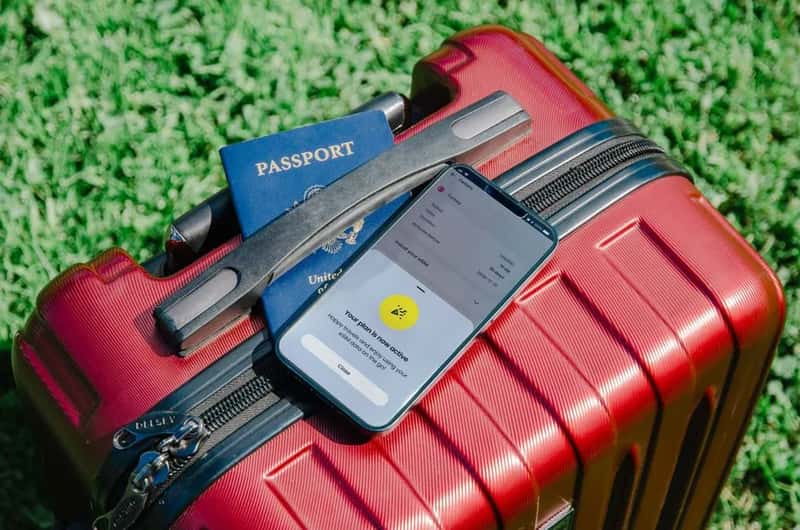
Australia feels, to a lot of Americans, like the kind of English speaking, close ally destination that should not require any real paperwork at all. Technically, it does. Anyone flying in from the United States needs an Electronic Travel Authority before boarding, and under Australian immigration law that authorization is legally classified as a visa, even though the process feels more like filling out an online form than applying for a traditional visa stamp.
The application itself takes just a few minutes through an official app or website, and approval usually comes back quickly, often within a day. It typically allows stays of up to three months per visit and remains valid for multiple entries over roughly a year, so it is not a hassle so much as an easily missed detail. Travelers who assume Australia works like the United Kingdom or Canada, where the rules can differ, sometimes only realize their mistake while checking in for their flight.