Every year, a handful of countries show up again and again near the top of global quality of life rankings, and the pattern rarely changes by much. What does shift, sometimes in surprising ways, is the exact order and the reasoning behind it. This year’s assessment from U.S. News, built on measures like healthcare access, safety, education, and personal freedom, offers one of the clearest snapshots of where life feels most stable and well supported right now.
What stands out most is not just who made the list, but who did not crack the upper tier despite enormous wealth. The countries below share a few traits: efficient public systems, high levels of social trust, and governments that seem to have figured out how to translate prosperity into everyday comfort for ordinary people.
1. Finland

Finland takes the No. 1 spot for quality of life in the 2026 U.S. News Best Countries rankings, reflecting the country’s strong healthcare, safety and social systems. That is not a fluke tied to one good year either. Finland has topped the World Happiness Report for nine consecutive years, which tells you the strength here runs deep rather than being a one time statistical bump.
Geography defines the history and culture of Nordic Finland, one of the most northern-reaching countries in the world, bordered by Scandinavia, Russia, the Baltic Sea and the Gulf of Bothnia. Life there leans on nature and a quiet kind of social trust rather than flashy wealth, and locals often describe their contentment as something built on reliability rather than excitement. Long, dark winters test residents every year, but the tradeoff seems to be one that most Finns accept without much complaint.
2. Iceland

Iceland lands in second place, a position it has held with remarkable consistency across several different global indices, not just this one. The Nordic country is famous for its natural beauty, hot springs and volcanoes, and that dramatic landscape shapes daily life just as much as any policy decision does. With a population smaller than many mid sized cities elsewhere, Iceland manages a level of social cohesion that larger nations often struggle to replicate.
Iceland sits at the very top of the 2025 Human Development Index at 0.970, tied closely with Norway and Switzerland, followed by Denmark, Germany, and Sweden. Healthcare access is close to universal, and gender equality metrics there consistently rank among the strongest anywhere in the world. Geothermal energy also keeps costs and environmental impact lower than you would expect for a country this far north.
3. Norway
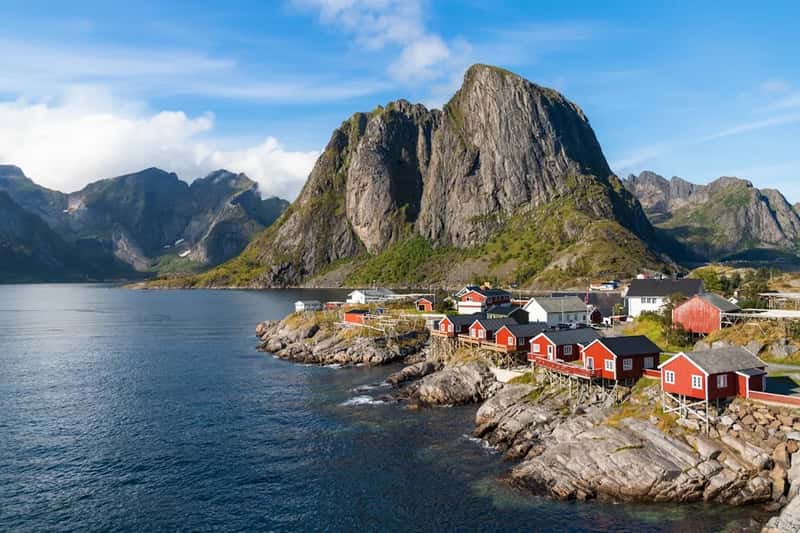
Norway takes third place this year, a spot it has occupied for a long stretch of recent rankings. Norway is made up mostly of mountainous terrain, with nearly all of its population living in the south around the capital, Oslo, and a coastline made up of thousands of miles of fjords, bays and island shores. That geography has shaped a society that values self reliance without sacrificing the safety net that defines most of Scandinavia.
Norway ranks among the top countries for quality of life due to factors such as good governance, income equality, civil rights, low unemployment, and a high net worth per capita. Wages tend to run higher than in many comparable economies too, with an average salary of around 55,000 dollars compared to roughly 51,480 dollars in the United States. Norway was also notably early on social progress, becoming the first Scandinavian country to legalize same sex marriage.
4. Denmark
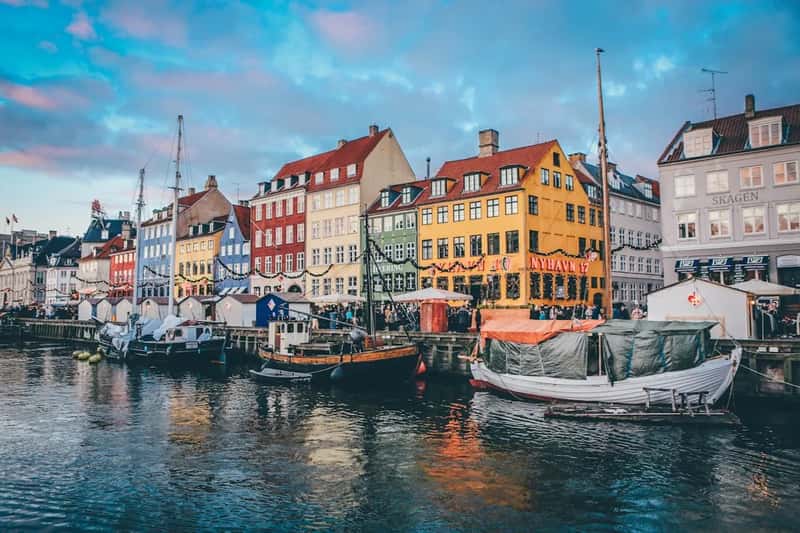
Denmark holds fourth place, and it remains one of the most consistently praised countries in almost every serious quality of life study published in recent years. Denmark is a country that generally performs well in the sub-rankings in areas like education, healthcare, political stability, and economic stability, according to analysts who study these rankings closely. The country’s public institutions are often cited as a model for how a small nation can deliver big results for its citizens.
Living costs run high, though. Denmark is known for its high living costs, especially in cities like Copenhagen, though most people find that the quality of life and welfare services balance these costs, with monthly expenses in Copenhagen typically running between 2,500 and 3,000 dollars. Free healthcare and free education from childhood through university help offset that price tag in ways that show up clearly in survey after survey.
5. Sweden
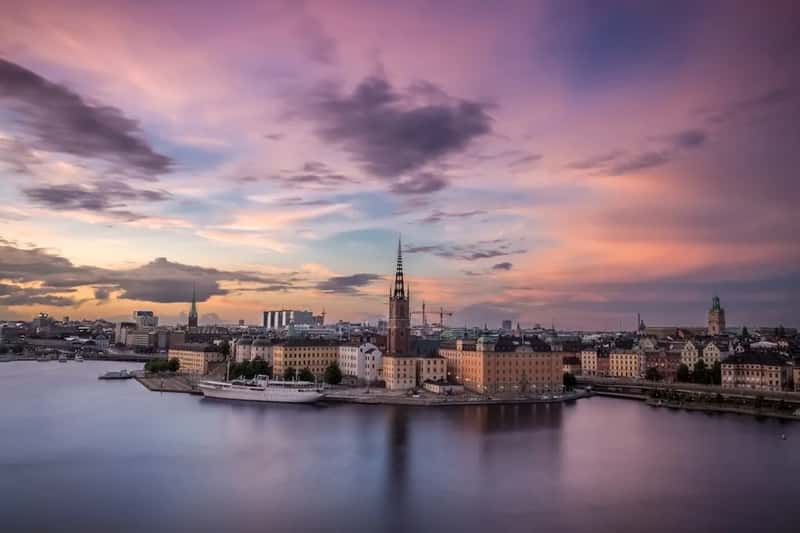
Sweden rounds out the top five in this particular U.S. News assessment. Finland takes the No. 1 spot, followed by Iceland, Norway and Denmark, with Sweden rounding out the top five, a lineup that has become almost familiar at this point given how often Nordic countries dominate these lists together. Sweden’s strength tends to come from consistency across nearly every category rather than dominance in just one.
Sweden offers residents free healthcare and college education, and its people boast one of the longest life expectancies, with an average age of 82.8 years, according to the CIA World Factbook. That kind of longevity is not accidental. It reflects decades of investment in preventive healthcare, clean air, and a social system built around reducing everyday stress for families.
6. Switzerland

Switzerland sits at sixth in this quality of life breakdown, though it is worth noting the country actually claims the very top spot in the broader overall U.S. News Best Countries ranking, which weighs economic and geopolitical strength alongside daily living conditions. Switzerland, Singapore and Japan also rank highly thanks to strong public infrastructure, healthcare and economic stability. That distinction between overall national strength and pure quality of life is part of what makes these rankings interesting to compare side by side.
Life in Switzerland is not cheap by any measure. Switzerland ranks in quality of life discussions with an exceptionally high safety score of 92 and an excellent healthcare system rated at 70, numbers that reflect just how much residents trust their day to day environment. Most people who live there seem to view the steep cost of living in cities like Zurich and Geneva as a fair trade for the stability and scenery that come with it.
7. Singapore

Singapore closes out the top seven, and it stands out here as the only country on this list that is not European. Switzerland, Singapore and Japan also rank highly thanks to strong public infrastructure, healthcare and economic stability, which places this small island nation in the same conversation as some of the wealthiest countries in the world despite having a fraction of their land mass. Its transit systems, hospitals, and public housing programs are frequently cited as reasons why daily life there runs unusually smoothly.
Singapore’s approach to quality of life differs noticeably from the Nordic model, leaning more on efficient governance and dense urban planning than on generous welfare spending. Public healthcare is heavily subsidized, crime rates remain extremely low by global standards, and the city state’s compact size means most residents face short commutes regardless of where they live. Japan trails closely behind in the same tier, a reminder that strong quality of life outcomes in Asia are no longer confined to just one or two standout nations.