Choosing a base as a remote worker used to mean picking wherever had cheap rent and decent Wi-Fi. These days, the calculation is more layered. People want legal protections that actually hold up, communities that welcome newcomers regardless of who they love or where they come from, and a country where daily errands do not require fluent local-language skills. The good news is that a handful of nations have quietly built reputations for combining all three: openness, safety, and genuine English-language ease.
The seven countries below were chosen because they pair a workable path to legal residency with strong anti-discrimination records, sizable English-speaking or English-fluent populations, and established international communities. None of them are perfect, and costs or paperwork vary quite a bit from one to the next. Still, each has earned its spot through a mix of policy, culture, and everyday livability that remote workers keep coming back to.
Portugal: Europe’s Warm, English-Friendly Gateway

Portugal has become something of a benchmark for remote work relocation, and it is not hard to see why. Ranking 6th on the Global Intelligence Unit’s 2025 Global Digital Nomad Report, Portugal remains one of the world’s most sought-after hubs for remote workers, and its Digital Nomad Visa (D8) offers both short-term and long-term residency routes.[1] The income bar sits well above the local minimum wage; the visa requires a monthly income of around €3,680, roughly four times the 2026 minimum wage.[2] That is a real threshold, but it comes with a genuine payoff since two consistent years on the D8 pathway puts applicants on track for permanent residency.
What makes Portugal stand out on the inclusivity front is not just paperwork, it is the legal culture behind it. Portugal is a truly progressive nation that bans discrimination based on sexual orientation in its constitution, backing that up with strong anti-discrimination laws covering gender, sexual orientation, and sexual expression.[3] Daily life reflects this openness too, since the country stands out thanks to low violent-crime rates, reliable public services, and English proficiency that is widespread in cities like Lisbon and Porto, making daily life seamless for newcomers.[1] Between the coworking scene, the healthcare system, and the sheer number of other expats already there, settling in rarely feels lonely.
Malta: An English-Speaking EU Nation With Strong Legal Protections

Malta occupies an unusual spot in Europe: it is a full EU member state where you genuinely do not need to learn a new language to get by. As one of the few EU member states where English is an official language, Malta stands out as a particularly accessible European option for anyone who wants to avoid language friction.[4] The country also happens to feel remarkably safe day to day, since Malta is ranked the 12th-safest country in the world by the Global Peace Index.[3] For remote professionals, the Nomad Residence Permit lets you work for a foreign employer with a gross annual income requirement, and it requires a €42,000 minimum gross annual income.[3]
Where Malta truly separates itself is in legal protections for LGBTQ+ residents, which matters enormously for anyone weighing where to build a long-term life. For several years running, Malta has held the number one spot on the ILGA-Europe Rainbow Map, remaining the most legally secure environment for LGBTQ+ people in the world.[2] That is not just a symbolic ranking either, since living in Malta is possible thanks to easy and straightforward visa paths that are inclusive towards gay applicants, including same-sex couples.[3] Combine that with warm weather, a compact size that makes networking easy, and English-language government services, and Malta earns its reputation as one of the most genuinely welcoming corners of Europe.
Spain: Sunny Streets, Solid Rights, and a Straightforward Visa

Spain has leaned hard into courting remote workers over the past few years, and the numbers back up the enthusiasm. Spain takes the top spot in several digital nomad indexes with a strong overall score, offering reliable internet, high-quality healthcare, and sunny, welcoming environments.[5] The visa itself is comparatively accessible too, since the Spain Digital Nomad Visa allows a stay of up to five years for remote workers with non-Spanish employers earning at least €2,850 per month.[3] On top of that, applicants can benefit from flexible visa terms with family inclusion and reduced tax rates on earnings up to €600,000 eligible under the so-called Beckham Law.[5]
Beyond the paperwork, Spain’s social fabric is genuinely accepting, which matters just as much as visa terms for people building a life abroad. Spain ranks among the top 10 most LGBT-friendly countries in the 2025 Equaldex LGBT Equality Index, offering strong legal protections and social acceptance.[6] Major cities like Madrid and Barcelona run on a mix of Spanish and English in professional and coworking settings, and the sheer density of international residents means newcomers rarely feel like outsiders for long. It is a country that manages to feel both foreign and familiar at the same time, which is exactly what a lot of remote workers are chasing.
Costa Rica: Pura Vida Meets a Thriving Expat Community
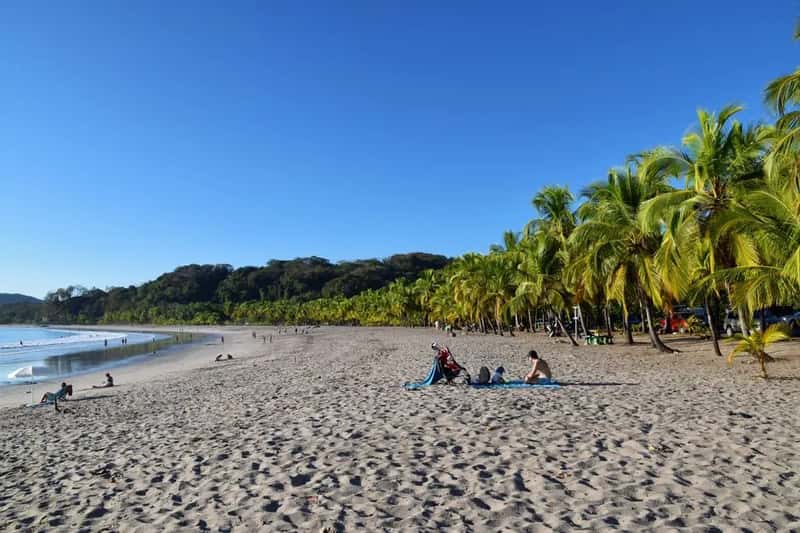
Costa Rica has built its remote work reputation on stability rather than flash, and that steadiness is precisely the point. The country launched a digital nomad visa designed to attract remote workers seeking longer stays, and applicants must demonstrate minimum monthly income along with international health insurance.[7] That combination of clear requirements and a functioning system has made it a favorite, since Costa Rica’s political stability, healthcare system, and natural environment have made it particularly appealing to Americans exploring remote work abroad.[7] It also helps that Costa Rica has a large English-speaking expat community[4], so integration rarely feels like starting from zero.
For those thinking further ahead than a single-year visa, Costa Rica also offers routes that support families and longer commitments. The Rentista visa provides a two-year stay including family, giving many people a realistic path toward settling down long term.[8] The country’s culture of “pura vida,” a phrase locals use to describe an unhurried, accepting approach to life, tends to translate into genuine friendliness toward outsiders rather than mere tourist-brochure branding. Between the beaches, the biodiversity, and the well-worn expat infrastructure in places like Escazú and the Nicoya Peninsula, it is easy to see why so many remote workers stay far longer than they originally planned.
Iceland: Small Population, Outsized Inclusivity

Iceland does not get talked about as often as Portugal or Spain in remote work circles, but its social credentials are hard to beat. Iceland is a very progressive nation and one of the most LGBTQ+ friendly countries in the world[3], and that reputation is not just anecdotal since Iceland ranks among the top 10 most LGBT-friendly countries in the 2025 Equaldex LGBT Equality Index, offering strong legal protections and social acceptance.[6] For remote workers weighing where legal recognition and everyday attitudes actually match, Iceland is one of the few places where both consistently score near the top.
Iceland has also formalized its openness to remote workers through an actual visa pathway rather than relying on tourist-visa workarounds. Iceland is among the countries that offer a dedicated digital nomad visa[6], and its small, close-knit population tends to mean bureaucracy moves faster than in larger nations. English fluency is near-universal there, a product of decades of English-language education and international media consumption, which removes one of the biggest daily friction points for anyone relocating. It is not the cheapest option on this list, but for people prioritizing safety and social acceptance above all else, Iceland is hard to argue with.
New Zealand: No Nomad Visa Needed, Just an Open Door

New Zealand has taken an almost contrarian approach to attracting remote workers: instead of building a brand-new visa category, it simply changed the rules on the one it already had. In February 2025, the government launched a “digital nomad scheme” by updating the conditions of its standard visitor visa, allowing remote workers to legally work for foreign employers while exploring the country.[9] The policy has since been reinforced with tax clarity too, since effective April 2026, a tax exemption applies to those staying under 275 days in an 18-month period.[10] There is also refreshingly little red tape involved, since New Zealand ranks first in one prominent index due to a combination of relatively low minimum income requirements, just $610 a month, a very high level of safety, almost full internet coverage, and English as an official language.[11]
What sets New Zealand apart on inclusivity is less about a single flashy law and more about a broad, consistent culture of tolerance layered on top of English being the default language of daily life. Kiwis are known for a laid-back social style that tends to extend naturally to newcomers, whether they are backpackers, retirees, or laptop-toting professionals. The absence of a rigid nomad-visa bureaucracy actually works in favor of accessibility here, since most visitors from visa-waiver countries can simply arrive, register their remote work status, and get on with life. It is not a loophole so much as a deliberate policy choice to keep the door open.
Barbados: Caribbean Ease With English as the Official Language

Barbados was one of the earliest Caribbean nations to formalize a dedicated remote work program, and it remains one of the more straightforward options in the region. The Barbados Welcome Stamp is a remote work program that allows foreign nationals to live and work in Barbados for up to 12 months, launched in 2020 as part of an initiative to attract remote workers, freelancers, and entrepreneurs.[12] The income threshold sits higher than many alternatives, since the program currently has a minimum income requirement of $50,000 per year[13], but the process itself moves quickly and the visa is renewable for those who want to stay longer.
As a Commonwealth nation, English is the official language of Barbados, which eliminates the language barrier entirely for the large share of remote workers coming from the US, UK, and Canada. The government has clearly committed to keeping the program alive too, since the Cabinet approved the renewal of the programme until December 31, 2026[14], signaling this is meant to be a lasting fixture rather than a pandemic-era experiment. Bajan culture leans heavily on hospitality and community, and combined with a functioning path to renewal or even eventual immigrant status, it gives remote workers a sense that they are being genuinely welcomed rather than simply tolerated for tourism revenue.
None of these seven countries will suit every remote worker’s budget, climate preference, or career stage, and that is fine. What they share is a track record of pairing legal openness with a culture that backs it up in daily life, whether that shows up as constitutional protections in Portugal, a top-ranked equality index in Malta and Iceland, or the simple fact that English gets you through the day without friction in Barbados and New Zealand. Inclusivity, in the end, is not just about who can technically get a visa. It is about who feels like they actually belong once they arrive, and these places have quietly earned that distinction one policy and one welcoming neighborhood at a time.