In many parts of the world, watching a six-year-old walk to school by themselves would trigger a call to child protective services. In a handful of countries, though, it is simply Tuesday. Researchers who study children’s independent mobility, meaning their freedom to move around their neighborhoods without an adult in tow, have spent decades tracking which nations still let kids navigate sidewalks, crosswalks, and bus stops on their own.
What emerges from this research is a small cluster of countries where walking to school alone remains not just tolerated but culturally expected. These places share low crime rates, strong pedestrian infrastructure, community-based safety systems, and a deliberate belief that independence builds resilient kids. Here are seven nations that consistently top the rankings for letting children make their own way to the classroom.
1. Japan
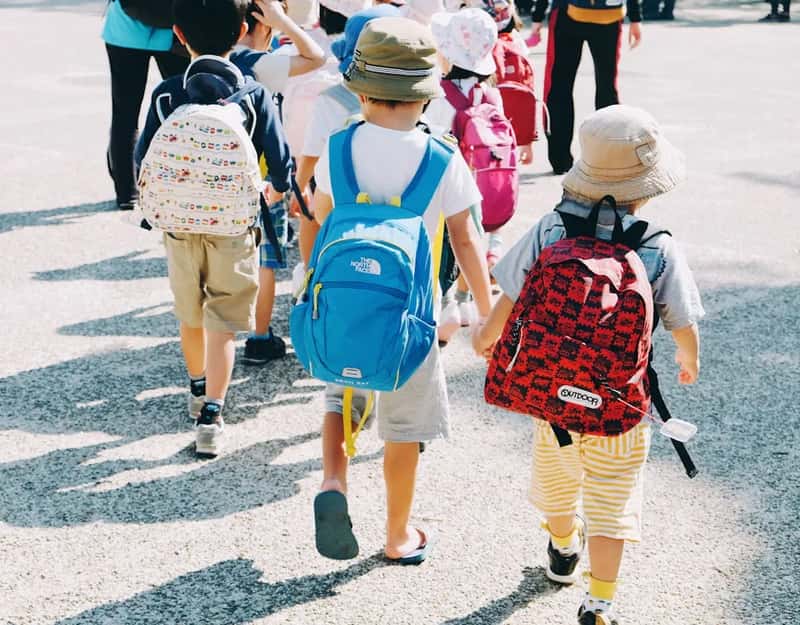
Japan is often the first country people mention when this topic comes up, and for good reason. In Japan, you often see elementary school-aged children going to school or to nearby stores by themselves, and a culture has developed in which it’s normal to see children walking around unattended.[1] Just 1.7 percent of Japanese children ride the bus to school, and children walk to school in groups, unaccompanied by their parents, even first graders.[2]
The system behind this independence is surprisingly structured. Japanese law requires that elementary schools be sited so that all children served live within no more than 2.5 miles, and school PTAs produce annual safety maps of the school neighborhood with recommended routes, asking retired adults to keep an eye on the walk to school.[2] Research from Chiba found that the percentage of children walking to and from school every day was 82 percent, which is extremely high compared to other developed countries.[3] That said, Japanese researchers have flagged a slow erosion of this system as more women enter the workforce, leaving fewer community volunteers to watch over morning commutes.
2. Finland
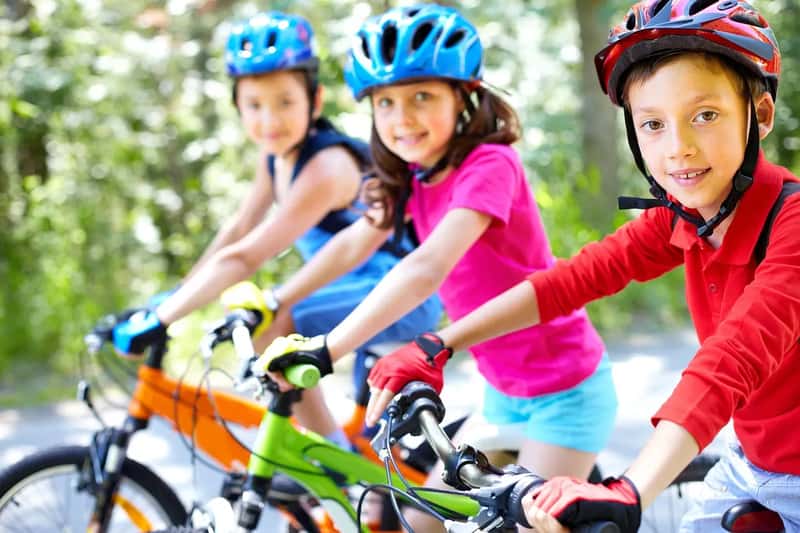
Finland routinely ranks at or near the very top of every international comparison of children’s independent mobility. A comparative study across sixteen countries found that children in Finland enjoyed the greatest freedom to travel independently, followed by Germany, Norway, Sweden, Japan, and Denmark.[4] By age seven, a majority of Finnish children can already travel to places within walking distance or cycle to places alone, and by age eight a majority can cross main roads, travel home from school, and go out after dark alone.[5]
What makes Finland stand out even among this elite group is the sheer consistency of the numbers. Finland is the top-performing country across almost every independent mobility indicator in this study, coming second only to Germany for children’s self-reported freedom to travel on local buses alone.[6] Cold winters and long dark evenings don’t seem to dampen this trust; instead, Finnish parents tend to view early independence as a normal part of growing up in a country with reliable infrastructure and strong social trust.
3. Germany

Germany has long been a benchmark for researchers comparing children’s freedom across generations. A comparative study of children in England and Germany showed that from 1990 to 2010 the level of independent mobility decreased significantly in both countries, though in 1990 about 90 percent of the German study population was allowed to travel home from school alone, dropping to around 76 percent by 2010.[4] Even with that decline, German children still travel independently far more often than their peers in many other Western nations.
That gap becomes clear when you look at direct comparisons. One study found that 67 percent of German children traveled without adult accompaniment, compared with only 26 percent of English and 33 percent of Australian children traveling to or from school on their own.[7] German cities also tend to favor traffic-calmed residential streets and dedicated school zones, which gives parents the confidence to let their kids walk or cycle without supervision from a fairly young age.
4. Norway
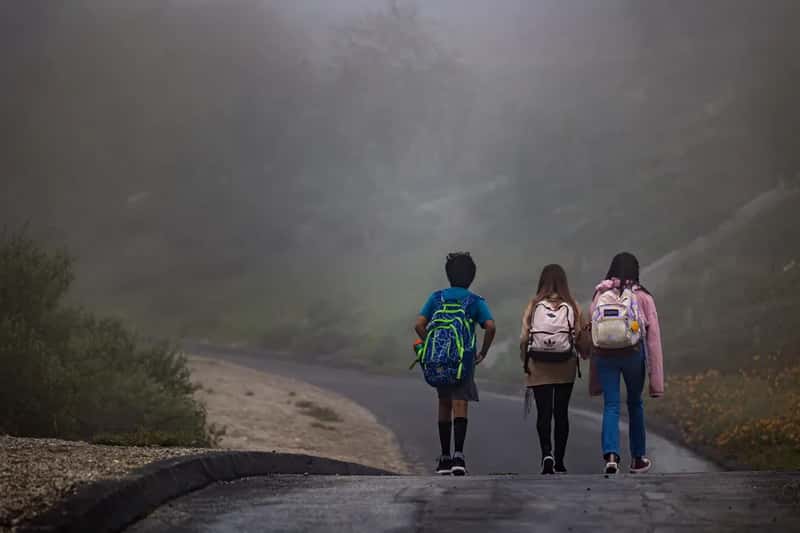
Norway sits comfortably inside the top tier of countries where children move around independently. The overall ranking of the sixteen-country comparison placed Norway among the leading group, just behind Finland and Germany and ahead of Sweden, Japan, and Denmark.[4] Norwegian towns and cities are generally compact, with schools built close to residential areas, which shortens the distances children need to cover on foot.
Car culture has crept into Norwegian school routines over the past decade, though walking still holds strong for local trips. In Norway, the share of car use on children’s school trips was 24 percent in 2020, while it was 64 percent on trips to organized sport activities.[8] That contrast suggests Norwegian families still see the school commute differently than other outings, treating it as a routine children can and should handle on their own two feet.
5. Sweden
Sweden’s approach to child-rearing has long emphasized outdoor time and self-sufficiency, and the data on independent mobility backs that reputation. According to the large sixteen-country comparative study, the other countries with a high degree of children’s independent mobility besides Finland were Japan, Germany, and Norway, with Sweden also grouped among the top performers.[7] Swedish neighborhoods are frequently designed around pedestrian and cycling paths that keep children separated from busy vehicle traffic.
Interestingly, Sweden is also one of the few countries where the gender gap in independent mobility barely exists. In most countries such as Germany, Finland, and Sweden, no significant difference was found between girls’ and boys’ mobility licenses.[4] That stands in contrast to nations like Italy, where parents have historically granted sons noticeably more freedom to roam than daughters, reflecting differing perceptions of risk by gender.
6. Denmark
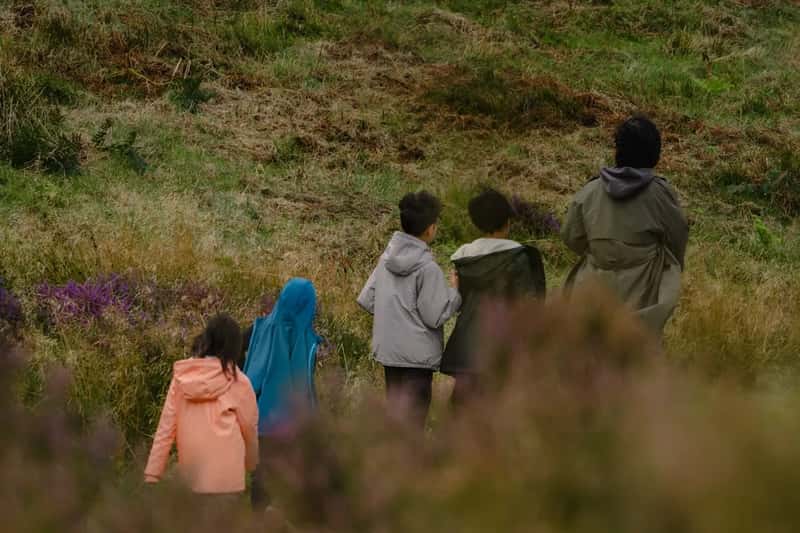
Denmark rounds out the group of Nordic countries where walking to school alone is still the norm rather than the exception. The overall ranking from the international comparison placed Denmark within the top cluster of countries, alongside Finland, Germany, Norway, Sweden, and Japan.[4] Danish cities are famous for prioritizing cyclists and pedestrians over cars, which naturally extends to how children get to school.
Researchers who grouped these top-performing nations together noted something specific about Denmark and its Nordic peers. Only in a handful of countries, namely Finland, Sweden, Japan, and Denmark, are a majority of children of any age allowed to go out after dark alone.[5] That detail matters because evening independence is typically the very last freedom parents grant, so its presence in Denmark signals an unusually high baseline of trust in public safety.
7. Switzerland

Switzerland’s tradition of walking to school runs deep, and it shows up clearly in national travel statistics. In Switzerland, walking is still the most important mode of transport during the period of compulsory schooling, with seven out of ten primary school children walking to school, compared with only ten percent of schoolchildren in the United States.[9] This isn’t a recent trend either; it reflects decades of urban planning built around short distances between homes and schools.
What sets Switzerland apart is how actively institutions discourage parents from driving. For foreigners in Switzerland, the sight of children as young as four walking alone to school or kindergarten can be surprising, and many schools and even police actively discourage parents from driving their children to school, a practice known as parent taxis.[10] In cities like Zurich, police even publish a map of safe routes to school[11] to help families plan the safest possible path, reinforcing a system where independence is treated as a skill worth teaching rather than a risk worth avoiding.
Why These Countries Look So Different From the Rest
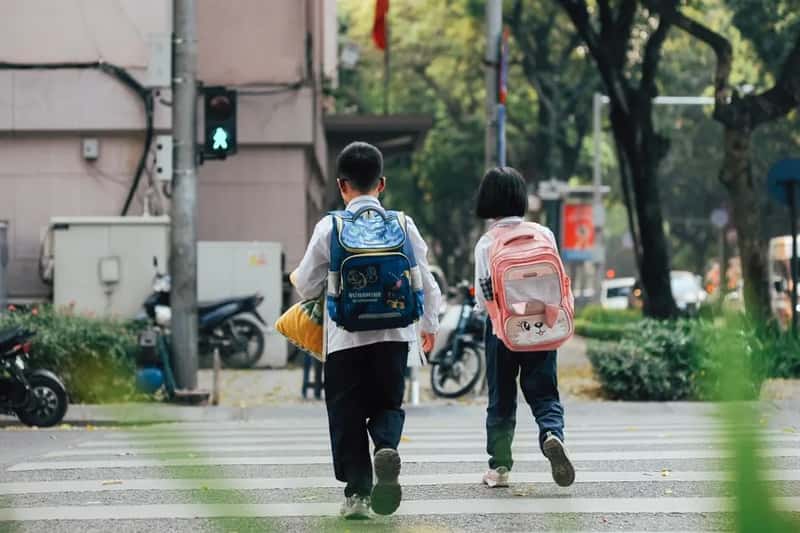
The contrast between these seven nations and much of the English-speaking world is stark. Forty years ago, half of all students in the United States walked or bicycled to school, but today fewer than 15 percent travel on their own steam.[12] A similar collapse happened in England, where research shows only 25 percent of English primary school children now travel home from school independently compared with 86 percent in 1971 and 35 percent in 1990.[13]
What ties Japan, Finland, Germany, Norway, Sweden, Denmark, and Switzerland together isn’t luck. It’s a combination of compact urban planning, traffic-calmed streets, community oversight, and a cultural willingness to let children take on age-appropriate responsibility. As more countries grapple with rising childhood anxiety and declining physical activity, these seven nations offer a quiet but persuasive argument: sometimes the safest thing you can do for a child is let go of their hand a little sooner than you think.