
Reliable internet used to be the exception on the road. Now it’s the baseline expectation, and the countries that deliver fast connections at low prices have become magnets for remote workers scouting their next base. The good news for 2026 is that the map of “cheap and fast” has widened well beyond the usual tech hubs, pulling in places that also happen to offer visas, low living costs, and genuine communities of remote professionals.
Picking a destination purely on internet speed rankings can be misleading, since headline numbers from places like Singapore or the UAE often come bundled with steep rents and living costs that don’t suit a nomad budget. The eight countries below were chosen because they combine measurably strong connectivity with affordability and, in most cases, an actual visa pathway for remote workers.
1. Romania
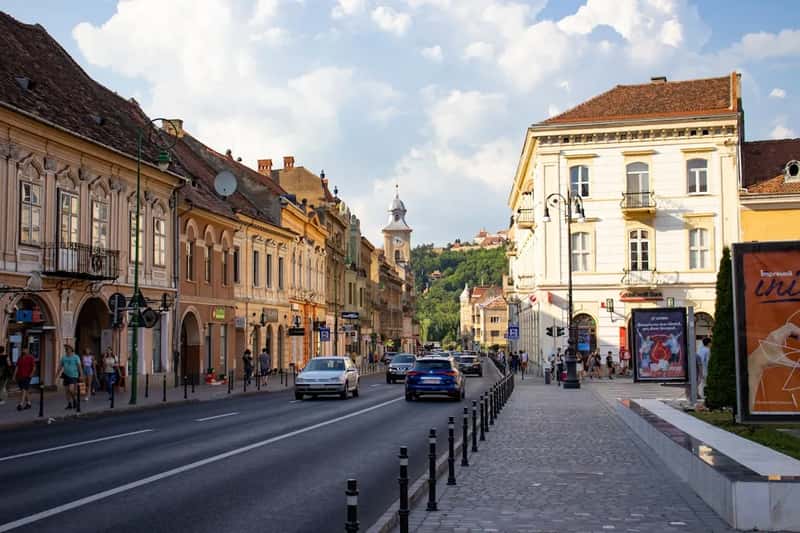
Romania rarely gets the credit it deserves in nomad conversations, yet it’s quietly become one of Europe’s best-kept secrets for internet infrastructure. Romania has some of the fastest average internet speeds in the world, often exceeding 200 Mbps in cities like Bucharest and Cluj-Napoca. That kind of performance puts it ahead of many wealthier Western European nations, largely thanks to fiber networks built more recently and with less legacy infrastructure to work around.
What makes Romania stand out isn’t just the raw speed, it’s the combination with price. Romania offers the best value when you weigh fast internet against very low costs. Romania is considered Europe’s best-kept internet secret, with the combination of top-5 global fixed speeds and EU membership being extraordinary, and Bucharest’s city center fiber ranking among the fastest in the world. For a nomad on a budget who still wants EU access and gigabit-level connections, it’s hard to argue against.
2. Vietnam

Vietnam has long been a favorite for budget-conscious remote workers, and its internet infrastructure has caught up impressively fast. Vietnam now ranks tenth globally for internet speed with an average around 285 Mbps, and e-visas are available to all nationalities. That’s a remarkable position for a country still associated in many people’s minds with budget backpacker trails rather than fiber-optic networks.
Living costs remain the other half of the appeal. Vietnam remains one of the cheapest options from around 800 dollars a month, with Da Nang available from as little as 600 dollars. Coastal cities like Da Nang have become particular favorites, offering a comparable lifestyle to more famous nomad hubs but with less crowding and, according to some accounts, even faster connections.
Da Nang and Hoi An offer a comparable coastal lifestyle at 800 to 1,400 dollars a month, with faster internet and fewer crowds.
3. Georgia

Georgia has built a reputation as one of the easiest countries in the world to simply show up and start working. Georgia offers one of the best visa deals available, a one-year visa-free stay for citizens of 95 or more nationalities with no minimum income requirement. That kind of low-friction entry is rare, and it’s a big part of why Tbilisi has become a fixture on nomad itineraries.
Connectivity has kept pace with the country’s growing popularity. Tbilisi has already crossed into genuinely excellent territory for its cost, offering cheap, fast, and reliable internet. Fibre is fast in both Tbilisi and Batumi, and both cities benefit from direct flights connecting to Europe and the Middle East. The one caveat worth knowing is that Georgian banking is genuinely fiddly for foreigners, and the language barrier grows significant outside the major cities.
4. Portugal

Portugal has become something of the gold standard for nomads who want European charm without sacrificing connectivity. Portugal ranks as a top overall destination for remote work, combining reliable broadband speeds above 160 Mbps, a purpose-built Digital Nomad Visa, and a lower cost of living relative to the rest of Western Europe. Lisbon and Porto have both developed dense fiber networks that make video calls and large file transfers a non-issue.
The visa framework adds a level of legal stability that many other countries on this list still lack. Portugal’s D8 visa requires income of roughly 3,680 euros a month, positioning it as a more formal, income-verified pathway compared to some looser regional schemes. Costs climb notably in Lisbon and the Algarve, so nomads chasing the lowest prices tend to look at smaller cities inland, where the same fiber backbone keeps speeds consistent.
5. Bulgaria

Bulgaria doesn’t get anywhere near the attention of its Western European neighbors, but its infrastructure quietly punches above its weight. Bulgaria has some of the fastest wifi in Europe, and its small but growing digital nomad community makes it easy to connect with fellow remote workers. Plovdiv and Sofia have both become low-key favorites among nomads who want reliable connections without the price tags of Barcelona or Berlin.
The affordability angle here is genuinely striking for a European Union country. A monthly budget in Plovdiv runs roughly 700 to 1,200 dollars, translating to about 550 to 940 British pounds. Combine that with Schengen-adjacent access and a stable EU legal framework, and Bulgaria becomes one of the more underrated entries on any serious cost-versus-speed comparison.
6. Thailand

Thailand’s internet has matured considerably since the early days of the digital nomad movement, when spotty cafe wifi was the norm in Chiang Mai. As of May 2025, Thailand ranked fifteenth in the world for fixed broadband speed, with an average download speed of 247.60 Mbps. Bangkok in particular has invested heavily in fiber, and that investment shows in day-to-day usability for remote work.
Visa access has also improved meaningfully in the past couple of years. Thailand’s DTV visa allows a five-year multi-entry stay tied to savings requirements around 500,000 baht. Living costs remain reasonable relative to the connectivity on offer, with Thailand generally considered accessible on a monthly budget around 1,200 dollars. Outside Bangkok and the more built-up tourist zones, speeds can dip, so it pays to confirm connectivity before committing to a longer stay in smaller towns.
7. Colombia

Colombia has emerged as one of Latin America’s more straightforward destinations for remote workers, both legally and technically. Colombia’s digital nomad visa, issued in 2022, remains one of the most straightforward in Latin America, with monthly costs running between about 1,100 and 1,700 dollars outside Bogotá. That’s a workable range for nomads coming from North America or Europe who still want a reasonable standard of living.
Connectivity has been improving steadily, especially in the cities that have become nomad hotspots. Medellin specifically is among the Latin American markets that are improving in internet quality. With more nomads now spreading beyond Medellín into places like Cartagena and Santa Marta, infrastructure investment has followed the demand, though it’s still wise to verify speeds neighborhood by neighborhood before signing a lease.
8. Estonia
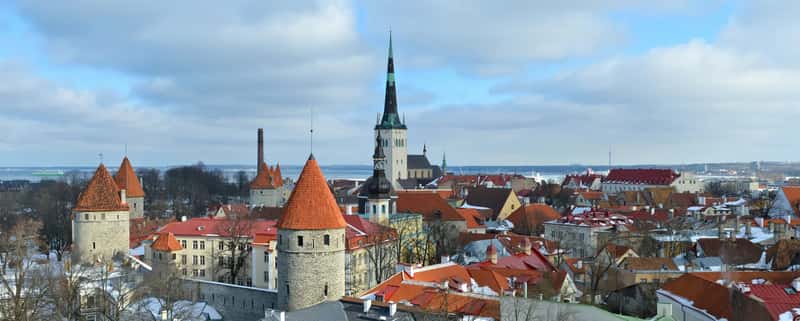
Estonia earns its spot less through raw speed rankings and more through the depth of its digital infrastructure and policy support for remote workers. Estonia is one of the most advanced digital societies globally and was one of the first countries to introduce a digital nomad visa, making it a pioneer in remote work policy. Its e-Residency program also lets nomads run an EU-based company from anywhere, which is a rare bureaucratic convenience.
Tallinn itself backs up the country’s tech reputation with tangible, everyday performance. Internet availability in Tallinn is described as exceptional high-speed connectivity, reflecting the country’s broader reputation for tech-savvy infrastructure. A typical monthly budget runs between about 1,200 and 1,800 dollars. It’s not the cheapest entry on this list, but for nomads who prioritize digital reliability and a genuinely safe, English-friendly environment, it’s tough to beat.
What These Countries Have in Common

Looking across all eight destinations, a pattern emerges that goes beyond raw megabits per second. Every country here pairs decent to excellent connectivity with a workable cost of living, and most now offer some kind of legal pathway, whether a dedicated digital nomad visa, a generous visa-free stay, or a well-established e-residency scheme. None of these places are flawless, and infrastructure can still vary sharply between capital cities and rural regions, but each has demonstrated that fast internet no longer requires a Western European or East Asian price tag.
The broader trend also matters here. Over 50 countries now offer dedicated digital nomad visas, up from just 12 in 2020. That expansion means nomads today have more legitimate, legally sound options than ever before, and connectivity that would have seemed exceptional five years ago is quickly becoming the norm rather than the exception in these emerging hubs.
Final Thoughts

Choosing a base as a digital nomad always comes down to trade-offs between cost, community, climate, and connection quality, and no single country wins on every front. Still, Romania, Vietnam, Georgia, Portugal, Bulgaria, Thailand, Colombia, and Estonia each prove that fast, affordable internet is achievable without draining a modest freelance income or navigating a bureaucratic nightmare.
The smartest approach is to treat any of these countries as a strong starting point rather than a guarantee, testing local speeds in your specific neighborhood before committing to a long-term stay. Internet infrastructure keeps shifting year over year, and the destinations climbing fastest right now are often the ones that were overlooked just a couple of years ago.