Higher education has quietly split into two very different worlds. In one, a government picks up the tab for tuition because it treats a university degree as a public good, much like healthcare or roads. In the other, families take out loans, sell property, or spend years saving just to cover a single year on campus. The gap between these two systems has only grown more visible as international student numbers climb and universities compete for tuition dollars.
What follows is a tour through both extremes: the countries where a diploma still comes essentially free of charge, and the ones where a degree can rival the price of a house. The differences say a lot about how each nation views education, and about who ultimately foots the bill.
Germany: Where public universities charge no tuition at all

Germany remains the poster child for tuition-free higher education, and the reasoning goes back over a decade. Germany is one of the few countries where international students can study at public universities without paying tuition, since in 2014 all federal states scrapped tuition fees, so most Bachelor’s and many Master’s programmes are free for everyone. The one notable holdout is in the south. The only exception is Baden-Württemberg, where non-EU students pay about €1,500 per semester.
Even where tuition is technically zero, students still pay something. While most states are tuition-free, students generally pay a nominal semester fee of €150 to €350. That small contribution has not scared anyone off. Over 420,000 international students are currently enrolled, and Germany has 9 universities in the global top 100 (QS 2026).
Norway: Free education at every level, EU or not

Norway goes a step further than most of its neighbors by extending free tuition to non-EU citizens as well. Norway remains one of the top countries with tuition-free education for both EU and non-EU students, and all public universities and colleges offer free tuition across all levels – undergraduate, graduate, and PhD programs. The only charge students see is administrative. Only a small semester fee (NOK 300–600) is required.
There is a catch, though it has nothing to do with tuition. Living expenses in Norway are higher than in many other countries, amounting to roughly NOK 90,000-100,000 per year. The upside is fairness in pricing. Foreign students don’t pay higher tuition fees than Norwegian students.
Finland: Free for some, affordable for nearly everyone else
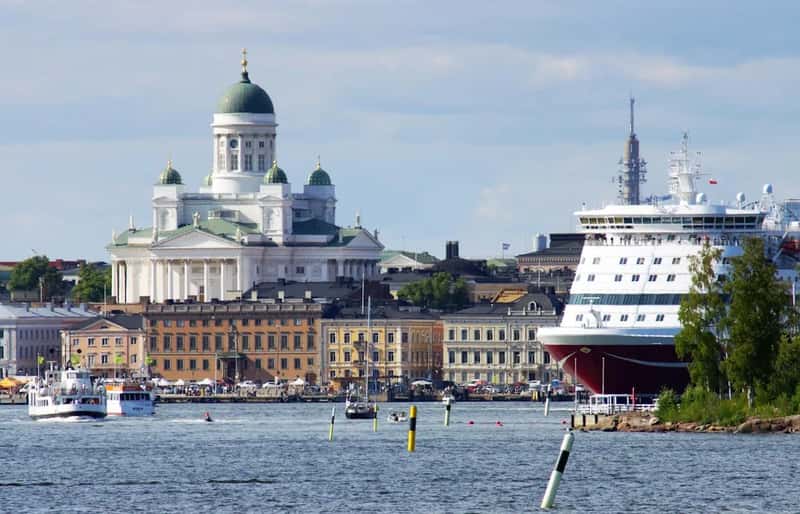
Finland’s system leans generous but isn’t quite as universal as Norway’s. In Finland and Norway, non-EU students usually pay fees, but scholarships can cover them. EU and EEA citizens, meanwhile, typically study without paying tuition at all, which keeps Finland firmly on the list of budget-friendly destinations for a serious degree.
Compared with the alternatives, Finland still looks like a bargain. This stands in contrast to countries such as the United States, the United Kingdom, and Australia, where tuition fees can exceed €20,000 per year for international students, while Finland, Norway, and Germany remain highly attractive study destinations for those seeking affordable, high-quality degrees. Scholarship funds sponsored by Finnish universities routinely close the remaining gap for students who do owe fees.
Denmark: Free tuition tied closely to citizenship

Denmark belongs to the small club of nations offering genuinely free college for its own citizens. Brazil and Denmark are examples of countries with free college for citizens. That benefit extends automatically to students from elsewhere in the EU and the Nordic region, who are treated the same way as Danes when they enroll at a public university.
Non-EU nationals face a different reality, since Danish public universities generally charge tuition once a student falls outside that EU or Nordic circle. Even so, the fees tend to sit below what comparable programs cost in the English-speaking world, and Denmark’s generous scholarship and grant system softens the blow for many admitted students from further afield.
Sweden: A two-tier system built around EU citizenship

Sweden splits its student body cleanly along citizenship lines. Sweden provides free education for EU/EEA students, while non-EU students pay fees, but scholarships are available. That structure mirrors much of Scandinavia, where the welfare model funds education for citizens and regional neighbors first.
For students from outside the EU, Swedish universities still charge less than most Anglophone competitors once scholarships are factored in. Government-funded and university-specific scholarship schemes routinely cover a meaningful chunk of the sticker price for strong applicants, making a Swedish degree realistic even without EU citizenship.
Austria: Low-cost degrees, especially in German-taught programs

Austria doesn’t always get top billing on tuition-free lists, but it deserves a mention. Countries like Austria or the Czech Republic also offer low or no tuition, especially in local-language programmes. EU students at Austrian public universities generally pay only a modest semester contribution rather than full tuition.
Non-EU students pay somewhat more, though the numbers still fall well short of what a comparable degree costs in the UK or the US. Vienna, Graz, and Innsbruck all host large public universities where the language of instruction and a student’s home region matter more to the final bill than almost anything else.
France: Tuition kept deliberately close to symbolic

France treats higher education fees as more of a formality than a real cost. France has very low tuition at public schools – under €200 for many programs at the bachelor’s level, a figure that barely registers next to tuition bills elsewhere in Europe or North America.
Master’s and doctoral fees run a little higher but remain modest by international standards. The state absorbs the overwhelming majority of the real cost of instruction, which is part of why French public universities can keep charging what amounts to pocket change for a full academic year.
Czech Republic: Free tuition if you study in Czech
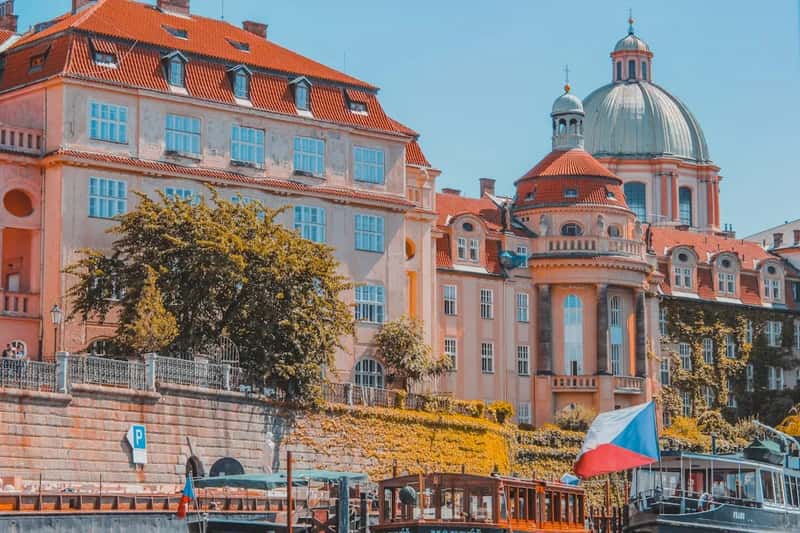
The Czech Republic offers one of the more interesting trade-offs in European higher education. Countries like Austria or the Czech Republic also offer low or no tuition, especially in local-language programmes. Students willing to take their coursework in Czech, rather than English, can attend public universities without paying tuition at all, regardless of citizenship.
Programs taught in English, aimed largely at international students, do carry a price tag, though it typically sits well below Western European or American norms. That arrangement has made the Czech Republic a quiet favorite for students chasing an affordable European degree without needing an EU passport.
United States: The benchmark for expensive tuition

The United States sets the pace for how costly a degree can get. Tuition fees for international students at public universities in the US typically range from USD 25,000 to USD 50,000 annually, while private universities tend to have higher tuition fees, ranging from USD 30,000 to USD 60,000 per year. That range covers everything from mid-tier state schools to elite research universities.
At the very top of the market, the numbers climb further still. In the U.S., many private universities now exceed $60,000–$65,000 per year in tuition alone, and when you add living expenses, total annual costs can cross $85,000–$90,000. Multiply that across a four-year degree, and the total investment easily surpasses what many families earn in several years.
United Kingdom: Costly, but with more variation than the US
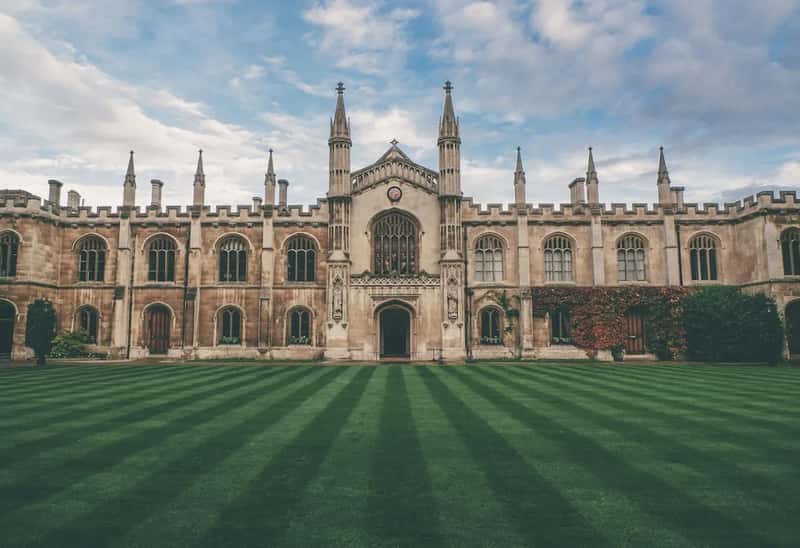
British universities charge a wide range depending on the institution and course. Tuition fees in the UK for international students are from GBP 10,000 to GBP 38,000 per year. That spread reflects everything from regional universities to London’s most selective research institutions.
At the elite end, prices climb sharply. In the UK, international students at top universities, including many Russell Group universities, often pay between £35,000–£50,000 per year, depending on the course. Oxford, for instance, sits near the very top of that scale, with published rates reaching well beyond the Russell Group average for certain courses.
Switzerland: Cheap tuition, brutal cost of living
Switzerland is the exception that proves tuition alone doesn’t tell the whole story. The average tuition fees for bachelor’s and master’s programmes cost between 400 and 3,700 euros annually (US$432 to US$4,000) at Swiss public universities, and PhD degrees cost between 100 and 900 euros (US$108 to US$973) per year. On paper, that looks almost as affordable as Scandinavia.
Living costs erase that advantage almost entirely. Living costs here are high, making it one of the most expensive countries for international students, with students expected to budget around 1,300 to 1,700 euros (US$1,419.10 to US$1,855.75) a month. Add rent in Zurich or Geneva, and Switzerland lands squarely among the priciest places to study in the world despite its modest tuition bills.
Australia: Tuition that climbs fast at the top end

Australia’s tuition fees vary enormously depending on the course chosen. The tuition costs for studying in Australia differ broadly, depending on the course and university, and can range from AU $20,000 to AU $50,000 on average, while top-tier universities and specialised degrees can cost AU $55,000 – $90,000 per year. Medicine, law, and business programs regularly sit at the higher end of that scale.
Once living costs are folded in, the total picture becomes even steeper. The total cost of studying in Australia typically ranges between AUD $55,000 and AUD $90,000 per year when tuition fees and living expenses are combined. Sydney and Melbourne, home to many of the country’s top-ranked universities, tend to push that figure toward the upper bound.
Canada: A step below its neighbors, still far from cheap

Canada sits in an odd middle ground, cheaper than the US but not by a wide margin. Tuition costs in Canada aren’t much cheaper than those in Australia, with an average price for international students typically landing around CAD$20,000-30,000 per year. That figure varies considerably by province and by whether a program falls under engineering, business, or the arts.
Toronto and Vancouver, where many of Canada’s most sought-after universities are located, add another significant expense on top of tuition through rent and daily living costs. International students often find that housing, rather than the classroom bill, ends up being the harder cost to plan around once they actually arrive.
Singapore: A regional hub with matching price tags

Singapore has built a reputation as Asia’s academic hub, and its fees reflect that positioning. Singapore also charges significant tuition fees (around SG$10,000-35,000) at its top universities, alongside some of the highest general living costs in Southeast Asia.
Branch campuses of major Western universities and Singapore’s own top-ranked institutions both draw large numbers of international applicants each year. The combination of strong graduate outcomes and a stable, business-friendly economy keeps demand high even as fees inch upward each admissions cycle.
Hong Kong: Tuition bills that rival top UK universities

Hong Kong’s public universities have become notably expensive for students from outside the territory. The tuition fee for non-local students for 2026-2027 is HK$214,000 per annum at institutions like the Chinese University of Hong Kong, and other government-funded schools charge similarly steep rates.
Once the full degree and living costs are tallied, the numbers climb further. For 2026/27 entry, the realistic all-in cost for an international student at one of Hong Kong’s eight UGC-funded universities for a four-year undergraduate degree runs roughly HK$985,000 to HK$1,060,000 total, broadly comparable to mid-tier UK Russell Group universities for international students. That puts Hong Kong squarely among the costlier destinations in Asia.
New Zealand: Smaller country, sizable tuition range
New Zealand’s tuition fees swing widely depending on the field of study. Tuition fees for some master’s programmes can be as low as NZ $20,000, while specialised fields like engineering or healthcare can reach NZ $65,000+. That spread makes the country’s overall reputation for affordability somewhat program-dependent.
Extra fees pile on quickly before classes even begin. Between the NZ $850 visa fee, the NZ $899 health insurance premium, and student service fees, extra expenses can exceed NZ $3,500 before a student attends the first class. Combined with tuition, the total cost of a New Zealand degree lands well above what a Nordic or Central European alternative would demand.
United Arab Emirates: Branch campuses at Western prices

The UAE has taken a different route toward building a higher education sector, importing entire branch campuses of well-known Western universities into Dubai and Abu Dhabi. Institutions like NYU Abu Dhabi and Sorbonne Abu Dhabi charge tuition that closely mirrors what their home campuses ask for in New York or Paris, rather than adjusting rates for the regional market.
Living costs in Dubai and Abu Dhabi add another layer on top of that tuition, with housing and daily expenses running comparable to major Western cities. For students who want a recognizable brand-name degree without leaving the Gulf region, the UAE delivers that option, just not at a discount.
Set side by side, these two lists say less about the quality of education on offer and more about how each government decides to split the bill between the state and the individual student. A degree from a tuition-free country in Europe can lead to the same career outcomes as one from a six-figure program elsewhere, provided the student is willing to learn the local language or navigate a slightly different application process. For anyone weighing where to study next, the real homework isn’t just picking a university. It’s figuring out which country’s philosophy on who should pay for education actually fits the budget.