Somewhere in the world right now, a newborn has a real shot at living past their ninetieth birthday, not because of luck, but because of where they happened to be born. Life expectancy data for 2026 shows a small cluster of nations pulling far ahead of the global average, and the gap between them and the rest of the world keeps widening rather than closing.
What makes this list interesting isn’t just the numbers themselves. It’s the pattern underneath them, a set of shared habits, policies, and social structures that show up again and again across very different cultures and continents.
Monaco

Monaco sits at the very top of nearly every global ranking, and by a comfortable margin. Residents of Monaco live an average of 86.5 years, the highest in the world. Some more recent tallies push that figure even higher, with the principality’s average life expectancy edging toward 86.7 years depending on the dataset used.
The breakdown between men and women there is striking on its own. Males in Monaco live an average of 85.17 years, while females reach 88.99 years, nearly nine decades of life in one of the world’s smallest countries. Wealth concentration, a tiny population, and access to elite private medical care all play a role, but so does a simple demographic quirk: many residents are retirees who moved there later in life specifically for the climate and healthcare.
San Marino

Tucked inside Italy, San Marino is easy to overlook on a map but hard to ignore in longevity statistics. San Marino follows Monaco closely, with a life expectancy of around 86.0 years. That places it consistently in second position across most major datasets, year after year.
Part of the explanation lies in how the country runs its healthcare system. San Marino’s universal healthcare system, combined with strong education rates and government emphasis on disease prevention, shows how systematic approaches can multiply the effect of individual health efforts. With a population under 35,000, the government can also respond quickly to public health needs without the bureaucratic drag larger nations often face.
Hong Kong

Hong Kong routinely surprises people who assume dense, high stress megacities can’t also be longevity hotspots. Hong Kong’s life expectancy for 2025 stood at 85.55 years, continuing a steady climb from previous years. That trajectory has held remarkably steady even through years of political and economic turbulence.
The reasons go beyond wealth alone. Hong Kong’s high level of economic development gives residents access to quality healthcare, education, food, and clean water, while a mild climate and an extensive public transport network encourage year round physical activity. Walking to the subway instead of driving everywhere turns out to be a quietly powerful health habit repeated millions of times a day across the territory.
Japan

Japan has long been treated as the textbook case for national longevity, and the data keeps backing that reputation up. Japan’s average life expectancy sits at roughly 84.8 years, placing it firmly among the top four or five nations worldwide. What sets Japan apart is not one single factor but a convergence of several working together at once.
Diet and healthcare access are usually cited first. Experts describe Japan as benefiting from a perfect storm of longevity factors, including universal healthcare, a diet rich in fish and vegetables, and an obesity rate of only about four percent. The country also devotes a substantial share of its economy to health, with roughly one tenth of gross domestic product going toward medical spending and a dense network of hospital beds relative to population size.
Switzerland

Switzerland is the rare wealthy nation that manages to combine high living costs with genuinely excellent public health outcomes. Switzerland’s life expectancy runs close to 84 years, keeping it just behind the East Asian leaders in most global comparisons. That figure has stayed remarkably stable, reflecting a healthcare system built for long term consistency rather than dramatic swings.
Much of the credit goes to how the Swiss structure daily life around health. Switzerland is known for its high standard of living and excellent healthcare. Mandatory private insurance, clean air, and a culture that treats hiking and cycling as normal weekend activities rather than niche hobbies all reinforce each other over a lifetime.
Liechtenstein
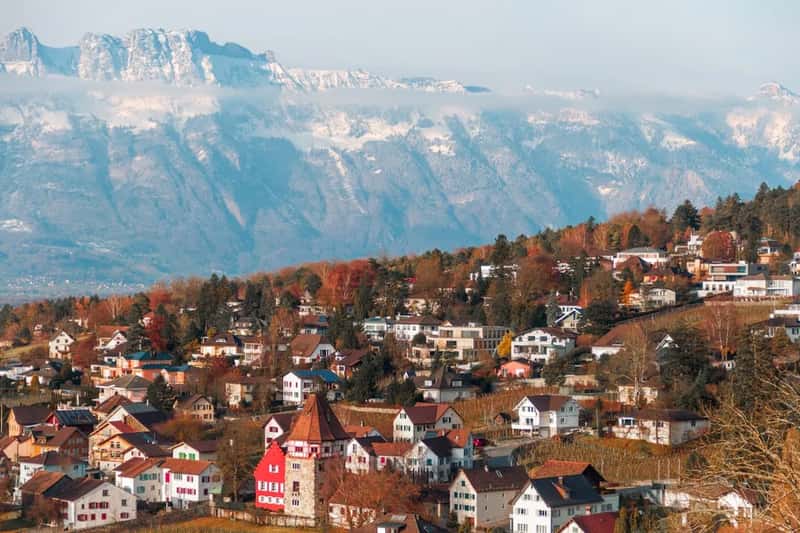
Wedged between Switzerland and Austria, Liechtenstein rarely gets much attention outside of banking headlines, yet it quietly ranks among the world’s longest lived nations. Liechtenstein’s life expectancy sits at around 84.8 years, placing it just behind Hong Kong in several recent rankings. Its tiny population, similar to San Marino’s, makes year to year fluctuations more noticeable but also allows for tightly managed public services.
Liechtenstein shares much of its healthcare infrastructure and cultural habits with Switzerland, given the close geographic and economic ties between the two. High income levels, low pollution, and easy access to specialist care across the border all contribute to outcomes that punch well above what a country of its size would typically achieve. It’s a reminder that longevity leaders don’t need to be large or globally famous to post some of the best numbers on record.
Andorra

Perched high in the Pyrenees between France and Spain, Andorra blends Mediterranean habits with the kind of small state efficiency seen in Monaco and San Marino. Andorra is among the high income nations renowned for low crime rates and high quality of life, factors that consistently correlate with longer lifespans. Its mountain setting also means a naturally active population, with walking and outdoor living built into everyday routines.
Diet plays a clear role too. Advanced healthcare with high immunization rates and a healthy Mediterranean diet are two of the main reasons Andorra has one of the highest life expectancies in the world. Combined with a small, well resourced population, Andorra shows how geography and culture can reinforce each other to produce outsized health results.
South Korea
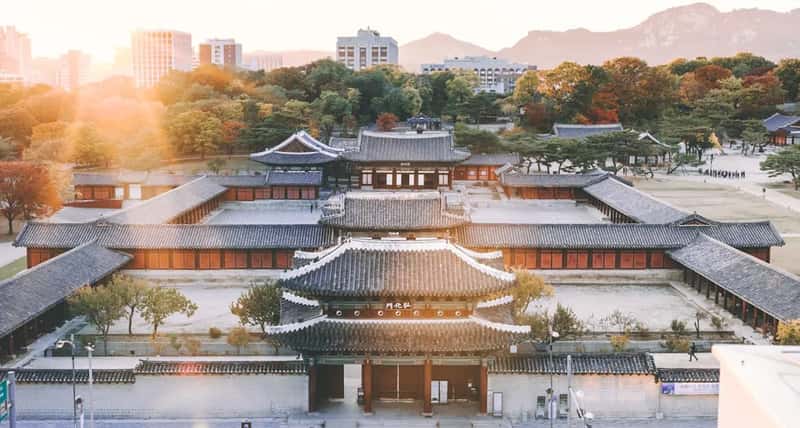
South Korea’s rise up the longevity rankings over the past three decades has been one of the more dramatic stories in global public health. South Korea now sits among the leading major economies in life expectancy, with figures around 84.4 years. That represents a jump of well over a decade compared to where the country stood in the 1980s.
Universal health coverage introduced decades ago laid the groundwork, but modern habits matter too. Preventive screening programs are aggressively promoted by the government, and a diet still centered on vegetables, fermented foods, and fish rather than heavily processed alternatives continues to pay dividends. South Korea also invests heavily in medical technology, which has helped catch and treat age related illnesses earlier than in many comparable nations.
Australia

Australia rounds out this list as one of the few large, geographically spread out countries to consistently rank among the global leaders. Australia’s life expectancy stands at roughly 84.1 years, placing it among the top performing major economies worldwide. That’s notable given the country’s size and the logistical challenge of delivering consistent healthcare across both dense cities and remote rural areas.
A publicly funded universal healthcare system, known as Medicare, forms the backbone of these outcomes. Low smoking rates, strong sun safety campaigns that have driven down skin cancer deaths over the past two decades, and an outdoor culture built around beaches and parks all support an active population well into older age. Australia’s experience also shows that longevity leadership isn’t limited to compact city states or small European principalities.
The common threads behind their longevity

Line these nine countries up side by side and the differences in size, geography, and culture are obvious. Monaco has a few tens of thousands of residents while Japan has well over a hundred million, yet both land near the very top of the same list. Most of these countries and territories combine universal healthcare, low crime, and strong social safety nets with diets rich in seafood and low in processed foods.
Wealth alone doesn’t fully explain it either, since several far richer nations on a per capita basis rank lower. What ties these places together instead is consistency: reliable access to preventive care, low tolerance for smoking, walkable environments, and food cultures that never fully embraced the ultra processed diet common elsewhere. Researchers are also watching newer tools like AI driven diagnostics, already being developed in places such as Singapore, which could push top performing countries toward even higher life expectancies by the end of this decade. The countries at the top of this list didn’t get there through a single breakthrough. They got there by getting the basics right and refusing to let them slip.