
Most people picture a crocodile the same way: massive, sun-baked, lounging on a muddy riverbank in open savannah. That mental image is wrong – at least for a pair of species quietly surviving deep inside West Africa’s dense rainforests, places where sunlight barely touches the ground and scientists still struggle to find them. The West African slender-snouted crocodile (Mecistops cataphractus) and the West African dwarf crocodile (Osteolaemus tetraspis) are doing things that flatly contradict what we assume crocodiles do. They climb trees. They hunt at night. Some live in caves. And until very recently, scientists weren’t even sure how many species they were looking at.
The twist is that these aren’t newly evolved oddities. They carry one of the oldest lineages in the crocodilian family tree – yet they remained so poorly studied for so long that basic facts about their behavior are still being pieced together right now. Here’s what researchers have actually found.
The Species That Science Didn’t Realize Existed Until Recently
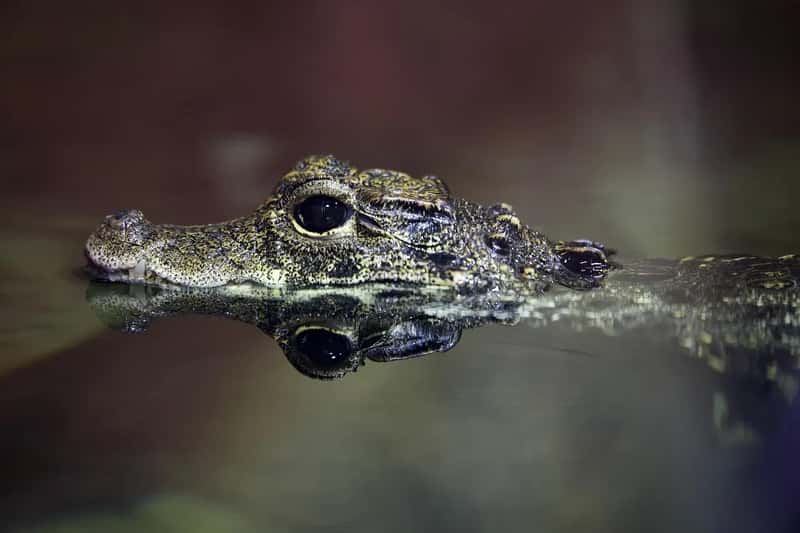
For most of the 20th century, scientists grouped the slender-snouted crocodile as a single wide-ranging African species. That assumption turned out to be spectacularly wrong. The slender-snouted crocodile was thought to be distributed across West Africa and into Central Africa, but the Central African species has since been separated as Mecistops leptorhynchus, based on studies in 2014 and 2018 that indicated both were distinct species. The description of M. leptorhynchus made it the first new living crocodile species to be named and detailed in more than 80 years. That’s not a small detail – that’s a brand-new crocodile hiding in plain sight for a century.
Traditionally placed in the genus Crocodylus, recent studies in DNA and morphology showed it is actually basal to Crocodylus and belongs in its own genus – and that the genus contains not one but two species. Both species diverged during the Miocene, about 6.5 to 7.5 million years ago, separated by the Cameroon Volcanic Line. In other words, these two crocodiles have been evolving independently, in isolation, since before modern humans existed – and we only just noticed.
A Forest That Actively Hides Them From Scientists
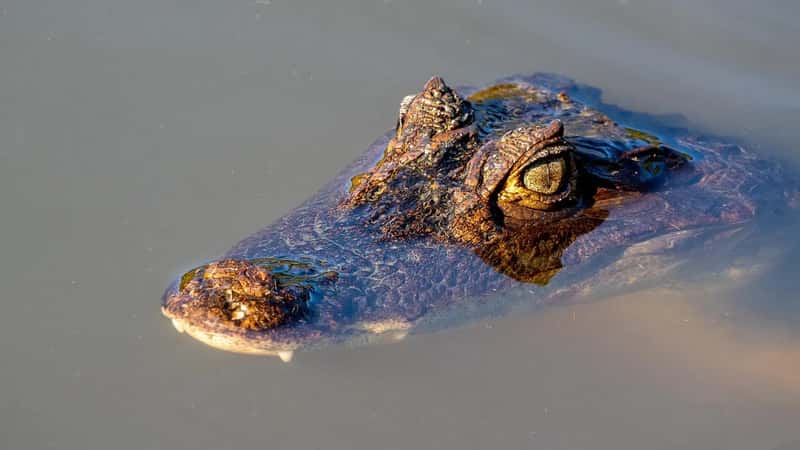
The reason these animals stayed off the radar for so long isn’t mysterious – it’s the forest itself. Slender-snouted crocodiles can be found in smaller river tributaries in densely forested habitats of West Africa, including Angola, Benin, Cameroon, Côte d’Ivoire, Equatorial Guinea, Gabon, Gambia, Ghana, Guinea, Liberia, Nigeria, Sierra Leone, Guinea-Bissau, and Togo. That’s a sprawling range, but the key word is “densely forested.” These aren’t open waterways where you can count animals from a boat.
The West African slender-snouted crocodile is a unique, elusive, and poorly known crocodilian. It’s a forest-dwelling species – without forests, the species cannot survive. This crocodile has historically been recorded in many areas in Côte d’Ivoire, and now, because the forest in those areas has been cut down, it has reduced their numbers. When the canopy goes, the crocodile goes with it. That’s a dependency on habitat that most large reptiles simply don’t share – and it makes surveying them extraordinarily difficult even for experts on the ground.
The Smallest Crocodile in the World – and It’s Basically Wearing Body Armor
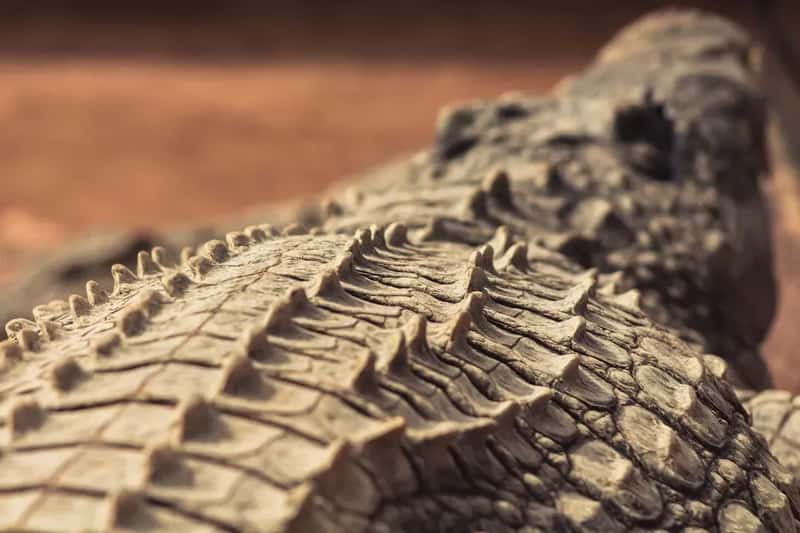
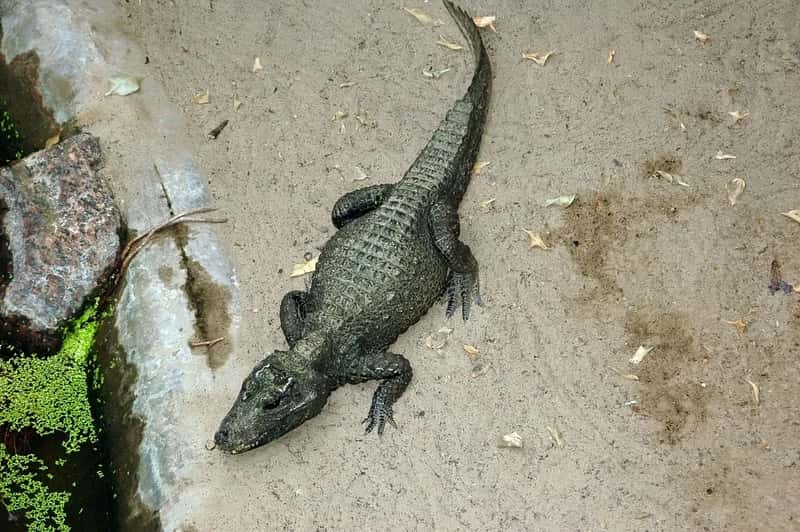
The West African dwarf crocodile is not just small by African standards. Known also as the broad-snouted crocodile or bony crocodile, it is the smallest extant living species of crocodile. Dwarf crocodiles reach an adult length of 1.7 to 1.9 meters and typically weigh between 18 and 32 kilograms. To put that in perspective, a large male Nile crocodile can weigh over half a ton. The dwarf croc maxes out around 70 pounds.
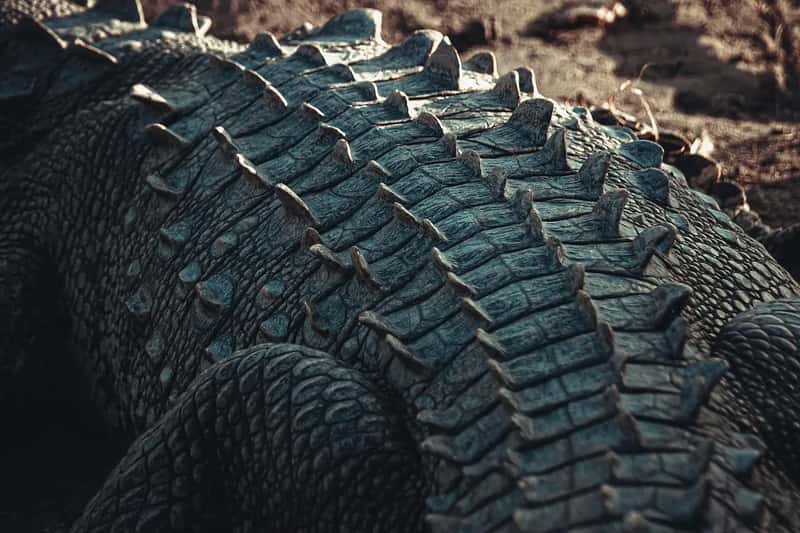
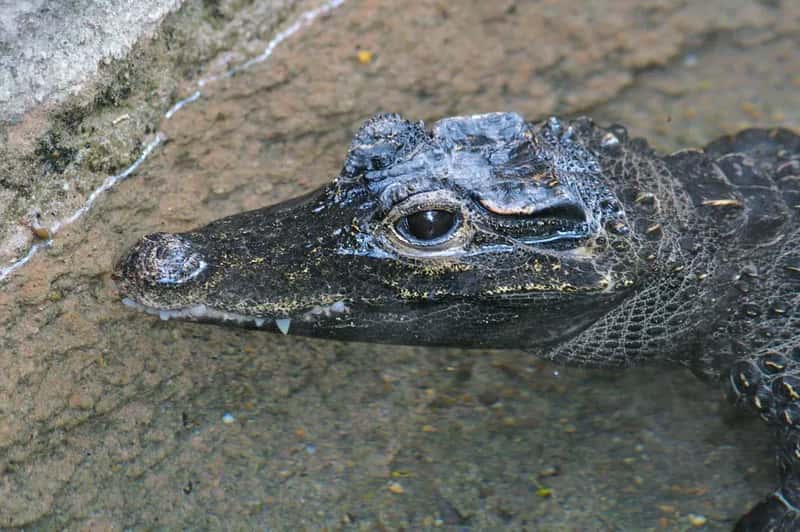
Being small in a forest full of predators comes with consequences – and this species evolved a dramatic solution. As a result of its small size and heightened vulnerability to predation, this species has a heavily armored neck, back, and tail, and also has osteoderms on its belly and underside of its neck. The genus name Osteolaemus actually means “bony throat,” derived from Ancient Greek, and was named specifically because of the osteoderms found among the scales in the neck and belly. It is, quite literally, named for the armor it grew to survive.
They Climb Trees – and Scientists Are Still Working Out Why
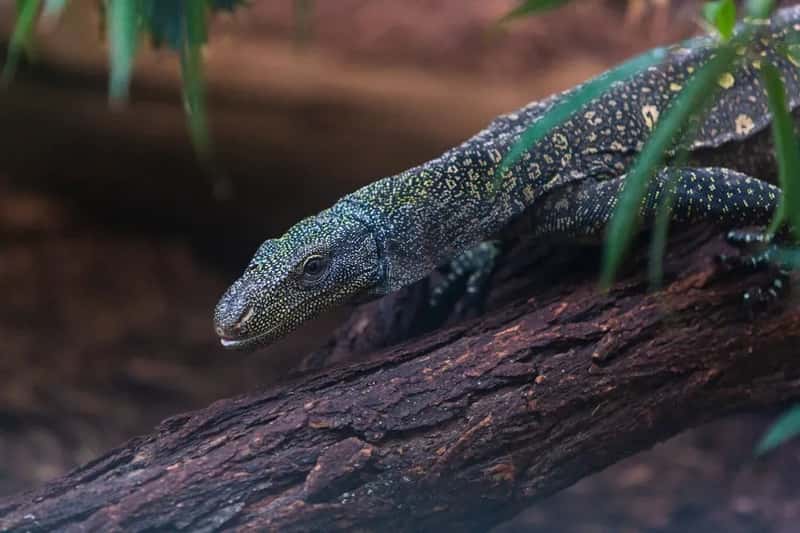
Here’s where things get genuinely strange. These are one of the few members of the crocodilian family that can, surprisingly, climb trees. They have been documented climbing up to four meters high – about 13 feet off the ground, which is not where anyone expects to find a crocodile. The reason appears to be thermoregulation. Because this is a forest-stream species, there are no open areas where they can bask, so they use rocks and the branches of fallen trees, demonstrating their ability to climb.
Dwarf crocodiles weigh between 18 and 32 kilograms – a size where branches that would snap under a Nile crocodile’s bulk become viable platforms. The slender-snouted species uses the same trick. On land, they can belly-crawl through mud and stand up on all four legs to “high walk” over rough terrain, and they sometimes climb several feet into the limbs of streamside trees. It’s not a fluke behavior. It’s a forest adaptation that the open-savannah crocodile model never predicted.
Some Have Gone Underground and Started Eating Bats
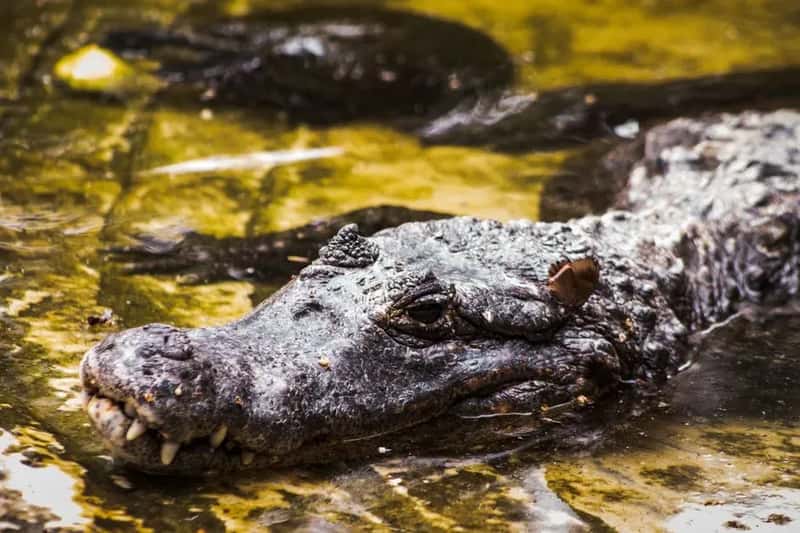
Tree climbing is strange enough. But one population of dwarf crocodiles has taken an even more radical turn. Some have gone underground, turned orange, swapped their diet for bats and cave crickets, and may be drifting toward becoming an entirely new species. Researchers studying cave systems in West Africa have found crocodiles living in near-total darkness, their skin stained by the guano-rich environment – a visible sign that these animals have been down there long enough for their biology to shift.
Recent sampling has identified three genetically distinct populations within the dwarf crocodile group more broadly. The cave population appears to be diverging from surface animals despite their close physical proximity – separated not by mountains or oceans, but by the simple fact that some went underground and never came back. Whether that isolation will eventually produce a fully distinct species is a question scientists genuinely cannot yet answer. Right now, we may be watching speciation happen in real time inside a cave in West Africa.
Nocturnal, Vocal, and Fiercely Devoted Parents
The slender-snouted crocodile breaks another stereotype: the idea that crocodiles are silent, cold killing machines. These reptiles are primarily nocturnal and are considered one of the most vocal crocodilian species – they growl and bellow to establish territory and attract mates. As ambush predators, they employ stealthy tactics, lying in wait submerged in vegetation or near riverbanks before launching sudden strikes, with activity peaking during nocturnal and crepuscular periods to enhance the ability to surprise prey in low-light conditions.
The parental behavior is equally surprising. Female slender-snouted crocodiles show incredibly attentive parental care after laying their clutch – the mothers guard their nests until their offspring hatch. Once hatched, the hatchlings begin making squeaking noises, which triggers the female to uncover the nest, scoop the hatchlings into her jaws, and carry them into the water. That level of attentiveness – listening for the specific sounds of her own young – is a behavior most people associate with birds, not reptiles. And it’s been happening in these West African forests for millions of years.
The Taxonomy Keeps Unraveling – There May Be Even More Species
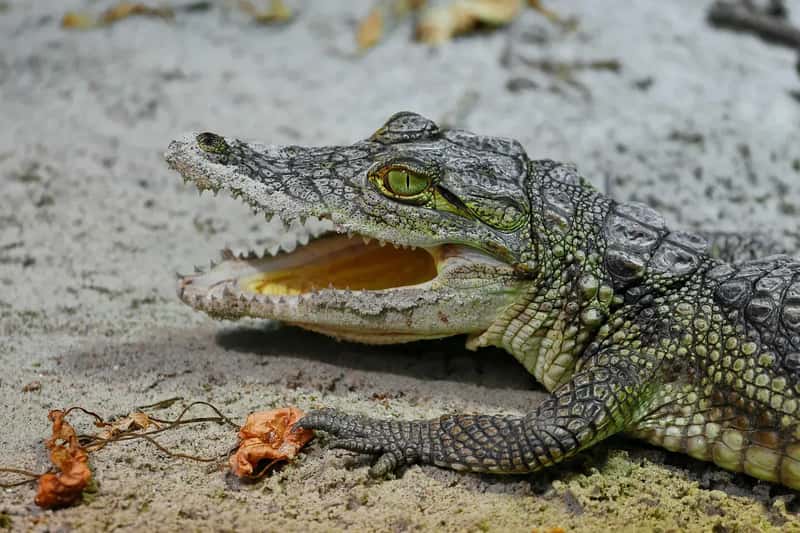
Scientists thought there was one slender-snouted crocodile. Then there were two. Now, the dwarf crocodile group is also fracturing. Studies of morphology published in 2007, and DNA studies in 2009, 2013, and 2015, indicate that three distinctly different populations of Osteolaemus may merit full species recognition: O. tetraspis, O. osborni from the Congo River Basin, and a third possibly unnamed species. Current research suggests there may be as many as seven species of crocodile in Africa total – a number that would have seemed absurd just two decades ago.
The African dwarf and slender-snouted crocodiles are considered the least known crocodilians in the world. That’s the scientific consensus – not a caveat, but a straightforward admission that these animals have largely evaded serious study. The original species description was based on what researchers describe as a “now-lost specimen of unknown geographic origin,” meaning the foundation of the entire taxonomy was shaky from the start. Every new genetic study peels back another layer, and the picture keeps getting more complicated – and more interesting.
They’re Disappearing Before We Even Understand Them
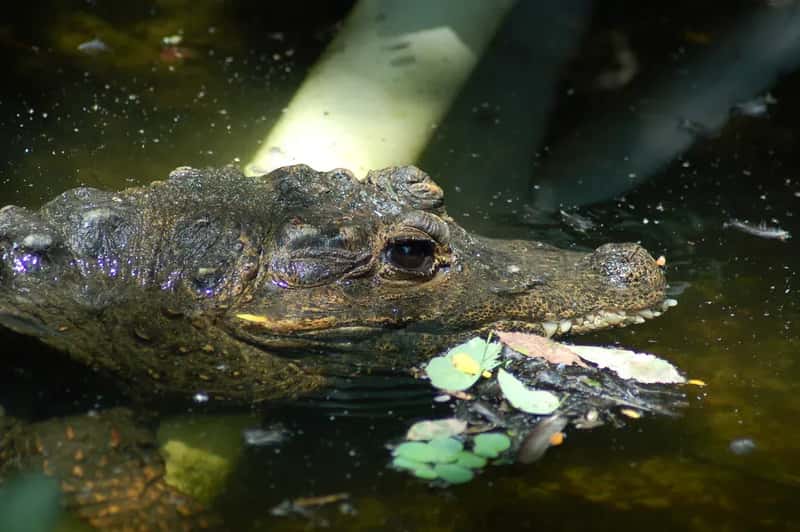
The West African slender-snouted crocodile is a critically endangered species. It is the most endangered crocodile in Africa – so shy and so forest-dependent that fewer than 500 may remain, and scientists are still working out basic facts about how it lives. That number is staggering. There are more giant pandas alive today than there may be West African slender-snouted crocodiles.
Both the dwarf and slender-snouted species have been highly susceptible to deforestation and illegal harvest over the past century, resulting in large-scale local and regional extinctions. A study of protected and non-protected areas found that in places where the slender-snouted crocodile existed in the past, there are no more in non-protected areas. The pattern is brutal and consistent: where the forest is cut, the crocodile vanishes. Conservation efforts like Project Mecistops are now focused specifically on preserving this critically endangered species endemic to West Africa – but the window may be closing faster than the science can keep up.
What West African Cultures Have Known All Along
While Western science scrambled to classify these animals, West African communities had been living alongside them for millennia – and treating them with far more complexity than a simple “dangerous reptile” label. In West and Central Africa, crocodiles are seen as powerful “water people” – guardians of rivers and swamps, tied to ancestors. The armored body of the dwarf crocodile stands for strength, borders, danger, and sacred waters, and it appears in sayings about patience, trickery, and respect for waterways.
In many river-crossing tales told across West Africa, crocodiles test travelers at the boundary between land and water – sometimes as guardians of a ford, sometimes as spirits in animal form – rewarding respect and punishing carelessness. There’s a practical wisdom baked into that framing. Communities that revered these animals as sacred also, in many cases, protected the rivers and forests they depended on. Now, as those forests shrink and the crocodiles vanish with them, that traditional knowledge is as endangered as the animals it described.
The Bottom Line
West Africa’s forest crocodiles aren’t the simple, ancient survivors they appear to be at first glance. They’re tree-climbers, cave-dwellers, devoted parents, and nocturnal hunters operating in some of the world’s most complex ecosystems. The slender-snouted crocodile turned out to be two different species that split apart six to seven million years ago. The dwarf crocodile may actually be three. Some populations have gone underground and started changing so rapidly they could be on the verge of becoming something entirely new. And the species most at risk – the West African slender-snouted crocodile – may have fewer than 500 individuals left, just as scientists are finally beginning to understand it. These aren’t animals we’ve figured out. They’re animals we’re losing before we get the chance. Have you ever heard of these species before today? Drop it in the comments.