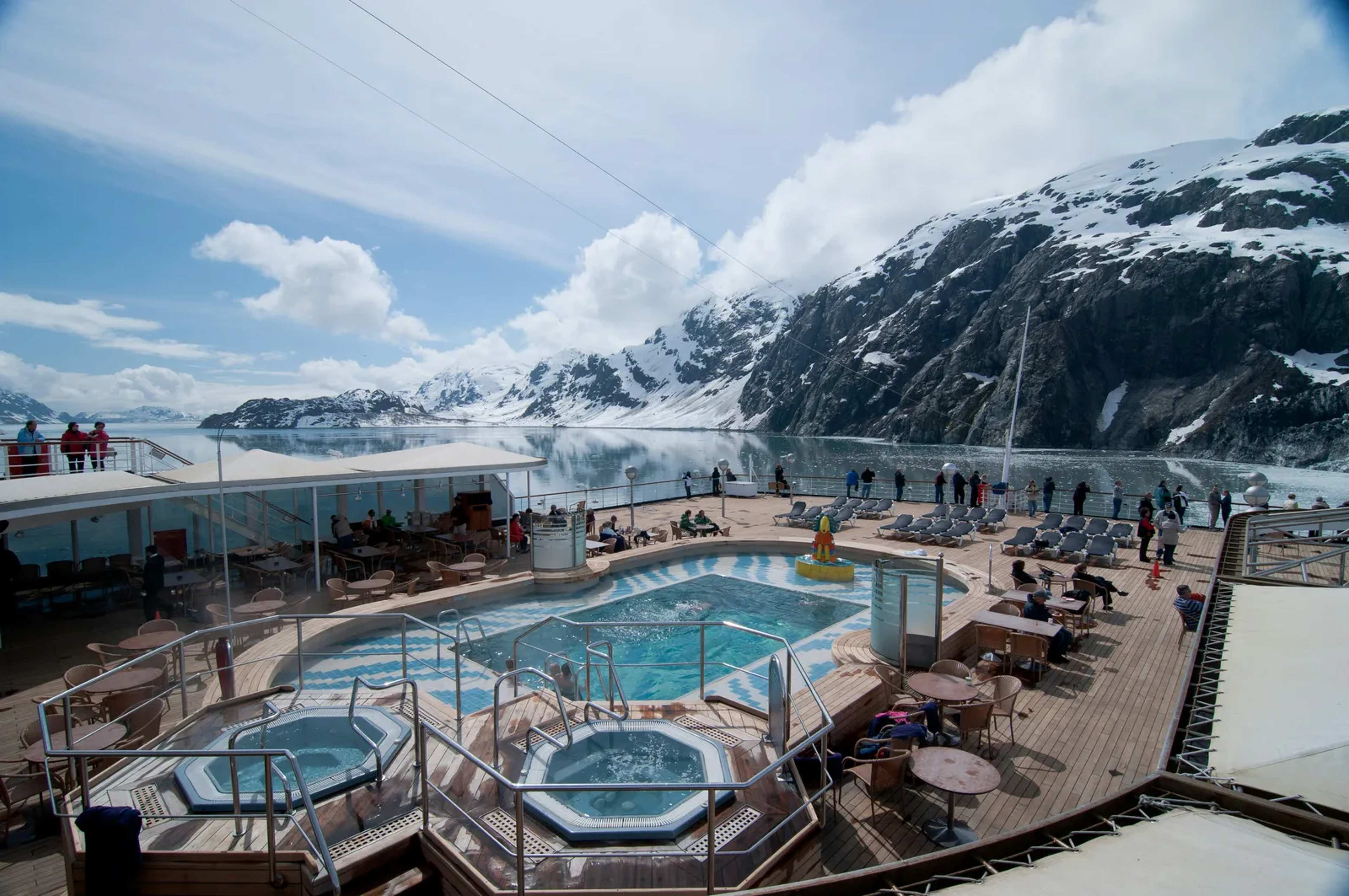
When sweltering heat waves become the norm, and wildfires choke the air with smoke, people start looking north. That’s exactly what’s happening across North America right now. Climate-driven natural disasters now force two to three million Americans from their homes annually, according to Census Bureau surveys, and many are seeking permanent relocation. The Great Lakes region, with its cooler temperatures and abundant freshwater, has emerged as a beacon for those fleeing climate extremes elsewhere. Northern cities, once overlooked for their harsh winters, are suddenly in the spotlight, positioning themselves as havens from the worst impacts of our warming planet.
Duluth, Minnesota: The Poster Child of Climate Migration
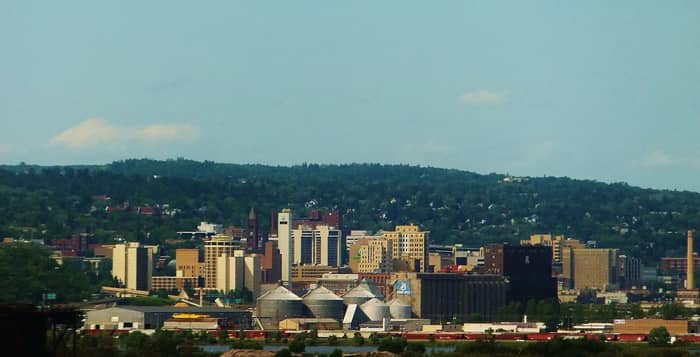
In 2019, Jesse Keenan, associate professor and social scientist at Harvard University, declared that Duluth is climate-proof, sparking a media frenzy that continues today. The designation wasn’t random. Duluth sits at the western point of Lake Superior, which contains about 10% of the world’s accessible freshwater, providing the city with unparalleled water security. Monica Haynes, director of the University of Minnesota Duluth’s Bureau of Business and Economic Research, confirmed that the Los Angeles metro area has the second-largest positive net migration to Duluth behind Minneapolis-St. Paul. People are already voting with their feet, though not quite in the massive numbers some predicted.
Duluth hasn’t grown much in the past decade, only adding around 400 residents since the last census, but the trend appears to be shifting. Duluth has had relatively cool summers and cold winters, which means a lower wildfire risk than the hotter and drier West or the Southeast. By the year 2040, summertime conditions in Duluth are anticipated to be similar to those today in Rochester, Minnesota, Saginaw, Michigan, and Worcester, Massachusetts. That’s actually not bad when you consider what other regions will be facing.
Buffalo, New York: From Rust Belt Relic to Climate Refuge
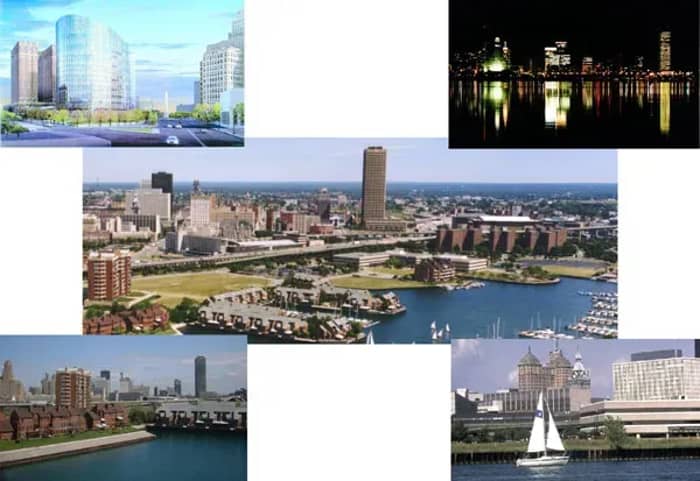
Buffalo flipped the script on its notorious winter reputation when Mayor Byron Brown declared Buffalo to be a “climate refuge city for centuries to come” in his 2019 State of the City address. The timing was strategic. A Harvard study identified Buffalo and Duluth, Minnesota, as the two places in the U.S. best suited to become receiver cities, those locations positioned to welcome people fleeing extreme weather elsewhere.
In 2020, the city saw its population grow for the first time in 70 years, according to the U.S. Census Bureau, a remarkable reversal of decades-long decline. About 3,000 people came to the city from Puerto Rico after Hurricane Maria hit the island in 2017, and while some later returned, many stayed, contributing to Buffalo’s first population growth in 70 years. The city’s location along Lake Erie offers water security and protection from sea level rise, while Buffalo might experience only eight extremely hot days a year by mid-century, compared to Miami’s 114 days over 100 degrees Fahrenheit.
Still, the city of Buffalo lacks a formal plan to adapt to climate change and to build resilience in neighborhoods, according to University at Buffalo researchers. The climate haven designation remains aspirational rather than fully realized.
Madison, Wisconsin: The Understated Safe Haven
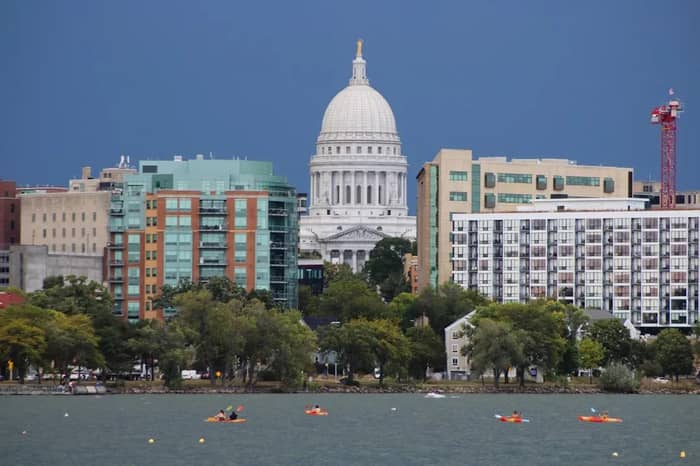
Madison is routinely cited as one of six climate havens around the United States, along with Wisconsin and the Great Lakes region on a broader basis. Unlike Buffalo and Duluth, Madison hasn’t aggressively marketed itself as a climate destination, yet people are finding their way there anyway. While the region still faces issues like higher temperatures and increased precipitation, the Midwest has a lot of freshwater sources and is generally spared from natural disasters.
The reality isn’t quite as rosy as the marketing suggests. In August 2018 in Dane County, just about a foot of rain fell in 24 hours, which was a statewide record and caused terrible flooding with even one fatality. Wisconsin’s annual average temperature has risen by 3 degrees Fahrenheit since the 1950s and is likely to increase an additional 2-8 degrees Fahrenheit by 2050, with extreme heat days over 90 degrees likely to triple. The 2023 summer brought extended periods of wildfire smoke from Canada, catching many residents off guard.
The cost of living, the quality of education, and the availability of housing are big issues in Madison with high house prices and rents, creating barriers for those seeking refuge from climate disasters elsewhere.
Ann Arbor, Michigan: The Educated Climate Choice
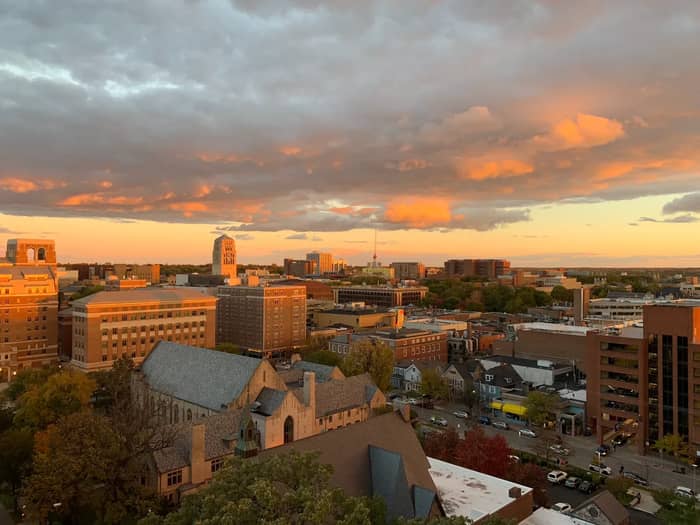
Ann Arbor, Michigan, is among the northern cities labelling themselves as climate havens, joining Duluth and Buffalo in this emerging category. The city benefits from its proximity to the Great Lakes and its highly educated population centered around the University of Michigan, which brings research capacity and innovation to climate adaptation strategies.
While many Great Lakes cities boast a temperate climate and plenty of space, some believe that doesn’t necessarily translate into climate haven status in the short term. These communities are not immune to climate change, as they’ve had many days with very poor air quality due to Canadian wildfires. The infrastructure challenges are real, too. Many Great Lakes cities feature aging housing stock and systems built for populations that no longer exist, requiring substantial investment before they can truly accommodate climate migrants.
Burlington, Vermont: The Eastern Climate Outpost
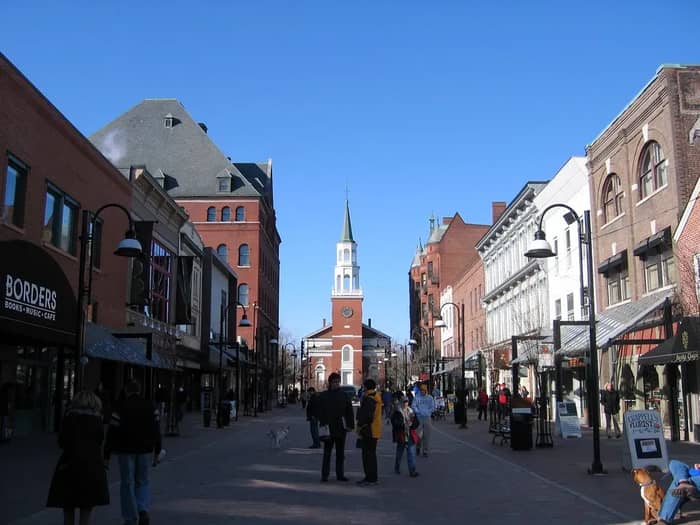
Old industrial northern cities, from Climate-Proof Duluth, Minnesota, to Burlington, Vermont, are billing themselves as climate havens in an effort to lure newcomers and revitalize their economies. Burlington stands out as the easternmost of the commonly cited climate refuges, offering proximity to major East Coast cities while maintaining distance from coastal flooding risks.
Burlington, Vermont, has embraced the self-imposed title of climate haven, positioning itself as an attractive destination for those fleeing climate extremes in other regions. The city’s relatively small size compared to other havens could be both an advantage and a limitation, as it may struggle to absorb large numbers of newcomers without careful planning.
Climate havens in the northwest and northeast could expect to grow by roughly 10 percent, potentially posing serious challenges to existing housing supply, infrastructure, and public services. Burlington faces the same fundamental question as all the other climate havens: can they actually prepare for and accommodate climate migrants before they arrive in large numbers?
The Reality Check: No Place Is Truly Climate-Proof

Let’s be real here. The term “climate haven” might be giving people false hope. It is not possible to be ‘climate-proof’, as Jesse Keenan himself acknowledged after his New Orleans home was rendered unlivable by Hurricane Ida. A climate refuge is not an oasis and not a place that’s not going to have extreme weather or be immune to climate change; what makes a place possibly a climate refuge is that the changes are not as extreme as in other parts of the country, according to Stephen Vermette, a geography professor at Buffalo State University.
There’s little evidence to show that U.S. climate migrants are already moving north on a mass scale, at least not yet. The populations of Cleveland, Duluth, and Buffalo have largely remained stagnant over the past decade. What’s happening instead is more subtle: individuals and families making calculated decisions based on personal experiences with climate disasters, not coordinated mass migration.
Thirty percent of Americans cited climate change as a compelling reason to move, suggesting the potential is there even if the massive movement hasn’t yet materialized. These northern cities have a window of opportunity to prepare infrastructure, housing, and social services before that trickle becomes a flood. Whether they’ll seize that opportunity remains to be seen.