Every year, researchers ask people in more than one hundred forty countries a deceptively simple question: how good is your life, really? The answers form the backbone of the World Happiness Report, a project released annually by the Oxford Wellbeing Research Centre in partnership with Gallup and the United Nations. The report is released annually by the Oxford Wellbeing Research Centre, in partnership with global analytics platform Gallup and the UN, and it comes up with its ranking by asking citizens across roughly one hundred forty countries to answer a single question about their current state of well-being, known as the Cantril Ladder.
The Cantril Ladder asks respondents to imagine a ladder running from zero to ten, with the worst possible life at the bottom and the best possible life at the top, then place themselves on it. Around a thousand people per country typically answer the survey, and while life evaluation is the sole metric used to build the ranking, the report also tracks factors like GDP per capita, social support, healthy life expectancy, freedom, generosity, and corruption levels. The 2026 edition, published in March, once again puts a familiar cluster of nations at the very top, though a few surprises have crept into the mix this year.
1. Finland
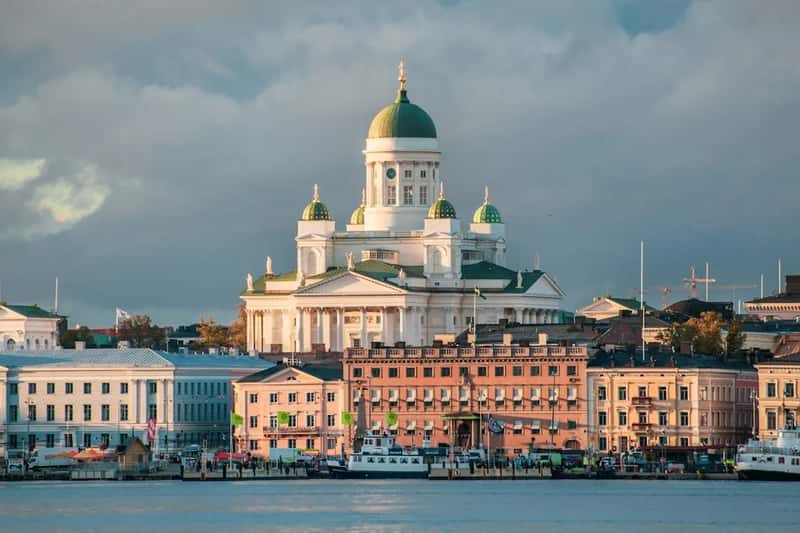
Finland has become almost synonymous with the top of this list. Finland tops the World Happiness Report 2026 for the ninth consecutive year, holding a score of 7.764 that keeps it clearly ahead of the rest of the pack. That kind of consistency is rare in any global ranking, and it says something about how deeply the country’s social systems are woven into everyday life rather than being a one-off statistical fluke.
Analysts point to Finland’s combination of high institutional trust, strong social support networks, and relatively low levels of corruption as the backbone of its score. Nordic countries continue to lead world happiness rankings, with Finland ranked first among the happiest countries on Earth, a pattern that has held steady even as global anxieties around technology, inequality, and social isolation have grown elsewhere.
2. Iceland

Iceland climbed into second place this year, edging past Denmark in a shift from the previous year’s order. Iceland and Denmark followed Finland in second and third place respectively, swapping places from the previous ranking. With a population of under four hundred thousand, Iceland’s small, tightly connected society tends to produce the kind of trust and mutual support that researchers consistently link to higher life satisfaction.
Iceland’s score sits at 7.540, remarkably close behind Finland and just ahead of Denmark. The Nordic bloc, made up of Finland, Iceland, Denmark, Sweden, and Norway, all sit inside the top six of the 2026 rankings. Icelanders also benefit from robust healthcare, generous parental leave, and a strong sense of community that outside observers often cite as central to the country’s wellbeing culture.
3. Denmark
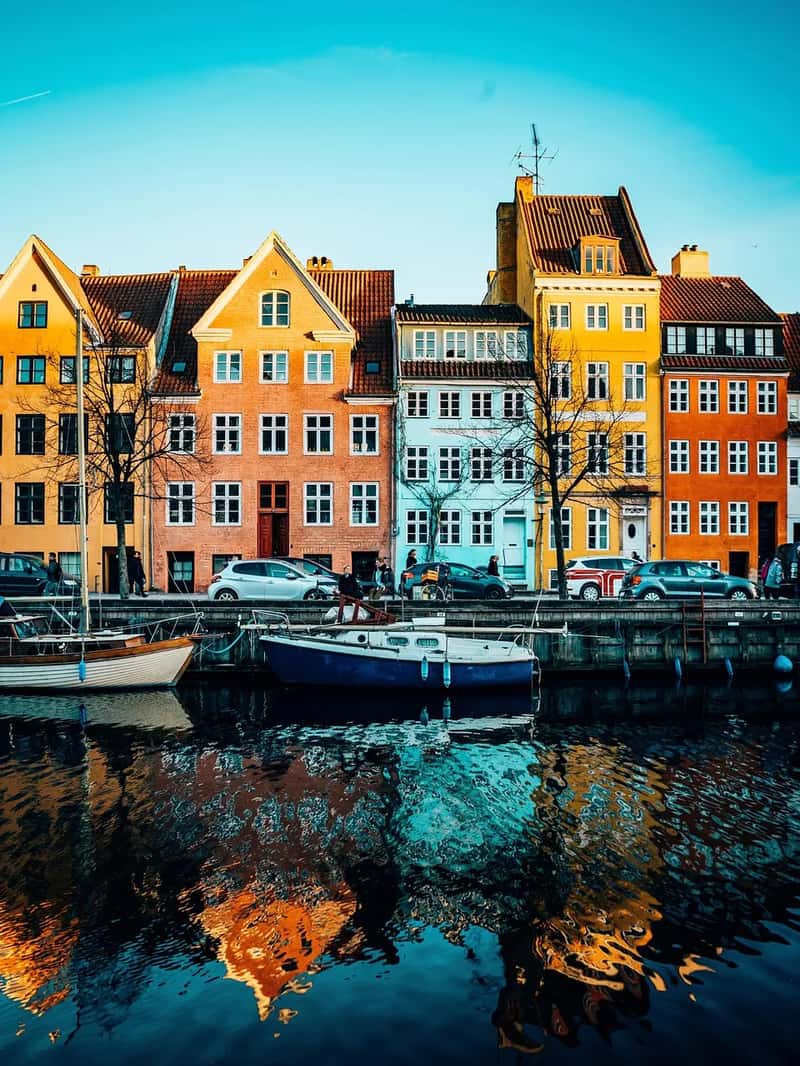
Denmark remains a fixture near the top of every happiness ranking published this decade, and 2026 is no exception. Denmark holds a score of 7.539 in the 2026 report, trailing Iceland by the narrowest of margins. The country’s reputation for work-life balance, efficient public services, and a relatively flat social hierarchy continues to underpin its consistently strong showing.
What sets Denmark apart from many wealthier nations is its emphasis on collective wellbeing over individual accumulation. High levels of trust in government and neighbors, combined with a generous welfare state, appear to cushion Danes against the kind of economic stress that erodes happiness in other high-income countries. Copenhagen’s famously bike-friendly streets and strong civic participation are often cited as everyday expressions of that broader social fabric.
4. Costa Rica

Costa Rica delivered one of the biggest storylines of this year’s report by cracking the top five for the first time. Costa Rica breaks through to fourth place in 2026, the highest-ever rank for any Latin American country in the history of the World Happiness Report. The country’s score of 7.439 marks an all-time high for the nation, according to the report’s own findings.
Costa Rica has long punched above its economic weight in happiness terms, a phenomenon often attributed to its strong sense of community, abundant green space, and comparatively low income inequality relative to its neighbors. The country stands out as one of the report’s biggest standout performers, placing well ahead of many nations with far higher GDP per capita. Its steady climb over recent years suggests this is not a temporary blip but a genuine structural strength.
5. Sweden

Sweden holds fifth place in the 2026 rankings with a score of 7.255, continuing the country’s long streak inside the global top ten. Like its Nordic neighbors, Sweden benefits from strong public institutions, extensive social safety nets, and a cultural emphasis on equality that tends to narrow the happiness gap between rich and poor citizens.
Sweden’s education and healthcare systems are frequently cited as pillars of its wellbeing performance, giving citizens a sense of security that other nations struggle to replicate. Five of the top seven countries in the 2026 report are Nordic nations, Finland, Iceland, Denmark, Sweden, and Norway, underscoring just how dominant this region remains in global happiness research. Swedes also report high levels of generalized trust, both in institutions and in strangers, a factor researchers consistently link to life satisfaction.
6. Norway
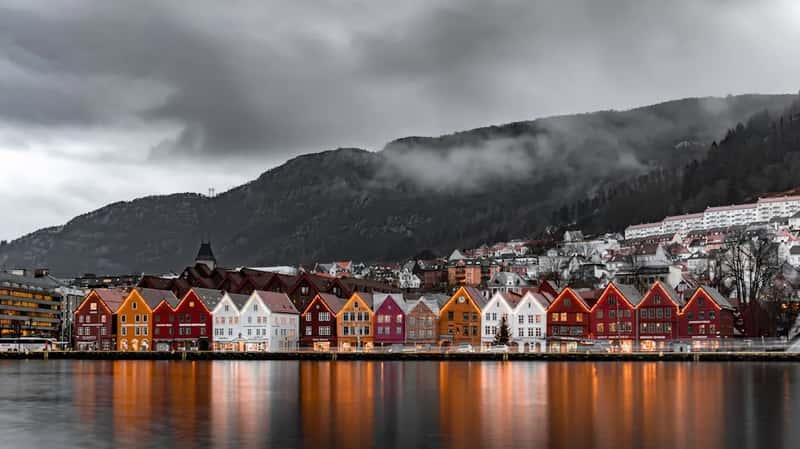
Norway rounds out the Nordic sweep of the top six, scoring 7.242 in this year’s report. The country’s oil wealth is often assumed to be the main driver of its happiness, but researchers point instead to how that wealth has been managed, funneled into public services, pensions, and infrastructure rather than concentrated at the top.
Norway’s strong social safety net, low crime rates, and high levels of personal freedom all contribute to its consistently high placement. The nation also scores well on generosity metrics, with Norwegians reporting high rates of charitable giving and volunteering, factors that the World Happiness Report has repeatedly tied to stronger self-reported wellbeing.
7. Netherlands

The Netherlands holds seventh place with a score of 7.223, maintaining its position as one of the more reliably happy nations outside the Nordic core. The Netherlands ranks highly due to strong economic performance, lower happiness inequality, and a high level of generosity compared to peer nations. Dutch culture’s famous directness and pragmatism seem to translate into a society where expectations are managed realistically, which some researchers suggest reduces the gap between aspiration and reality that fuels dissatisfaction elsewhere.
Beyond the numbers, the Netherlands benefits from excellent public transportation, widespread cycling infrastructure, and a strong tradition of civic engagement. The country’s relatively low levels of income inequality compared to other wealthy nations also help explain why happiness is spread more evenly across its population rather than concentrated among a fortunate few.
8. Israel

Israel’s eighth-place finish continues to surprise observers who associate happiness rankings purely with peace and stability. The country has remained inside the global top ten for several consecutive editions of the report, a testament to how strongly family bonds, community ties, and a sense of shared purpose can offset external pressures.
Researchers studying Israel’s placement often point to the strength of its social fabric, extended family networks, and high levels of social support as counterweights to regional tension. Israel appeared as a first-timer in the top ten of the 2025 edition of the report and has held its position in the years since, a pattern that challenges simple assumptions about what drives national happiness.
9. Luxembourg

Luxembourg claims ninth place with a score of 7.063, benefiting from one of the highest GDP per capita figures in the world alongside strong social protections. The tiny nation’s wealth is broadly distributed through generous public services, and its small size allows for efficient governance that larger countries often struggle to match.
Luxembourg’s multilingual, multicultural population also seems to contribute to a society comfortable with diversity and international exchange. High wages, strong healthcare coverage, and short commuting distances in such a compact country all feed into residents’ generally positive life evaluations.
10. Switzerland

Switzerland enters the top ten this year with a score of 7.018, a testament to its enduring reputation for stability, precision, and quality of life. The country’s decentralized political system, which gives significant power to local cantons, tends to produce governance that feels responsive to everyday concerns rather than distant or bureaucratic.
Switzerland’s strong economy, low unemployment, and excellent public infrastructure all play a role in its high ranking. The Swiss also report high levels of trust in their institutions and in each other, a combination that researchers consistently find correlates with elevated happiness scores across the Cantril Ladder survey.
11. New Zealand

New Zealand holds eleventh place with a score of 6.995, continuing its long run near the top of the global rankings. The country’s relatively small population, strong sense of national identity, and emphasis on outdoor life and natural beauty are frequently cited as contributing factors to its consistently strong showing.
New Zealanders also benefit from comparatively low corruption, a stable political system, and social policies that prioritize wellbeing alongside economic growth. The country’s geographic isolation, once seen as a disadvantage, is now sometimes framed as an asset, insulating it somewhat from global instability while fostering a tight-knit national community.
12. Mexico

Mexico rounds out this list in twelfth place with a score of 6.972, a placement that continues to defy simple assumptions linking happiness strictly to national wealth. Mexico first appeared in the top ten of the World Happiness Report in 2025 and has remained near that mark since, driven largely by strong family ties and social connectedness. Despite ranking well below many wealthier nations on GDP per capita, Mexicans consistently report high levels of life satisfaction.
Researchers studying the country’s placement point to Mexico’s strong extended family structures, vibrant community life, and cultural emphasis on social gatherings as key drivers of wellbeing that don’t necessarily show up in economic statistics. This pattern echoes findings elsewhere in Latin America, where nations like Costa Rica also outperform their income levels on happiness measures, suggesting that social bonds can meaningfully offset economic disadvantage.
Closing Thoughts

What stands out most clearly across this year’s rankings is how little raw wealth alone explains happiness. Nordic nations dominate the top of the list, yes, but Costa Rica’s leap into fourth place and Mexico’s steady presence near the top ten prove that strong social bonds, trust, and community can rival or even outweigh GDP per capita when it comes to how people actually feel about their lives.
The World Happiness Report is not a perfect measuring stick, and no single survey question can capture something as layered as human contentment. Still, the patterns it reveals year after year, the enduring importance of trust, connection, and a functioning social safety net, offer a useful reminder that happiness tends to grow less from what a nation has than from how fairly and closely its people share it.