Scroll through enough travel blogs and you’ll notice a pattern. The same handful of places keep getting introduced as if nobody has heard of them, tucked into listicles with titles like “underrated” or “off the beaten path.” Yet these spots show up on every cruise itinerary, every influencer’s geotag, and every airport departure board heading into peak season.
The gap between marketing language and reality has grown wide enough that several governments are now actively managing crowds rather than pretending the crowds don’t exist. Here are seven destinations still sold as discoveries, even though the numbers say otherwise.
Hallstatt, Austria
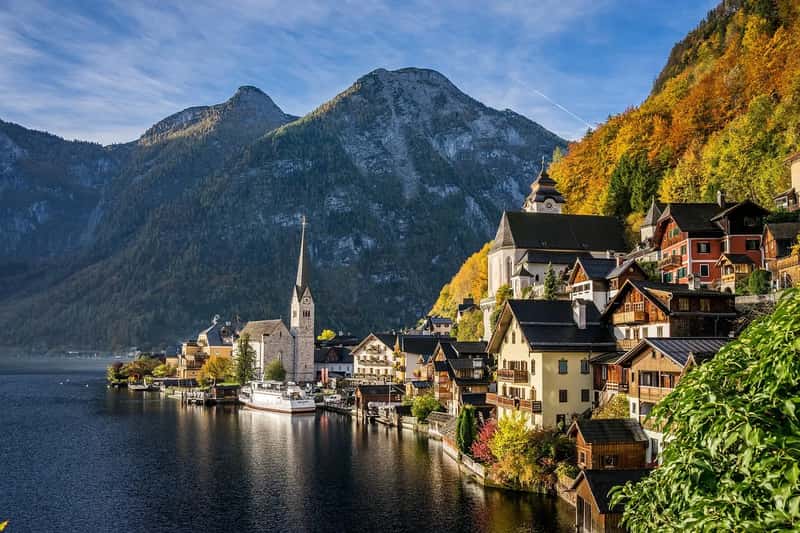
Hallstatt is home to somewhere between 760 and 800 permanent residents, yet it attracts more than one million visitors every year, a ratio few places in the world can match[1]. On the busiest summer days, the village is overrun by up to 10,000 tourists per day[2]. Much of the surge traces back to the village’s resemblance to the fictional kingdom in Disney’s Frozen, which sent a fresh wave of visitors chasing the same lakeside photo spot.
Local authorities have tried blunt fixes before. Local officials have tried blunt tactics before, including a 2023 fence built to block a popular selfie viewpoint, though social media backlash was intense enough that the fence came down within days.[3] A formal daily cap has been discussed but never enforced. The village has called for a reservation-based daily cap of 5,000 visitors, but as of 2026 lacks the authority from provincial government to enforce one.[3] For now, the only real limit applies to tour buses rather than pedestrians.
Dubrovnik, Croatia
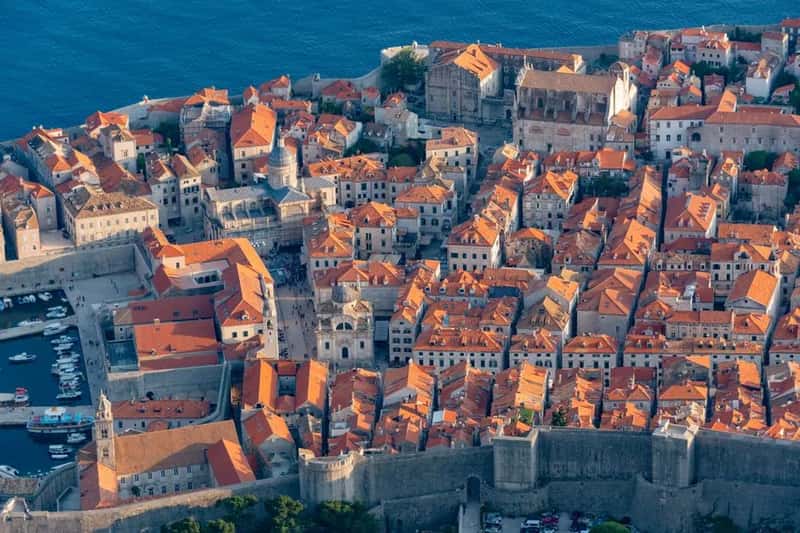
Dubrovnik’s Old Town has been drawing crowds since long before Game of Thrones, but the show’s success as its main filming location for King’s Landing added a fresh wave of arrivals starting in 2011. By 2019, the ratio of visitors to residents had reached striking levels, with the city recorded as having 36 tourists for every local resident[4] in one widely cited ranking of European cities. That kind of density is hard to reconcile with any notion of an undiscovered spot.
Officials are now moving from suggestion to enforcement. Starting in 2026, entry to the city walls and museums will only be accessible by using the booking system in advance[5], a shift meant to spread visitors across the day rather than let them cluster at midday peaks. Cruise arrivals are also being reined in, with visits capped at two cruise ships per day, each required to dock for a minimum of eight hours[5], while coaches are subject to stricter controls, with scheduled drop-off times introduced at Pile Gate, the Old Town’s main entrance[5].
Bali, Indonesia
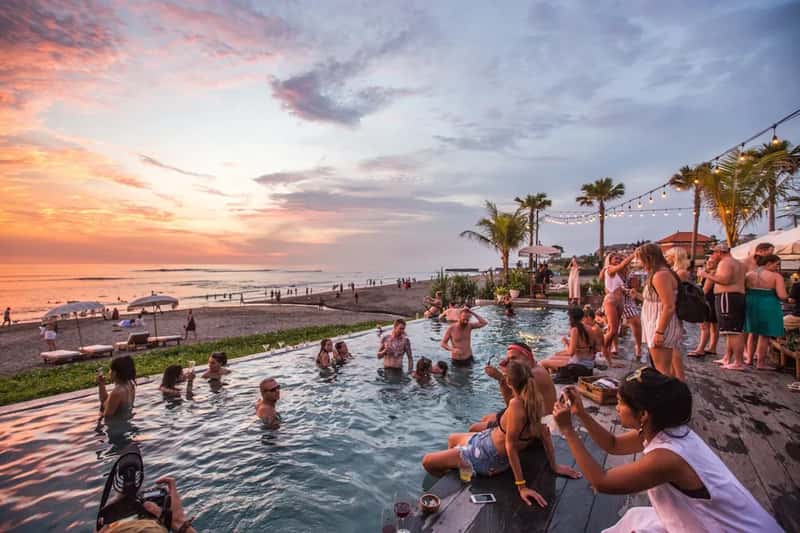
Bali’s tourism numbers have long since surpassed anything resembling a quiet secret. The 2025 result represents an increase of more than 11 percent compared with 2024, when Bali welcomed roughly 6.3 million foreign visitors by air, and it surpasses the island’s previous pre-pandemic record of 6.27 million foreign arrivals in 2019.[6] Layer domestic travel on top of that and the scale becomes even clearer, since domestic tourism was much larger, with 26.62 million domestic trips recorded in Bali during 2025[7].
What makes Bali’s case interesting is where the pressure actually lands. Most visitors concentrate in the southern tourism belt stretching from the airport through Seminyak, Canggu and Ubud, while northern areas such as Lovina or the mountainous interior remain comparatively quiet, receiving a fraction of the traffic.[8] Researchers have started describing this less as classic overtourism and more as overconcentration, a distinction that matters if you’re hoping to actually find a quiet corner of the island.
Santorini, Greece
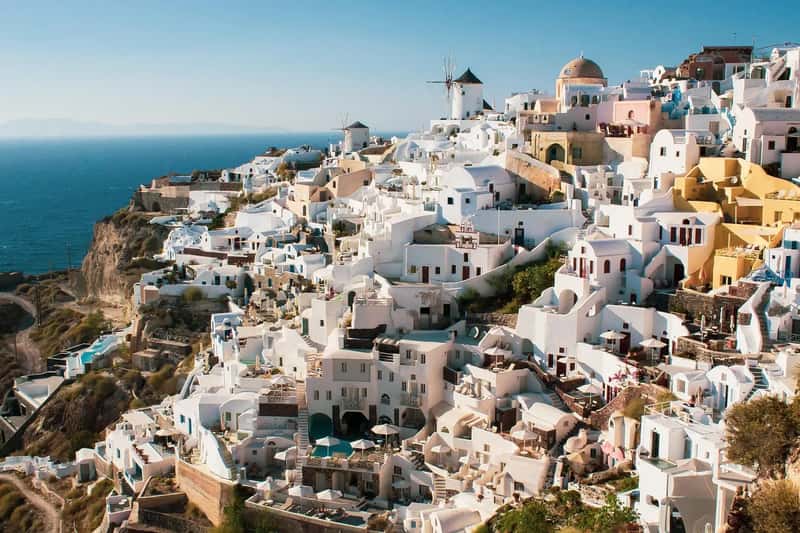
Santorini’s population sits at roughly 15,500 people spread across a compact 76 square kilometers, yet it draws staggering numbers of visitors each year. The Greek Cycladic island has hosted approximately 3.4 million tourist visits annually in peak years, with daily peak-season cruise ship arrivals frequently exceeding 17,000 passengers against an island population sustaining capacity that local authorities now publicly characterize as approximately 8,000 daily cruise arrivals.[9] That mismatch is precisely why the island became a flashpoint for overtourism debates rather than a case study in discretion.
Greece has since introduced one of the most aggressive cruise interventions anywhere in the Mediterranean. Santorini’s 8,000-per-day passenger cap cut 2025 island cruise visits by 10.6 percent, from 1.35 million to 1.20 million, and island tourism revenue by over 22 percent.[10] For 2026 the rules tightened further, with the island’s Berth Allocation System showing an 18.27 percent drop in scheduled cruise arrivals, with only 595 ships scheduled to dock compared to 728 in 2025[11]. Fewer ships has meant a noticeably calmer caldera walk, but it hardly qualifies as an undiscovered island anymore.
Iceland’s Blue Lagoon and Golden Circle
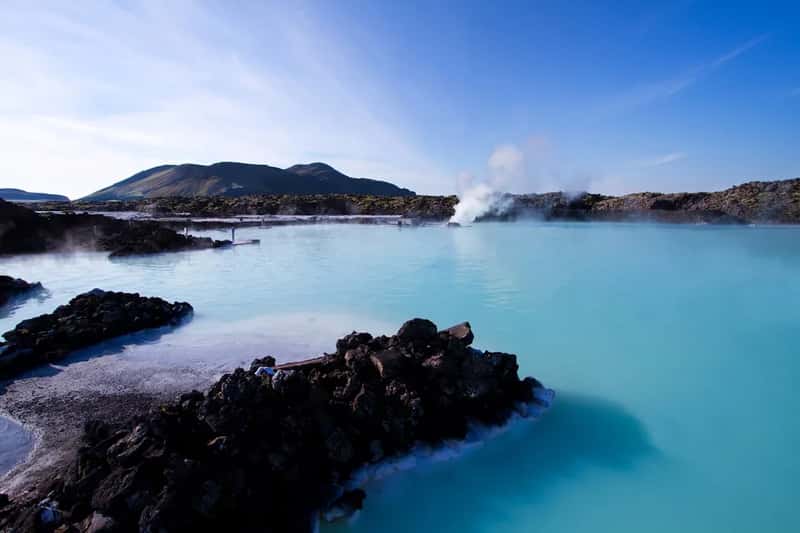
Iceland’s population hovers around 383,000, a figure that makes its visitor numbers look almost absurd by comparison. Iceland welcomed just under 2.3 million foreign overnight visitors in 2025, and Keflavik Airport expects around 2.24 million foreign tourists in 2026, only slightly below its estimate for the previous year.[12] That growth traces back roughly fifteen years, since the country’s visitor count soared from less than 500,000 in 2010 to an expected 2.3 million[13] in the mid-2020s.
The Blue Lagoon, once a byproduct of a nearby geothermal power plant, now anchors much of that traffic on its own. Over one million people visit the Blue Lagoon every year, making it one of the busiest tourist spots in Iceland.[14] Tourism’s weight in the national economy backs up the scale, with the sector accounting for 8.5 percent of gross domestic product in 2023, up from 7.5 percent in 2022 and exceeding the 8.2 percent average recorded during the pre-Covid period of 2016 through 2019[15]. None of that fits the profile of a place still waiting to be found.
Machu Picchu, Peru
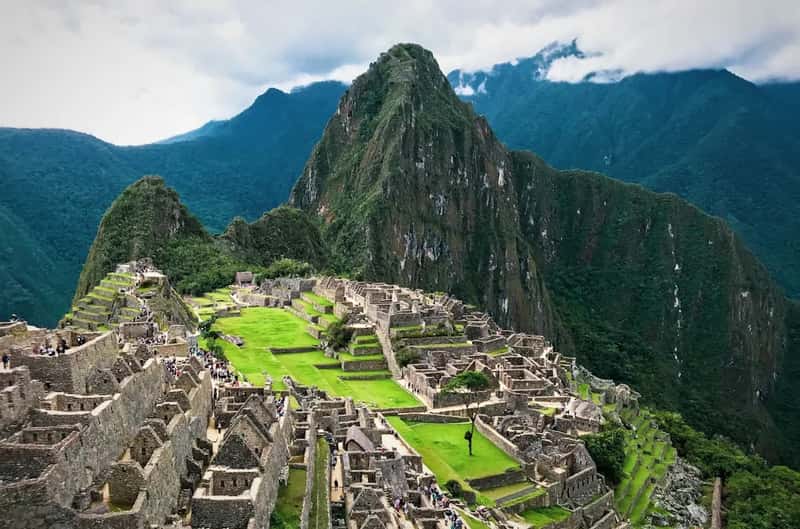
Peru introduced timed entry tickets and daily visitor caps at Machu Picchu more than a decade ago, a response to concerns about erosion on the Inca-built stone paths and pressure on the fragile mountaintop site. UNESCO has raised the possibility of endangered status more than once, largely because of the sheer volume of foot traffic moving through terraces designed for a fraction of today’s crowds. The site now requires visitors to book specific entry windows and travel with a licensed guide through most circuits, a system unimaginable at a place that was still genuinely obscure.
Getting there involves either a multi-day trek along the Inca Trail, itself capped and requiring advance permits often booked out months ahead, or a train journey through Aguas Calientes, a town that exists almost entirely to service the ruin’s visitor economy. Peak season lines at the entrance gate can stretch well before sunrise, with tour groups timing arrivals to catch the classic postcard view before clouds roll in. A destination that requires this much logistical planning to manage demand is, by definition, not a secret.
Gion district, Kyoto, Japan
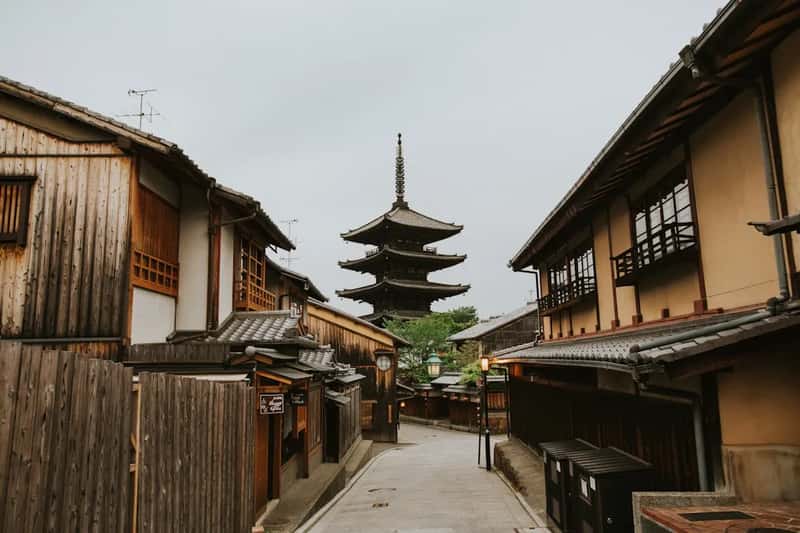
Kyoto’s Gion district, the historic geisha quarter of narrow lanes and traditional teahouses, became so overwhelmed by tourist foot traffic that authorities took the unusual step of restricting access to some of its private alleys in 2024. The measure followed repeated reports of visitors chasing and photographing geiko and maiko as they moved between appointments, behavior residents and shop owners said had turned quiet streets into a kind of open-air photo set. Signs warning of fines for trespassing on private roads went up soon after, a rare instance of a neighborhood pushing back rather than simply absorbing the crowds.
The irony is that Gion’s fame is largely self-inflicted by decades of tourism marketing built around its old wooden facades and lantern-lit streets. Kyoto as a whole draws millions of domestic and international visitors annually, with the geisha district serving as one of its most photographed corners precisely because it looks like a step back in time. That visual appeal, amplified endlessly online, is exactly what pushed a working residential neighborhood into becoming one of the most closely watched tourism flashpoints in Japan.
None of these seven places lack for beauty or cultural weight. What they lack is anonymity, and pretending otherwise does a disservice to travelers hoping for a quieter experience and to the residents living with the consequences of that gap. The more honest framing might simply be this: these are extraordinary destinations, worth visiting with open eyes about the crowds, the restrictions, and the reasons both exist in the first place.