Travel was supposed to be good for everyone. It brings money into local economies, connects cultures, and turns quiet fishing villages into globally recognized names. Yet something has fundamentally shifted. In 2024 and into 2025 and 2026, a growing number of destinations have stopped rolling out the welcome mat. Protests, fines, tourist taxes, and outright bans have become the new normal, and the tension between residents and visitors has reached a breaking point in cities that once dreamed of being on every traveler’s bucket list. The term is overtourism, and it is no longer a fringe concern.
A World Flooded with Travelers
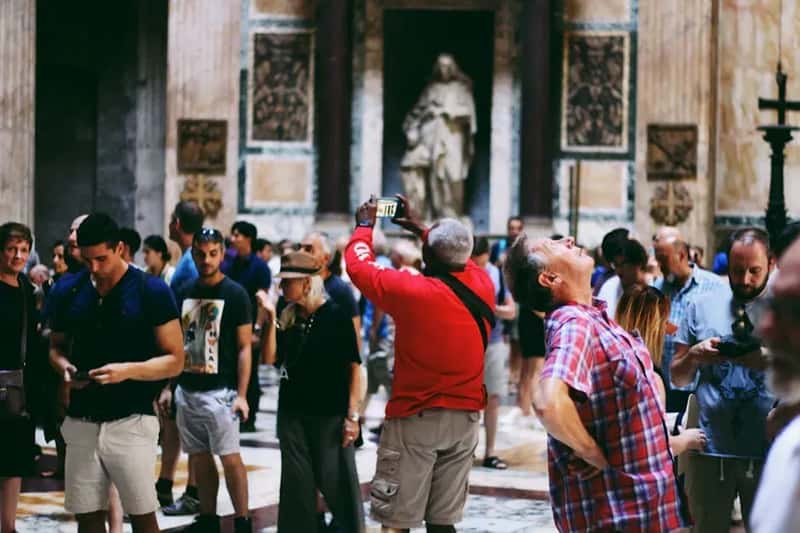
Travel and tourism set records in 2024, with the contribution of tourism to global GDP expected to reach $11.1 trillion, and international tourist numbers reaching approximately 1.53 billion worldwide, marking a 2% increase above 2019’s pre-pandemic peak. That sounds like a success story. The problem is that those billions of arrivals are not spread evenly. The rapid growth in global tourism intensified existing pressures, with cheap flights, social media exposure, and the lure of bucket-list experiences driving tourists to the same small set of locations, all at once.
The United Nations World Tourism Organization (UNWTO) predicts that the number of worldwide tourists, which peaked at 1.5 billion in 2019, will reach 1.8 billion by 2030, likely leading to increased pressure on highly desirable travel spots. In 2024, Europe’s tourism numbers reached new heights, with foreign arrivals surpassing 2019 figures by a year-on-year increase of 12% since 2023, while Portugal alone saw a 26% increase in arrivals in 2024. The infrastructure of these places was simply never built to handle it.
When Tourists Outnumber Residents by the Thousands
Barcelona offers a vivid case study. The city of just 1.6 million residents welcomed over 26 million tourists in 2024, with more than 15.6 million staying overnight, according to local tourism authorities. That is over 10 times the local population, and these numbers do not even count the cruise ship day-trippers, which add another 1.6 million visitors a year. The result is predictable chaos in the streets, soaring rents, and locals who feel like strangers in their own neighborhoods.
In Santorini, Greece, reports emerged of up to 18,000 cruise passengers overwhelming the island in a single day, straining resources for its 15,000 residents. In April 2024, Venice made headlines as the first city in the world to impose a €5 entry fee for day visitors. As Italy’s most visited destination, inbound arrivals reached 4.9 million in 2023, dwarfing the resident population of 49,000. These are not just logistical inconveniences. They represent a fundamental breakdown in the relationship between a place and the people trying to profit from it.
Residents Fight Back
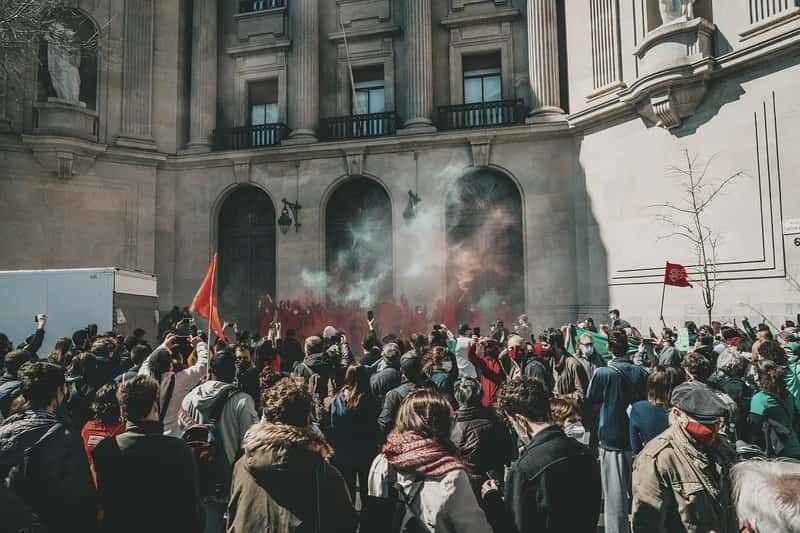
In summer 2024, tens of thousands of locals expressed their growing frustration in anti-tourism rallies and demonstrations across Europe, including Spain. Barcelona suffered from severe overtourism, which resulted in 3,000 residents protesting on July 6, 2024. Residents demanded reduced tourist numbers and for the government to prioritize fairer economies. The signs and slogans were blunt. Throughout the year, evidence of collective frustration with so many visitors popped up in the form of banners, slogans, and expletive-heavy graffiti urging tourists to “go home” on building facades.
On July 21, 2024, 20,000 people demonstrated against mass tourism in Palma de Mallorca, Spain. In Barcelona, 600 masked protesters took to the streets on June 15, 2025, equipped with water pistols, smoke bombs, and protest banners. One demonstrator encapsulated the sentiment, saying “I can’t afford to live in my own city.” These are not isolated incidents. In hotspots like Barcelona, Palma de Mallorca, and Kyoto, local anger has boiled over into street demonstrations, viral videos, and grassroots resistance campaigns.
The Housing Crisis That Tourism Built

Much of the recent backlash from locals is because tourism is coming at the cost of a lower quality of life and spiking housing costs. With an uptick in the number of properties dedicated to hospitality, the market for rentals has shrunk, causing home prices to increase. Platforms like Airbnb accelerated this process dramatically. Short-term rental platforms like Airbnb and Booking.com have drastically reshaped urban housing, with many locals arguing that these platforms have hollowed out communities, turning homes into revolving doors for temporary guests.
In 2023, the Canary Islands welcomed 14.1 million foreign visitors, which locals found unsustainable given the islands’ limited resources and increasing prices. In a 2024 protest in Tenerife, a local said their rent was €800 while they earned a salary of €900. Another activist complained about short-term booking websites, saying they had increased housing prices so severely that locals now had to sleep in cars and caves. In response, governments are moving fast. Barcelona announced plans to eliminate all tourist rentals by 2028, while Valencia’s inspections of tourist apartments increased by 454% in 2024 alone, with the closure of 278 illegal residences already ordered.
Social Media: The Overtourism Accelerant
Instagram and TikTok play a crucial role in driving overtourism, and a single post from a popular influencer can turn a previously unknown destination into a must-visit location overnight. This sudden influx of visitors can strain local resources, inflate housing prices, and erode the cultural fabric of communities. The numbers behind this are staggering. Where a printed travel book may only land in the hands of a few thousand people, 5.31 billion social media user profiles existed in April 2025, and the hashtag #Travel had more than 600 million associated posts.
When the carrying capacity of a tourism destination is exceeded today, it is usually because that place was made social media famous. Santorini, for example, saw visitor numbers start to sharply increase in 2013, right when Instagram began to attain widespread usage, reaching a total of 3.4 million tourists in 2023. Widely hailed as Greece’s “Instagram Island” with 8 million posts tagged #santorini on the platform, it has been the lure of photogenic blue-and-white architecture that flooded the island with tourists. A study in the Journal of Outdoor Recreation and Tourism highlights this further, focusing on a viral video showcasing a breathtaking sunrise in Hainan, China. The short clip, which received over 65,000 likes, led to a dramatic rise in visitors to the national park, from 50 to 600 per day in just one month. This surge caused traffic congestion, pollution, and unsustainable pressure on already underdeveloped infrastructure.
The Environmental Toll Is Becoming Irreversible
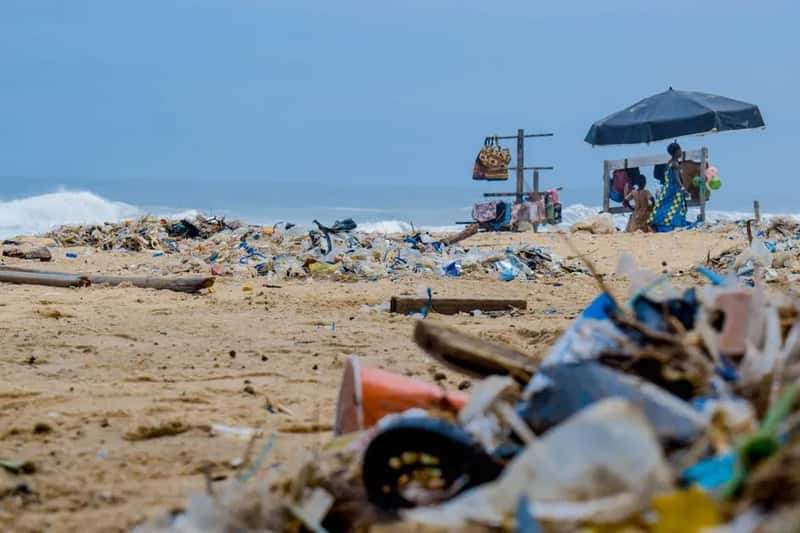
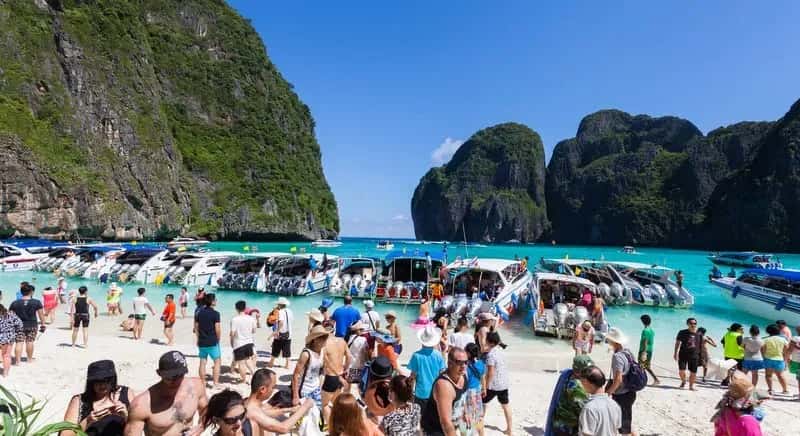
Thailand’s Maya Bay, featured in Leonardo DiCaprio’s 2000 film The Beach, used to receive thousands of tourist boats every day. In 2018, it closed to tourists as the boats destroyed the area’s coral reefs. When it shut down, only 8% of its coral reefs were alive. The conservation efforts started paying off over the years, and in 2023, biologists reported that the coral reef population grew to 20 to 30%. Recovery is possible, but it requires drastic action.
Perhaps the most notable overtourism hotspot in terms of environmental damage is Mount Everest in Nepal, where in 2024 alone, 11 tons of waste, including gas canisters, old tents, and food, were removed from the mountain. Marine litter in the Mediterranean region was found to increase by up to 40% during the high tourist season. Governments are responding with hard rules. Pompeii, with more than four million visitors in 2024, introduced a 20,000-visitor daily cap in 2025. The Trevi Fountain in Rome introduced a reservation system limiting access to 400 visitors at a time. Mount Fuji in Japan capped daily visitors during peak season at 4,000 with a fee of ¥2,000. As Caroline Bremner, senior head of travel research at Euromonitor International, put it, “The tide is turning and local councils and governments are taking back control, some going by the book, others through more informal and guerrilla tactics.”