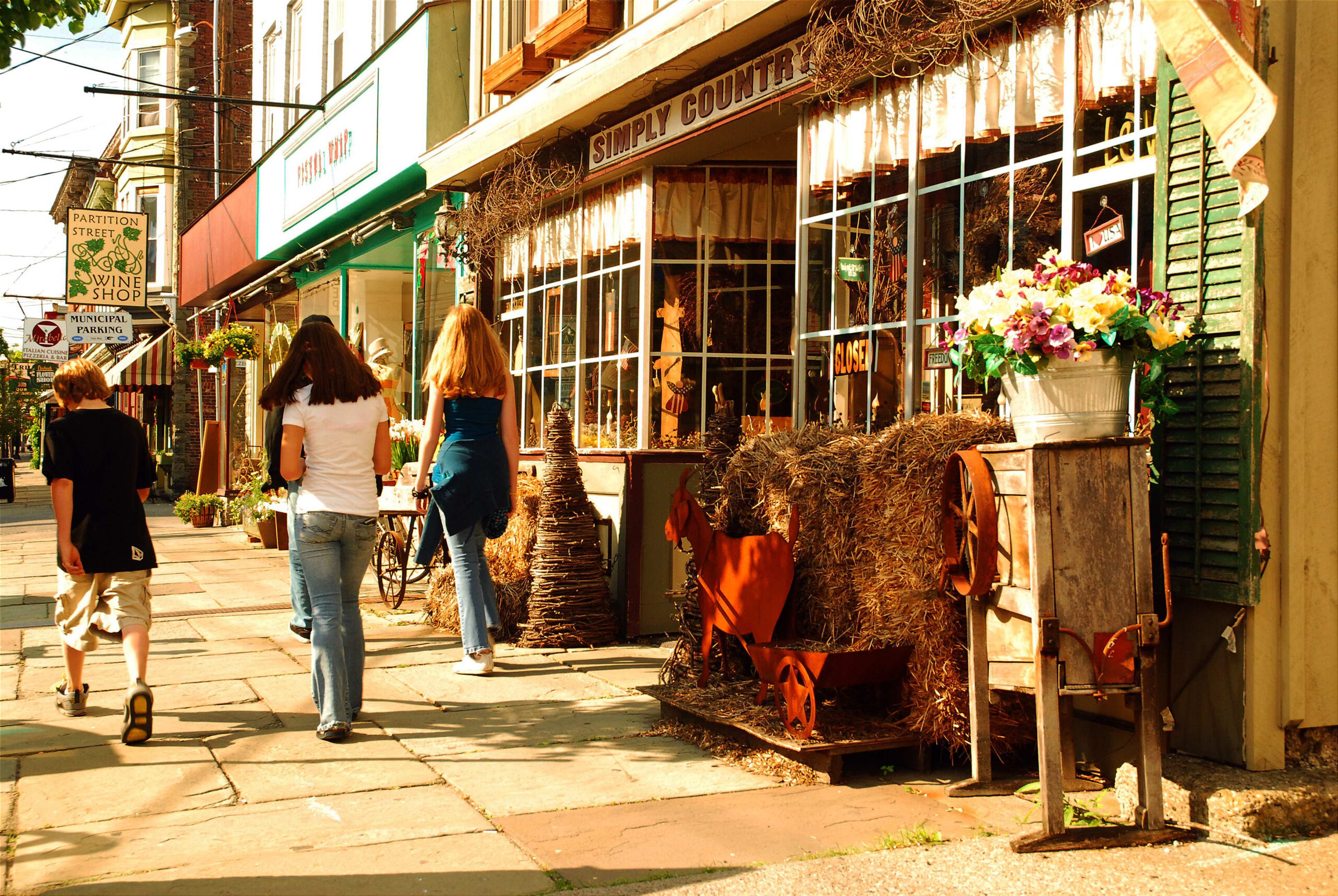
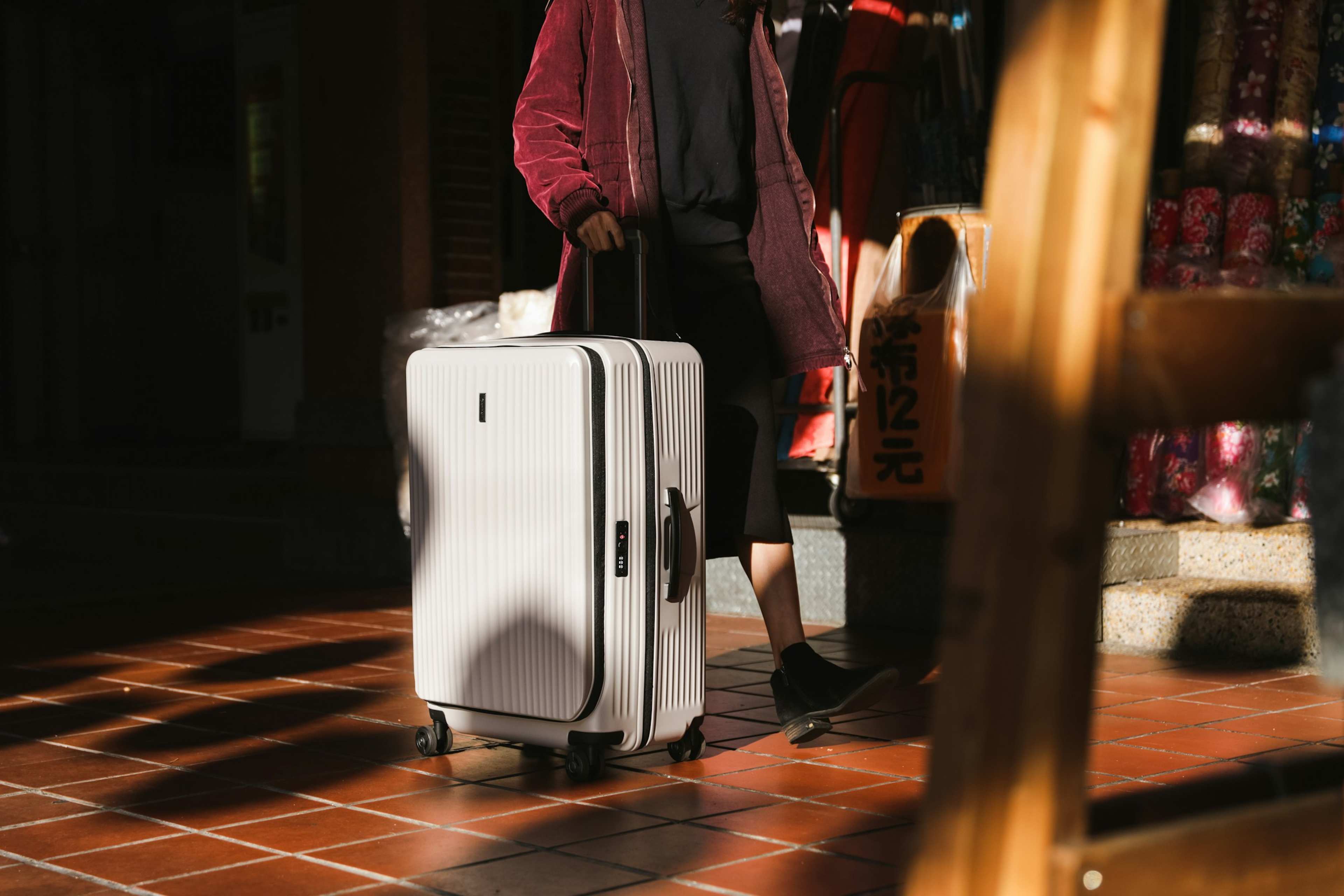
You chose the destination before you admitted why.
You said it was the food. The architecture. The price of the flight.
You did not say: I chose it because I can walk those streets and no one will clock me as an outsider.
No one ever says that out loud.
But the body knows. The body has always known. It gravitates toward the zip code where the mirror finally cooperates – where the face in the crowd could be yours, where the silence around you is neutral instead of loaded.
“Faces and locations can have really deep meanings for us, in terms of how we think of ourselves, and who we are, and how we situate ourselves in the world,” says sociologist Karen Stein. She studies how travel shapes identity. She does not study how desperately we want that identity to be unremarkable for five straight days.
This is about the gap. The one between who you perform at home and who you simply are when no one is assigning you a category. The one between the exhaustion of being readable – your ethnicity, your accent, your face – and the rare, electric relief of passing through a city unscrutinized.
1. The Invisible Tax

There is a cost to being visibly foreign that never appears on any itinerary.
It’s the microsecond delay before someone decides whether to help you or overcharge you. It’s the recalibration of your posture when you realize your clothes are wrong for this latitude. It’s the low-grade vigilance of existing somewhere that has already decided who you are before you’ve opened your mouth.
There are many benefits to blending in when you travel, and perhaps one of the greatest is safety. If you look like a local, your chances of being pickpocketed, scammed, or the victim of a tourist trap are lessened.
But the research undersells it. Safety is the practical argument.
The deeper argument is energy. The invisible tax of visibility – of being perceptibly other – depletes something that has no clinical name. Call it social bandwidth. Call it the cost of being a walking question mark in someone else’s neighborhood.
You go where you can stop paying that tax. Where your face is not a billboard for your outsider status. Where you can simply be a person, moving through a city, spending no cognitive overhead on being perceived.
That is not a small thing. That is everything.
2. The Borrowed Anonymity
Anonymity is a luxury. Most of us don’t have it at home.
At home, you are someone’s colleague, someone’s neighbor, someone’s child who turned out like this. You are a history. A reputation. A set of remembered decisions that follow you through every room.
Travel promises anonymity. But not all travel delivers it equally.
The traveler who stands out – visually, sartorially, linguistically – trades one set of social pressures for another. They swapped the weight of being known for the weight of being conspicuous. That is not rest. That is relocation of burden.
Nothing enhances a travel experience more than feeling like you belong. Instead of standing out as a tourist, blending in as a local allows you to navigate new places with confidence, avoid tourist traps, and connect more deeply with the culture.
The destination where you look like a local offers something rarer. It offers borrowed anonymity – the temporary loan of an identity that requires no maintenance. You did not build it. You did not earn it. You simply arrived and it fit.
You were anonymous on purpose. And it felt, briefly, like breathing without remembering to breathe.
3. The Permission Slip
There is a version of you that only exists in certain cities.
Looser. Slower. Less defended. The version that lingers over coffee because no one at that café knows your name or your deadline. The version that takes a wrong turn and calls it an afternoon rather than a failure.
That version needs permission. It needs the city’s cooperation.
When you look like a local, the city cooperates. It does not treat you as a guest who must perform gratitude and wonder at all times. It treats you as a resident, entitled to the quiet rituals of ordinary life.
The absolute best way to blend in with the locals is to act like you’re not on vacation. Whatever you normally do on your days off, do that.
But here is the truth underneath that advice: acting like you’re not on vacation and looking like you’re not on vacation are two entirely different psychological transactions. One is behavioral. One is identity.
The place where you look like a local issues you a permission slip your home city never would. The slip reads: You are nobody special here. Proceed accordingly.
You have never been so relieved to be nobody special.
4. The Comfort of Shared Syntax
Every city has a visual grammar. A way of dressing that signals belonging. A pace of walking that means I live here. A café posture that separates the regulars from the visitors.
When you look like a local, you already speak part of that grammar.
You don’t have to learn it. It was pre-loaded. Your face, your coloring, your resting expression – they already approximate the dominant visual syntax of this particular place. You arrived with a head start.
Both your appearance and your manner say a great deal, and in countries with a different culture and language to your own, this is even more significant.
The psychological relief of this cannot be overstated. Learning a new grammar while simultaneously performing a stable identity is exhausting. It is the cognitive equivalent of patching a ship while sailing it.
But when the visual grammar is already yours by accident of appearance, something relaxes. You stop performing. You start inhabiting. And the difference between performing a place and inhabiting it is the difference between a vacation and a respite.
5. The Mirror That Finally Agrees
I remember standing in a market in Lisbon – or maybe it was Porto, I’ve spent enough time conflating the two – and noticing that no one noticed me. A vendor handed me change without a flicker of curiosity. A woman asked me something in Portuguese and, when I answered in broken fragments, seemed merely politely confused rather than visibly surprised that someone who looked like me didn’t speak the language.
It lasted about four minutes.
Four minutes of being just a person in a market.
I stood there longer than I needed to. Buying nothing. Recalibrating.
Traveling is a way to step out of one’s comfort zone through different cultures, new people, and boundary-spanning experiences. The research says this is about growth. About expansion. About becoming a more open version of yourself.
But sometimes the most expansive thing that happens is a contraction. A narrowing down to just this: a body in a market, unremarkable, unassigned, briefly free from the architecture of how others read you.
The mirror in some cities just agrees with you. It reflects you back without commentary.
You’ve been looking for that mirror your whole life.
6. The Exit Strategy
Blending in is, at its core, an exit strategy from the self you are at home.
Not an escape – that word implies desperation. This is more deliberate. More architectural. You have designed a temporary life in which the loudest signal your exterior broadcasts is: nothing to decode here.
The traveler who stands out must constantly field the external projection of what their difference means. The traveler who blends in gets to decide what their presence means, or to mean nothing at all.
Cultural immersion stands as perhaps the most powerful element of transformative travel experiences. Unlike surface-level tourism, truly immersing yourself in different cultures creates profound shifts in how you see yourself and others.
But immersion cuts both ways. You can immerse in a culture. Or you can be absorbed into it temporarily. The first is active learning. The second is something more primal.
It is the fantasy of the clean slate. The life without the paper trail of your previous self. The city that has no opinion about who you used to be. Most people think they are choosing a destination. They are choosing the version of themselves the destination allows.
7. The Reduction of Cognitive Load
Being visibly foreign is, neurologically, a second job.
Your brain – already managing navigation, language approximation, cultural translation, currency conversion – is simultaneously running a background process called am I being perceived correctly? That process never clocks out. It hums beneath every interaction, every transaction, every moment in a public space.
Your brain loves novelty, and travel delivers it in abundance. Neuroplasticity – the brain’s ability to form new neural connections – flourishes during travel experiences.
But neuroplasticity costs energy. Novel environments are metabolically expensive. The brain is already burning hot.
The destination where you look like a local silences one of those background processes. Am I being perceived correctly? The system closes. The processing power it consumed gets redirected. Suddenly there is extra capacity – for noticing a doorway, for absorbing an afternoon, for being present in a way that scrutinized travel never quite allows.
You thought you were choosing a destination. You were choosing a lighter cognitive load. You were choosing, finally, to just be in a place without simultaneously explaining yourself to it.
8. The Rehearsal for Belonging
Belonging is not a feeling most people carry at full volume.
It is practiced. Rehearsed. Earned in small, incremental transactions – a nod from a regular, a shorthand with a bartender, a route you know without checking your phone. These are the micro-rituals of belonging, and they accumulate over years in a single place.
Travel compresses this timeline. Or it tries to.
Even for a couple of days, frequent the same coffee shop, pub, or small grocery store. They’ll know that you’re new, but when you greet them like a regular, others won’t. You’ll also learn more about the day-to-day routines of locals by hanging out where they eat or shop.
But here is the subconscious calculation: this rehearsal works better when you look the part. When your appearance does not immediately signal passing through. When the bartender’s nod can plausibly be the nod of recognition rather than the nod of accommodation.
You are practicing belonging in a city that lets you practice without correcting you. You are rehearsing a life in which you fit. You will not move here. You know that. But the rehearsal changes something in the body that the body carries home.
9. The Temporary Identity
Every traveler, consciously or not, tries on a new self at the destination.
The question is how much resistance the destination offers. How much friction there is between the self you arrived as and the self the city allows you to become.
Traveling can change not only your appearance but also your behavior, based on where you are and your perception of that place. This is not performance. This is adaptation – the ancient, mammalian tendency to read an environment and adjust accordingly.
The destination where you look like a local offers low-friction adaptation. The environment does not push back on your face. It accepts you as a given and waits to see what you’ll do next.
Stretching of comfort zones or undergoing difficulties that build personal growth can develop a stronger self-identity. But sometimes growth is not about difficulty. Sometimes it is about the sudden, shocking ease of a temporary identity that requires no apology and no explanation.
The temporary identity is not false. It is simply unburdened. You wear it for a week. You grieve it at the airport. You carry a faint residue of it home – tucked somewhere in the posture, somewhere in the way you now hold a coffee cup.
10. The Long Conversation With the Self You Haven’t Met Yet
The deepest reason is the hardest to say without sounding like you’re confessing something.
You have spent years being assigned. Your neighborhood assigned you a class. Your school assigned you a role. Your face assigned you a history you did not write. Your body assigned you a set of cultural meanings that change depending on which room you walk into, which country you land in, which pair of eyes is doing the reading.
You are exhausted by the assignment.
Faces and locations can have really deep meanings for us, in terms of how we think of ourselves, and who we are, and how we situate ourselves in the world. The places we choose are not arbitrary. They are negotiations. Proposals. Experiments in what it feels like when the world reads you differently – or does not read you at all.
The destination where you look like a local is not running away. It is running toward something. Toward a version of yourself that exists outside the accumulated projections of everyone who has ever known your name. Toward the city that will let you be unlabeled, if only for the duration of one visa stamp.
Personal experiences have the power to change the way a person sees themselves and the world around them. The subconscious already knows this. It chose the destination before the conscious mind finished building the justification. It chose it because the streets there won’t demand a biography on entry. Because the silence around you will be the silence of indifference rather than assessment.
Because somewhere in that city, for a few days, you are not a category. You are not a signal. You are not a question anyone is attempting to answer.
You are simply someone walking. Getting coffee. Taking a side street. Letting the afternoon do what it wants with you.
That is the thing you were looking for. Not the architecture. Not the cuisine. Not the airline miles or the favorable exchange rate. You were looking for the city that would finally stop trying to place you – and let you, for once, place yourself.
You already know which city that is.
You booked the flight before you admitted why.