The restaurant is half-full. You are completely alone.
Not lonely. Alone.
There is a difference, and you have always known it.
You asked for the window seat. You always ask for the window seat. The host raised an eyebrow – barely – and you didn’t flinch. You sat down, ordered a drink, and turned to face the glass like it was the only honest mirror you’ve encountered all week.
Here is the version of you that performs at dinner tables, laughs at the right moments, orders what the table is having. And there is the other version sitting alone right now, watching a stranger hail a cab in the rain. The performer and the witness. The social self and the true self. Most people spend their whole lives letting the performer run the show. You are the rare kind who slips away, finds a window, and watches the world do its thing without demanding that you participate.
1. The Glass Barrier
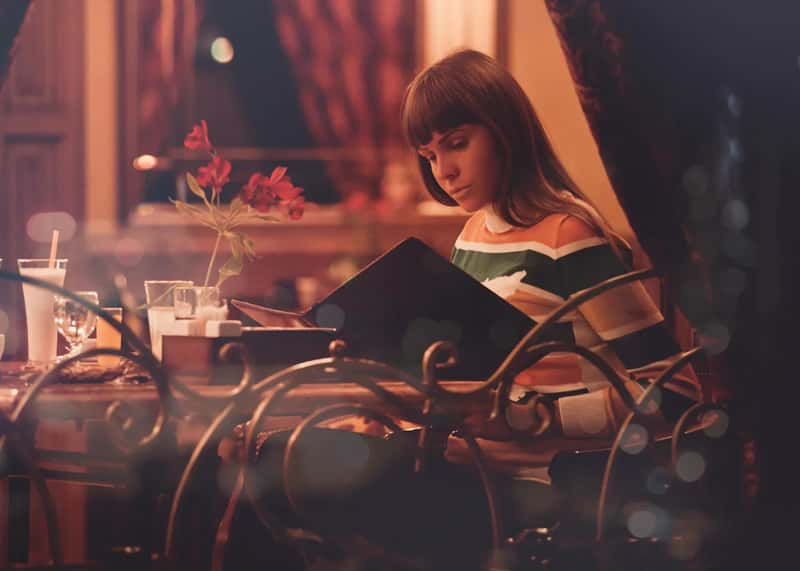
The window is not decoration. It is architecture doing psychological work.
It gives you the world in full resolution – movement, color, human drama – while keeping you physically untouchable by it.
Research on dining environments found that people in stressful social situations gravitate toward tables “anchored” against a wall, window, or other architectural feature rather than exposed, unanchored positions. The window seat is the most elegant anchor available. It puts solid glass between you and the performance of the street.
You can watch the couple arguing at the crosswalk. You can observe the delivery driver checking his phone, the woman in the red coat walking too fast. None of them can ask anything of you.
The glass is a one-way mirror for the emotionally fatigued. It is a screen you get to watch without being cast in.
This is not avoidance. It is calibration. It is choosing how much of the world you let in, and at what temperature. The window seat is the only seat that grants you the full sensory experience of being somewhere – the light, the motion, the life – without the social tax of belonging to it.
2. The Controlled Perimeter
You chose this table the way you choose everything: strategically, quietly, and without explaining yourself to anyone.
Psychologists suggest that our seating habits mirror our subconscious preferences for control, safety, and interaction. The window seat gives you a wall on one side and a clear line of sight on the other. Nobody can approach from behind. You know where every exit is. Your back is protected.
This is not paranoia. This is ancient wiring doing exactly what it evolved to do.
At its core, the desire to control a seating environment represents a need for safety – when we can control our environment, we feel less vulnerable to potential threats, whether real or imagined.
The solo diner at the window has constructed a perimeter. A small, defensible territory in a world that is always asking for more than you planned to give. Inside that perimeter, the food tastes better. The thoughts come cleaner. The noise of the room becomes ambient rather than invasive.
Control is not a character flaw. Control, exercised quietly at a window table, is how some people survive the sheer loudness of being alive.
3. The Spotlight Illusion
You think they are watching you. They are not.
The couple two tables over is dissecting their mortgage. The group near the bar is three drinks deep into a conversation about someone none of them actually like. The server is mentally composing a text message.
The self-consciousness of dining alone fades faster than expected, partly because of a well-documented phenomenon: researchers found that people consistently overestimate how much attention others are paying to them, a bias called the spotlight effect.
The spotlight you feel burning on your back does not exist. It is a projection. Your brain, trained by years of social performance, keeps generating an imaginary audience.
The spotlight effect – a psychological bias where we overestimate how much others notice us – is mostly an illusion. This insight frees solo diners from self-consciousness and allows them to do things others wouldn’t dare simply because they fear being seen.
The window seat helps dissolve this illusion. When you are turned toward the glass, watching the street, you are not performing for the room. You have redirected your gaze outward. The imaginary audience loses its target. And something in you finally exhales.
4. The Sensory Upgrade
There is a version of that meal you have never tasted. The one where you actually pay attention.
When you eat with others, your jaw is moving but your brain is elsewhere – managing the social temperature, editing what you’re about to say, tracking who seems distant tonight and why. The food is incidental. A prop in the scene.
Alone at the window, everything sharpens.
When eating alone, “we have the opportunity to practice mindfulness, truly focusing on the flavors, textures and experience of our meal without external distractions.”
Solo eaters often report being more present during meals – they notice the flavors, textures, and aromas of their food, observe their surroundings, and naturally practice what psychologists call mindfulness.
The light through the window changes the color of everything on your plate. You notice that. You would not have noticed that with someone across from you, competing for your attention. The window seat is where food becomes an experience again, instead of a backdrop to someone else’s anecdote.
5. The Emotional Decompression Chamber
I remember the first time I understood what this was really about. A city I didn’t live in. A restaurant I’d never return to. I was three days into a trip I’d taken alone, and I was so relieved by my own company that it startled me. I ordered something I couldn’t pronounce. I ate it watching pedestrians below. No one knew where I was. It was the most rested I’d felt in months.
That relief had a clinical name. I just didn’t know it yet.
For people who feel overstimulated or emotionally depleted, eating alone can be a soft landing – it is one of the few daily activities that can offer true solitude.
The window seat accelerates this decompression. The movement outside is rhythmic, almost hypnotic – people cycling, buses running their routes, a pigeon doing what pigeons do. Your nervous system interprets the motion as proof that the world is continuing without requiring your input. This is the deepest possible permission to rest.
Recent studies have found that the negative effects typically associated with being alone were reduced or entirely eliminated when participants purposefully set aside the time for a solo activity – some even reported decreased stress and moodiness and improved sleeping habits.
The meal is not the point. The decompression is the point. The meal is just the reason you’re allowed to be there.
6. The Observation Instinct
You have always been a watcher. Long before you knew it was a psychological trait, you were the kid at the birthday party who drifted to the edge of the room and catalogued everything.
The window seat honors that instinct without pathologizing it.
Choosing a seat by the window can be a sign of a dreamy, introspective nature – it may indicate that you are someone who values space for thought and reflection, and often finds inspiration in the world outside.
From your position at the glass, you are running a thousand quiet analyses. That man has been checking his watch every ninety seconds – waiting for someone he’s afraid won’t show. That woman is laughing too hard at her own joke – performing confidence she doesn’t quite feel. You read these signals without effort because you have been reading rooms since you were old enough to understand that rooms have moods.
Picking a table facing the street for people-watching – or choosing a window seat where light and movement give natural company – is one of the most instinctive things an observant solo diner can do.
This is not voyeurism. This is your most native intelligence, finally given a stage.
7. The Identity Without Witness
In company, you are always slightly edited. You are the version of yourself that you’ve calculated is appropriate for the specific people at the table. The professional self. The funny self. The self who is doing just fine, thank you.
Alone at the window, those performances go dark.
Solo dining fosters a deeper self-awareness – by spending quality time with yourself, you gain insights into your preferences and desires, and this practice encourages introspection, helping you understand more about who you are and what you enjoy, not just about food, but about life in general.
Nobody is watching. Nobody needs managing. The mask you wear so automatically you’ve forgotten it’s a mask – you can set it on the table next to your fork and just sit with your actual face for a while.
Being able to sit comfortably alone at a restaurant table is less about being fearless and more about knowing yourself well enough that other people’s opinions simply do not carry much weight.
The window seat is where you meet the self that exists when nobody is counting on you to be a particular way. That self is quieter than you expect. And usually more honest than you’re ready for.
8. The Sovereign Meal
You chose this restaurant. You chose this table. You chose every item on this order without running it by a single other human being. That might sound unremarkable. It is, in fact, extraordinary.
You can choose where to go, what to eat, and how long to linger – and while this might sound minor, the cumulative effect of doing things on your own terms can build confidence. It is a subtle but powerful way of practicing self-trust.
Solo diners are decisive – they don’t need a committee to choose a restaurant or spend twenty minutes debating menu options with a group. Research from the Journal of Personality and Social Psychology suggests that people who spend time alone regularly develop stronger decision-making abilities because they rely on their own judgment rather than group consensus.
There is something quietly radical about a meal that answers to nobody. No dietary compromises. No one’s preference overriding your own. No social math around what you order versus what they ordered. You eat what you want. You linger as long as you choose. You leave when you decide.
This is not selfishness. This is sovereignty. And most people get so little of it that they’ve forgotten what it feels like.
9. The Provisional Disappearance
Here is what nobody says out loud about the window seat: it is a practice in disappearing.
Not permanently. Not tragically. Just temporarily vanishing from the web of obligations, expectations, and relational demands that constitute a modern life. The window seat gives you an exit that isn’t really an exit – you are still here, still in the world, still eating a meal in a public room – but you have stepped just slightly sideways from the social contract.
The principle at work is what psychologists call “positive solitude” – the ability to be alone without feeling lonely. These are not people eating alone because they have to. They’re choosing it because they find value in that quiet space for reflection, planning, or simply savoring a good meal without distraction.
The street beyond the glass is indifferent to you. The people passing don’t know your name, your failures, your pending emails. To them, you are a shape in a window. A face behind glass. Briefly, beautifully, you are nobody’s anything. You are just a person who chose a seat, and ordered food, and is watching the evening arrange itself in the amber light of a city that doesn’t owe you a single thing.
In a world where people feel constant pressure to appear social, busy, and connected, the choice to be alone can feel like a radical act – but for those who are truly comfortable with themselves, it isn’t radical at all. It’s natural.
The provisional disappearance is the heaviest thing on the menu. And you order it every time.
There is a specific kind of person who has read this far with recognition rather than curiosity. Not everyone needs the window seat. Some people are genuinely nourished by the noise, by the press of other bodies, by the beautiful obligation of being needed at a table. This is not about them. This is about the ones who feel, in the deepest and most wordless part of themselves, that observation is not withdrawal – it is participation at a frequency most people can’t hear.
The vulnerability that the window seat protects you from is real. Connection is high-risk. Being seen fully – not as the edited version, not as the appropriate-for-the-table version, but as the actual raw thing that you are – is one of the most terrifying propositions a human being can face. The glass doesn’t eliminate that terror. It just gives you somewhere to stand while you decide whether you’re ready. And some days, you are not ready. Some days, the most honest thing you can do is sit alone at the glass and watch the world go about its business and let the food be warm and the light be good and not require anything more of yourself than that.
The window will be there tomorrow. The world will still be moving on the other side of it. And when you are ready – truly ready, not performed-ready – you will know it. You won’t need the glass at all. But until then, there is no shame in the seat you keep choosing. Some of the most accurate things a person can know about themselves they learned from a window, alone, while the soup was still hot.