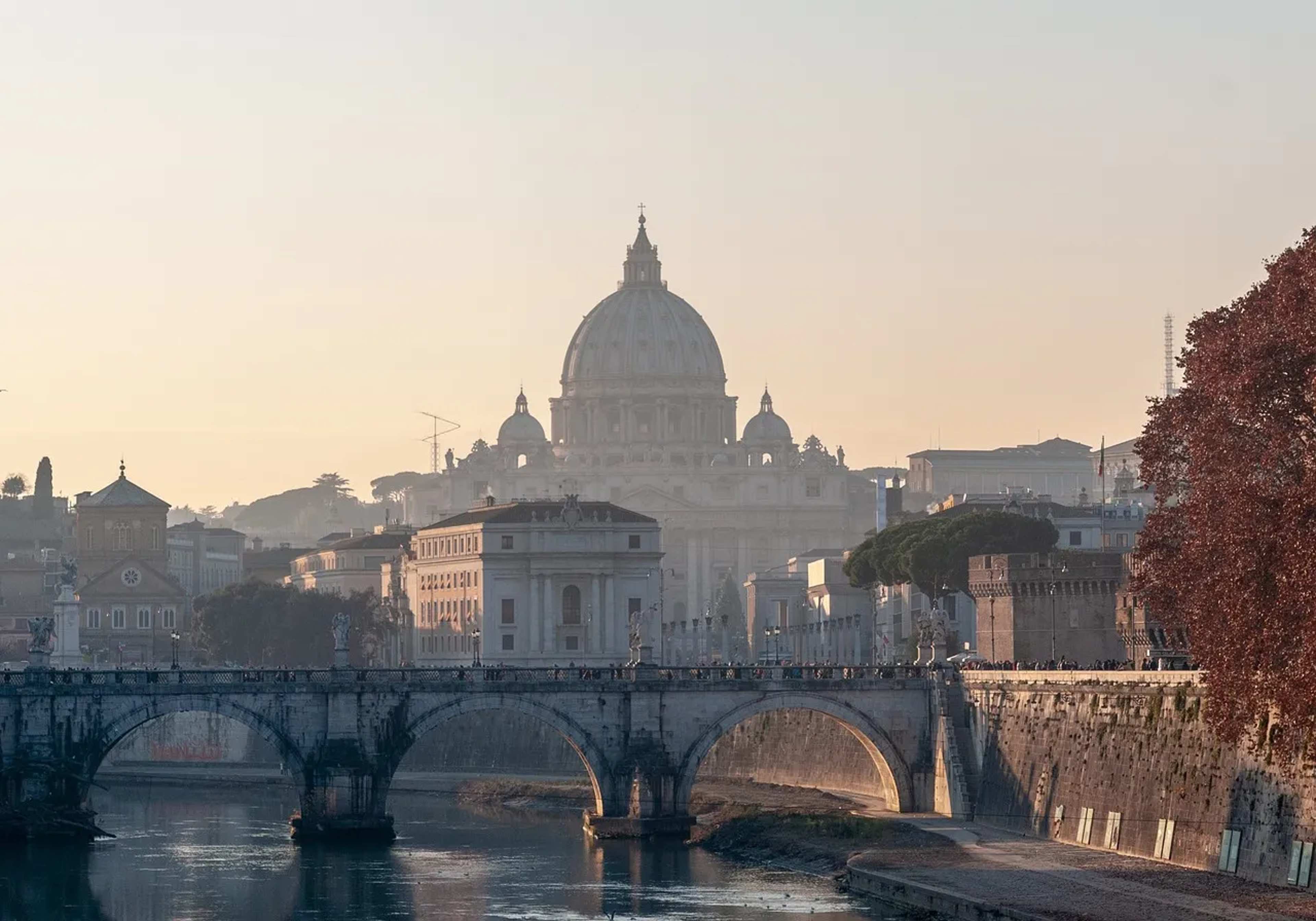
The city at 2 AM doesn’t ask anything of you.
No performance reviews. No LinkedIn notifications. No polite smiles that mean nothing.
Just the low hum of a street light. A cat crossing a wet cobblestone. Your own footsteps echoing back at you like a confession.
You are awake. Everyone else is not. And something about that ratio feels exactly right.
Here is the identity gap nobody talks about: the person you are between 9 and 5 – organized, productive, legible – is not the only person you are. There is another version. One who only appears when the crowd thins, when the ambient noise drops below a certain frequency, when the world stops demanding you justify your presence in it.
That version isn’t broken. That version isn’t antisocial.
That version is just more honest.
1. The Productive Lie
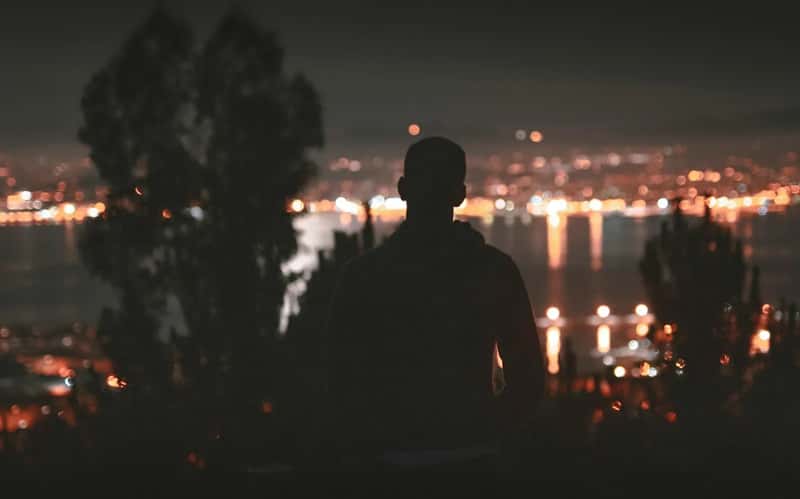
Somewhere, someone decided that daylight hours are the only hours that count.
That what you accomplish between sunrise and sunset is the full measure of your worth. That rest is recovery for the next day’s output. That stillness is laziness dressed up in dim lighting.
It’s a lie. A tidy, socially reinforced lie.
Exploring a destination at night is more than just a change in scenery – it’s a shift in mindset. What changes isn’t just the light. What changes is the entire operating system of social expectation.
You stop being a unit of productivity. You start being a person again.
The noctourist doesn’t wander at midnight because they’re running from something. They wander because they’re finally running toward the version of the world – and themselves – that doesn’t require a performance.
Daytime belongs to the economy. Night belongs to whoever shows up.
Show up.
2. The Crowd Dissolves
Daytime is loud with other people’s intentions.
Tour groups herding through narrow alleys. Cameras catching what everyone else already caught. Lines that tell you, in no uncertain terms, that this experience has been pre-approved, pre-packaged, and pre-digested for your convenience.
Noctourism boasts practical benefits. Cooler temperatures can make outdoor adventures more comfortable, while visiting popular sites at night lets travelers avoid daytime crowds and enjoy a calmer, more intimate experience.
But “calmer” undersells it.
What you actually gain is authorship. When the crowd dissolves, the experience becomes yours. You didn’t inherit a shared itinerary. You wrote your own.
There’s a psychological weight that lifts when you stand at a famous monument after midnight with no one else around. You’re not consuming a destination. You’re meeting it.
Person to place. No mediator. No noise.
Just an honest introduction.
3. The Senses Sharpen
Here is something the daytime hides from you: your own nervous system.
When the visual field narrows – when the blazing overhead sun stops flattening every surface into sameness – the other channels open up. You hear the city differently. You smell rain on warm pavement in a way that registers somewhere older than language.
Reduced visibility sharpens the other senses, making the sounds of nature and the flavours of local street food more intense.
This is not poetic license. This is neurology.
In low-light environments, the brain compensates. It reaches for texture, sound, temperature, scent. It becomes, for lack of a better word, more present. More invested in the exact current moment rather than the next scheduled task.
The noctourist is not escaping reality. They are arriving in it – fully, sensorially, without the blunt instrument of midday glare drowning out the subtler frequencies.
The night doesn’t dull the world. It tunes it.
4. The Clock Stops Counting
Productivity culture runs on the clock. It has to. Without timestamps, there is no accountability. Without accountability, the whole architecture of measurable output collapses.
At 3 AM on a foreign street, the clock is still technically running. But it has lost its authority over you.
No meeting in forty minutes. No dinner reservation to honor. No schedule to perform against.
Daytime crowds and the hustle-bustle isn’t everyone’s cup of tea. Some prefer the quiet life. Be it moonlit forest walks, peaceful night excursions, or stargazing getaways, these after-dark experiences offer not just solitude but also an opportunity to reflect.
Time, after midnight, becomes qualitative rather than quantitative. An hour doesn’t have a deliverable attached to it. It has a texture. A temperature. A particular quality of silence.
The psychological relief of this is difficult to overstate. You have been trained, for years, to convert time into outcomes. At night, you are finally allowed to just spend it.
Spend it walking. Spend it watching. Spend it being absolutely nowhere useful.
5. The Version of You Nobody Manages
I remember the first time I understood what I was actually doing when I walked cities at night.
It was a narrow street in Lisbon – 1 AM, the Fado clubs still murmuring their low, gorgeous grief into the stone walls. I wasn’t looking for anything. I wasn’t documenting anything. I was just walking in a direction that felt right, in a city that didn’t know my name, with nobody waiting for a status update on my whereabouts.
And I realized: this is the version of me that nobody manages.
Not my employer. Not my social role. Not the algorithm tracking my engagement patterns.
Beyond the physical, there is the psychology of awe. Looking up at a clear night sky can shift our perspective. It reduces the feeling of being overwhelmed by daily problems. This sense of wonder is a powerful tool for mental well-being.
The night gave me back a self I had been renting out, piece by piece, to the daylight economy. That night in Lisbon, I reclaimed a few square feet of interior territory. It cost nothing. It left a mark that daylight hasn’t entirely erased.
6. The City Tells the Truth
Daytime cities are performance spaces.
Every storefront optimized for foot traffic. Every public plaza designed for the photograph. Every human interaction calibrated for commercial legibility – friendly, efficient, transactional.
After dark, something honest leaks through the scaffolding.
The allure of noctourism lies in the transformation that darkness brings to familiar landscapes. Without the artificial glow of city lights and the usual hustle and bustle of daytime, we can see and experience places in a completely new light – or rather, lack thereof.
The city at night shows you its bones. The loading docks. The old men playing cards under a single bulb. The neighborhoods that never made the travel blogs because they don’t have a photogenic café.
This is not the city as product. This is the city as organism.
Alive in ways that have nothing to do with you, the tourist. Alive in the particular, unglamorous, deeply human way that daytime commerce tends to paper over.
Night travel is honest travel. Everything else, by comparison, is a brochure.
7. The Biology of Dark
There is a reason the dark feels like coming home to certain people.
It is not pathology. It is not insomnia dressed up as wanderlust. It is, in part, deep biology asserting itself against a world that has flooded every hour with artificial light and the anxious productivity it demands.
There is a biological reason why we crave the dark. Our bodies need it to stay healthy. Exposure to natural darkness triggers the production of melatonin. This hormone regulates our sleep and helps our cells repair themselves. Constant light at night can lead to stress, anxiety, and even physical illness.
With worldwide light pollution growing 10% annually, and the Milky Way already invisible to a third of the world’s population, starry skies have become a reason to travel.
We are not just chasing quiet. We are chasing a biological state our nervous systems were designed for – and that the modern world has systematically stripped away.
The noctourist is not being eccentric. They are being mammalian.
8. The Anonymous Geography
Identity is a social contract. It requires witnesses.
Your name, your role, your reputation – these exist because other people remember them. Consensus is what makes you who you are, in the daylight sense of the phrase. Remove the witnesses, and a strange freedom opens up.
Whether it’s to escape the heat, avoid crowds, or experience a place in a more intimate and mysterious way, traveling after dark is no longer just a niche experience – it’s a movement.
In an unfamiliar city, after midnight, you are nobody’s narrative. You are just a figure moving through space. Unrecognized. Uncategorized. Temporarily released from the weight of being knowable.
This is not loneliness. Loneliness is the ache for connection. This is something else – a deliberate, chosen anonymity that functions like a palate cleanser. A reset of the social self.
You walk through the anonymous geography of someone else’s city, and for a few hours, you are not the person your inbox thinks you are. You are just a set of footsteps on wet stone.
It is, quietly, one of the most liberating feelings available to a modern human being.
9. The World That Belongs to No One
Between the last night owl and the first early riser, there is a window.
It might be forty minutes. It might be two hours. But for that window, the city – any city – belongs to no demographic, no marketing team, no curated experience economy.
It’s more than simply “going out” at night. It’s a deliberate decision to experience a destination in its after-dark form.
The fountains run for no one in particular. The cathedral facade glows for the empty square. The last delivery truck grumbles down an alley and the silence rushes back in like water filling a hole.
You are in a world that belongs to no one. And therefore, briefly, entirely to you.
Psychologically, this carries enormous weight. So much of modern life is negotiated – space, time, attention, access. The after-dark window requires no negotiation. You simply arrive, and the world accommodates you without asking anything in return.
For the chronically overscheduled, this is not a minor pleasure. This is oxygen.
10. The Self You Were Before They Named You
That’s the quiet magic of noctourism: it invites you to listen harder, breathe deeper, and see the world in ways you’d normally overlook.
But the deepest thing it offers is not sensory. It’s existential.
Because before you had a job title, before you had a credit score, before you had a curated personality distributed across platforms – you had a self that moved through the world on pure instinct and curiosity.
That self didn’t need a reason to turn left instead of right. It didn’t need a return on investment from sitting on a cold church step and watching a city breathe.
By chasing the dark, we are actually finding our way back to ourselves.
Night travel – real night travel, the unscripted kind, the kind with no itinerary and no alarm – strips away the accumulated sediment of identity until you find the bedrock underneath. The self that predates the résumé. The self that still gets genuinely moved by a lit window in a foreign building, by the smell of something cooking in a language you don’t speak, by the particular silence that falls between 4 and 5 AM when even the insomniac city finally exhales.
Noctourism encourages travelers to slow down, observe, and connect. Noctourism reminds us that some of the most extraordinary experiences happen when we step outside the daylight, embrace the unknown, and allow the world’s nocturnal wonders to unfold before us.
That self you find in the dark – the pre-professional, pre-optimized, pre-branded self – is not a regression. It is not nostalgia. It is the most accurate version of you that exists, and it has been waiting patiently through every 9 AM standup meeting, every performance review, every morning you looked in the mirror and got your professional face on.
It waits for the lights to go down.
Then it walks out the door.
And somewhere in an empty plaza, in a city that doesn’t know your name, it remembers that it was always free.