Exchange rates rarely make headlines outside financial circles, yet they quietly shape everything from grocery bills to backpacking budgets. A handful of countries in 2026 are dealing with currencies so depreciated that daily transactions require stacks of banknotes just to cover a cup of coffee. For travelers, this same weakness can translate into surprisingly affordable trips, though it often comes paired with economic hardship for local residents.
Below is a look at six nations whose currencies rank among the weakest in the world right now, along with what that imbalance actually means once you land at the airport.
Iran and the Iranian rial
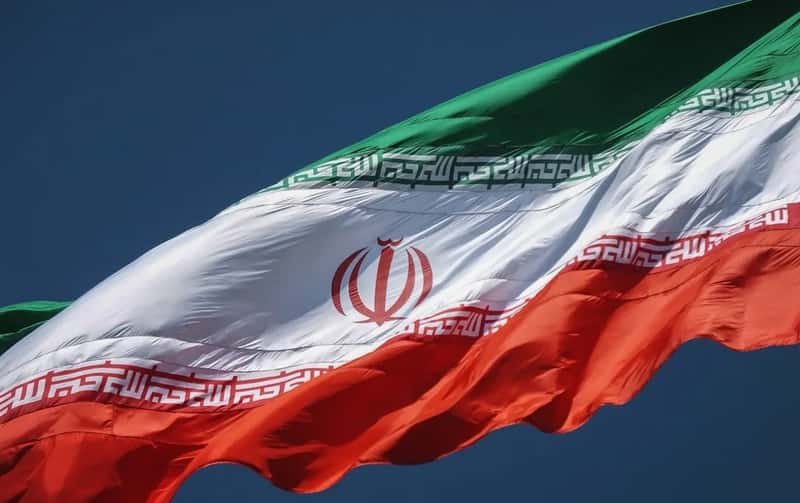
The Iranian rial has become something of a cautionary tale in currency circles. Since late 2025, the rial has continued to weaken sharply in the open market, with the exchange rate reaching approximately 1.4 to 1.5 million rials per US dollar by early January 2026, the weakest level ever recorded. By May, some platforms were quoting even steeper figures. One US dollar buys roughly 1.7 million Iranian rials at the parallel rate quoted on alanchand.com, compared with about 1.32 million at the official Central Bank of Iran rate.
The causes are layered rather than singular. Long running sanctions have restricted Iran’s access to foreign currency, while high inflation has damaged local purchasing power, and political uncertainty has encouraged households and businesses to hold dollars, gold or other hard assets instead of rials. For travelers, the practical reality is complicated. Tourism to Iran remains limited by sanctions and banking restrictions, meaning foreign cards generally do not work and cash must be carried and exchanged carefully, often at rates far more favorable than official ones but with added logistical risk.
Lebanon and the Lebanese pound
Lebanon’s currency crisis has been unfolding for years rather than months, and it still anchors most global rankings of weak currencies. The Lebanese pound ranks as the weakest currency in the world in 2026, with its prolonged collapse stemming from years of political instability, hyperinflation, and a depressed economy. Forbes Advisor’s own tracking backs this up. The outlet found the Lebanese pound to be the weakest currency in the world, buying just $0.000011, meaning one US dollar buys you 89,598.84 Lebanese pounds.
What makes Lebanon distinct is the dual pricing system that has emerged from the crisis. Many businesses in Beirut now quote prices in dollars outright, sidestepping the pound almost entirely for tourist facing transactions. Visitors carrying US dollars in cash will find their money stretches considerably further than official exchange calculators suggest, though the country’s banking sector remains fragile and ATM withdrawals in foreign currency are still unreliable in many areas.
Vietnam and the Vietnamese dong

Vietnam presents a different story entirely, one where a weak currency does not signal economic distress. The Vietnamese dong is one of the lowest valued currencies in the world, but Vietnam is not a collapsed economy. Its low valuation is attributed to significant devaluation relative to global standards, restrictions on foreign trade, and a prolonged period of elevated US interest rates, with US$1 equaling 26,345 VND as of January 2026.
For travelers, this simply means large numbers on every price tag rather than any red flag about safety or reliability. Meals, transport, and accommodation in cities like Hanoi and Ho Chi Minh City remain inexpensive by international standards, and the country’s tourism infrastructure is well developed, with widespread card acceptance and reliable ATMs in urban and coastal areas. First time visitors often find themselves doing quick mental math dividing by tens of thousands, a minor adjustment that quickly becomes second nature.
Laos and the Lao kip

Laos rounds out the Southeast Asian entries on this list, and its currency troubles are more structural than Vietnam’s. The Laotian kip remains on the list due to its weak valuation, with US$1 equal to 21,663.26 KIP, and despite an increase in money circulation, the currency remains under pressure amid a prolonged period of economic sluggishness, persistent inflation, and rising foreign debt.
This combination of factors makes Laos one of the more budget friendly destinations in the region, though travelers should expect a more limited banking infrastructure than in neighboring Thailand or Vietnam. Cash remains king in much of the country, particularly outside Vientiane and Luang Prabang, and carrying US dollars alongside kip is a common practical strategy. Prices for accommodations, street food, and local transport tend to be noticeably lower than in more currency stable Southeast Asian countries.
Indonesia and the Indonesian rupiah
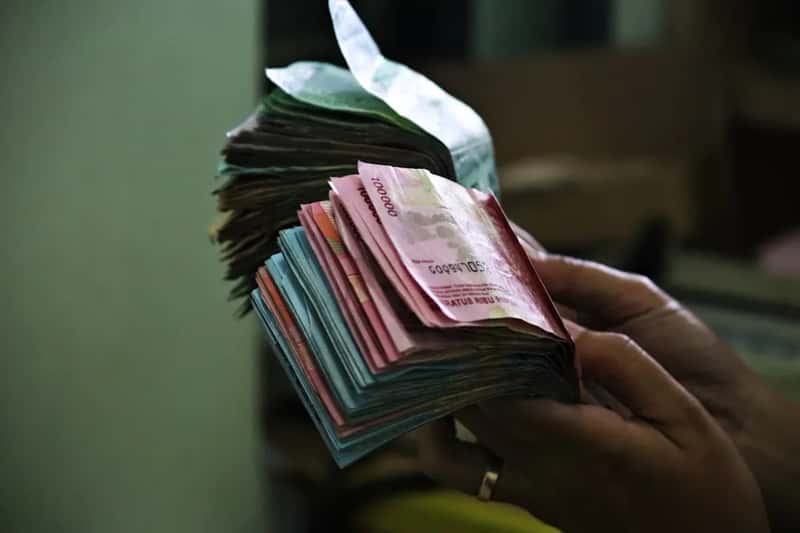
Indonesia’s rupiah has long sat among the world’s weakest currencies by nominal value, a fact that surprises visitors given the size and diversity of the Indonesian economy. Despite Indonesia’s economic size, the rupiah faces pressure from import costs and periodic capital outflows. The currency’s low face value is largely a legacy of decades of inflation rather than a sign of current instability, which is an important distinction for anyone judging the country’s economic health by exchange rate alone.
Bali, Jakarta, and other major tourist hubs have well established systems for handling foreign currency, with ATMs widely available and card payments increasingly common in cities. Still, the sheer number of zeros on rupiah banknotes can be disorienting at first, with everyday purchases often running into the hundreds of thousands. Travelers accustomed to smaller currency units should budget extra time at checkout counters simply to count correctly.
Uzbekistan and the Uzbekistani som

Uzbekistan has emerged as a growing destination for Silk Road tourism, even as its currency remains one of the weakest globally. Industrial stagnation and limited foreign investment have kept Uzbekistan’s currency among the weakest globally. Central Bank data from early February 2026 put the official reference rate at roughly 1 USD to 12,225 UZS.
The currency has shown relative stability compared with some others on this list. Over the past month the som weakened only slightly, though it is up by more than five percent over the last twelve months against the dollar. For visitors, banks and official exchange offices are the safest route for converting cash, and using a prepaid travel card is generally the best way to pay in Uzbekistan because such cards typically incur lower fees than standard credit or debit cards. Historic cities like Samarkand and Bukhara remain notably affordable for international visitors as a result.
A weak currency tells only part of a country’s economic story. Vietnam and Uzbekistan illustrate how a low nominal exchange rate can coexist with functioning, even growing, economies, while Iran and Lebanon show what happens when currency collapse reflects deeper structural crises involving sanctions, banking failures, or sustained political instability. Indonesia and Laos sit somewhere between these extremes, carrying decades of inflation history without the acute emergency conditions seen elsewhere on this list.
For travelers, the practical takeaway is straightforward. Money brought in US dollars or euros tends to go considerably further in each of these six destinations, though the experience of using that money varies widely depending on local banking infrastructure, card acceptance, and the presence or absence of parallel exchange markets. Checking current rates immediately before departure remains essential, since several of these currencies, particularly the Iranian rial, have shown the capacity to shift dramatically within a matter of weeks.