There’s a certain comfort in the promise of an all-inclusive vacation. Pay once, show up, and let someone else handle the math for a week. That pitch has sold millions of trips over the decades, and it still works because it taps into something real: nobody wants to calculate a bar tab while on vacation.
But spend enough time reading traveler reviews, resort fine print, and industry data from the past two years, and a more complicated picture starts to form. The gap between what gets advertised and what actually shows up on the final bill has widened, and the reasons behind that gap are worth understanding before you book anything.
The word “all-inclusive” isn’t regulated, and that’s the root of the problem

There is no governing body that defines what “all-inclusive” has to mean, which means every property gets to write its own rules. The term “all-inclusive” is not regulated, which means every resort defines it differently. At most properties, the base rate genuinely covers meals at the main buffet and à la carte restaurants, house drinks, pool and beach access with towels and loungers, basic non-motorized water sports, nightly entertainment, and kids’ club programming at family resorts.
The problem is that two resorts using the identical label can deliver wildly different experiences. An all-inclusive at Grand Oasis Cancun, where rates dip below $120 per night, includes house-brand rum and a 14-restaurant rotation with long lines, while an all-inclusive at Grand Velas Riviera Maya, where rates start at $724 per night, includes Michelin-starred dining, premium spirits, gratuities, and 24-hour in-suite dining. Both call themselves “all-inclusive.” A travel expert put it plainly: “Travelers are often surprised by how much the cost of extras can vary between resorts. One resort might include domestic flights, spa services, fine premium drinks, water activities and even a personal butler. Another might charge extra for most – or all – of those things.”
The advertised price is almost never the price you’ll actually pay

Resorts are skilled at making a nightly rate look attractive before the extra charges get folded in. The price you see upfront almost never reflects what you’ll actually pay, since all-inclusive resorts often advertise seemingly low nightly rates upfront, but hidden resort fees and taxes are later tacked on, ballooning the final bill. These extra charges can add fifty dollars or more per day, exponentially increasing the overall cost.
Taxes make things worse. Depending on the destination, accommodations taxes can reach double digits, and in U.S. states or territories, additional city and tourism levies stack on top, meaning a suite advertised at $500 per night can realistically land at $700 or more once all mandatory charges are applied. One Reddit user summed up the frustration after a booking went sideways: “We booked what we thought was a $3,000 vacation and ended up spending $5,000 by checkout. Nobody warned us about any of this.”
Tipping still happens, no matter what the marketing says

Plenty of all-inclusive brands lean hard on the “no tipping necessary” line in their advertising, and for some brands that’s genuinely true. Gratuities sit in a gray zone. Sandals and Beaches resorts maintain genuine no-tipping policies, but most other brands permit tipping and, in practice, staff expectations around gratuities are real, particularly for butler services, spa workers, and drivers. Budget an additional $10 to $20 per day per couple if you are staying at a property that is not explicitly no-tip.
Even resorts with an official no-tipping stance carve out exceptions. Some resorts may have a “no tipping policy” but encourage tipping for airport transport, spa treatments and butler services, and you don’t want to be unprepared when it comes to tipping protocol during what should be a relaxing trip. It’s worth budgeting for small bills before you leave home rather than scrambling for cash once you land.
Food and drinks are included, but not the versions you might be picturing
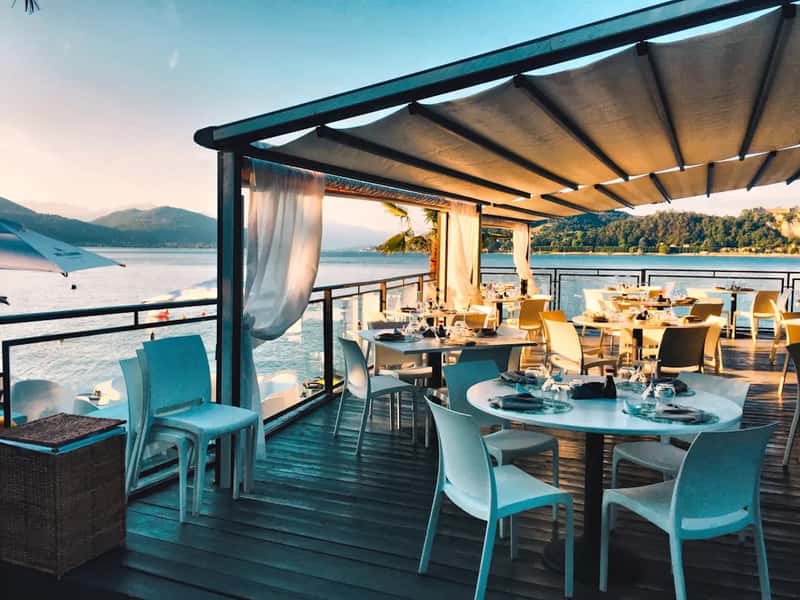
Every all-inclusive package covers eating and drinking, but “covered” has layers. Many resorts include unlimited food and beverages, but only within a certain tier. House wines, well liquors and standard menu items are often covered, while premium spirits, specialty wines and certain dining experiences can come with additional charges. A tomahawk steak or a chef’s tasting menu with wine pairings tends to fall outside the base rate no matter how the brochure phrases it.
Some travelers, especially those hoping for elevated cuisine, come away disappointed regardless of price point. One of the most common complaints about all-inclusive resorts is that food quality is often mediocre despite constant access to meals and snacks, since with all food included at a set price, there is little incentive for resorts to provide gourmet cuisine, and the goal becomes feeding high volumes of guests as cheaply as possible. That said, this complaint tends to cluster at the budget end of the market rather than across the board. At the budget end, it means unlimited mediocre food and weak drinks at a beach resort, a genuine value for cost-conscious travelers who understand what they are getting, while at the luxury end, it means world-class dining, premium spirits, attentive service, and the freedom to enjoy every aspect of a resort without ever thinking about money.
Airport transfers and off-property costs are easy to assume, harder to confirm

It’s a common mistake to assume the resort will handle every logistical detail, including getting you there from the airport. A lot of travelers assume that transportation to and from the airport is included in the cost of a vacation, but that’s not always the case. Some resorts do include it, but you always need to check because it may only be for certain room types or booking classes, and you should be prepared ahead of time so you’re not stuck paying a high price for a last-minute car service.
Leaving the resort grounds almost always costs something extra, too. With small exception, you will be responsible for the cost of any excursion or tour that takes you off the resort property, and if there’s something in the destination you’d like to experience that isn’t offered on resort grounds, such as a cooking class or a historical walking tour, expect to pay for it. Currency exchange inside the resort compounds the issue further, since the resort will undoubtedly have a currency exchange and ATM available, but exchange rates are usually terrible and ATM fees are astronomical, so it helps to use a credit card with no foreign transaction fees and get cash from an ATM off resort.
Resort credits aren’t free money, whatever they’re called

Some higher-tier packages come with a chunk of “resort credit” meant to sweeten the deal, and it’s easy to mistake this for cash in hand. Resort credits are a common cause of confusion for all-inclusive travelers, since many assume they function like “free cash,” but in reality, resort credits tend to work more like coupons that can be applied toward specific experiences and purchases. The fine print often limits how the credit can even be spent.
A travel expert explained the mechanics behind the frustration. “For example, travelers may be given $50 in resort credits toward premium drinks, but these credits may only be usable in $10 increments, meaning they would have to buy five separate drinks in order to use all their credits. Minimum spends often apply to resort credits for spa treatments or excursions too.” Since these credits almost always expire at the end of their stay, it’s worth thinking of resort credits as a bonus rather than a guaranteed discount, and reviewing the terms carefully.
Timeshare presentations still lurk at check-in for some brands

Not every all-inclusive property tries to sell you a timeshare, but the ones that do can be persistent about it. You’re barely checked in before someone starts offering free excursions in exchange for attending a “brief 90-minute presentation,” a pitch that reliably stretches far longer, and many all-inclusive resorts aggressively market timeshare presentations offering “free” upgrades or excursions in exchange for attending sales pitches that often extend much longer.
Declining once often isn’t the end of it. Saying no firmly is not always enough either, since timeshare sales staff will still engage in high-pressure sales presentations, and owners will still feel forced into signing oppressive timeshare purchase agreements. Regulators have started paying closer attention to lodging fee transparency more broadly, though enforcement so far has focused mainly on disclosure rather than eliminating the practice.
Where you go changes the math more than almost anything else
Destination drives price more dramatically than most travelers expect. A 2026 analysis covering 235 resorts across two dozen destinations found that the average all-inclusive resort costs $280 a night, ranging from Tunisia at around $90 to the Maldives at around $713. That’s nearly an eightfold difference for a broadly comparable style of trip.
Regional premiums show up even among destinations that seem similar on paper. The Maldives sits at a $713 median, nearly eight times the price of Tunisia for an equivalent week, while Antigua and Barbados at a $600 median cost two to three times more than Mediterranean equivalents like Turkey at $214 or Spain at $220, for a broadly comparable resort experience. Star rating matters less than most people assume, too, since a five-star costs only about fifty percent more than a four-star, and in value destinations, a five-star can be cheaper than a Caribbean three-star.
Despite all this, demand for all-inclusive travel keeps climbing

None of these caveats seem to be scaring travelers away. A recent industry survey found that 87% of consumers have either stayed or considered staying at an all-inclusive resort, with six out of 10 agreeing they are more likely to do so than they were five years ago. Cost predictability is a big part of the appeal, especially as travel spending climbs; 68% of Americans expect to spend more on travel in 2026 than they did in 2025.
Interest is especially strong among younger travelers who value knowing costs upfront. Millennials at 75% and Gen Z consumers at 68% agreed that all-inclusive resorts provide better value than planning a vacation piece by piece on their own, overindexing the survey average of 66%. The broader market reflects that momentum too, with the global all-inclusive resort sector valued at $67.4 billion in 2025 and projected to reach $134.8 billion by 2034, expanding at a compound annual growth rate of 8.0%.
Final thoughts
All-inclusive resorts aren’t a scam, and they aren’t the effortless bargain the brochures suggest either. They sit somewhere in between, a genuinely useful format for people who want cost certainty, wrapped around a pricing structure that rewards careful reading and punishes assumptions.
The travelers who come away happiest tend to be the ones who treat the “what’s included” page as required reading rather than fine print to skim past. Knowing which tier you’re booking, what extras to expect, and where the regional price gaps hide can turn a potentially frustrating trip into exactly the stress-free week the marketing promised in the first place.