Picture this for a moment. You’ve worked decades, paid into Social Security your entire adult life, and when retirement finally arrives, the monthly check lands somewhere around $1,800. In many parts of the United States, that barely covers rent. It’s frustrating, I know. Yet there’s a growing movement of retirees who have discovered something remarkable: a passport, a little courage, and that same Social Security check can unlock a lifestyle abroad that feels closer to luxury than scraping by.
Nearly 760,000 Americans collect Social Security benefits while living abroad. That number has surged dramatically over the past quarter century. Why the exodus? In specific corners of the world, the purchasing power of your benefit stretches so far that everyday life resembles what a six-figure salary might afford back home. Think private healthcare that doesn’t bankrupt you, beachfront apartments for less than a studio in Des Moines, fresh meals for pocket change, and enough left over to travel. Let’s explore seven destinations where your Social Security doesn’t just keep you afloat, it transforms your golden years.
Thailand: Where Luxury Costs Less Than Your Cable Bill

A single retiree living on $1,200 a month can rent a $300 studio in Chiang Mai, eat Thai food for about $10 a day, and still have money left for a few $2 Chang beers during happy hour. That’s not a fantasy; that’s the reality on the ground in 2026. For couples, the math gets even better. A couple living on two average Social Security checks, roughly $3,800 a month, can live comfortably: a beachside two-bedroom bungalow in Pattaya or Hua Hin for under $1,000, groceries costing $300–$400 a month, and meals out whenever they like.
Thailand is ranked as having the best healthcare system in Southeast Asia according to Numbeo’s 2025 rankings. The country is ranked 9th in the world with an index of 77.5, equal to that of Finland, and 4th in Asia. What I find impressive is how affordable it stays even when you factor in air conditioning running all day. Honestly, it’s hard to exceed $150 a month. Cities like Bangkok offer ultra-modern infrastructure, while the northern hills around Chiang Mai give you cooler climates and cultural depth. Thailand landed ninth place in the 2026 Global Retirement Index, and for good reason.
Vietnam: Budget Paradise With a Side of Adventure
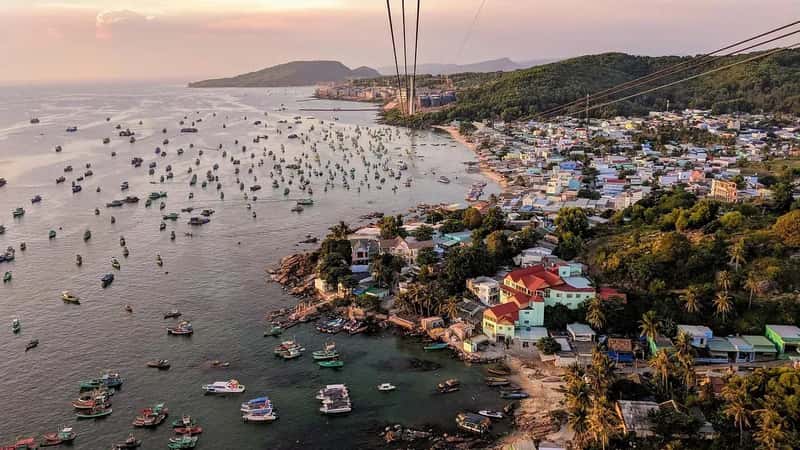
Vietnam consistently ranks as one of the cheapest places on earth to retire, often undercutting even Thailand. In Ho Chi Minh City, Vietnam, fully furnished and air-conditioned apartments in the city center go for between $400 to $800. Rent alone leaves you with most of your Social Security intact. You’ll spend a fraction of what you’re used to on food and transportation.
Most expats can retire comfortably in Southeast Asia with $1,200–$2,500 per month, depending on lifestyle and country. Thailand and Malaysia lean toward the higher end, while Indonesia and Vietnam can be significantly cheaper. Vietnam doesn’t offer a straightforward retirement visa like its neighbors, which can complicate long-term stays. Still, many retirees work around this by doing visa runs or exploring investor visa pathways. Cities like Da Nang and Hanoi attract foreigners with their blend of beaches, history, and surprisingly cosmopolitan scenes. Vietnam might demand a bit more planning, but the payoff in affordability is undeniable.
Mexico: Close to Home, Far From Expensive

Mexico has long been the go-to for Americans seeking an affordable retirement without straying too far from the homeland. It’s easy to hop back for holidays, and you don’t have to navigate complex time zones or intercontinental flights. As long as you are eligible for U.S. Social Security payments, you will be eligible to receive payments while living in Mexico, which removes one major headache.
Healthcare stands out as another huge win. For those aged 50 to 59, IMSS currently costs about $61 per month per person. For people 60 to 69, it is $85 per month, 70 to 79-year-olds pay $88 per month, and individuals 80 and over pay $91 per month. Housing can be shockingly inexpensive depending on location. Historic cities like Mérida, Guanajuato, and San Miguel de Allende offer charm and culture without the price tag of Mexico City or the tourist-heavy beach towns. Let’s be real: the food alone is worth the move.
Portugal: European Elegance on a Modest Check

If you’ve always dreamed of retiring in Europe but assumed it was financially out of reach, Portugal might surprise you. According to the Global Retirement Report, Portugal ranks #1 overall, a rank driven by its balance of quality of life, safety, accessible procedures, and integration. It’s not the absolute cheapest on this list, yet it delivers European sophistication at a fraction of the cost of France or Spain.
My monthly budget for “essentials” is 2,000 euros ($2,176 usd). Essentials include healthcare/insurance; rent; mobile phone plan for U.S. number; Portugal plan for phone/Internet/TV/landline; piped gas; electricity; municipal water; groceries; dining out; local transportation. Expat retiree pensions are currently taxed in Portugal at 10 percent. U.S. Social Security payments are considered a pension and are taxed in Portugal, even if they are not taxable in the U.S.. That 10 percent is manageable when you consider what you’re getting: walkable cities, reliable public transit, top-tier healthcare, ocean breezes, and year-round sunshine.
Ecuador: Live Like Royalty, Seriously

The cost of living in Ecuador is about 54% lower than in the United States. The estimated annual cost for a retired couple to live in the Ecuadorian city of Cuenca, which has a population of about 500,000, is about $20,400 per year; for a single person the estimated annual cost is about $17,280. Break that down monthly and you’re looking at less than $1,500 for a couple. Ecuador uses the U.S. dollar as its official currency, which simplifies finances and eliminates exchange-rate headaches.
Americans can still collect their Social Security payments in Ecuador without being taxed by the Ecuadorian government, providing a steady income stream. Retirees benefit from a range of discounts, including 50% off on public transit, airfare, and cultural events, as well as significant refunds on the 14% sales tax. These discounts further stretch the affordability of living in Ecuador. Cuenca, nestled high in the Andes, is the most popular expat hub. You get colonial architecture, mountain vistas, a temperate climate, and a large English-speaking community. Ecuador also offers coastal cities like Salinas for those who prefer beaches over altitude.
Colombia: Spring Eternal in Medellín
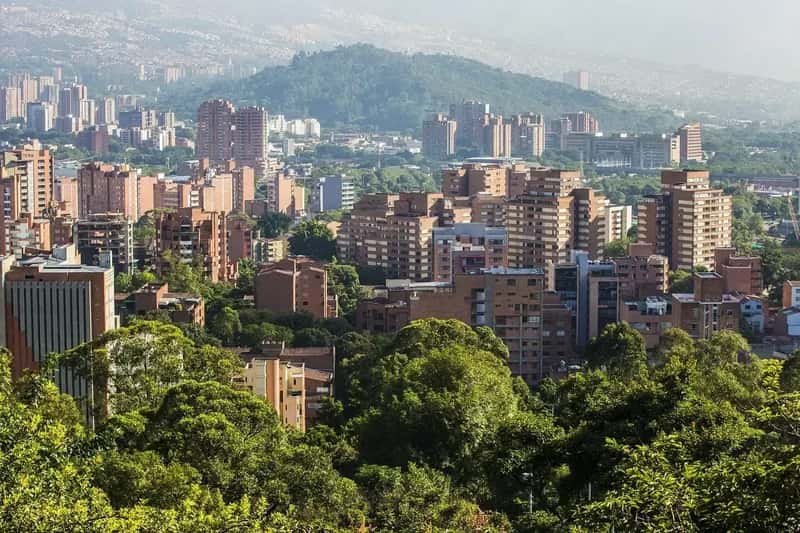
Colombia has shed its troubled past and emerged as one of South America’s most appealing retirement destinations. The average Social Security check is about $1,780 USD per month, making it possible for retirees to live off of their Social Security income alone in Colombia. Given that the average income in Colombia ($22,248 USD) is much lower than in the US ($77,463 USD), it’s logical that the cost of living is also reduced. US retirees can generally live comfortably on $1,500 to $2,000 USD per month or even less.
Malaysia: Modernity Meets Affordability
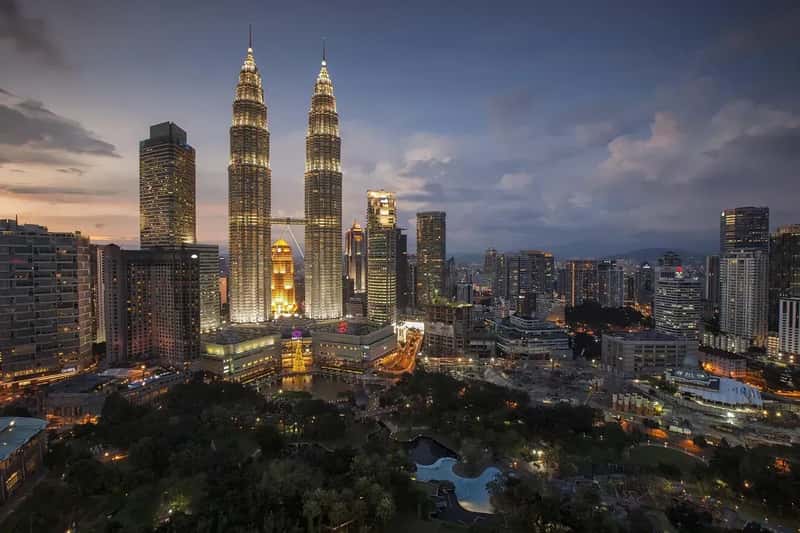
Malaysia occupies a sweet spot: it’s more developed than many Southeast Asian neighbors, yet still highly affordable for Western retirees. The cost of living in Malaysia is higher than in Thailand or the Philippines, but still moderate. It’s often cited that Malaysia offers “first-world comfort at a mid-range cost.” For example, a couple might live well in Kuala Lumpur on perhaps $2,500–$3,000 a month. That’s above the single Social Security check range, yet well within reach for couples.
A huge advantage is healthcare: Malaysia’s healthcare is ranked among the best in the region. Hospitals in KL, Penang, Johor, etc., are equipped with the latest technology and many doctors are Western-trained. English is widely spoken, which eases the transition for American retirees. Penang offers beachside living with incredible food culture, while Kuala Lumpur gives you skyscrapers, shopping, and efficiency. Malaysia secured the 10th spot in the 2026 Annual Global Retirement Index, affirming its status as a solid choice.
Conclusion

Retirement doesn’t have to mean downsizing your dreams or stretching every dollar until it screams. The world is full of places where your Social Security transforms from survival money into freedom money. These seven countries prove that with the right location, healthcare becomes affordable, housing stops devouring your income, and daily life regains a sense of ease and enjoyment. Whether you crave Thai beaches, Portuguese cobblestones, or Colombian mountain air, options exist.
The hardest part? Letting go of the familiar and taking that first step. Did you ever imagine your retirement check could fund this kind of life?