Anyone who has moved abroad in the last decade got used to a certain rhythm: pack up, fly out, deal with paperwork once you land, repeat as needed. That rhythm is breaking. Between new biometric border systems, pricier travel authorizations, and citizenship timelines that suddenly stretch by years instead of months, the mechanics of living abroad are shifting fast, and mostly in the direction of more documentation, not less.
None of this happened overnight. It’s the result of several governments moving in parallel, each tightening its own version of border control while expanding, oddly enough, the number of legal pathways for remote workers and long-term movers. The result is a messier, more bureaucratic landscape than expats faced even three or four years ago. Here’s what’s actually changing, country by country and system by system.
Europe’s ETIAS travel authorization finally arrives

After four postponements stretching back to 2020, the EU’s Travel Information and Authorisation System is now genuinely close to launch. The EES became operational first in October 2025, and ETIAS is expected to become operational in the last quarter of 2026. That timeline has held up better than previous ones, though officials have been careful about locking in an exact date.
Once live, ETIAS will be a digital travel authorization that visa-exempt travelers, including US, UK, Canadian, and Australian citizens, will need before visiting 30 European countries. The fee has bounced around in public reporting, but the confirmed figure from the European Commission is €20, not the widely circulated €7 figure, confirmed by the European Commission’s Directorate-General for Migration and Home Affairs on July 17, 2025. It’s valid for three years or until your passport expires, whichever comes first. There will also be a transition period, since EU authorities have stated ETIAS will be subject to a transitional period during which any traveller will be able to enter without an ETIAS travel authorization, subject to satisfying all other entry requirements. For expats who cross into the Schengen zone regularly for work or family reasons, this is one more login to keep track of, alongside a passport and residence card.
The EES biometric border system is already changing how you enter Europe
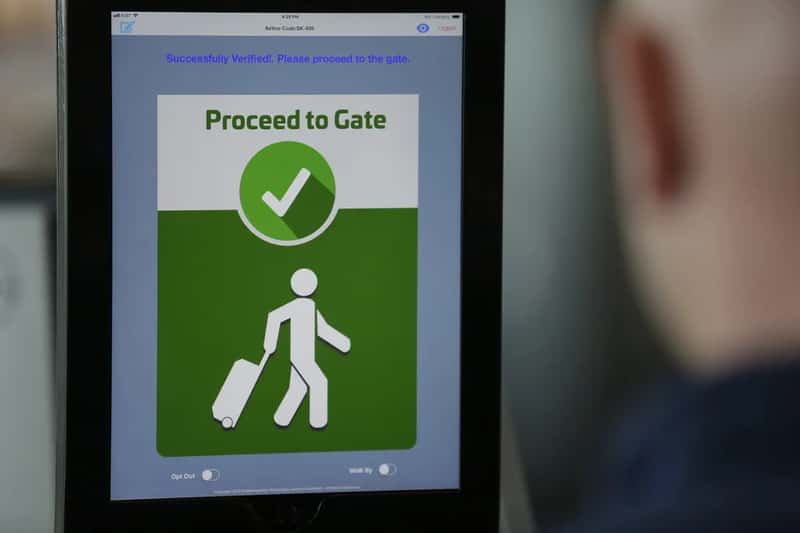
While ETIAS gets the headlines, the Entry/Exit System is the one already affecting travelers on the ground. As of April 10, 2026, the EES became fully operational across all Schengen countries, replacing passport stamps with digital records of entries and exits of non-EU nationals coming for short stays. Fingerprints and a facial photo are now part of the routine at most borders.
The scale of the rollout has been considerable. Since the EES started, over 45 million border crossings were registered, over 24,000 people had been refused entry for reasons such as inadequate justification of their visit or expired or fraudulent documents, and the system also helped identify over 600 people who posed a security risk to Europe. For anyone with a second home in Spain or a residence permit in France, this doesn’t change your legal status. But it does mean the 90/180-day rule is now tracked automatically rather than eyeballed by a border officer with a stamp, which leaves far less room for informal overstays than in the past.
The UK’s ETA is now mandatory, and getting more expensive
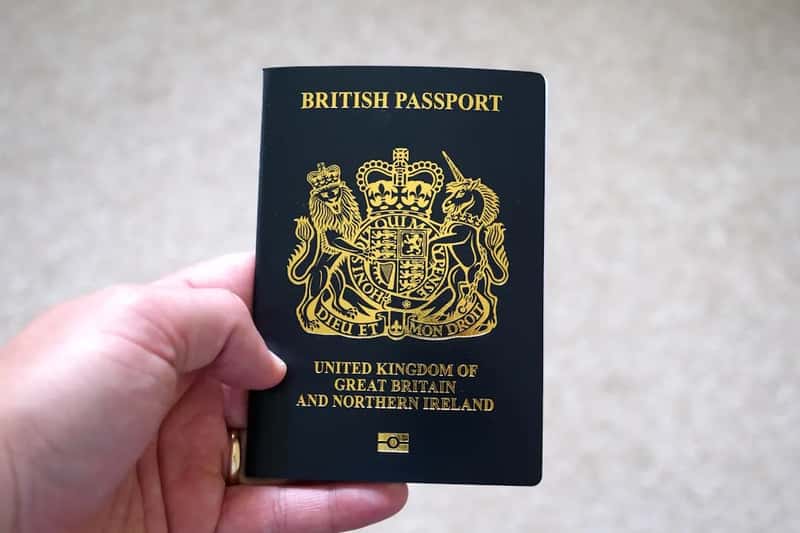
Britain moved first on this front, and it’s already fully enforced. As of February 25, 2026, anyone visiting the UK from a visa-exempt country must have an approved Electronic Travel Authorisation before boarding, covering 85 nationalities in total, with February 25, 2026 marking the hard enforcement date after transitional flexibility ended. That means airlines and even Eurostar can turn you away at check-in if the paperwork isn’t sorted.
The cost keeps climbing too. The UK government raised the fee for its Electronic Travel Authorisation to £20 from £16 on April 8, 2026, a 25% increase on visa-exempt travelers who must secure approval before heading to Britain. The ETA began at £10 during pilot phases in 2025, then rose to £16 in April 2025, and with the latest increase to £20, the price has now doubled from the initial pilot level in little more than a year. Dual nationals face their own wrinkle here too, since if you hold both US and UK citizenship, you must travel to the UK on your British passport, not your US passport, from 25 February 2026.
US work visas come with steeper price tags and tighter scrutiny
On the other side of the Atlantic, the pressure has landed on employers and skilled workers rather than tourists. Employers now face a new $100,000 fee for initial H-1B petitions filed between September 2025 and September 2026, and a weighted selection process replacing the random lottery became effective February 27, 2026, prioritizing higher-skilled and higher-paid applicants. That’s a dramatic shift from the lottery system companies have relied on for years.
Paperwork has thickened as well. USCIS made the updated Form I-129 mandatory for all H-1B cap-subject petitions on April 1, 2026, requiring employers to disclose detailed wage information and provide expanded job role descriptions, including minimum education, field of study, and experience requirements. For expat professionals hoping to move to the US on employer sponsorship, this means longer lead times and a system that increasingly favors senior, well-paid roles over entry-level transfers.
Digital nomad visas have gone from novelty to standard policy

While the big traditional visa systems get stricter, an entirely different category has quietly exploded. In only a few years, Digital Nomad Visas have shifted from novelty to mainstream policy, with over forty nations running such visas to attract foreign remote workers. Some trackers put the number even higher, with one estimate noting around 60 countries offering digital nomad visas or remote-worker residency programmes as of 2026.
The demand behind this is real. Digital nomads now make up approximately 12% of the U.S. workforce, with 18.5 million American workers identifying as digital nomads in 2025, a 153% increase since 2019. Countries are responding in kind, and new entrants keep appearing. The newest additions are Slovenia, which became Europe’s latest nomad destination in late 2025, and Moldova, which added a budget-friendly two-year visa the same year. This is arguably the most expat-friendly trend on this list, a genuine widening of legal options even as tourist-facing systems tighten.
Portugal’s Golden Visa survives, but the wait for citizenship doubles

Portugal remains one of the most watched residency programs in Europe, and it has stayed largely intact on the investment side. As it stands in 2026, the Golden Visa program itself remains unchanged, with current investment categories still valid. The minimum stay requirement hasn’t budged either, still seven days in the first year, and then fourteen days per year for subsequent years.
What has changed is the road to a passport. Following the April 2026 Nationality Law amendments, third-country nationals now face a 10-year residency requirement before they can apply for citizenship, double the previous threshold, which includes the vast majority of Golden Visa holders from the US, UK, China, Brazil with non-CPLP status, South Africa, and elsewhere. Permanent residency after five years is still on the table, but anyone who chose Portugal specifically for a fast route to an EU passport now needs to recalculate. Portugal’s Parliament voted to amend the Nationality Law on April 1, 2026, with 151 votes in favour and 64 against, and President António José Seguro promulgated the revised law on May 3, 2026.
Spain shut its golden visa door and pointed people toward remote work instead

Spain went further than Portugal and simply ended its investor visa altogether. Organic Law 1/2025 was published in Spain’s Official State Gazette on January 3, 2025, and its 21st final provision suppressed the legal basis for the residence visa for investors, with the change taking effect on April 3, 2025. The most popular route, buying property for €500,000, is now closed to new applicants.
In its place, Spain’s Digital Nomad Visa has become the practical alternative for foreigners without seven-figure sums to invest. Created under the Startup Law, the Digital Nomad Visa is the most popular replacement for foreign professionals who do not want to invest seven figures in Spain. Applicants need income of at least 200% of Spain’s minimum interprofessional wage, roughly €2,500 to €2,850 per month in 2026. It’s a smaller commitment than a golden visa ever was, and arguably a more honest reflection of who is actually relocating to Spain these days.
Visa fees are climbing almost everywhere at once

It isn’t just the UK and the EU pushing costs upward. The pattern is broad enough that immigration trackers are describing it as a coordinated shift rather than isolated policy tweaks. The global immigration landscape in 2026 is defined by rising costs and intensified vetting, with mandatory updated H-1B forms in the U.S., significant fee hikes in the UK and Canada, and the implementation of electronic travel authorizations across Europe.
Visitors to the US aren’t spared either. For visitors, the $250 Visa Integrity Fee and expanded screening add cost and paperwork. The through-line across all of these programs is the same: governments increasingly want to charge for the privilege of pre-screening, and they want more data before granting it. Expats juggling multiple passports or dual citizenship in more than one country are the ones absorbing the compounding costs, since each system now has its own fee schedule and its own renewal clock.
The 90/180-day rule is no longer something you can quietly bend

For years, plenty of long-term visitors treated the Schengen 90-day limit as a soft guideline, especially if they crossed borders between countries. That informality is disappearing. One of the key goals of the EES is to prevent third-country nationals from overstaying their allowed period in Europe, with the system automatically calculating how many days remain under the 90 days in any 180-day period rule, making it much easier for both travelers and border authorities to keep track.
The days you spend in one Schengen country now count against your total time everywhere else in the zone, tallied automatically rather than reconstructed from stamps. The days you spend in France, Spain, or any other participating country are counted together, not separately. Anyone who was quietly living on a rolling series of short tourist stays across multiple EU countries will find that strategy far harder to sustain going into 2027.
Final thoughts

Taken together, these changes don’t point to one single trend so much as two trends running side by side. Governments are getting better at tracking who crosses their borders and for how long, and they’re charging more for the privilege each time. At the same time, many of those same governments are opening wider doors for remote workers and long-term movers who fit a profile they actually want: people who bring income without competing for local jobs.
For expats already settled somewhere, the practical advice is fairly simple. Keep passports current well ahead of expiry dates, register for new systems as soon as portals open rather than waiting until the last minute, and don’t assume that a rule which worked in 2023 still applies today. The paperwork is heavier than it used to be, but the number of legitimate paths abroad hasn’t shrunk. It has just become more specific about who qualifies for which one.