What makes a capital dangerous goes beyond crime rates alone. It’s the combination of armed conflict, failing institutions, kidnappings that happen in broad daylight, and communities where police have lost control to militias or criminal syndicates. From the Caribbean to Central Asia, from the Middle East to Africa, these cities share common threads of instability that affect millions of residents who can’t simply pack up and leave. Their stories reveal uncomfortable truths about how quickly order can collapse when systems break down. So let’s dive into the world’s most perilous capitals and understand what life looks like when danger becomes ordinary.
Port-au-Prince, Haiti: A Capital Under Siege

Gang violence in Haiti claimed more than 5,600 lives in 2024 alone, marking Port-au-Prince as one of the deadliest capital cities on the planet. Gangs have gained near-total control of the capital, with Port-au-Prince now under the control of criminal groups who are expanding attacks beyond the city. The situation has become so dire that by the end of May 2024, criminal gangs controlled up to 80 percent of the Port-au-Prince Metropolitan Zone, limiting people’s ability to move freely and access food, protection, and health services. Daily life in this Caribbean capital has transformed into a nightmare of coordinated violence, with residents trapped in their neighborhoods facing indiscriminate attacks.
What’s particularly chilling is how systematic the violence has become. UN officials and experts report the deliberate, systematic, and pervasive use of sexual violence, including collective rape, sexual slavery, and mutilation, by gangs as a means of exerting territorial control and to punish communities. In 2024, 115 people were killed in an attack by the Gran Grif gang on the town of Pont-Sondé in October, and 180 others, primarily older people, were killed in Cité Soleil in December in attacks ordered by a gang leader.
Caracas, Venezuela: Violence Behind the Political Facade
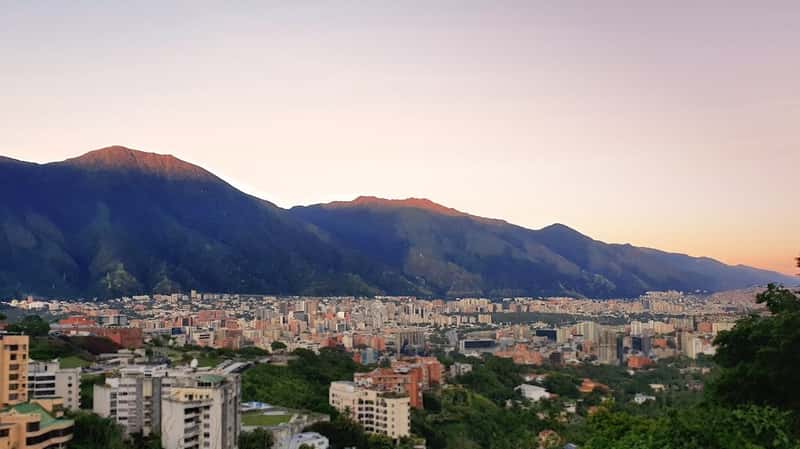
In 2020, the capital city, Caracas, ranked third in the ranking of most violent Venezuelan metropolises, with a murder rate of nearly 53 per 100,000 inhabitants, with the list headed by Cumaná with a homicide rate of 62.42. Though Venezuela has reported declining crime rates in recent years, the reality on the ground tells a more complicated story. The country held the sixth position for the highest homicide rate in Latin America, recording 26.8 homicides per 100,000 inhabitants in 2023, even after experiencing a steady decrease in the rate over the years. Here’s the thing: those decreases aren’t necessarily good news.
Criminologists say violent deaths have dropped because of Venezuela’s poor economy and the government’s extrajudicial killings, with so many people having left Venezuela that criminals have fewer people to assault. The Venezuelan capital remains plagued by kidnappings, with News.com.au calling the Venezuelan capital the kidnap capital of the world in 2013, noting that Venezuela had the highest kidnapping rate in the world and that 5 people were kidnapped for a ransom every day. Mass migration due to economic collapse has essentially exported some of the violence while leaving behind a city where danger still lurks beneath official statistics.
Kabul, Afghanistan: Life Under Taliban Rule
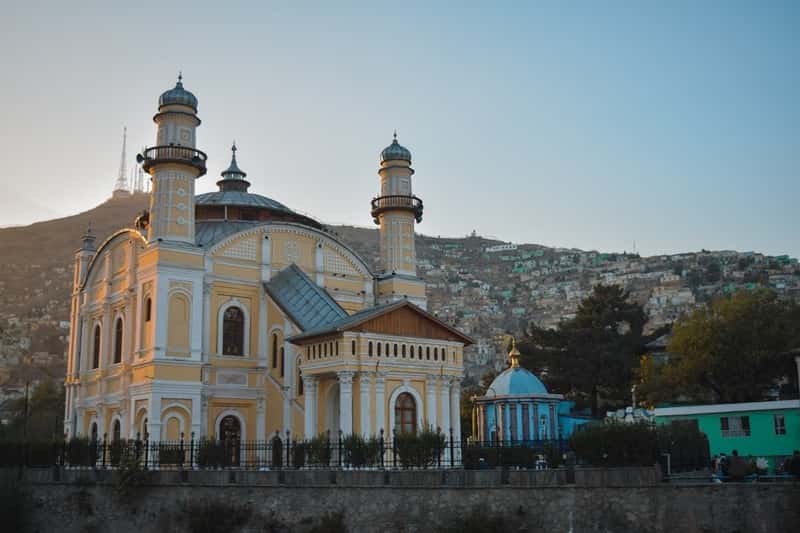
The Afghan capital presents a different kind of danger altogether. More than half of Afghanistan’s population, roughly 23.7 million people, needed urgent humanitarian aid and assistance in 2024, with 12.4 million people facing food insecurity and 2.9 million at emergency levels of hunger, while the UN Humanitarian Needs and Response Plan had received only 31 percent of the needed funds. Beyond starvation, the city faces persistent threats from terrorist attacks. ISKP claimed responsibility for an attack on a passenger bus in the Dasht-e Barchi area, a predominantly Hazara neighborhood in Kabul, that killed at least 5 and wounded 20 people, while on September 2, ISKP carried out a suicide attack outside the Taliban’s prosecution office, killing at least 21 people, most of them civilians.
Damascus, Syria: A City in Transition
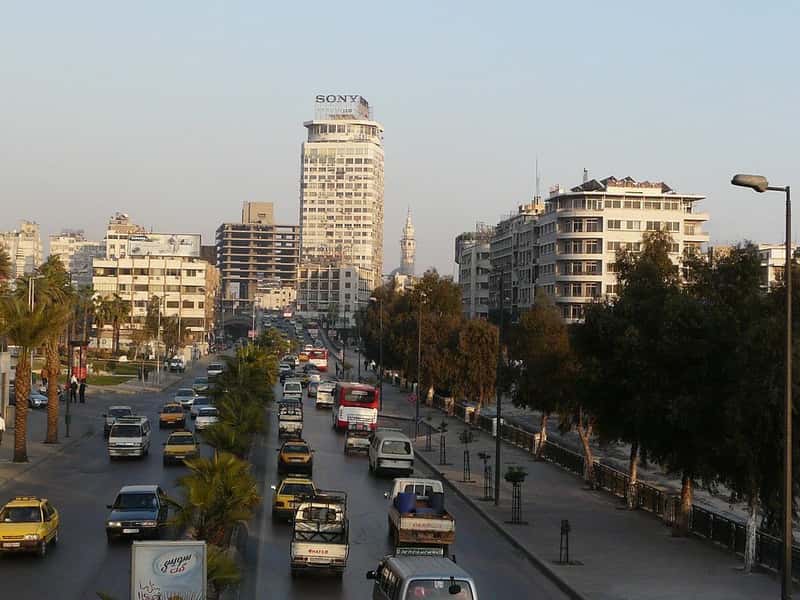
In December 2024, Hayat Tahrir al Sham overthrew the regime of Bashar al-Assad and took over the country, initiating a new era for Syria of presumably more freedom, with local Syrians seeming enthusiastic and optimistic about it. Still, the capital remains extremely volatile. Opposition forces took control of Syria’s capital Damascus, toppled the former regime and formed a transitional government, but despite ongoing efforts by the transitional government to dismantle armed factions and strengthen security, violent clashes continue to occur between minority communities, groups loyal to the former regime and security forces from the interim government, resulting in casualties, with the situation remaining volatile and unpredictable.
On 2 June 2025, an attack in the Greek Orthodox Church of Prophet Elias, Damascus, killed at least 30 people. The risk of kidnapping, including of foreign nationals, has been increasing throughout Syria, while Israeli air strikes continue to occur throughout the country, including in Damascus, targeting military installations, transitional government buildings, and security forces positions. The infrastructure damage is staggering. Syria experiences regular power outages, with some areas of the country receiving roughly 2 to 3 hours of electricity per day at best.
Johannesburg, South Africa: Financial Hub, Violence Hotspot
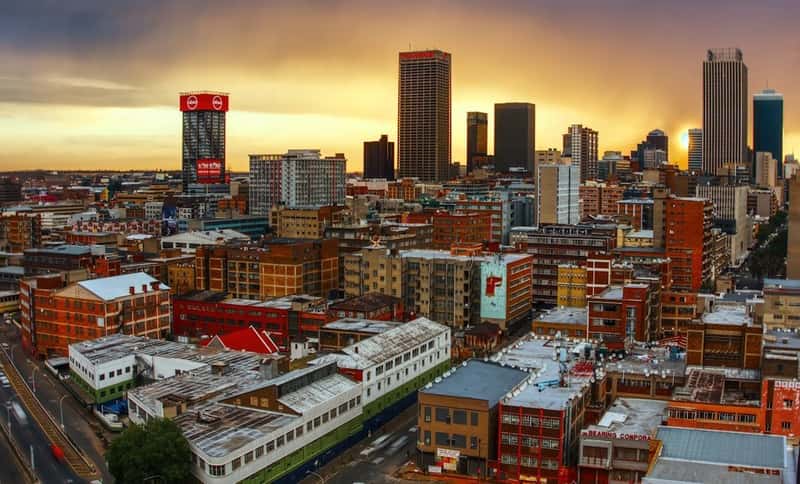
Johannesburg is South Africa’s largest city and its financial capital, but that status does not insulate it from violence, with the homicide rate placing it among the world’s most dangerous cities. Inner-city areas like Hillbrow face persistent danger, with reports of muggings, armed assaults, and killings, while shootings linked to gang conflicts happen in residential zones and shopping areas alike. The contradiction is striking: a city that houses major corporations and financial institutions simultaneously operates under conditions where effective policing has essentially collapsed in certain neighborhoods.
Large portions of the city operate under informal security due to a shortage of effective public policing. This means that despite being a capital of commerce and one of Africa’s most developed urban centers, residents in many areas can’t rely on the state to protect them from violent crime. It’s honestly hard to reconcile the image of gleaming office towers with the reality of neighborhoods where violence is simply part of daily existence.
What These Cities Tell Us About Modern Danger
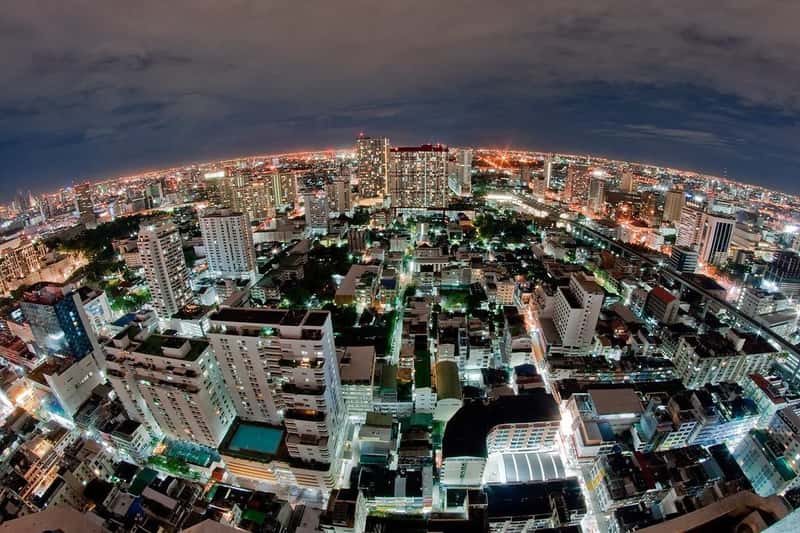
Looking at these capitals, a pattern emerges. The most dangerous aren’t necessarily in active war zones. Violence in these places comes from deeply rooted problems: poverty, gang networks, unchecked access to firearms, and fractured public trust in law enforcement. Port-au-Prince shows us what happens when criminal organizations effectively replace the state. Caracas demonstrates how economic collapse fuels instability even as official crime numbers drop. Kabul reveals the dangers of ideological extremism combined with humanitarian catastrophe.
Damascus is caught between regime change and ongoing conflict. Johannesburg proves that economic development doesn’t automatically translate to safety. The cities listed represent some of the highest homicide rates recorded between 2023 and 2025, with each location facing different causes – cartel violence, gang control, political instability, poverty, or weak law enforcement – but all share a common reality of ongoing, often unchecked, violence. These aren’t abstract statistics. They represent millions of people trying to survive in cities where stepping outside can be a calculated risk.
Did you expect Port-au-Prince to surpass traditional conflict zones? Or that economic hubs like Johannesburg would face such persistent violence? The world’s most dangerous capitals aren’t always where you’d think they’d be.