Prix Versailles announced its 2026 list of the world’s most beautiful railway stations at UNESCO headquarters in Paris on 28 September.[1] All seven stations were recognised for creativity, innovation and their relationship to local heritage.[1] It’s a juried architecture prize, not a passenger poll or a universal ranking. Even so, the list is a good excuse to look at how far station design has moved beyond concrete and departure boards.
Think of what follows as a walk through a gallery, one station per room. Three of the seven will receive extra World Titles (Prix Versailles, Interior or Exterior) at a ceremony in December.[2] Until then, the seven are presented as equal finalists.
Town Hall Station, Melbourne
Town Hall Station in Melbourne was designed by Hassell, RSHP and WW+P.[3] It opened in 2025 beneath Swanston Street in the city centre.[4] The jury focused on scale, saying it “stands out for the sheer size of its underground volumes.”[3]
The main concourse sits under City Square. Eight large columns, shaped like trees, hold up the canopy and give the hall a cathedral-like feel.[3] Coppery vaulted ceilings rise 10 metres above wide platforms, which adds to the sense of space.[3] For an underground station, that openness is unusual.
Lyon Part-Dieu Station, Lyon
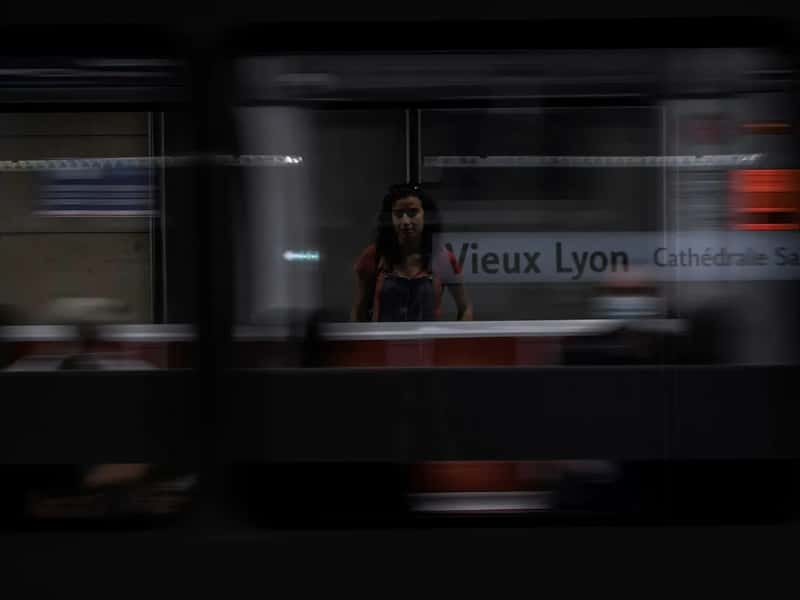
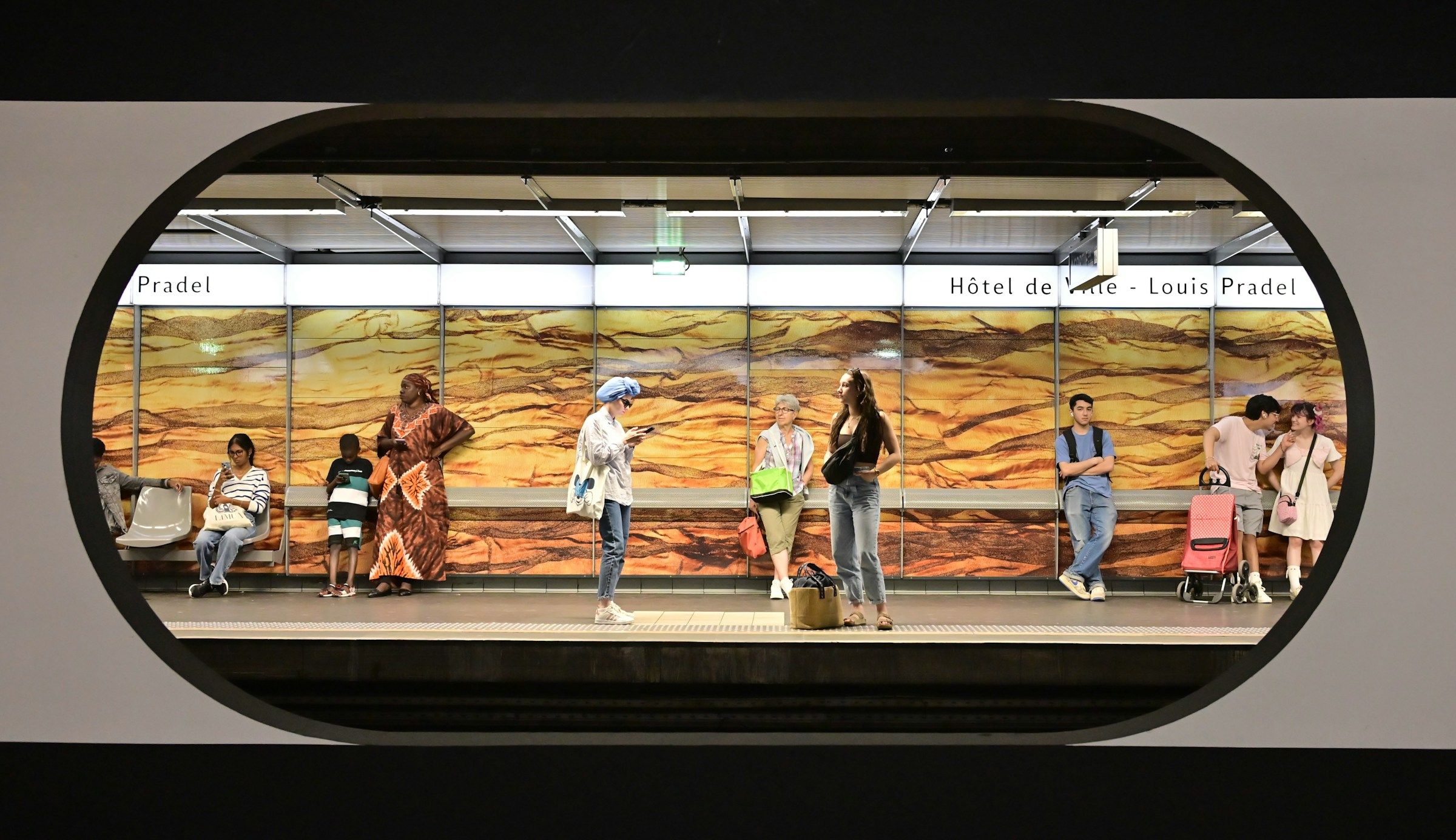
Lyon Part-Dieu was redesigned by AREP and L’AUC.[3] The jury noted that people in Lyon often walk through buildings to get from one street to another, and the station had become a shortcut between neighbourhoods.[5] It’s one of Europe’s top stations for connecting passengers, and it has doubled in size.[5]
The work was phased over several years. A new entrance building and hall, Galerie Béraudier, opened in June 2024, followed by an underground interchange plaza in April 2025 and a renewed forecourt in September 2025.[6] Prix Versailles praised its community spaces and France’s biggest bicycle parking garage.[1] It’s a civic makeover as much as a beauty contest entry.
Colosseo – Fori Imperiali Station, Rome
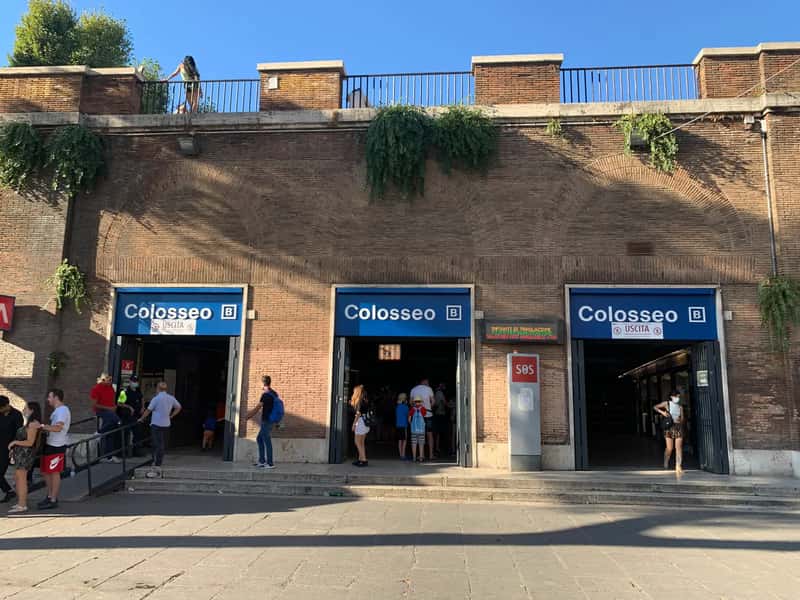
Rome’s Metro C station is built around what was dug up while it was being built. It spans four levels and reaches a maximum depth of more than 30 metres, creating a large underground cavity where archaeological finds now sit alongside passing travellers.[5] It entered service on 16 December 2025.[7]
The jury described the descent to the platforms as “a literal dive into the city’s history.”[3] An aperture gives transferring passengers an unexpected glimpse of the Colosseum above.[2] Few commutes come with that kind of view.
National Museum Station, Riyadh
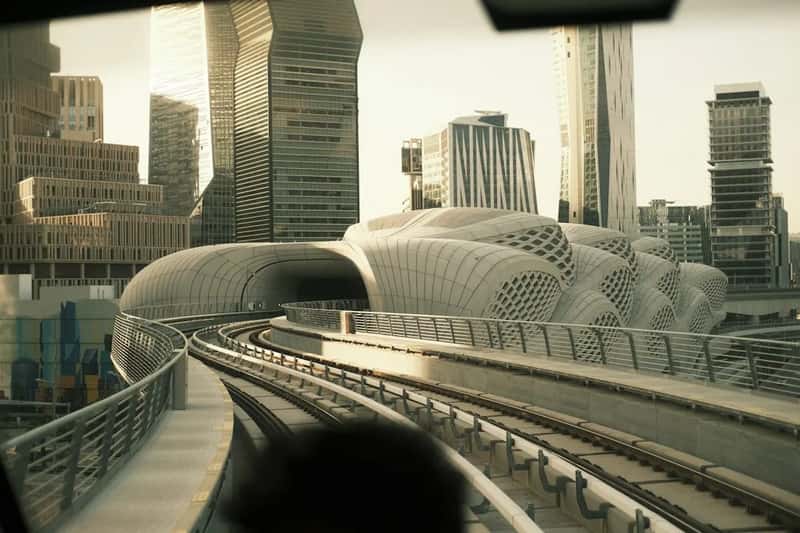
Arup designed the National Museum Station in Riyadh. Its entrance is wrapped in a lattice concrete shell modelled on the topography of Tuwaiq Mountain.[2] The building draws its look from the landscape and from local building traditions.
Triangular openings inspired by traditional Najdi architecture reveal a glowing blue interior.[2] The contrast between the solid outer shell and the lit interior seems to be the main idea. This is one of two Riyadh entries, and it’s the one most tied to the look of the local terrain.
Western Station, Riyadh
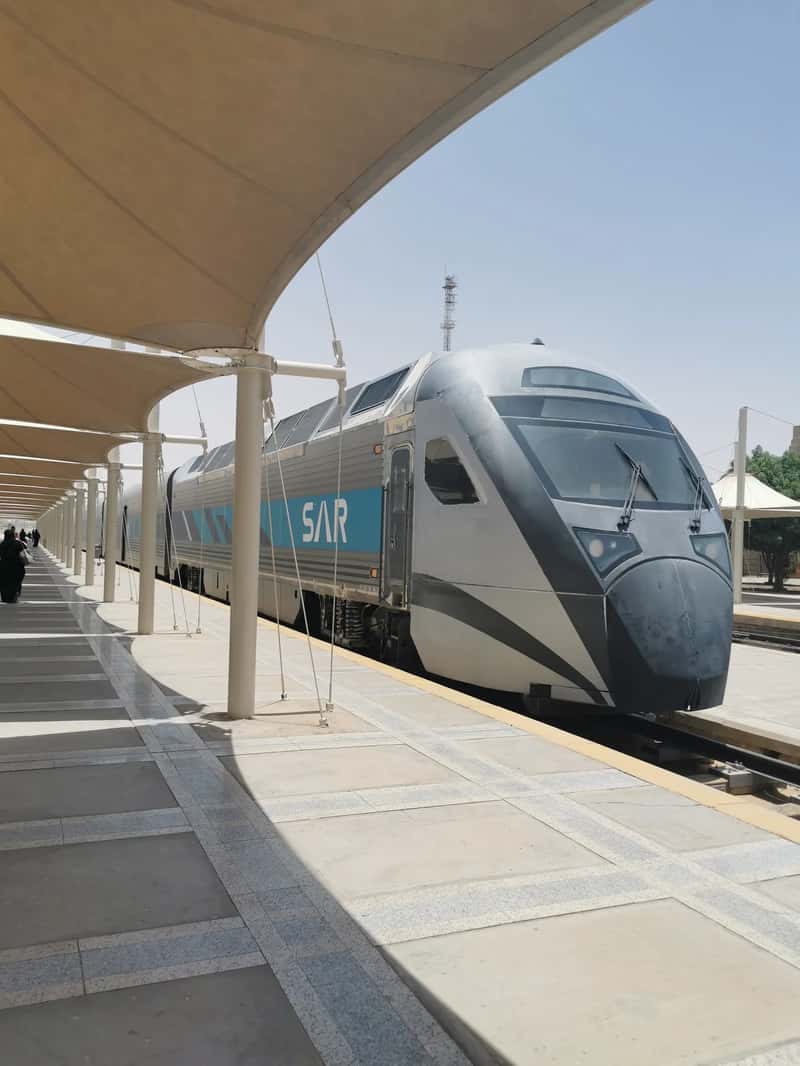
Riyadh’s second entry is Western Station. It takes inspiration from desert dunes, and its undulating roofline shades a small ecosystem of shops, a mosque and pedestrian squares built around the tracks.[2] That makes it part transit hub and part neighbourhood centre.
The two Riyadh picks helped make the list geographically varied. Saudi Arabia and Italy were the most awarded countries, with two stations each, while Australia, France and Los Angeles also made the list.[1] Using the landscape as a design source runs through both Riyadh projects.
LAX/Metro Transit Center, Los Angeles

The seventh station is the odd one out, because it’s about getting to a plane. Prix Versailles included it for “radically reinventing airport transit.”[1] That’s a different goal from the heritage-heavy entries in Rome and Naples.
The design responds to the local climate. Sculptural canopies are designed to cut air conditioning use through natural ventilation, and solar panels cover roughly half the building’s energy demand.[2] It’s a practical example of the prize’s sustainability criteria.