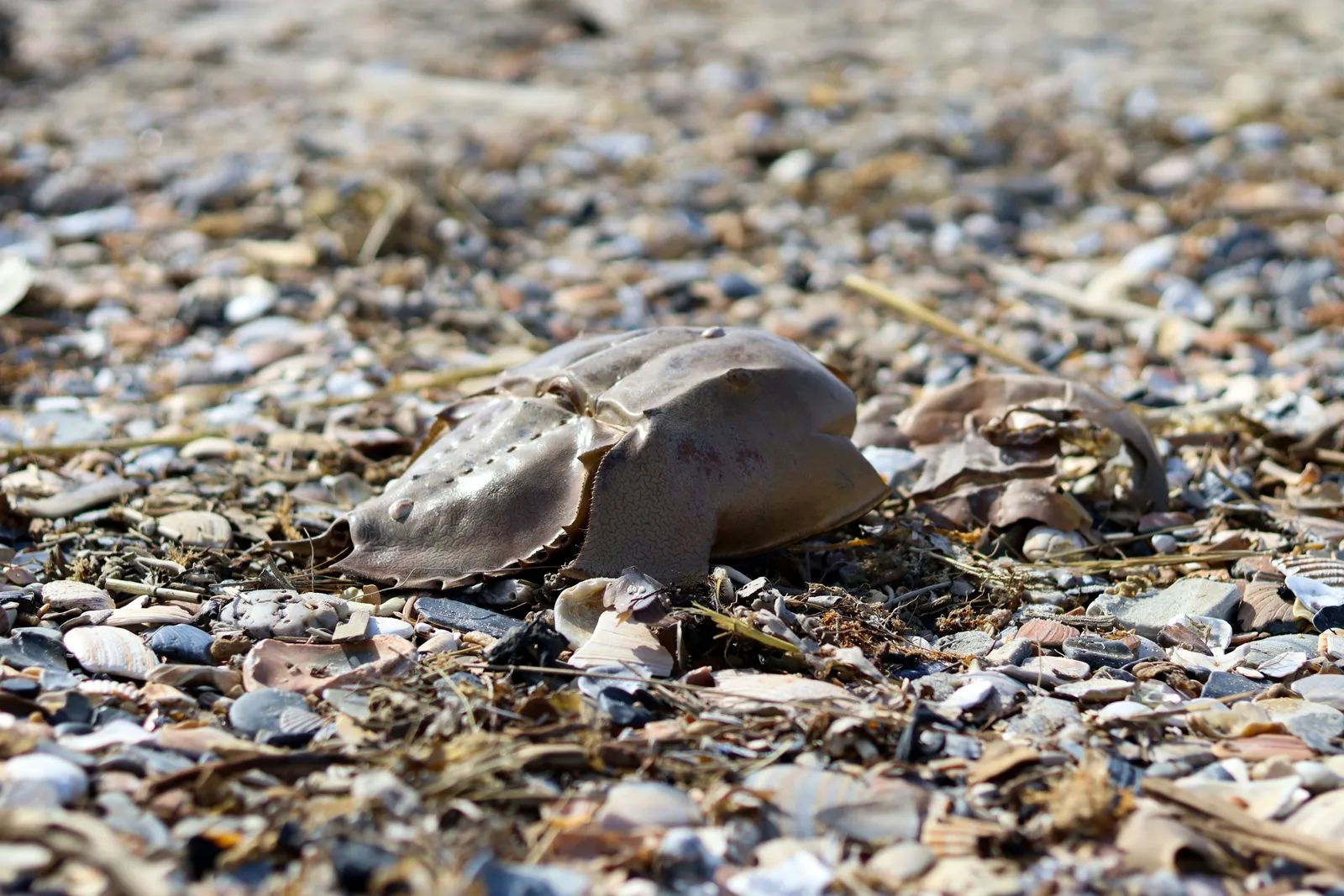
Philippine researchers have documented horseshoe crabs in the southern province of Tawi-Tawi for the first time, extending the known range of these ancient arthropods beyond Palawan. The confirmation rests on accounts from local fishers and coastal residents rather than direct scientific sightings. Their descriptions match two species already familiar from other parts of Southeast Asia, one of which carries medical importance because of its distinctive blue blood. ([1])
Why the Finding Matters
Horseshoe crabs have survived largely unchanged for roughly 450 million years, earning them the label of living fossils. The American species that washes up on East Coast beaches supplies a clotting agent used worldwide to test injectable drugs and vaccines for bacterial contamination. A similar lineage now appears in Philippine waters previously thought empty of these animals. The new records come at a moment when coastal development and fishing pressure are altering many tropical shorelines. Establishing where the animals still occur provides a starting point for any future protection measures. Without baseline data, conservation planning remains difficult.
Two Species Identified by Locals
Residents described animals matching the tri-spine horseshoe crab, listed as endangered by the IUCN, and the mangrove horseshoe crab, whose status remains data deficient. Both were reported in markets and along shorelines in four municipalities of Tawi-Tawi. The tri-spine form tends to reach larger sizes and prefers somewhat deeper coastal waters. The mangrove species stays closer to muddy estuarine areas. Local knowledge supplied the only current evidence for either in this province.
| Species | Conservation Status | Typical Habitat |
|---|---|---|
| Tri-spine horseshoe crab | Endangered | Coastal waters |
| Mangrove horseshoe crab | Data deficient | Estuarine mudflats |
How the Records Were Gathered
Ivane Pedrosa-Gerasmio first heard reports while visiting a market in Bongao in December 2023. She and student Quesie Tolero Omnos then interviewed 142 residents across the province about sightings, collection practices, and perceived population trends. The approach relied on people who spend their days on the water and in the mangroves. Their consistent descriptions of shell shape, spine arrangement, and seasonal appearance gave researchers enough detail to assign the animals to known species. No specimens were collected for the initial report.
Next Steps for Protection
The authors emphasize that the new information is only a beginning. Further surveys will be needed to determine abundance, breeding sites, and any threats from harvesting or habitat loss. The mangrove species in particular lacks enough data for a formal risk assessment. Local fishers already interact with the animals, sometimes collecting them for food or bait. Understanding those uses can help shape practical conservation rules that respect both the species and community needs. The study supplies the first documented foothold for such work in Tawi-Tawi.