Violence against women is not a distant, abstract statistic. It happens in homes, in relationships, in cities that appear perfectly normal from the outside. The numbers coming out of recent global research are, honestly, staggering. We are talking about a crisis that does not discriminate by continent, culture, or economic status. It is everywhere, though some places bear a far heavier burden than others.
An estimated 840 million women, almost one in three, have been subjected to physical and/or sexual intimate partner violence, non-partner sexual violence, or both at least once in their life. That figure has barely budged in two decades. So let’s not look away. Let’s look directly at the countries where women face the highest rates of violence, backed by the most current data available. Let’s dive in.
1. South Africa: A Nation Facing a Declared Emergency

If there is one country that forces the world to confront gender-based violence head-on, it is South Africa. South Africa is considered the most dangerous country in the world for women, notorious for its high levels of gender-based violence, sexual assault, and femicide, leading to its disturbingly high score of 771.82 on the Women’s Danger Index. That score is not just a number. It represents real lives, real families, and a crisis that the government has finally started treating with emergency-level seriousness.
South Africa is estimated to have among the highest rate of rape in the world and an estimated femicide rate that is five times the global average. Think about that for a second. Five times the global average. The First South African National Gender-based Violence Study, released in 2024, revealed that more than one in three women, specifically 35.8 per cent of South African women, have experienced physical and/or sexual violence in their lifetime.
Between July and September 2024 alone, 957 women were murdered, 1,567 survived attempted murders and 14,366 experienced assaults resulting in grievous bodily harm. In addition, 10,191 rapes were reported. Responding to the outcry amplified by over one million petition signatures, the South African government declared gender-based violence and femicide a national disaster. Whether that declaration translates into real change remains the most pressing question the country faces.
2. Brazil: Record Femicides Despite New Laws

Brazil holds the grim distinction of second place on the Women’s Danger Index, scoring 624.28, indicating severe issues surrounding women’s security and rights. Here is the thing that makes Brazil particularly troubling: the country has passed wave after wave of protective legislation, and the violence keeps climbing. It almost feels like the laws exist in a parallel universe from the reality on the ground.
With 1,492 femicides recorded in 2024, Brazil reached its highest record since 2015, when the femicide law first came into effect. Meanwhile, Brazil recorded the equivalent of 196 rapes per day in 2024, totaling 71,892 cases of rape of women throughout the entire year. Those are not typos. That is roughly one rape every seven minutes around the clock.
In Latin America, Brazil and the Dominican Republic have some of the highest rates of femicide in the region, only falling behind Honduras. These figures also reveal structural gender inequalities that remain very present in Brazil. A stronger law on paper means very little when enforcement is inconsistent and impunity is rampant at street level.
3. Russia: Hidden Violence, Minimized Data

Russia ranks third on the Women’s Danger Index, scoring 592.71. The challenge with Russia is that the data tells only a fragment of the story. Domestic violence is chronically under-reported there, partly because of social stigma, and partly because legal protections for victims have actually weakened in recent years rather than improved. That is a direction most other countries are not heading.
The prevalence of violence against women is likely under-reported as survivors and victims fear retaliation or lack the resources to escape. In Russia, this structural barrier is compounded by a cultural climate that often frames domestic violence as a private family matter. Social norms can also be powerful disincentives for women to report and pursue legal recourse against perpetrators. Social acceptance of domestic violence against women by women themselves weakens the functioning of legal frameworks and is an obstacle to addressing violence against women.
In authoritarian settings, violence against women is often hidden, under-reported, or even used as a deliberate tool of control. Russia fits that description more closely with each passing year. The true scale of violence there may be far greater than official figures suggest, which is itself a deeply unsettling thought.
4. Mexico: Femicide Rates That Have Nearly Doubled Since 2015

Mexico stands at fourth place on the Women’s Danger Index, with a score of 576.05. Mexico’s story is one of contradictions. The country elected its first female president in 2024, achieved near gender parity in Congress, and yet the violence against ordinary women on the ground has shown a deeply alarming trend. Rates of femicide in Mexico have almost doubled since 2015.
Violence against women in Mexico is deeply rooted in machismo, impunity, and socio-cultural norms that perpetuate discrimination against women. Impunity and ineffective institutional responses represent a critical challenge for preventing and punishing gender-based violence. The two violent crime indicators of the Mexico Peace Index most associated with violence against women are sexual assault and family violence, and the official rates of these two indicators have more than doubled in the past decade.
More than 30 per cent of women in Colombia and Turkey report having experienced lifetime interpersonal violence from a partner, while more than 8 per cent of women in Korea, Mexico, Turkey, and Colombia report having experienced intimate partner violence in the past year. For Mexico, that persistent, above-average rate sits alongside one of the continent’s most visible political advances for women. The gap between representation and protection remains jaw-dropping.
5. Afghanistan: Where the State Itself Is Part of the Problem

Afghanistan occupies a category of its own. By July 2024, 64 per cent of women in Afghanistan reported feeling “not at all” safe leaving home by themselves, compared to just 2 per cent of men. That is not a statistic about crime rates. That is a statistic about the complete erasure of freedom of movement for women in an entire country. It is difficult to overstate how catastrophic that is.
In Afghanistan, the Taliban have dismantled protections for women experiencing gender-based violence, closed shelters, and replaced them with practices that can involve imprisoning women in the name of protection, while imposing sweeping restrictions on their movement, work, and speech. In this case, the state itself is a central perpetrator of rights violations. That phrase should stop every reader cold.
Humanitarian contexts have a severe impact on the safety of women, with roughly 70 per cent of women experiencing gender-based violence in humanitarian contexts compared with 35 per cent worldwide. Afghanistan sits squarely in that category. Eight per cent of surveyed Afghan women claimed they knew at least one woman or girl who had attempted suicide in the last three years. The suffering being endured is layered, chronic, and largely invisible to the outside world.
6. Iran: A Climate of Systemic Suppression

Iran scores 553.11 on the Women’s Danger Index, placing it fifth globally, indicating the issues of gender equity and women’s safety desperately need to be addressed. Iran’s situation is closely tied to legal and political structures that restrict women’s autonomy at every level. Laws that require male guardianship, that criminalize women’s dress, and that limit their ability to seek legal recourse against abusers create a system in which violence can flourish largely unchallenged.
Violence against women encompasses all forms of physical violence, sexual violence and abuse, psychological violence, economic violence, and harassment. Other forms include harassment, rape and other forms of assault, child marriage, human trafficking, female genital mutilation, a lack of reproductive rights, social norms that devalue women, and discriminatory laws that disenfranchise women. Iran checks many of those boxes in policy alone, before a single act of physical violence even enters the equation.
These statistics represent only reported cases and documented incidents, with experts estimating that actual prevalence could be significantly higher due to underreporting, social stigma, and limited access to support services. In Iran, that underreporting is structural and institutionalized. Women who speak out face judicial punishment. The silence built into the system is, itself, a form of violence.
7. India: Scale and Structural Inequality

India scores 541.25 on the Women’s Danger Index, revealing serious issues of gender-based violence, inequality, and discrimination plaguing the nation. India’s challenge is one of staggering scale. With over a billion people, even a modest percentage of women experiencing violence translates to hundreds of millions of lives affected. The WHO South-East Asia region’s 33 per cent lifetime intimate partner violence rate impacts a staggering 168.5 million women due to the region’s larger population.
Prevalence estimates of lifetime intimate partner violence reach 33 per cent in the WHO South-East Asia region, which includes India as its most populous member. Rural women, women from lower castes, and women with disabilities face compounded vulnerabilities that official national averages often fail to capture. I think it is fair to say the headline figures, alarming as they are, almost certainly undercount the true picture.
Women in countries classified as lowest-income, conflict-affected, and climate-vulnerable settings are disproportionately affected. Large portions of rural India fit that description. Attitudes justifying violence against women are strongly associated with more women experiencing violence in any given year, and surveys across several Indian states have documented troublingly high levels of social acceptance of partner violence.
8. Democratic Republic of Congo: War as a Weapon Against Women
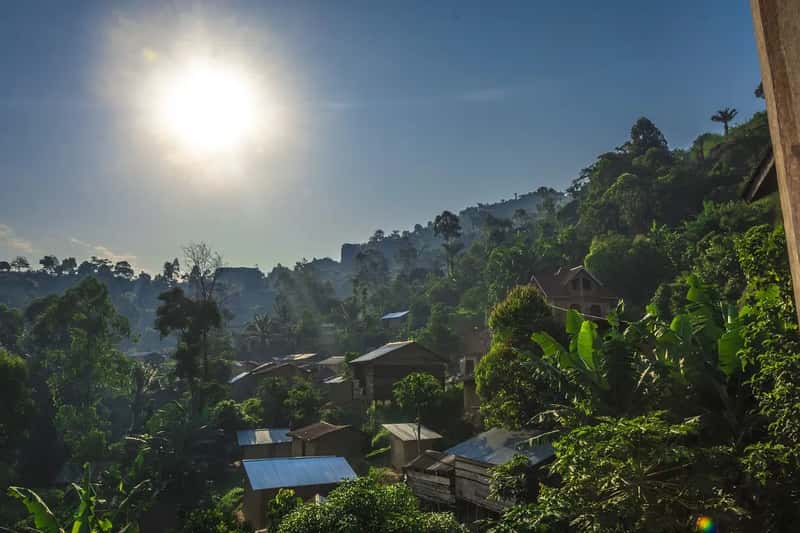
The DRC represents one of the most extreme cases of conflict-driven sexual violence on the planet. Africa records the highest rates of femicide relative to female population of any region in the world. With an estimated 22,600 victims of intimate partner and family member femicide in 2024, Africa is the region with the highest number of victims in aggregate terms. Moreover, Africa continues to account for the highest number of victims relative to the size of its female population, at three victims per 100,000.
The DRC has been described by humanitarian organizations as the epicenter of conflict-related sexual violence for decades. Roughly 70 per cent of women experience gender-based violence in humanitarian contexts compared with 35 per cent worldwide, and the DRC represents one of the most prolonged and extreme humanitarian crises on the continent. Armed groups have used rape systematically as a tool of war, something that amounts to a war crime under international law.
These regions face unique challenges including armed conflicts, economic instability, weak legal frameworks, and cultural practices that may normalize violence against women. In the DRC, all of those factors collide at once, creating conditions where violence against women is not an aberration but an entrenched feature of daily life for millions. Violence against women and girls is the most widespread human rights violation, and femicide is its most extreme and preventable form, often following a pattern of prior abuse.
The Global Picture: A Crisis With No Quick Fix

Around 60 per cent of the almost 83,300 women and girls killed intentionally in 2024 were murdered by their intimate partners or other family members. In other words, an average of 137 women and girls worldwide lost their lives every day at the hands of a partner or close relative. Let that sink in. One woman every ten minutes, killed by someone who was supposed to love or protect her.
The global figure of 840 million women affected has remained largely unchanged in the last two decades. Progress in reducing intimate partner violence has been very slow over the last two decades with only a 0.2 per cent annual decline. That rate of decline is not progress in any meaningful sense. At that pace, the problem will outlive everyone reading this article by generations.
What makes these statistics particularly alarming is that they represent only reported cases and documented incidents, with experts estimating that the actual prevalence could be significantly higher due to underreporting, social stigma, and limited access to support services. The real numbers, in other words, are almost certainly worse than what the data shows. That is one of the most sobering conclusions of all.
Why Underreporting Makes Everything Worse

The prevalence of violence against women is likely under-reported as survivors and victims fear retaliation or lack the resources to escape. This is true in every single country on this list, from the wealthiest to the most impoverished. Fear is the great silencer. And when women do not report, the system has no data to respond to. No data means no policy, no funding, no accountability.
Social norms can be powerful disincentives for women to report and pursue legal recourse against perpetrators. Social acceptance of domestic violence against women by women themselves weakens the functioning of legal frameworks and is an obstacle to addressing violence against women. Honestly, that last point is one of the most difficult to grapple with. When the acceptance of violence runs so deep that even those harmed by it internalize it as normal, the systemic challenge becomes almost immeasurable.
The 2024 UNODC and UN Women report underscores a critical accountability gap in global data, fewer countries are reporting femicide statistics, warning that every victim must be counted to strengthen prevention, ensure justice, and end impunity. Counting the dead is the bare minimum. The world has not even managed to do that consistently.
What Needs to Change
Violence against women and girls is the most widespread human rights violation, and femicide is its most extreme and preventable form, often following a pattern of prior abuse. The word “preventable” carries enormous weight there. These are not natural disasters. These are choices, systems, and structures that allow violence to continue. They can be changed. The question is whether the political will exists to change them.
The OECD Social Institutions and Gender Index showed that social norms and legal frameworks can either drive processes of social transformation or act as barriers to women’s empowerment. Although legislative progress to protect women’s physical integrity has been made, there are still disparities across countries. Law is necessary, but law alone changes nothing without enforcement, funding, and cultural transformation at the grassroots level.
With UN Women’s support, 90 countries, home to 3 billion women and girls, have made services responding to violence more available and centred on putting survivors first. That is meaningful progress, but it reaches far from everyone. The women in conflict zones, in authoritarian states, in isolated rural communities, they remain profoundly out of reach. That gap between what is possible and what actually exists for the most vulnerable women on earth is where the real urgency lives. What do you think should be the world’s first step? Tell us in the comments.