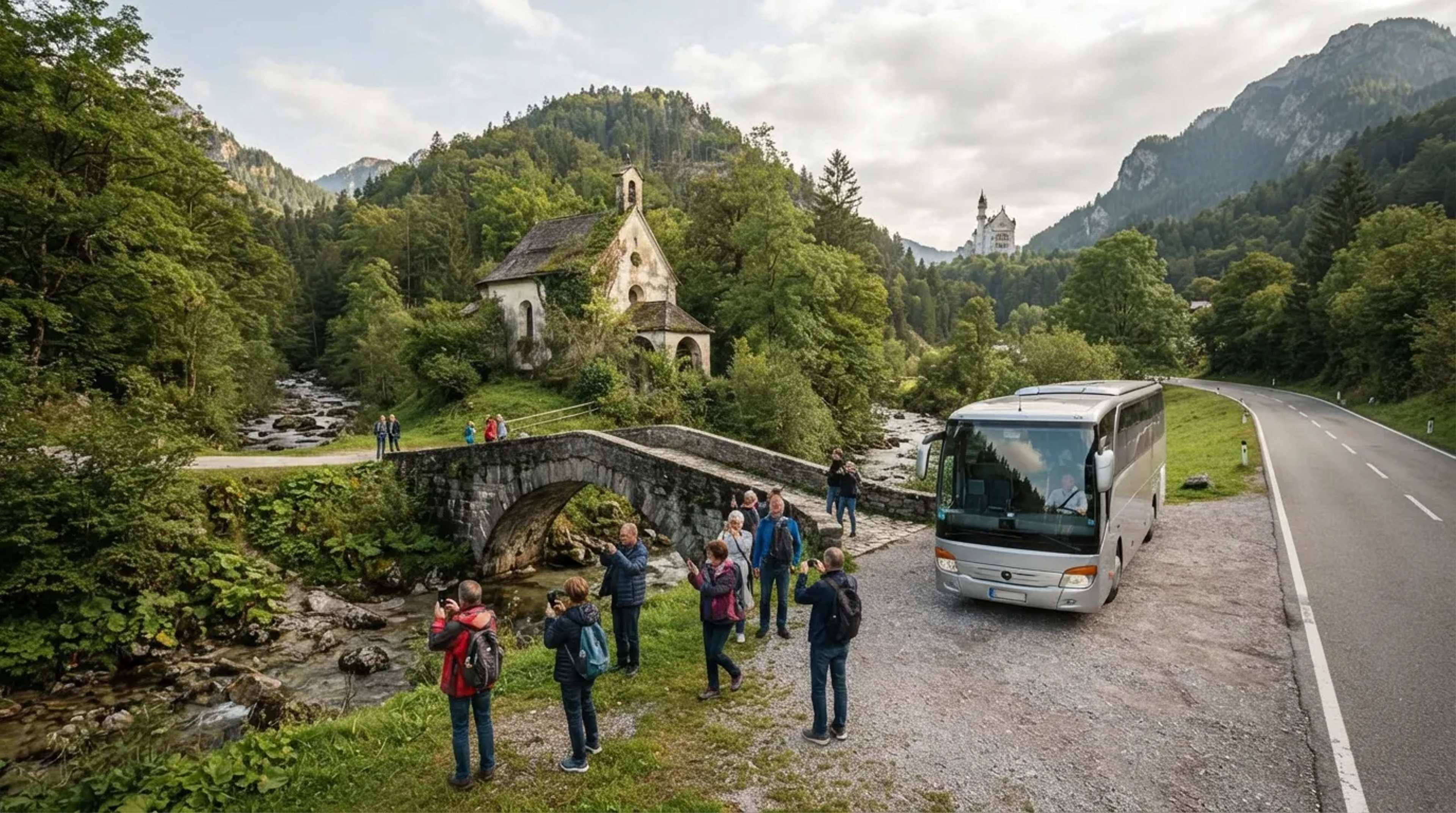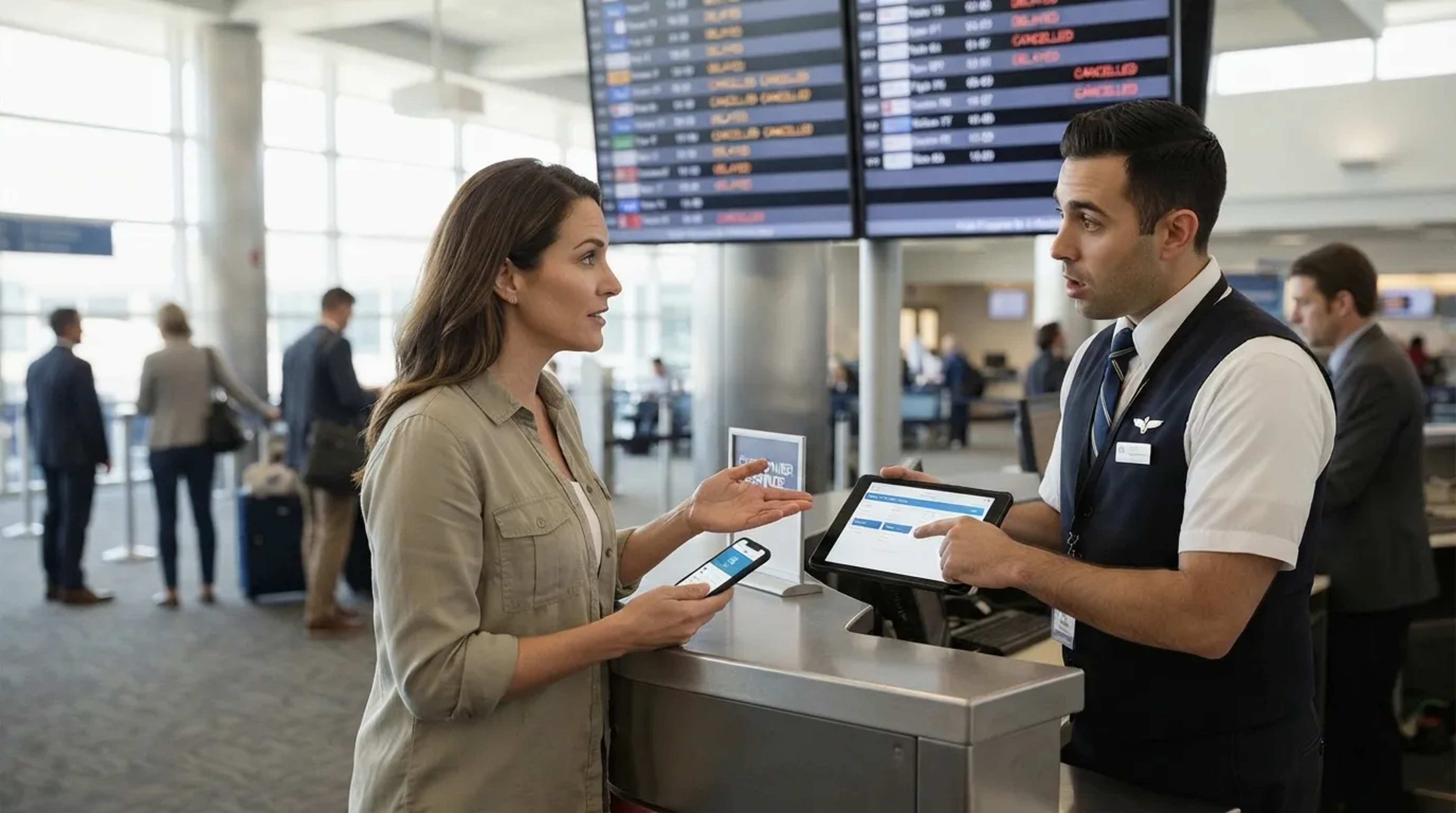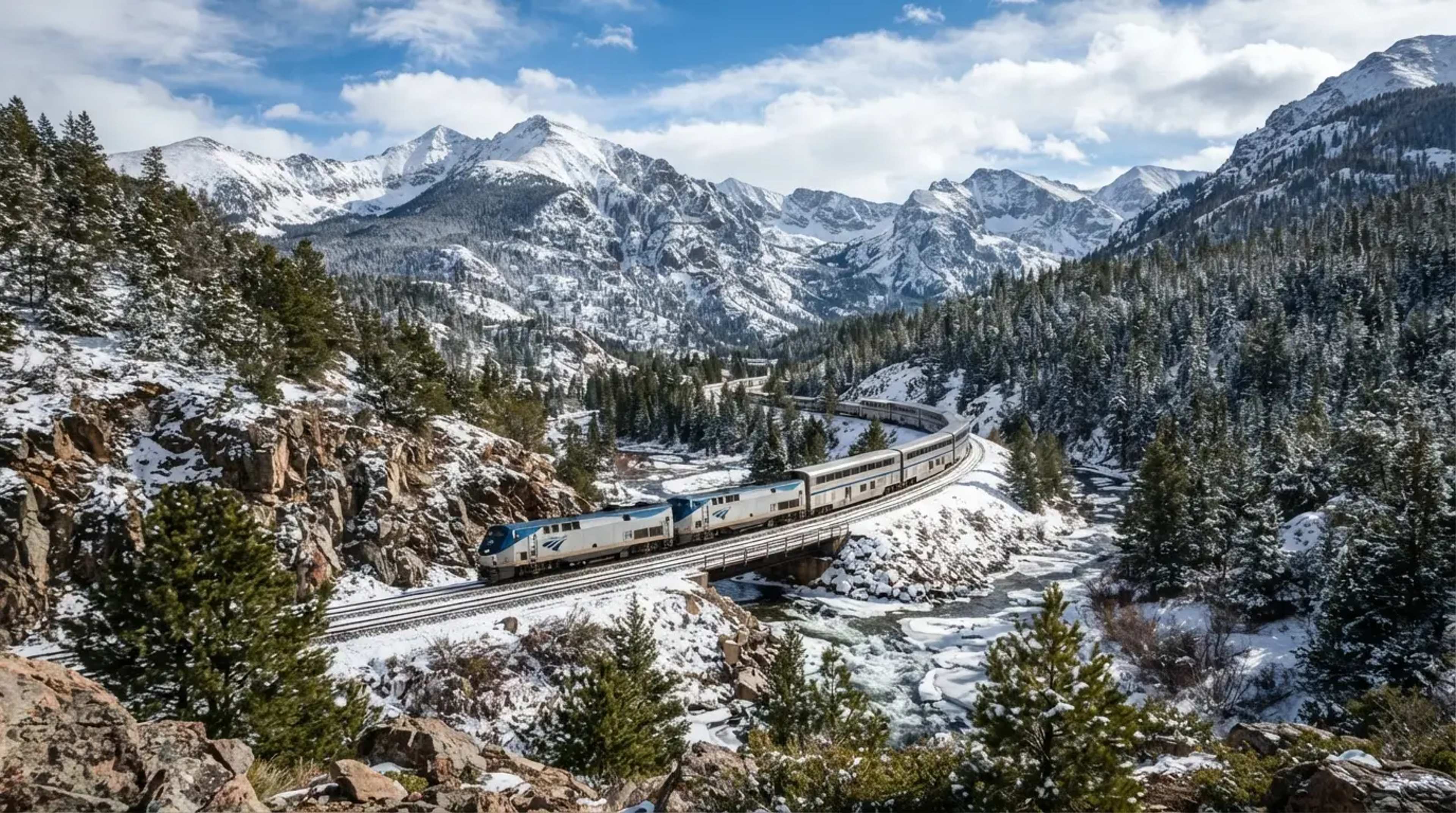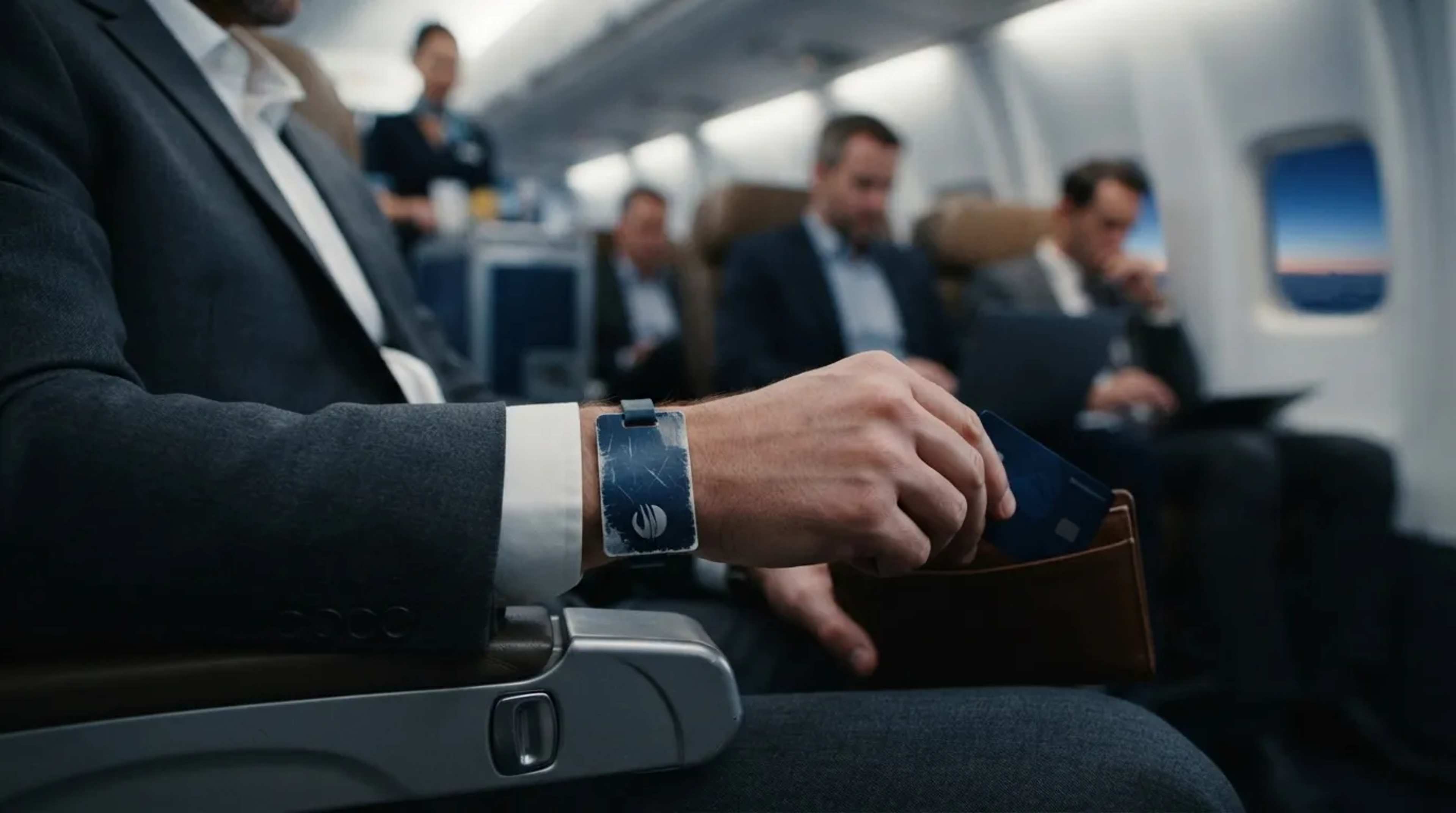
You probably think your tour begins when the coach doors hiss open. Tour managers will tell you it’s already half-written by then. Your seat, the order your suitcase was stacked, even the stop that will quietly vanish at 3 p.m. if traffic turns ugly were all settled before the engine turned over.
What’s strange is how few of these choices are about sightseeing. They involve a driver’s legal clock, a restaurant kitchen that can’t handle forty surprise guests, and a ranking of stops nobody mentions out loud. Start with the seat under you, and save your biggest eyebrow-raise for #1.
#15 – The “Random” Seat Is Rarely Random
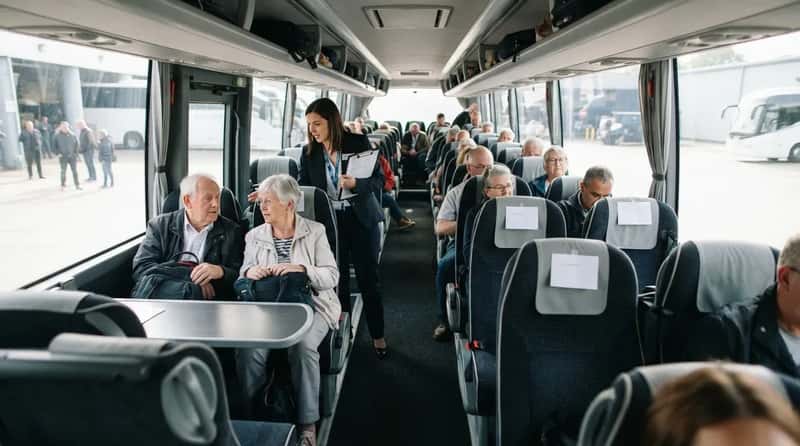
Your seat on a group coach was probably decided before you stepped on board. Many tour managers pick a seating system on day one: fixed seats for the whole trip, or a daily rotation. The reason is simple. Nothing starts a feud faster than a window seat at the front. A clear rule announced early takes the argument out of the aisle.
Managers also quietly reserve spots for people who need them. Travelers prone to motion sickness often get the front, and anyone with a mobility issue gets easy access to the door. Families and friends usually sit together. Some managers insist rotation is the only fair system, while others say fixed seats prevent daily shuffling and lost jackets. Either way, the choice is made before the first mile.
Quick Compare
- Fixed seats: Fewer lost jackets, an easier head count and no daily shuffle.
- Daily rotation: Everyone gets a turn at the front, and the window seat stops being a prize.
- Either way: Seats for motion sickness and mobility needs are usually settled first.
But the next decision involves your suitcase, and it’s far more strategic than you’d think…
#14 – Your Suitcase Was Loaded in Reverse on Purpose
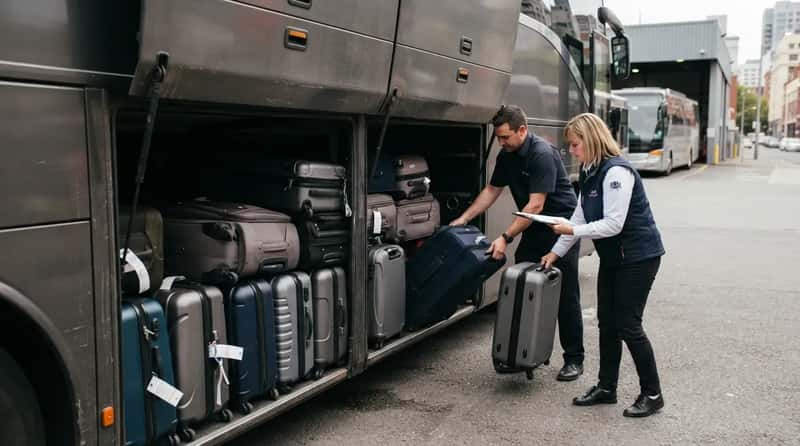
The order your bags go into the coach’s under-floor bays is a planned decision, not luck. Managers and drivers typically load the last hotel first and the first hotel last, so the bags needed soonest come out first. Heavy cases go low and centered. Soft bags fill the gaps.
It sounds like a small detail until you’ve watched a group slump in a lobby while a driver digs through a pile. Many managers ask every traveler to tag bags clearly, and many operators cap luggage at one suitcase per person because bay space is finite. The bays also aren’t reachable between stops, so anything you need during the day has to stay with you.
- Load order follows the hotel order, in reverse.
- Medications, chargers and documents stay in your day bag.
And that’s before the part of the day nobody wants to talk about: the bathroom plan…
#13 – The Bathroom Stop Is Planned Like a Military Operation
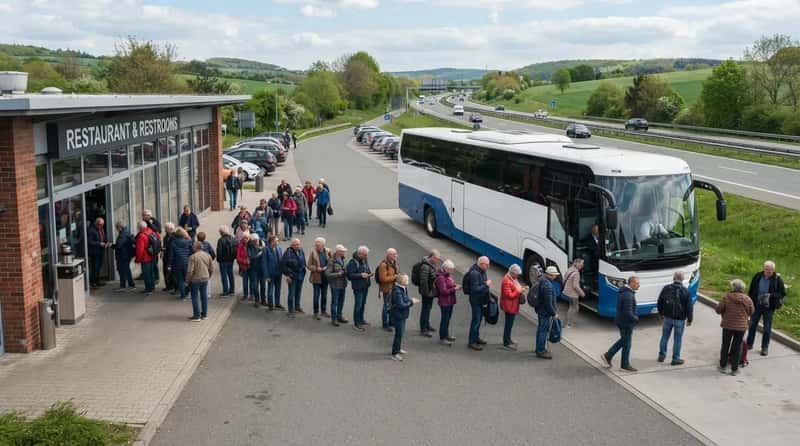
Ask a tour manager what derails a schedule, and restroom stops come up fast. Many coaches have an onboard toilet, but plenty of operators ask passengers to save it for emergencies because the tanks are small. So managers build in regular stops, choosing places where a full coach can actually park.
Here’s what most people don’t realize: a “ten-minute” stop for a full coach rarely stays ten minutes. Forty people, a few queues and a coffee line stretch it fast. Managers often announce a return time that’s earlier than the real deadline. Many also say the scenic roadside pull-off is overrated, because it usually has no facilities at all.
Once everyone’s back on board, there’s a bigger question: who is actually counting heads?
#12 – The Head-Count System That Prevents the Nightmare Scenario
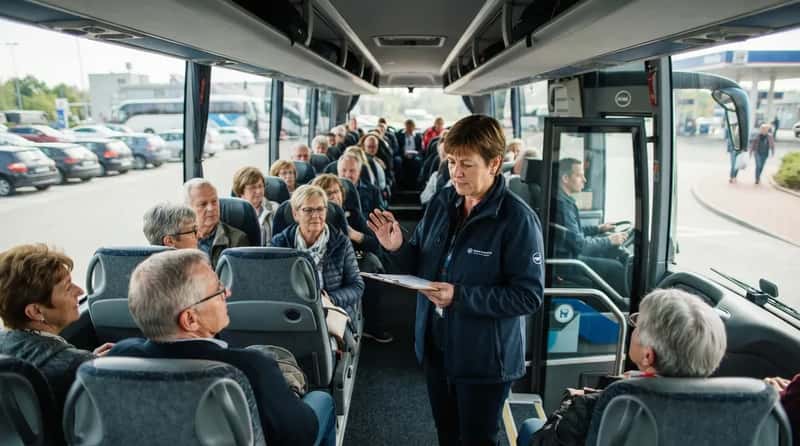
Nobody wants to be the traveler left behind at a service area. So managers set up a counting routine before departure. It might be seat numbers, a buddy system or a count by row. The count happens at every single re-boarding, not just the big stops.
Many also decide who stays last off and who stays last on, so someone is always watching the door. Travelers get the manager’s phone number and a clear rule: if you’re running late, call, don’t assume. The goal is a routine so dull that nobody thinks about it until the day it matters.
Even a perfect count is useless if the clock is wrong, though, and the clock gets set earlier than you think…
#11 – The Real Departure Time Isn’t the One on Your Itinerary
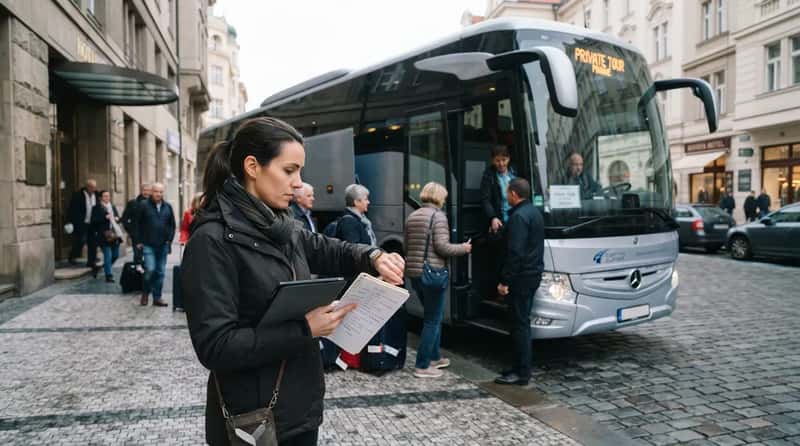
The printed time is often a polite fiction. Many managers plan their own deadline well ahead of it, because city traffic, loading and stragglers eat minutes. An itinerary shows the best case. The manager plans for the realistic one.
That buffer is a decision made at the planning stage. A 30-minute cushion at breakfast can save an entire afternoon stop later. Managers weigh wake-up calls, luggage-out times and breakfast hours together, since one slow hotel can ripple through the whole day. They’d rather have the group wait five minutes than lose a booked slot.
At a Glance
- On paper: The best-case time that goes on your itinerary.
- In the manager’s notes: An earlier deadline with room for traffic and stragglers.
- What eats the cushion: Luggage loading, slow breakfast service and one late traveler.
- What it protects: Timed entries and lunch reservations later in the day.
Next up is a rule that sounds harsh but has saved plenty of trips…
#10 – The “If You Get Lost” Rule Everyone Hears Once
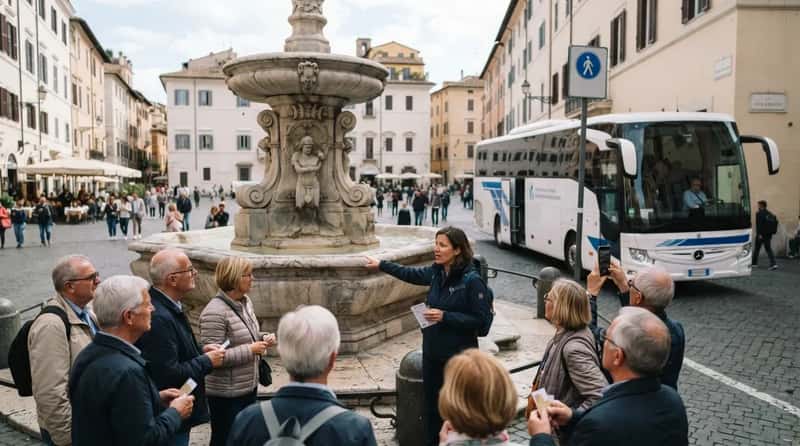
Before the group scatters, many managers set one fixed meeting point and one backup. They choose landmarks that are hard to miss. They also ask travelers to note the coach number or plate and carry the hotel’s card. The coach often isn’t parked where it dropped you off. Drivers frequently have to move to legal parking, so “meet at the bus” can mean nothing.
That’s why the instructions stay stubbornly specific: the time, the exact spot and who to call. Vague plans fall apart in crowded places. Specific ones still work when phones die or signals vanish.
But the biggest limit on your day belongs to someone who rarely speaks into the microphone…
#9 – The Driver’s Clock Quietly Runs the Whole Itinerary
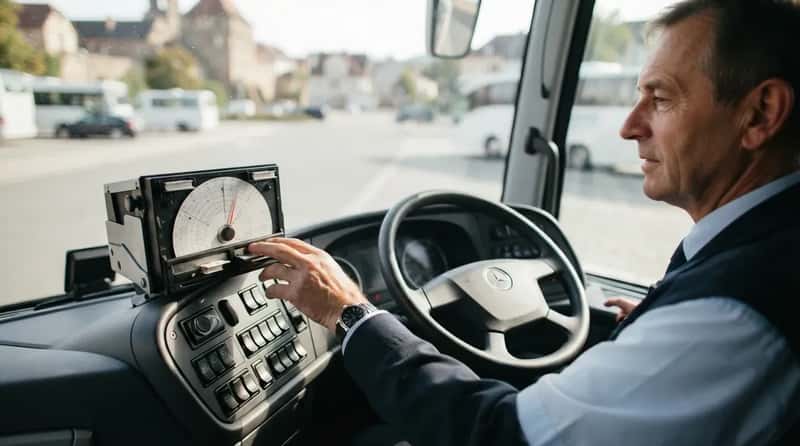
In the U.S., passenger-carrying drivers can drive up to 10 hours following 8 consecutive hours off duty. They also can’t drive once they’ve been on duty for 15 hours after those 8 hours off. Managers build the day around those limits, not the other way around.
In Europe the rules differ, and tachographs record driving time. Drivers there generally need a 45-minute break after 4.5 hours behind the wheel. A late-running day can’t simply be fixed with a heavier foot on the pedal. A long lunch or an extra shopping stop can push the final leg into hours the driver legally can’t work, which is why a good manager protects the schedule for the driver’s sake as much as yours.
Then there’s the route itself, and this is where the biggest surprises hide…
#8 – The Road Your Phone Would Pick Might Be Banned
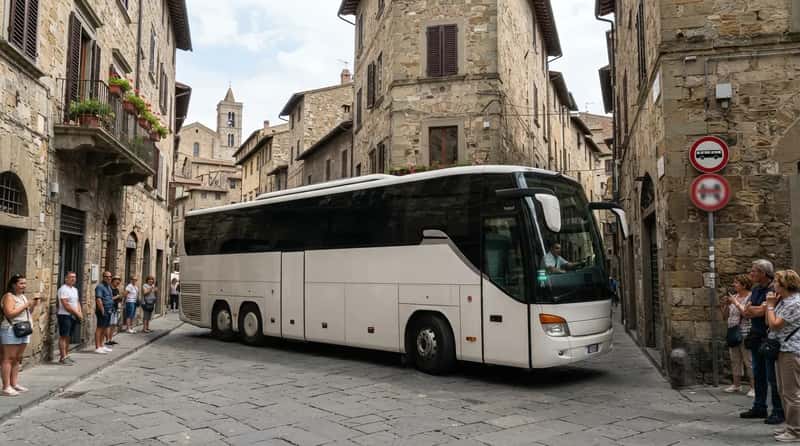
A coach is tall, long and slow to turn. Many historic city centers restrict or charge coaches, and drop-off points are often fixed. So managers and drivers check the route in advance, including clearances, turning space and where passengers can actually get off. The walk from the drop-off to the attraction is often decided weeks before you arrive.
Some managers call standard car navigation the riskiest tool on a coach trip, because it routes for cars. Professionals tend to lean on commercial routing and local knowledge. One wrong turn into a narrow street can cost hours and, in the worst case, a damaged vehicle.
And even a perfect route can’t help you if you miss the entry window…
#7 – The Timed Ticket That Controls Your Entire Afternoon

Many top sights run on timed entry. The Alhambra’s palaces and the Vatican Museums are well-known examples. Managers reserve slots long before departure, then reverse-engineer the day so the coach arrives in time. Miss your window and that stop may simply not happen.
That’s why a “relaxed” morning on your itinerary can be a tightly engineered one. Managers account for parking, the walk, security lines and group check-in, not just the ticket time. Some managers say the busiest attraction on the list is the one most worth skipping, because the queue eats the trip. Others think skipping it is the bigger regret.
Then comes the variable nobody can book in advance: the sky…
#6 – The Rain Plan That Exists Before the Forecast Does
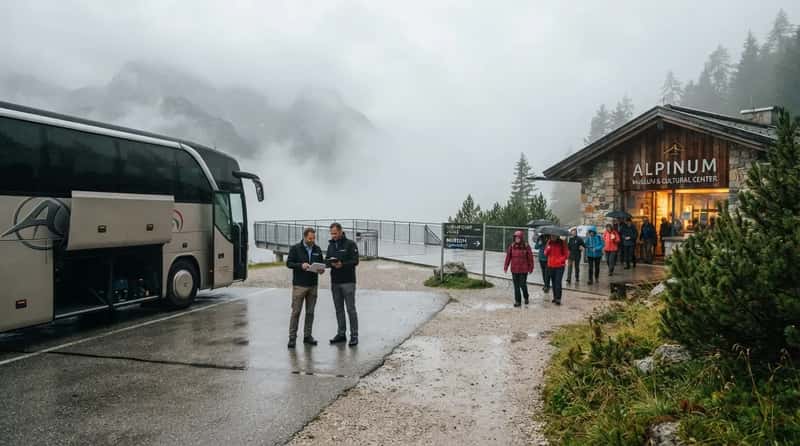
Good managers don’t wait for a storm to start improvising. They decide in advance what swaps with what. An outdoor morning can trade places with an indoor afternoon. A mountain drive can get an alternative if conditions look bad. The decision to reorder the day is often already agreed with the driver and the venues.
This is also where managers get blunt about overhyped stops. A viewpoint is a gamble in fog or rain. Many would rather protect a museum slot than bet on a lookout that may show nothing but cloud. It’s an opinion that splits groups, but it’s rooted in experience.
But some of the most important notes in a manager’s file have nothing to do with the weather…
#5 – The Allergy and Mobility Notes Read Before Anyone Boards

Before departure, managers go through traveler forms for dietary needs, allergies and mobility limits. Those details shape restaurant orders, hotel rooms and which sights work for the group. Restaurants can’t fix a serious allergy on the spot for forty people. They need notice, and a kitchen that gets it can plan the whole meal around one guest’s safety.
Accessibility works the same way. In the U.S., larger over-the-road bus companies generally must provide accessible service when given advance notice, so the request has to happen well before travel day. Waiting until the curb is too late. Managers who skip this step usually learn the lesson once, publicly.
Fast Facts
- U.S. Department of Transportation rules generally ask for 48 hours’ notice for accessible over-the-road bus service.
- Allergy details are passed to restaurants before the meal, not at the table.
- Mobility notes can change the seat, the hotel room and the walking pace of a stop.
The next decision is one many passengers actively resent, yet it might matter most…
#4 – The Safety Briefing Everyone Rolls Their Eyes At

Yes, the speech about seat belts and exits feels like a formality. Managers give it anyway. U.S. motorcoaches built since late 2016 are required to have seat belts, but a belt only works if someone buckles it. The briefing also covers where the emergency exits are and what to do if the coach has to stop suddenly.
Some travelers see it as nagging. Managers see it as the cheapest insurance on the trip. They decide when to do it (usually early and again each morning), and they keep it short on purpose. A calm, brief routine is more likely to be remembered than a long lecture.
Then there’s the part of the trip where managers check the company itself…
#3 – The Quiet Background Check on the Coach and Its Company
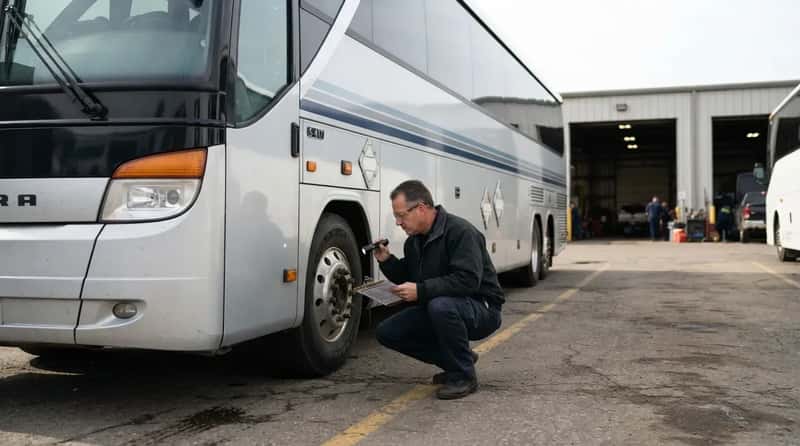
Before a trip, careful planners check who is actually providing the vehicle. In the U.S., FMCSA keeps a public database where anyone can look up a carrier’s safety record. You can check a charter company’s record yourself in minutes. Many managers do it routinely, and they keep the operator’s emergency contact on hand.
Drivers have their own routine as well. Federal rules expect them to confirm the vehicle is in safe working order, and many do a walk-around before every run. Managers say a good driver’s habits are often the best clue to a good company. Most passengers never see any of it.
Now for the decision that fills hungry travelers with the most hope, and the most disappointment…
#2 – Lunch Was Booked Weeks Ago, and the Clock Is Ticking

Forty or fifty hungry people walking into a restaurant unannounced can overwhelm a kitchen. So managers book groups ahead, often with a set menu and a set time. Arrive late and the table, or the schedule, may not wait. The coach also needs somewhere to park near the door, which narrows the options fast.
That’s why the “free choice” lunch is a hot debate. Many managers call it overrated, because it often means wandering, queuing and rushing back. Others say travelers deserve the freedom. Both camps agree on one thing: the decision is made before anyone’s stomach starts growling.
Why It Stands Out
- A set menu lets the kitchen serve a whole coach at once.
- Parking near the door often decides which restaurants make the shortlist.
- Free-choice lunches trade speed for freedom, and the clock decides who wins.
And the very last decision explains all the others, because it’s about what gets sacrificed…
#1 – The Stop They Already Decided to Cut
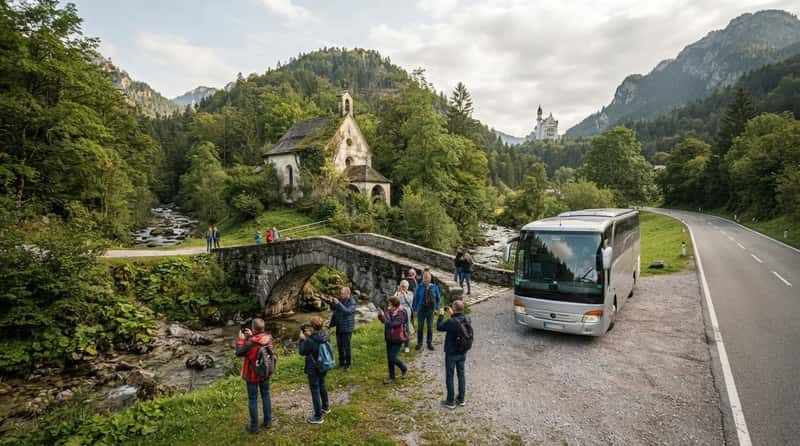
Here’s the secret experienced managers rarely announce. Before departure, they quietly rank the day’s stops. Which one is untouchable? Which one can vanish if a delay hits? The sight that disappears when traffic turns bad was usually chosen days earlier.
The protected stops are typically the ones people booked the trip for, plus anything with a timed ticket. The first to go are flexible, low-stakes pauses. Managers also tell the group early that the schedule can bend. It’s a hard call that sounds cold, yet it prevents panic when the clock starts working against everyone.
The smoothest tours are the ones where nothing seems to happen. Behind that calm are choices about seating, luggage, head counts, route limits, timed tickets, allergies and driver hours, all settled before the doors open.
The most striking part is how many of them are about deciding what to give up. Next time your day glides along without a hitch, remember that somebody already did the worrying for you, long before the engine started.