Deep in southwestern Ethiopia, where the Omo River carves through ancient valleys, something irreversible is happening. Communities that have thrived for thousands of years are watching their world dissolve in real time. The construction of massive dams, the seizure of ancestral lands for sugar plantations, and the slow suffocation of traditional ways of life have created what some researchers are calling a humanitarian emergency hiding in plain sight. These aren’t abstract statistics or distant concerns. Real families are going hungry, children are being displaced, and entire cultural systems built over millennia are collapsing within a single generation.
The Omo River’s Lifeline Severed

The Lower Omo River in southwest Ethiopia is home to eight different tribes whose population is about 200,000, yet this fragile world faces an existential threat. The Gilgel Gibe III Dam is 800 feet high and is Africa’s tallest, and its hydroelectric power plant has doubled Ethiopia’s electricity production. When the dam opened in October 2015, it fundamentally altered the ecosystem that had sustained indigenous communities for centuries.
The dam slowed the Omo’s flow and ended the twice-yearly flooding that nourished river-bank agricultural land and cattle pastures with deposits of nutrient-rich alluvial sediment. What seemed like progress for the nation became a catastrophe for those who called the valley home. The filling of the reservoir behind Gibe III Dam on the Omo River is holding back the flows needed by some 200,000 indigenous people in southern Ethiopia and northern Kenya to sustain their food production and livelihoods.
Eight Distinct Cultures Under Siege
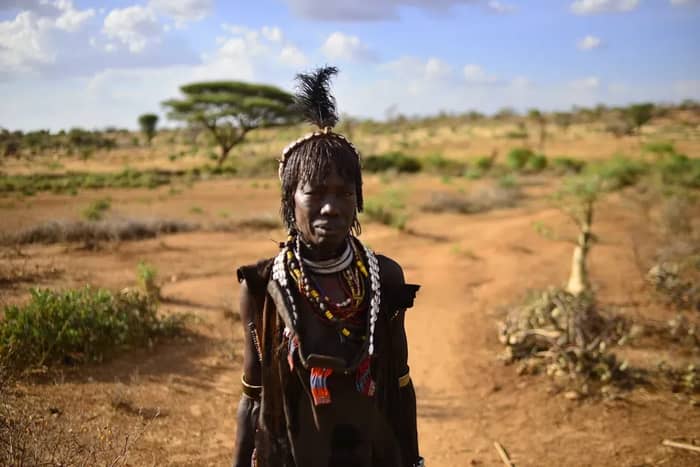
Ethnic groups affected by the dam include eight distinct indigenous communities: the Mursi, Bodi (Mekan), Muguji (Kwegu), Kara (Karo), Hamer, Bashada, Nyangatom and Daasanach. Each tribe maintains unique traditions, from elaborate body painting to complex spiritual rituals. The Mursi are one of the better-known tribes of the, with a population of around 8,000, famous for their lip plates worn by women.
The Karo (or Kara), with a population of about 1000 to 1500, live on the east banks of the Omo River in southern Ethiopia. They’re celebrated for their artistry in body decoration, mixing white chalk with yellow mineral rock, red iron ore, and black charcoal. The total population of the Hamar district is 64,925, with 32,600 males and 32,325 females, making them one of the largest groups. Their bull-jumping ceremonies mark the transition to manhood, rituals that have persisted for generations.
Promises Broken, Land Stolen
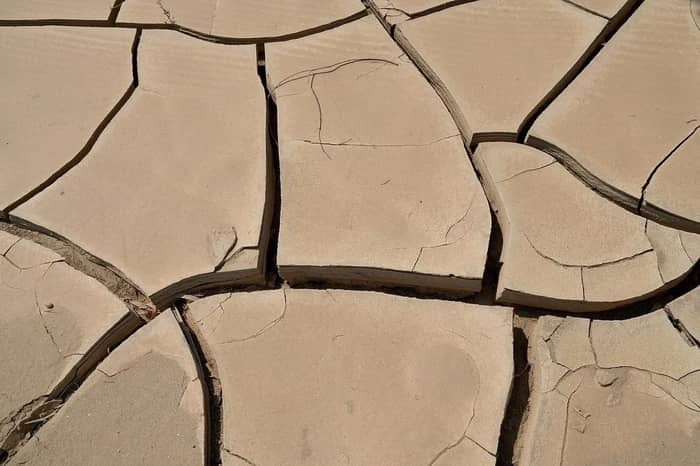
Acute hunger is now common with the dam’s blockage of the annual flood, a natural event that the inhabitants of the valley have relied on for centuries for cultivation. The government had assured communities of controlled floods to compensate for the loss, yet these promises evaporated like morning mist. Bibala, a member of the Mursi community, said that before the dam’s construction, “the land was full of grain,” and “Now the water is gone and we are all hungry.
In 2011, the government began to lease out vast blocks of fertile land in the Lower Omo region to Malaysian, Italian, Indian and Korean companies to plant biofuels and cash crops such as oil palm, jatropha, cotton and maize. The government has started to evict Bodi, Kwegu, and Mursi people from their land into resettlement areas to make way for the large state-run Kuraz Sugar Project, covering 150,000 hectares. Traditional grazing lands and sacred sites disappeared beneath sugarcane plantations.
Starvation and Death in the Valley
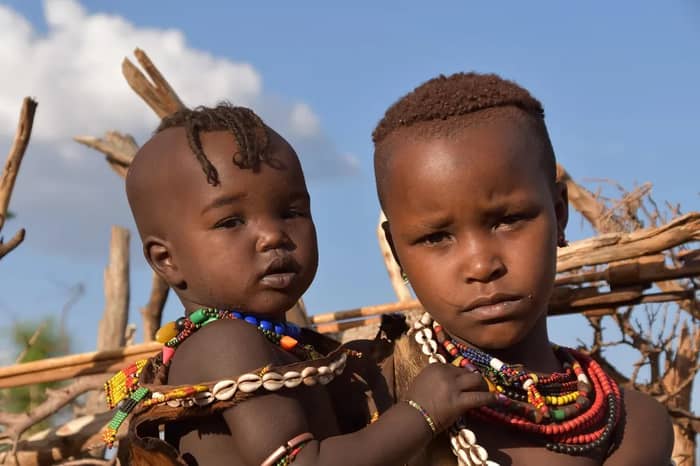
New field research reveals a severe humanitarian crisis unfolding in Ethiopia’s Lower, with local Indigenous tribes facing disease and acute hunger, resulting in starvation deaths.
Malnourished villagers are also suffering from deadly diseases, chickenpox and measles outbreaks, malaria, and leishmania. In 2015, the tallest dam in Africa began operating, and within ya few years, centuries of survival strategies collapsed. Diverse livelihood strategies that had served indigenous groups for centuries were cut off, and the river’s yearly gift of fertile soils ended.
Tourism’s Double-Edged Sword

They truly are the “vanishing” tribes of the region, making it a “before it’s too late” destination, according to photographers documenting the region. Tourism has brought both opportunity and exploitation. The Mursi have become increasingly dependent on tourists who periodically trickle into their villages and offer small payments in exchange for photos of Mursi women donning stretched lip plates.
Yet the benefits remain minimal. Most of the industry is controlled by foreigners or Ethiopians from outside the communities, and most indigenous groups receive almost no tourists. The paradox is cruel: visitors come to witness authentic traditions, but their presence accelerates the erosion of those very ways of life. Ceremonies once held for spiritual significance now sometimes become performances staged for camera-wielding outsiders.
A UNESCO Site Under Threat

A prehistoric site near Lake Turkana, the lower valley of the Omo is renowned the world over, with the discovery of many fossils there, especially Homo gracilis, being of fundamental importance in the study of human evolution. Despite its designation as a UNESCO World Heritage Site, protection has proven largely symbolic. Recently, the protection of the property has become a concern as there have emerged development activities around the area, with an urgent need to put in place structured management and to define the boundaries.
The irony stings: a place celebrated globally for revealing humanity’s ancient past is witnessing the destruction of living human cultures. International attention has done little to halt the projects transforming the valley. While academics study millennia-old fossils, contemporary communities struggle to survive the present moment.
The Future Hanging in the Balance
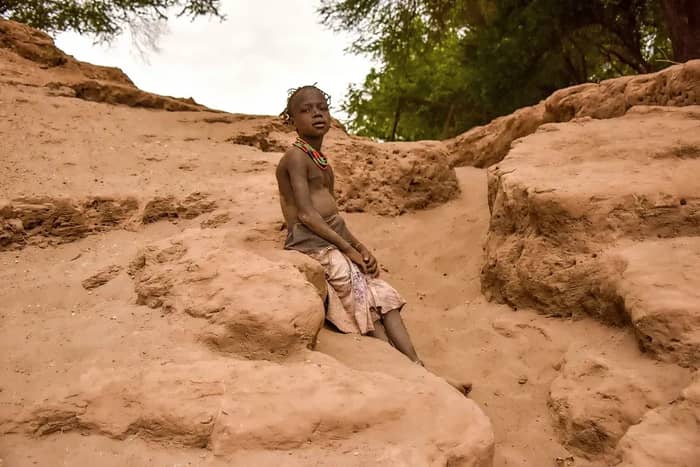
The government is now planning to build Gibe IV and Gibe V, which will destroy a fragile environment and the livelihoods of the tribes. The cascade of dams threatens to complete what Gibe III began. Average temperatures in the Turkana basin have already increased by 2 to 3 degrees Celsius since the 1970s, compounding the challenges from dam construction with climate change impacts.
Can these cultures survive? Some younger generations are abandoning traditional practices, seeking education and modern opportunities. Others cling fiercely to ancestral ways, even as the material basis for those traditions crumbles. The documentation happening now through photographs, videos, and anthropological research may soon be all that remains of these extraordinary societies. What will we tell future generations about how we allowed such vibrant human diversity to vanish? It stands as both a testament to human adaptability across millennia and a stark warning about the costs of development that ignores those it displaces.