Wasps outsmart pitcher plants for sweet reward – Image for illustrative purposes only (Image credits: Unsplash)
Carnivorous plants have long been viewed as efficient traps that turn insects into meals. Yet a recent study of the California pitcher plant reveals a more balanced exchange. Researchers found that the plant’s abundant prey, vespid wasps, routinely collect nectar and fly away unharmed. The finding challenges simple predator-prey labels and shows how ecological ties can shift with context.
A Plant Built to Capture
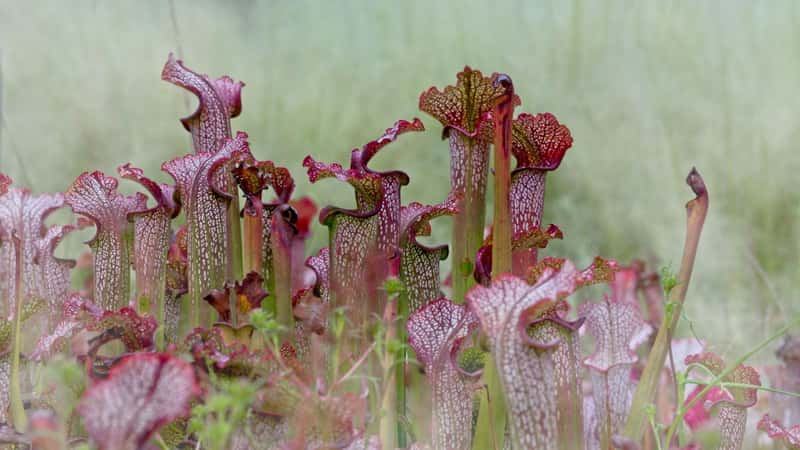
The California pitcher plant grows in bogs across northern California and Oregon. Its tubular leaves hold digestive fluids and emit sweet nectar that draws insects close. Most visitors risk falling inside and drowning. The design appears optimized for capture, yet field observations showed a different pattern for one common visitor.
Wasps arrived in large numbers and fed without consequence in the great majority of cases. Earlier work had already noted that fewer than two percent of visiting wasps became trapped. The low capture rate prompted the new research team to examine what the insects actually gain from repeated visits.
Wasps Turn the Tables
Scientists at the Okinawa Institute of Science and Technology tracked nectar feeding by vespid wasps on the plants. They documented that the insects obtain a reliable energy source while avoiding the fate of other prey. The wasps’ ability to land, drink, and depart safely suggests they have evolved behaviors that neutralize the plant’s trap.
David Armitage, senior author of the study, noted that ecologists often prefer fixed categories for species interactions. He observed that real relationships prove more fluid once examined closely. The wasps’ success rate indicates the plant’s strategy works only part of the time, leaving room for the insects to exploit the resource.
Benefits Flow Both Ways
Each time a wasp is caught, the plant receives nitrogen and other nutrients essential for growth in nutrient-poor soils. The occasional capture supplies the pitcher plant with resources it cannot obtain from air or water alone. Meanwhile, the wasps secure steady fuel that supports their colonies during active seasons.
The researchers described the arrangement as mutualism in disguise. If the plant captured wasps more efficiently, the insects might evolve stronger avoidance over generations. The current low capture rate keeps the nectar reward available and sustains the interaction for both sides.
Broader Lessons for Ecology
The study, published in the journal Ecology, adds to growing evidence that many species relationships resist simple classification. Context, behavior, and evolutionary history all shape outcomes that appear fixed at first glance. Similar hidden exchanges may exist in other carnivorous plant systems where certain insects appear to thrive near potential traps.
Future work could test whether the wasps’ tactics vary by region or season. It could also explore whether other insects show comparable abilities to harvest nectar without paying the ultimate price. Such questions keep the boundary between predator and partner open to further discovery.