
When most Americans picture a crocodile, they picture something massive and terrifying – a 15-foot Nile monster hauling itself out of a river to drag a wildebeest under. That image is real, but it is also incomplete. Hiding in the rainforest swamps of West Africa is a crocodile that breaks nearly every rule people think they know about crocodilians. It barely grows longer than a large dog. It digs burrows. It wanders far from water on its own four legs. And scientists openly admit it is one of the least-studied large reptiles left on Earth.
The West African dwarf crocodile – Osteolaemus tetraspis – has been quietly living this strange, shadow life for millions of years. It is not a juvenile version of a bigger species. It is not a myth or a regional exaggeration. It is a fully distinct, ancient animal with a set of traits so unusual that researchers are still piecing together how it actually lives. Here is what they have found so far – and some of it will genuinely surprise you.
It Is the World’s Smallest True Crocodile – and That Changes Everything
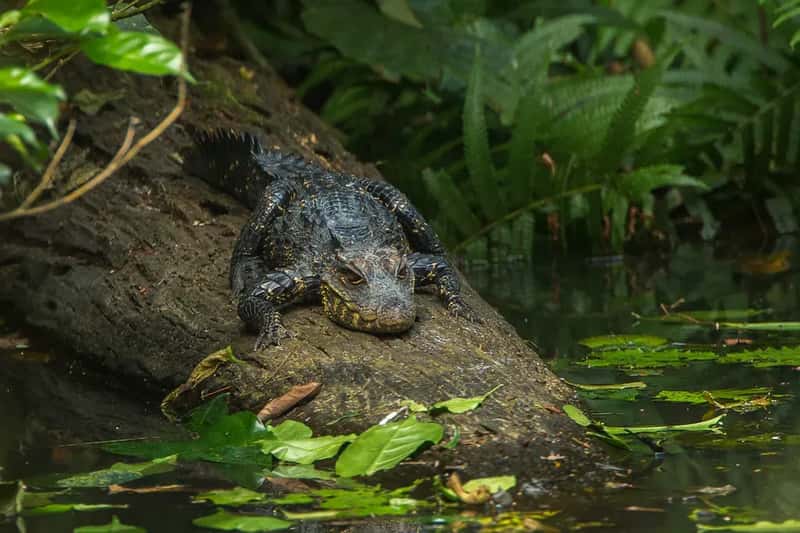
The dwarf crocodile is the world’s smallest living crocodile species, growing to a maximum length of 1.8 meters (5.9 feet) and a maximum weight of 45.4 kg (100 pounds). To put that in perspective, a full-grown Nile crocodile can exceed 16 feet and weigh over 1,500 pounds. The dwarf is not in the same conversation size-wise – and that size difference is the single biggest reason this animal behaves so differently from every other crocodile on the planet. Being small in a world full of bigger predators forces a completely different survival strategy.
It is generally timid, secretive, and nocturnal. When threatened, it typically flees quickly to its burrow or underground den for refuge, or hides in water or among submerged roots, relying on heavily armored scales and osteoderms for protection rather than aggression. It is less aggressive than larger crocodilians and prefers avoidance over confrontation. That is a sharp contrast to what most people expect from a crocodile. This animal would rather disappear than fight.
Its Armor Is Something No Other Crocodile Has
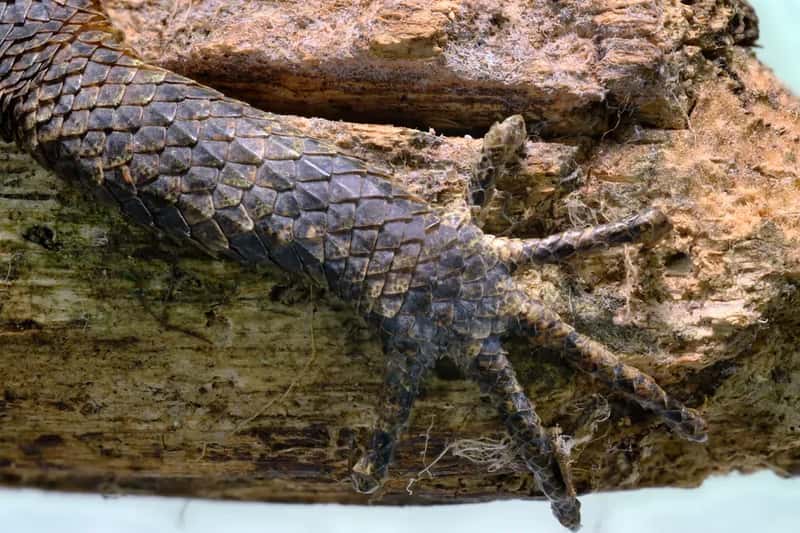
Because it cannot rely on sheer size to deter predators, the dwarf crocodile evolved something remarkable instead. As a result of its small size and heightened vulnerability to predation, this species of crocodile has a heavily armored neck, back, and tail and also has osteoderms on its belly and underside of neck. That last detail matters enormously. Most crocodiles have bony scales on their backs but relatively soft undersides. The dwarf crocodile is essentially armored top to bottom – a living tank built for the forest floor.
The genus name, Osteolaemus, means “bony throat” and comes from Ancient Greek words for “bone” and “throat.” The genus was named as such due to the osteoderms found among the scales in the neck and belly. The specific epithet, tetraspis, means “four shields,” as the back of the neck has four large, shield-like scales. So the animal’s very scientific name is a direct reference to how extraordinarily armored it is. Even the people who first formally classified it were struck by the plating before anything else.
It Lives on Land More Than in Water – Which Almost No Crocodile Does
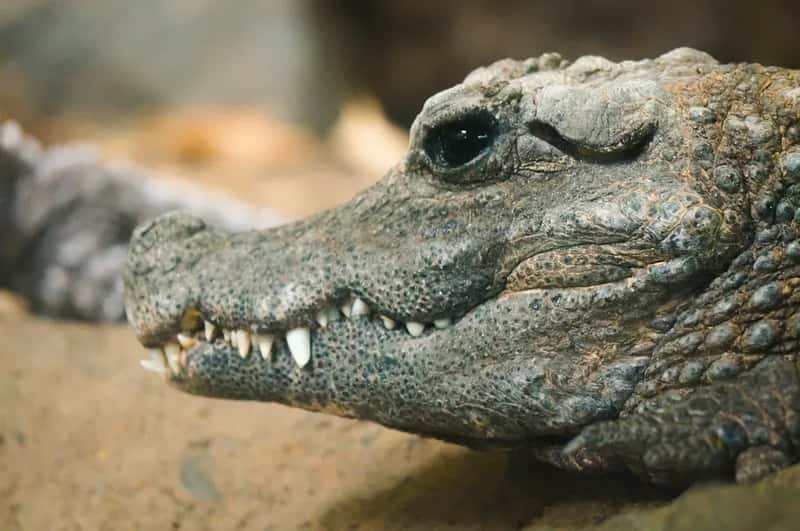
Here is the fact that tends to stop people cold: this is not primarily an aquatic animal. Dwarf crocs are the most terrestrial crocodile species, avoiding deep water and sometimes wandering far inland in search of food or mates. While every other crocodile on Earth is built around rivers, lakes, and the ambush of water-dependent prey, the dwarf crocodile has quietly evolved to spend a significant portion of its life entirely on land, moving through the dense undergrowth of rainforest floors.
The dwarf crocodile is solitary and nocturnal and makes its home on land by digging a burrow with its claws. Burrows often have water access through tunnels. They prefer slow-moving bodies of water and will dig burrows that often have two passageways near the water’s edge. This engineering instinct – carving out a home with tunnels to the water – is a behavior you simply do not see in the Nile crocodile or the saltwater crocodile. It is genuinely alien crocodile behavior.
Its Diet Shifts With the Seasons in a Way That Surprises Researchers
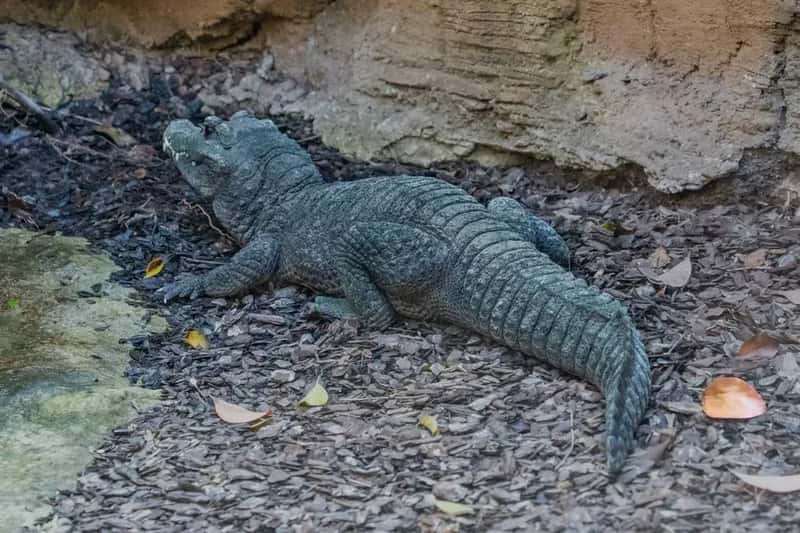
The dwarf crocodile does not eat like a typical crocodile, either. Food preference changes seasonally, with fish being favored in the wet season and crustaceans during the dry season. During the dry season, food intake will decrease. These foods are eaten along with frogs, insects, water birds, and small mammals. Seasonal dietary switching at this level of specificity is unusual for a crocodilian and reflects just how adapted this animal is to a forest environment with distinct wet and dry cycles.
These crocodiles are primarily nocturnal hunters that forage for prey on land. Their diet is made up mostly of invertebrates, including beetles and other insects and millipedes, but it may also include small mammals and amphibians. A crocodile hunting beetles and millipedes on the forest floor in the dark of night is not the image anyone has in their head when they think “crocodile.” But that is exactly what this animal does, regularly. It is one of the most genuinely distinctive feeding behaviors in the entire crocodilian family.
There Are Cave-Dwelling Dwarf Crocodiles Turning Orange Underground
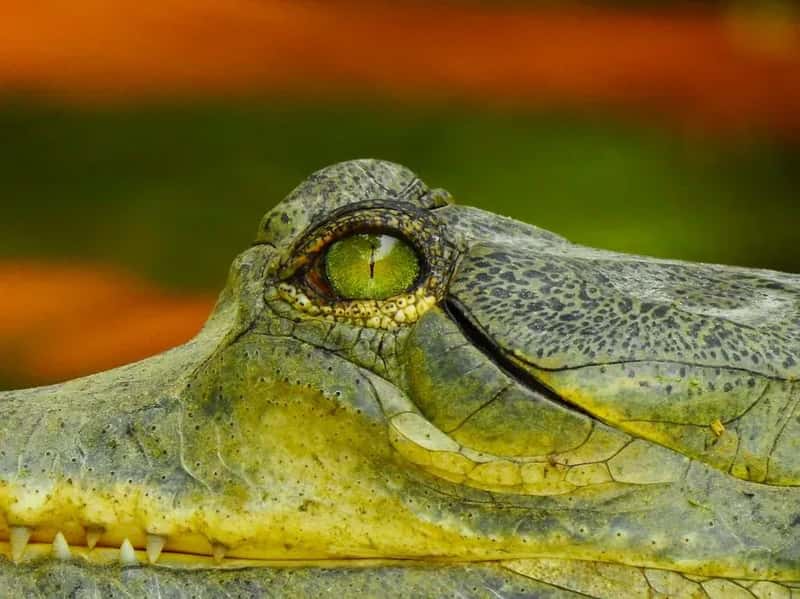
If the standard dwarf crocodile was not strange enough, researchers discovered something even harder to believe inside the caves of Gabon. The Abanda cave crocodiles are distinct from their forest-dwelling counterparts. They navigate through complete darkness, feed primarily on bats and cave crickets, and swim in pools of bat guano. This unique habitat has caused their skin to turn orange, due to chemical bleaching from prolonged exposure to guano, which is rich in urea. Orange crocodiles living in pitch-black caves and eating bats – that sentence sounds like fiction but it is documented science.
Discovered in 2008 and first studied extensively in 2010, these crocodiles exhibit behaviors and characteristics unseen in their surface relatives. They lay eggs near the cave entrances, where juveniles begin their journey into the depths, rarely emerging again once they mature. Genetic analysis suggests these crocodiles are on the path to becoming a new species. In other words, a small crocodile that was already one of the most unusual reptiles on Earth has a population that may be actively diverging into something entirely new – right now, underground, in West Africa.
Its Taxonomy Is Still Being Rewritten by Modern Science
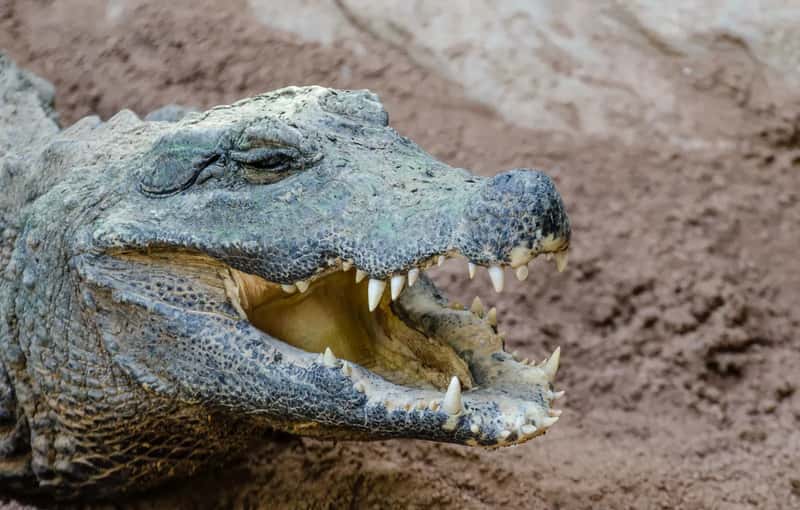
Most people assume that science has a firm count on how many crocodile species exist. The dwarf crocodile is actively proving that assumption wrong. The genus Osteolaemus currently comprises two recognized species: the West African dwarf crocodile (Osteolaemus tetraspis) and the Congo dwarf crocodile (Osteolaemus osborni). But the boundaries between these species and potential additional ones are genuinely unsettled. Researchers are still running genetic studies across populations to figure out exactly what they are dealing with.
Analyses of populations in Central Africa demonstrate comparable genetic divergence between O. osborni and O. tetraspis as seen in other African groups, supporting elevated species status for multiple taxa. The status of O. osborni itself remains debated between full species and subspecies, though the IUCN Crocodile Specialist Group recognizes both O. tetraspis and O. osborni separately, with evidence for a third taxon. A third taxon. That means science may be looking at a group of distinct species – still being identified in the 21st century – hiding in plain sight in West African forests.
The Mother Guards Her Nest, Then Carries Her Young to Water
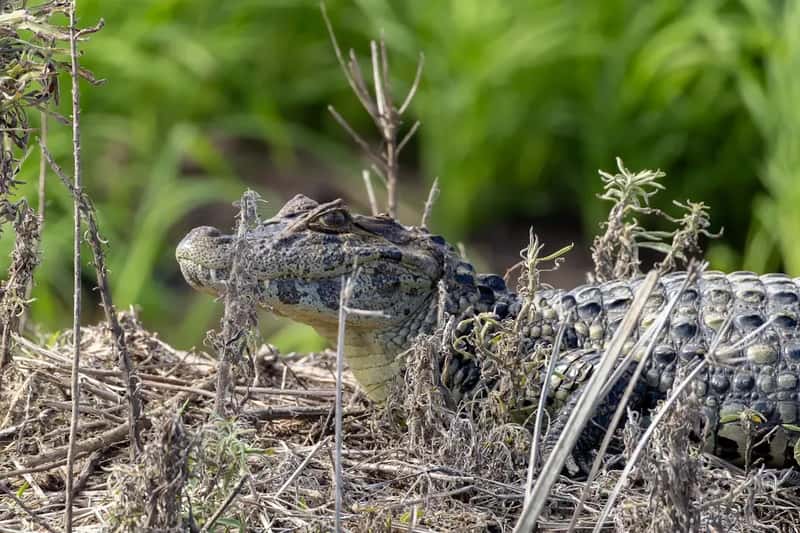
One of the most overlooked facts about the dwarf crocodile is how it raises its young. They breed at the beginning of the wet season, when water levels are higher. When courting, they lie side by side, embracing and rubbing one another. After they part, females build nests in warm, rotting vegetation. They will lay up to 17 eggs, which hatch around three months later. The rotting vegetation is not random – it generates its own heat through decomposition, acting as a natural incubator the mother has deliberately constructed.
The newborns make loud “urk” noises that signal the mother that they are out of their shells. She then digs them out of the nest and carries them to the water, marking the beginning of a life that may last 50 to 100 years. A crocodile that can live up to a century, that carries its newborns to the water in its jaws, and that starts life with a specific call to summon its mother – this is an animal with far more behavioral complexity than its reputation suggests. It is not simply a small, aggressive reptile. It is a layered, long-lived survivor.
It Is the Most Heavily Hunted Crocodile in West Africa – For the Worst Reasons
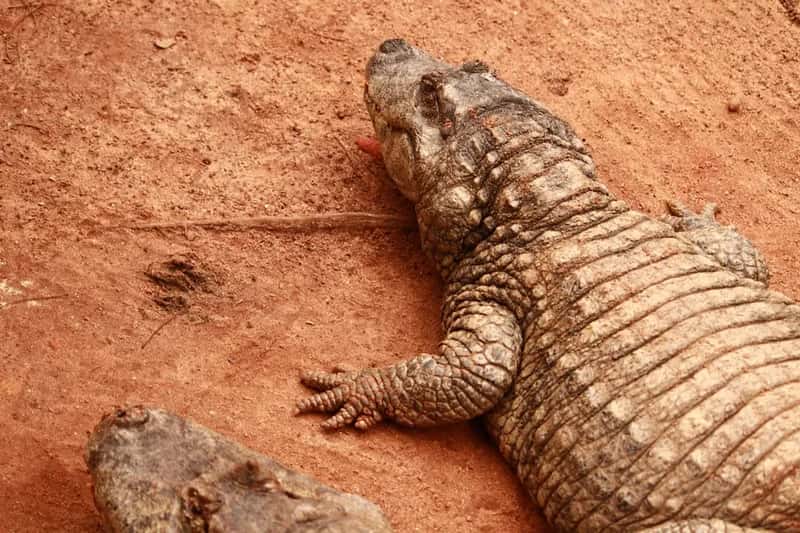
Here is the part that is hardest to hear. The very traits that make the dwarf crocodile so scientifically interesting are the same traits that make it the most vulnerable to hunters. The small size and non-aggressive nature of the dwarf crocodile makes its capture and transport relatively easy, and so it is the most heavily hunted crocodile in the area. Dwarf crocodiles are hunted unsustainably for the unregulated bush meat trade. Because it retreats instead of attacks, it is easier to catch than any larger species. Its defense mechanisms, brilliant for surviving the forest, are useless against humans with snares.
Since 1996 the IUCN has considered the dwarf crocodile to be a vulnerable species. Although it occurs widely throughout West Africa – numbering from 25,000 to 100,000 individuals, according to estimates – many local populations and habitats have been reduced by human activity. Moreover, a substantial amount of their habitat throughout the region has been lost to logging, oil palm cultivation, and expansion of grazing land. The range between 25,000 and 100,000 individuals is enormous – and that gap itself tells you how little scientists actually know about where this animal stands right now.
Scientists Openly Admit This Is One of the Least-Known Crocodiles on Earth
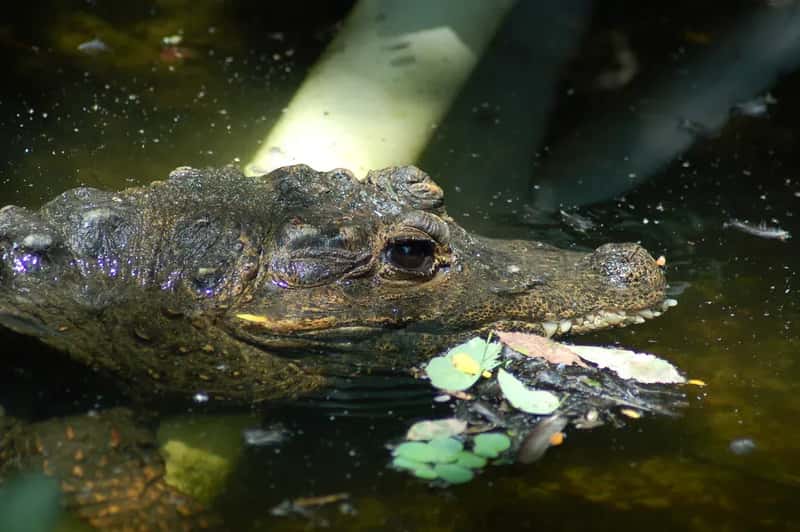
For all the facts that have been gathered, the honest truth is that the West African dwarf crocodile remains deeply mysterious. The African dwarf and slender-snouted crocodiles are considered the least known crocodilians in the world. That is not a casual observation – it is a formal assessment from wildlife researchers who study crocodilians professionally. An animal that can live a century, build engineered burrows, turn orange in caves, and may represent multiple undescribed species is still largely a blank page in the scientific record.
We know little about how threatened African dwarf crocodiles really are. In some places populations appear stable, while in others people are concerned they could be eliminated locally by habitat loss and hunting. This issue is additionally complicated by the fact that populations in different regions are threatened by different processes. For example, in Central Africa, the largest threat is hunting for bushmeat, while in West Africa hunting is a much rarer activity and habitat loss is likely the biggest problem. Different threats in different regions, a population count that spans a range of 75,000 individuals, cave populations mutating in the dark – this is an animal that science has barely begun to understand.
The Bottom Line
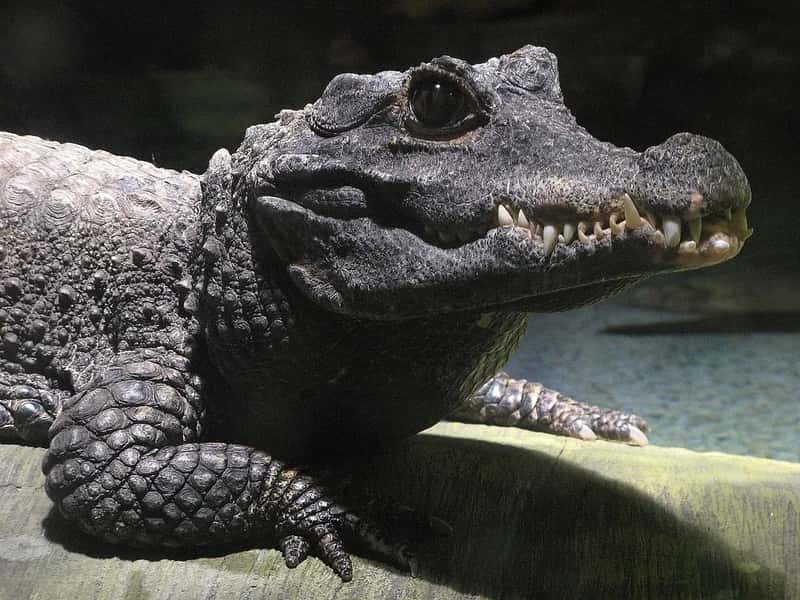
The West African dwarf crocodile is not a footnote in the crocodile family. It is one of the most biologically distinctive reptiles on Earth – armored from throat to belly, built to walk on land, capable of digging burrows with tunneled water access, and present in cave populations that are literally turning a different color as they evolve. It is also, quietly, one of the most threatened. The same small size and gentle temperament that make it scientifically fascinating make it easy to catch and easy to lose. Science does not even have a firm count on how many are left. The cave crocodiles, the possible third species, the century-long lifespans – none of this has made it into mainstream conversation yet. Have you ever seen or heard of this animal before today? Drop it in the comments.