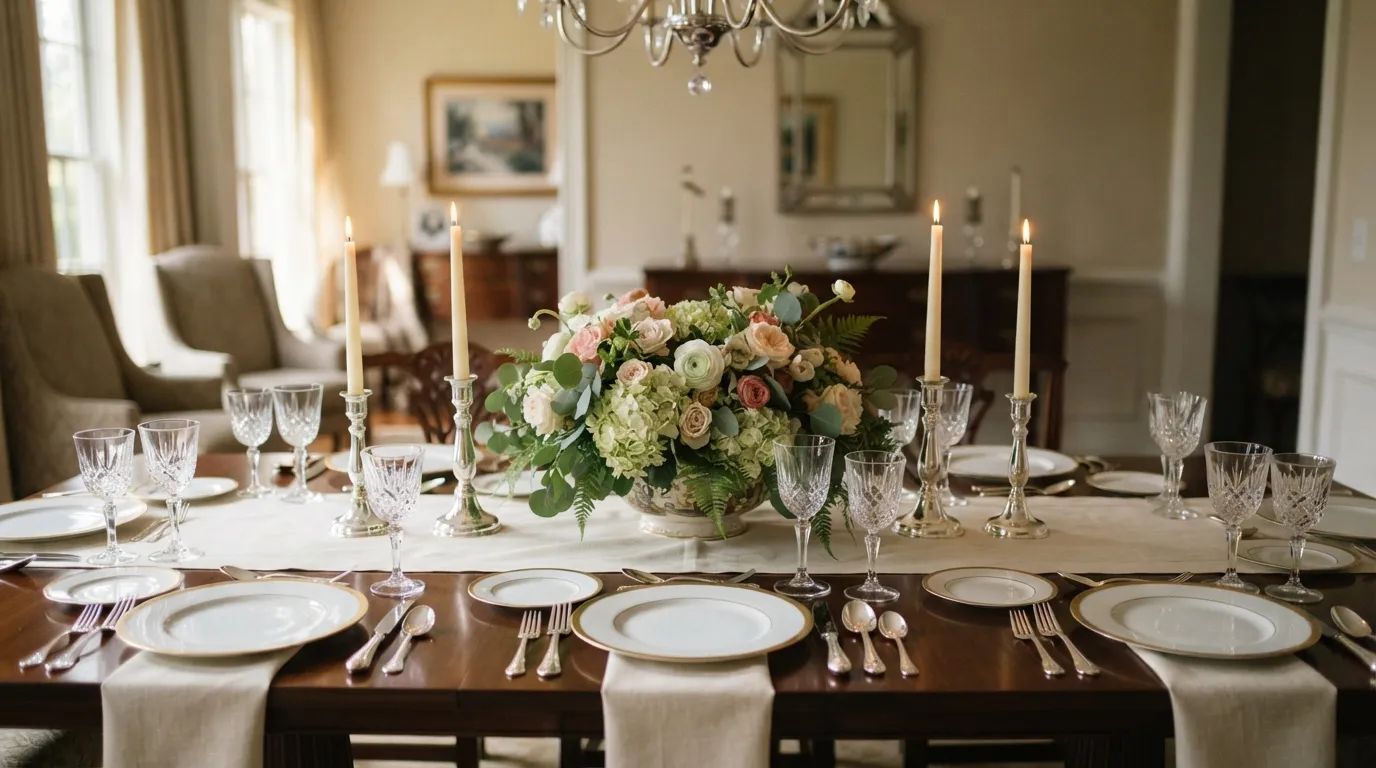
Most people think setting a dining room before guests arrive is just about putting plates on a table. Turns out, it’s a choreographed ritual that professionals spend hours perfecting.
Most home hosts get it wrong in at least three critical ways without ever knowing it. From the hidden cloth under your tablecloth to the exact order glasses get used, here’s what actually happens before a single guest walks through the door.
#10 – The Table Gets a Secret Layer Nobody Talks About
Most hosts skip this step entirely, and it shows.
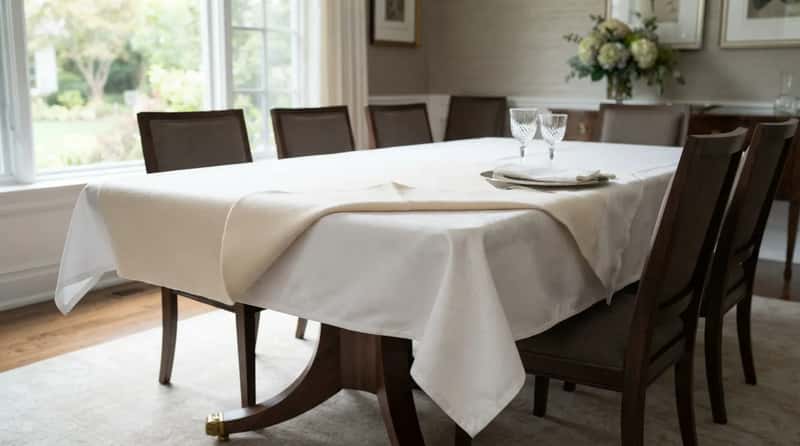
A special cloth called a molleton cloth goes under the tablecloth. Its job is to muffle the clatter of dishes and glassware while protecting the table from heat.
It also keeps the tablecloth from slipping around all night. A tablecloth should hang evenly on every side, with a drop of 12 to 18 inches – any lower and it ends up in your guests’ laps.
Everything on the table should be crisp and sparkling. White linens read as the most formal, but colored or patterned cloths can look just as elegant.
Fast Facts
- (cite index=”7-5″>Casual tables usually get a 6-to-8-inch tablecloth drop, while formal dinners call for 10 to 12 inches or more.
- (cite index=”3-1″>Some hosts push the formal drop even further, to 15 or 20 inches, for extra polish.
- (cite index=”8-9″>Floor-length tablecloths are standard for weddings, galas, and other upscale events.
Most people just grab whatever’s on the linen shelf. Insiders iron everything the morning of – and that single habit changes the whole feel of the room before anyone sits down.
But that’s nothing compared to what the flatware reveals in #9…
#9 – Every Utensil Tells a Story Before Food Is Served
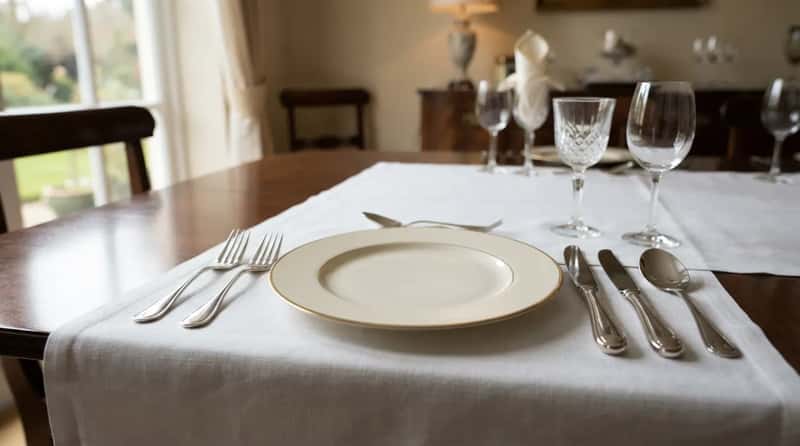
The position of a fork or knife isn’t decoration. It’s communication.
Utensils go in the order they’re used, outside in. Forks always sit on the left, knives and spoons always sit on the right.
Knife blades face the plate, cutting edge in. No more than three of any implement ever hits the table, unless an oyster fork joins the lineup.
Only set out what you’ll actually use. Not serving soup? Then the soup spoon stays in the drawer – this rule alone separates polished hosts from guessers.
Everything gets aligned, plates, utensils, and glasses in careful symmetry. Utensils sit about an inch from the table’s edge, close enough to be comfortable, far enough to look intentional.
But that’s nothing compared to what the glassware reveals in #8…
#8 – The Glasses Are Arranged in a Hidden Sequence
Most people just put a glass above the plate and call it done. That’s not how it actually works.
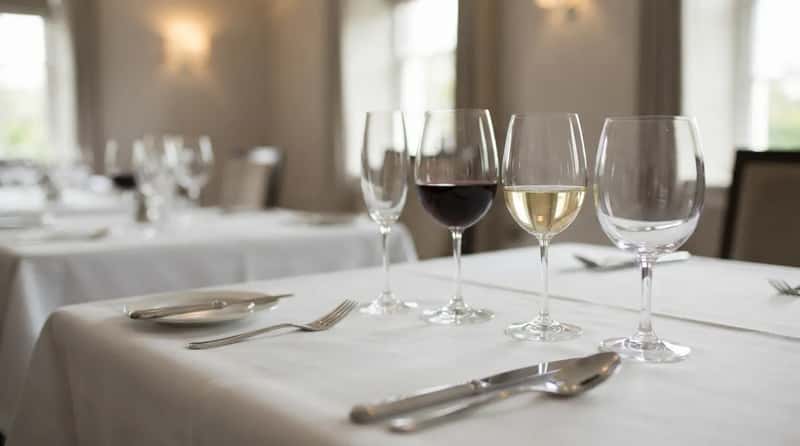
The water glass sits above the knife, the wine glass above the spoon. The bread plate goes above the fork, with the butter knife’s blade facing down.
Glassware follows a strict right-to-left order of use: water, then white wine, then red wine, then champagne. Guests use each glass in that exact sequence without ever realizing it was planned for them.
Every glass has to be spotless. Professionals actually hold them up to the light first, catching water marks a guest would never notice on their own.
The glasses are the last thing guests see clearly before the room dims. That’s what makes the next step so critical…
#7 – The Charger Plate Is Doing a Job You Never Guessed
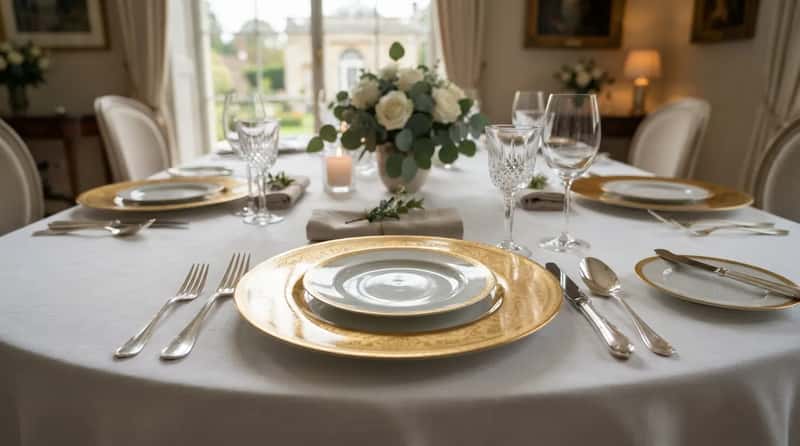
Most guests assume the big decorative plate at the center of a setting is just for looks. It’s actually doing two jobs at once.
In American dining, that service plate – the charger – sits at the center of each setting. It works as both decoration and a shield against heat and condensation, and it stays put until the main course is cleared.
The setting itself sends a message before anyone’s said a word. A bare table signals casual; adding a silverware set or place mat instantly elevates it.
Quick Compare
- Bare table: casual, everyday feel
- Place mat added: a small step toward formal
- Charger plus full silver: the most formal signal a host can send
Usually, the more items on the table, the more formal the service. The charger frames each guest’s personal space and quietly says: this meal is intentional.
But that’s nothing compared to how name cards shift the entire room in #6…
#6 – The Seating Plan Is Locked In Long Before Anyone Arrives
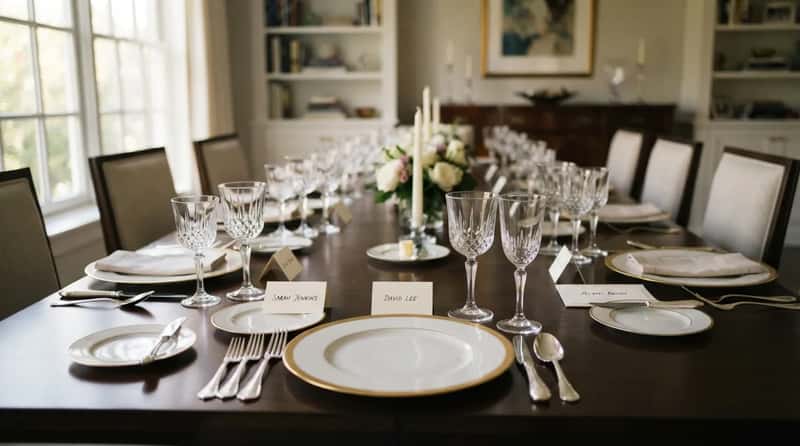
Hosts who “wing” the seating are making a mistake that ripples through the whole evening. Every guest at a formal dinner gets a name card except the host.
Place cards go above the charger, centered between the bread plate and the glasses. Check the spelling twice – a misspelled name is one of the fastest ways to make a guest feel like an afterthought.
Most home dining tables actually seat fewer people comfortably than hosts assume. Crowding is one of the top complaints guests quietly voice after dinner parties.
Get the seating right and the evening practically runs itself. Get it wrong, and no amount of great food saves the room.
But that’s nothing compared to the beverage secret in #5…
#5 – A Separate Drinks Station Changes Everything
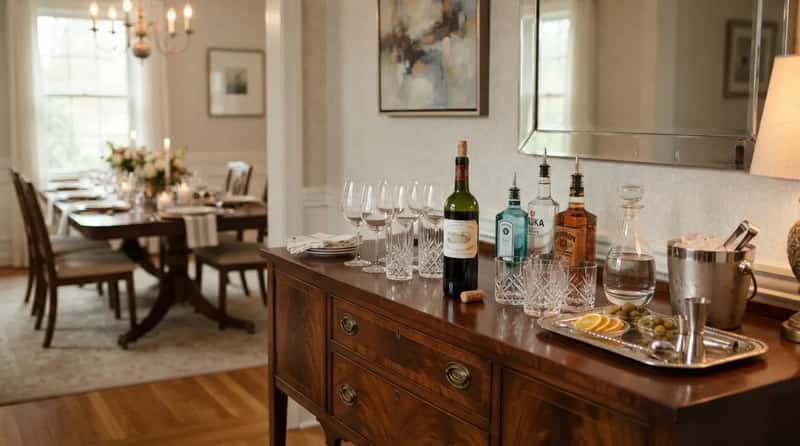
Here’s what most hosts don’t realize: the drinks setup matters as much as the table itself. A crowded bar cart is a warning sign the whole night could feel chaotic.
Set up a separate area – a sideboard or bar cart works – so guests don’t cluster around your main table. Stock it with wine glasses, water glasses, and something for mixed drinks.
Set it up before anyone arrives. That way you’re greeting guests, not stuck pouring drinks behind a cart.
Red wine should be uncorked and standing in the room an hour before dinner. It’s a small detail almost no home host gets right, but it changes the wine’s flavor by the time it’s poured.
Worth Knowing
- (cite index=”17-1,17-2″>Light-bodied reds like Pinot Noir need only 20 to 30 minutes of air before they taste their best.
- (cite index=”17-3,17-11″>Medium-bodied reds such as Merlot or Cabernet Franc typically want 30 to 60 minutes.
- (cite index=”17-12,17-13″>Full-bodied reds like Cabernet Sauvignon or Nebbiolo often need 60 minutes or more to fully open up.
The drinks station is where guests first relax and start to feel welcome. And what happens with the lighting next is just as deliberate…
#4 – The Lighting Is Timed, Not Just Switched On
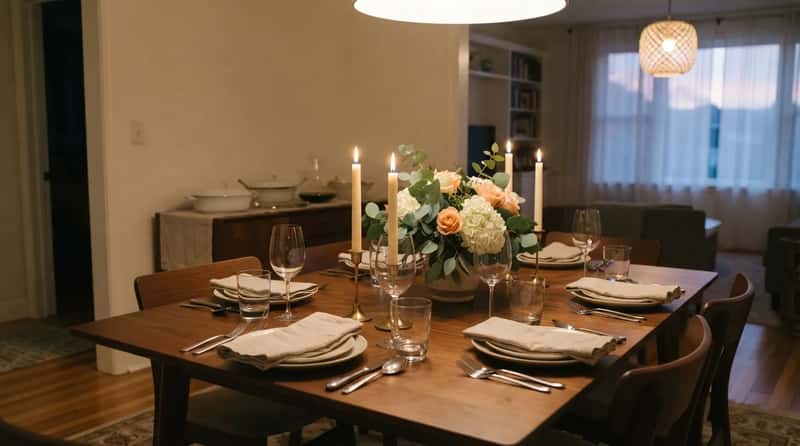
Most people flip on the dining room light the second guests arrive. That’s backwards.
Candles get lit just before guests walk in – not earlier. Light them too soon and they burn down before dinner ends; light them on arrival and the mood shifts the instant someone steps through the door.
There’s nothing like candlelight to make even a modest table feel special in a way no overhead fixture can match. The order matters: room lighting first, candles last.
The room should look finished before the first guest sees it – never like a setup still in progress. That fully lit, candle-warmed moment is the fastest way to turn “arriving” into “already comfortable.”
And the centerpiece is what they’ll notice first…
#3 – The Centerpiece Has a Rule Most Hosts Break
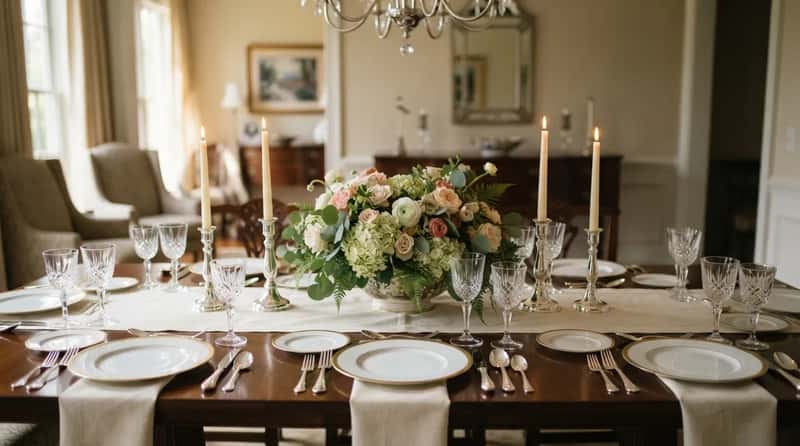
You’ve probably sat at a table where the centerpiece blocked every conversation across it. That’s a real problem, and an easy one to fix.
Most formal tables lean on flowers, though fruit works too. The centerpiece quietly announces the tone of the meal before food ever arrives.
Keep it short enough to see over, or be ready to move it once people sit down. A centerpiece that blocks eye contact kills conversation, which defeats the entire point of hosting.
The most formal tables stay strictly symmetrical: centerpiece dead center, an even number of candlesticks, place settings spaced evenly around the edge. Low and lush, or tall and out of the way – anything in between is the mistake professionals never make.
But that’s nothing compared to the final inspection ritual in #2…
#2 – A Full Inspection Happens Every Single Time
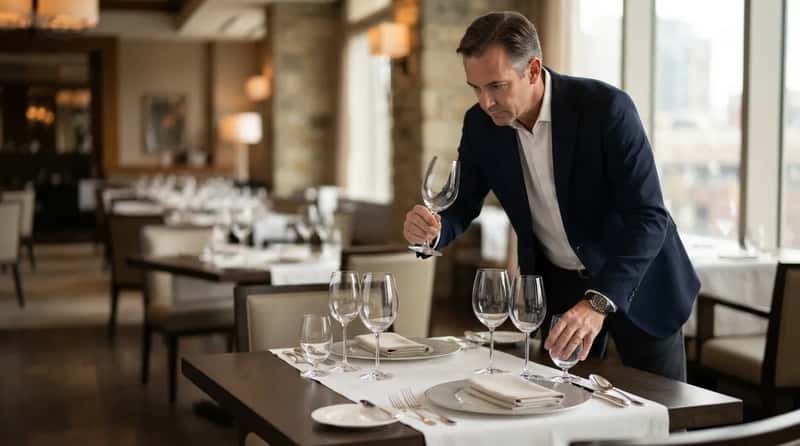
The dining room gets one last pass before the door opens. Every professional treats this step as non-negotiable.
Set the table as early as possible, then double-check it yourself. The earlier it’s done, the more time you have to catch a missing spoon or a water mark on a glass.
Tableware gets checked for chips and dirt, tables get wiped down and inspected for wobbly legs. A wobbly table discovered mid-meal is one of those small disasters guests quietly remember for years.
At a Glance
- Chipped or cloudy glassware – swap it out
- Wobbly table legs – fix before guests sit down
- Water spots on flatware – hold each piece to the light
- Uneven place settings – realign for symmetry
Step back and look at the whole table one more time. This is the moment the room stops being a workspace and becomes an experience waiting to happen.
And it leads straight to the one detail that separates forgettable dinners from the ones people still talk about…
#1 – The Room Tells Guests How to Feel Before a Word Is Spoken
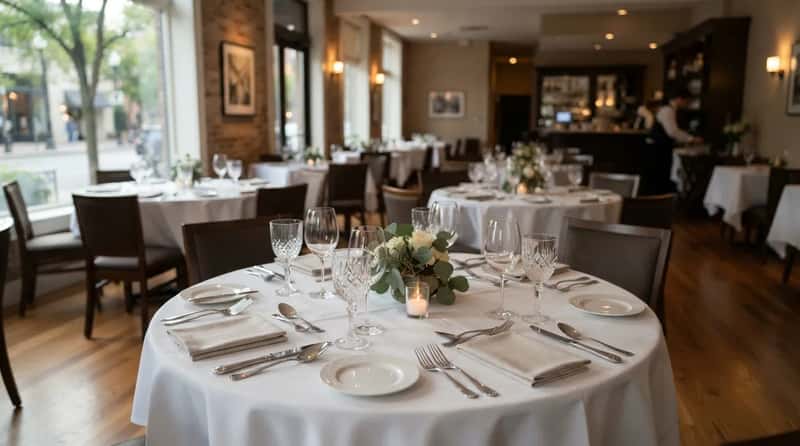
The pre-arrival dining room isn’t just set – it’s staged. What it communicates the second guests walk in is either everything or nothing.
As soon as guests sit down, an impeccable table setting tells them the service will be excellent. The room makes a promise the meal then has to keep.
Setting a table is a quiet form of etiquette – an unwritten signal of attention and respect. It sets the tone before the first course ever reaches the table.
When it works, no one comments on the tablecloth, the glassware, or the candles. They just feel at ease the moment they walk in, and they never quite know why.
The Bottom Line
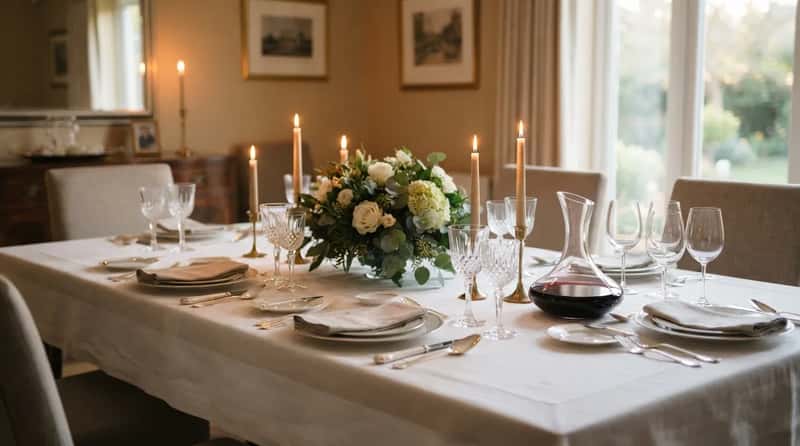
A dining room before guests arrive is not a blank space. It’s a carefully built environment.
The molleton cloth under the tablecloth, the outside-in utensil order, the timed candles, the pre-decanted red wine, the centerpiece kept low – none of it happens by accident. Every detail tells guests they’re expected, respected, and about to be looked after.
Most home hosts nail the food but underestimate the room. Nail the room, and the food somehow tastes better before anyone takes a bite.
Which detail surprised you most – or do you have a pre-arrival ritual we didn’t cover? Drop it in the comments.
Bonus – The Pre-Arrival Trick Even Professional Hosts Keep Secret
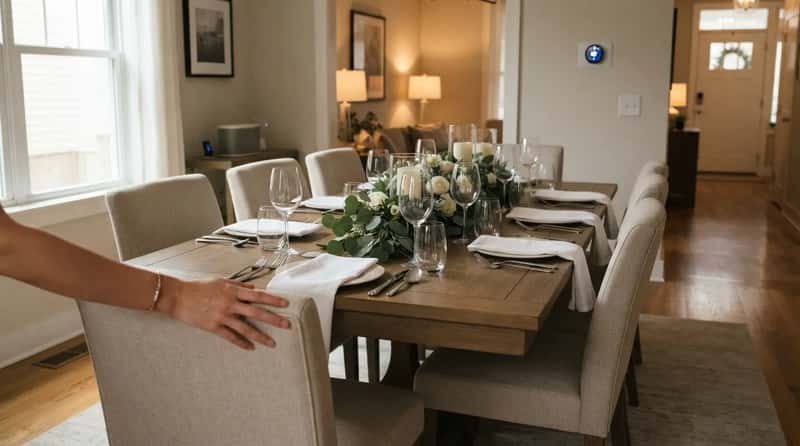
Five minutes before the doorbell rings, do what professional stagers call the guest’s-eye walkthrough: sit down in every single chair at the table, one at a time.
From each seat, check three things and fix them on the spot.
- Sightlines: can you see the person across from you, or does the centerpiece block your view?
- Scent: unlit candles or diffusers should be unscented near the food – a strong fragrance fights the meal’s aroma and dulls taste
- Temperature: nudge the thermostat two degrees cooler than feels comfortable empty, since a full table of bodies and candles raises the room’s temperature within the first twenty minutes
- Sound: turn on background music low enough that it’s felt more than heard, then step out of the room and listen from the doorway
This single walkthrough catches the mistakes no amount of table-setting perfection can – the things you only notice from a guest’s actual seat.