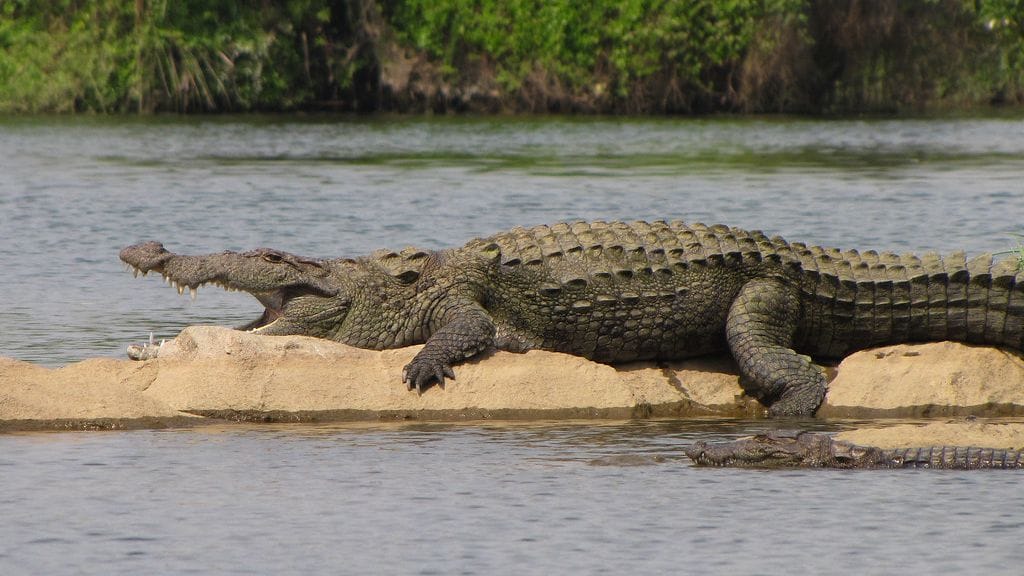
Most people’s mental image of a crocodile is a massive, prehistoric-looking beast coiled in a warm muddy river, doing absolutely nothing – waiting, patient, brutish, and simple. That image is wrong. Deep in the remnant rainforests of West Africa, a critically endangered crocodile is doing things that don’t fit the textbook: climbing trees, hiding in caves, changing its own diet, and possibly drifting toward becoming an entirely new species – all within the same small stretch of forest. Scientists studying it are being forced to rethink where the hard limits of animal behaviour actually sit.
The animal at the center of all this is the West African slender-snouted crocodile, Mecistops cataphractus – and almost nobody has heard of it. It doesn’t show up in wildlife documentaries. It barely registers in conservation campaigns. For years, researchers didn’t even have enough data on it to properly classify how threatened it was. What they’re finding now, as field surveys finally reach its remote habitat, is stranger and more consequential than anyone expected.
The Crocodile Science Forgot
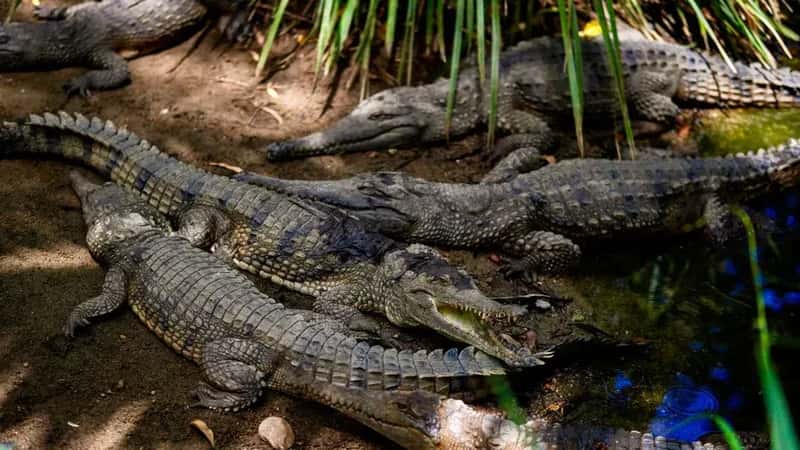
Virtually all crocodile behaviour research has historically been conducted on species like the American alligator, the common caiman, and the Nile crocodile – among the most abundant and well-studied crocodilians in the world. The crocodilians of West Africa, by contrast, are among the most threatened and least researched species on the planet. That matters more than it sounds. When scientists built their models of “how crocodiles behave,” they were essentially looking at the easy ones and assuming the rest followed the same rules.
The West African slender-snouted crocodile is a critically endangered species of African crocodile. Both species in the genus Mecistops have been studied very little, in part due to their remote habitat. It is listed as Critically Endangered on the IUCN Red List, making it one of the most endangered crocodilians globally. Surveys prior to the year 2000 already recorded it as severely depleted in Liberia and Nigeria, and likely extinct in The Gambia, Senegal, Guinea-Bissau, and Togo. Science barely got started before the animal began to vanish.
It Was Hiding in Plain Sight – As the Wrong Species
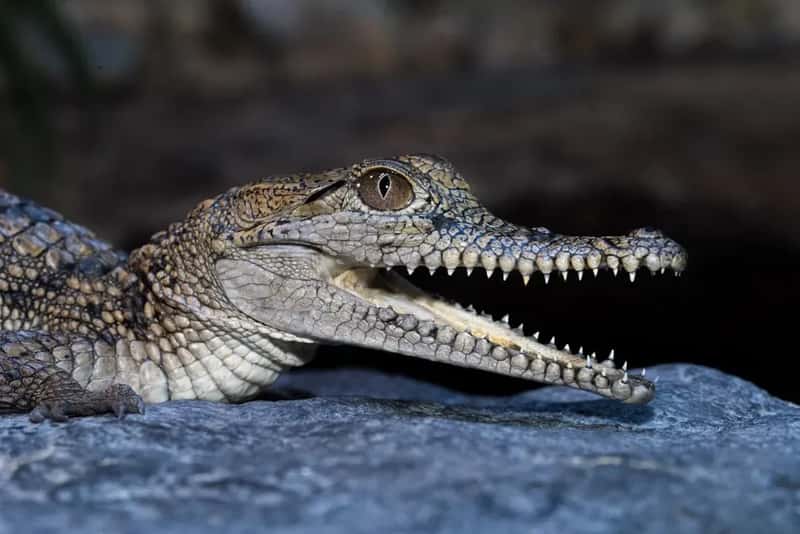
For most of recorded scientific history, the West African slender-snouted crocodile wasn’t even considered its own species. This species was traditionally placed in the genus Crocodylus as a single species. But recent research using DNA and morphology shows that it not only belongs in its own genus, Mecistops, but that there are actually two slender-snouted crocodile species. That split has enormous consequences – it means both populations cover far smaller ranges than scientists thought.
The two species diverged about 6.5 to 7.5 million years ago, living in different river drainage zones that were geographically separated by the Cameroon Line. The two populations diverged 6 to 8 million years ago, around the same time humans and chimpanzees last shared a common ancestor. The West African slender-snouted crocodile is now considered a distinct species. This impending split means both occur over much smaller areas, and may face a considerably greater risk of extinction than previously thought. They were one species on paper long after they had stopped being one in nature.
They Climb Trees – and It’s Not a Fluke
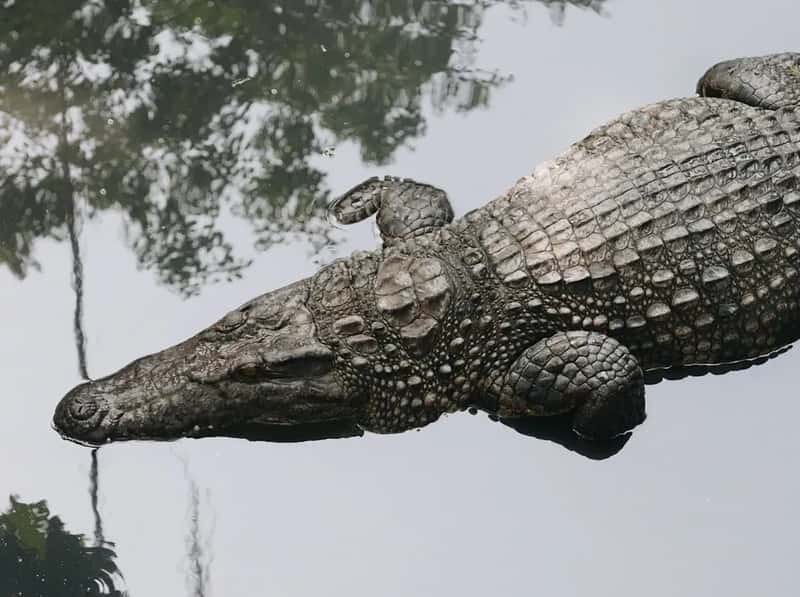
Here’s where the animal behaviour rulebook starts to bend. West Africa’s crocodiles are doing things that have no business fitting into the mental image most people carry around. They climb trees – up to four meters high – to warm up and keep watch. This isn’t a clumsy one-off accident. It’s a documented, repeatable behaviour that researchers now believe is driven by the specific demands of their forest environment.
In the deep forest rivers of West Africa, where dense canopy blocks sunlight from reaching riverbanks, getting up into the trees isn’t a curiosity – it’s a survival strategy. That’s because the slender-snouted crocodile is a forest-stream species. There are no open areas where they can bask, so they use rocks because they stick out of the water, as do the branches of fallen trees, showing their ability to climb. Crocodiles typically maintain a preferred body temperature between 30°C and 35°C, and to achieve this balance, they employ behavioural strategies and physiological adaptations that allow them to absorb or dissipate heat as necessary. When the riverbank isn’t available, they go vertical.
Some Went Underground and Never Came Back
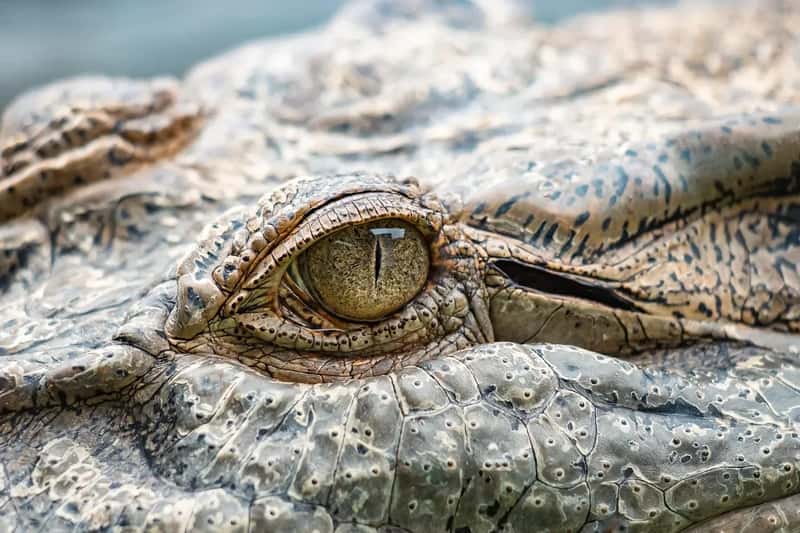
The tree-climbing is striking. But what’s happening underground in certain caves of West Africa may be the genuinely mind-bending part. Some crocodiles in the region have gone underground, turned orange, swapped their diet for bats and cave crickets, and may be drifting toward becoming an entirely new species. These are crocodiles – animals that have barely changed in 80 million years – apparently adapting in real time to conditions that should be far outside their range of viable behaviour.
Recent sampling has identified three genetically distinct populations within the dwarf crocodile group more broadly. The cave population appears to be diverging from surface animals despite their close physical proximity – separated not by mountains or oceans, but by the simple fact that some went underground and never came back. Whether that isolation will eventually produce a fully distinct species is a question scientists genuinely cannot yet answer. That’s not a rhetorical cliffhanger. It’s an open scientific question sitting unresolved in the field right now.
The Forest Is Their Life Support – and It’s Disappearing
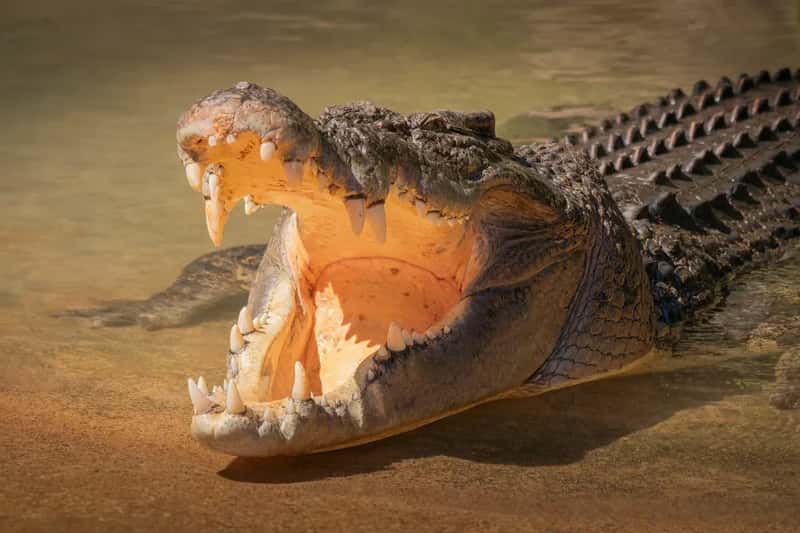
The behaviour of the slender-snouted crocodile can only be understood in the context of its habitat, and that habitat is under serious pressure. This is a forest-dwelling species. Without forests, the species cannot survive. This crocodile has historically been recorded in many areas in Côte d’Ivoire, and because the forest in those areas has been cut down, its numbers have been reduced. The behaviour scientists are only now documenting may not survive long enough to be fully understood.
The West African slender-snouted crocodile is a very shy species and is under threat from fishing practices, human disturbance, hunting, habitat degradation and fragmentation across its entire range. The crocodiles don’t move far from the water. As soon as the aquatic ecosystem is destroyed or changed, it impacts their feeding behaviour. Keeping the aquatic environment clean so that prey species can thrive is critical to the slender-snouted crocodile’s survival. Lose the river, lose the forest, lose the crocodile – in that order.
The Scientist Who Decided It Was Worth Saving
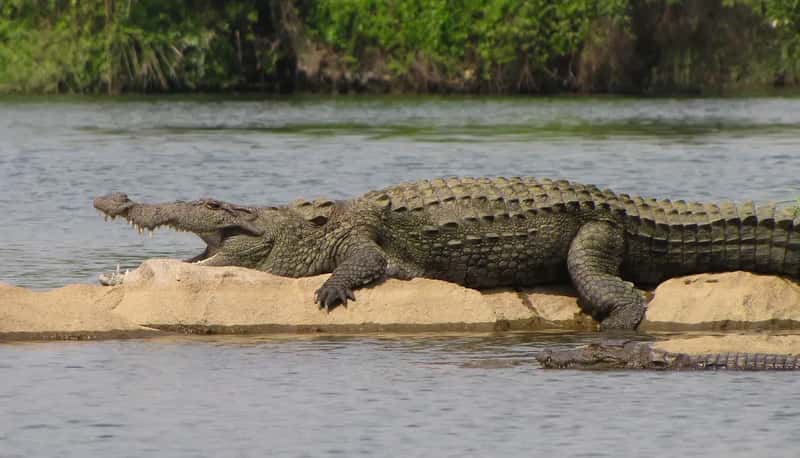
The researcher most closely tied to the field study of this species in Côte d’Ivoire is environmental scientist Christine Kouman. Kouman, who cofounded the conservation NGO EBURCO, is working with others to ensure the species’ rainforest habitat stays well protected. She says she has always had a passion to take care of things that are overlooked or neglected. The West African slender-snouted crocodile and its habitat in what remains of the Upper Guinean Forest qualify on both fronts. That framing – overlooked and neglected – is more scientifically precise than it sounds.
A study of both protected and non-protected areas by her colleague Dr. Ahizi Michel found that in places where the slender-snouted crocodile existed in the past, there are no more in non-protected areas. Project Mecistops combines captive breeding programs, field surveys, and collaboration with West African national governments to try to build a foundation for the species’ survival. The aim is to ensure survival of the Critically Endangered West African slender-snouted crocodile through scientific research, capacity building, and support of West African national partners, including the management of a captive crocodile population to support a conservation breeding and reintroduction program. It is, at this point, a race.
Cultural Protection Did What Conservation Policy Couldn’t
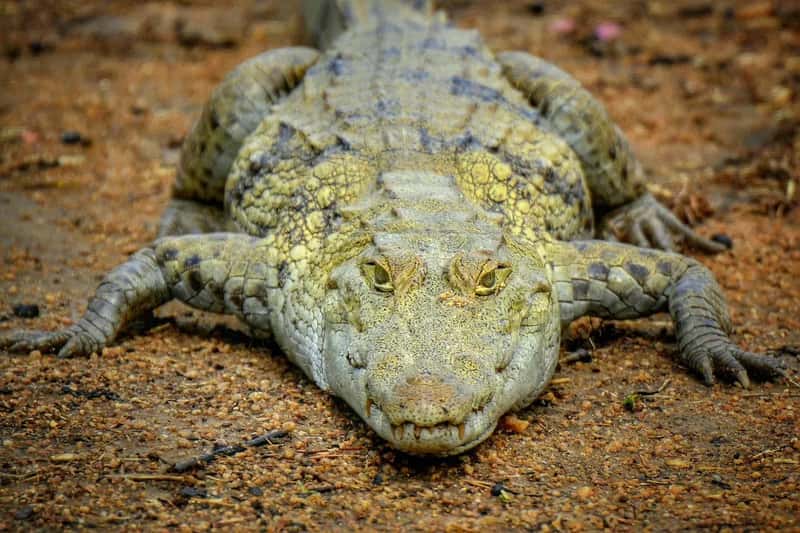
One of the stranger discoveries in the slender-snouted crocodile’s story is that in some areas, the animal has survived not because of formal protection but because local communities considered it sacred. In Akan mythology, crocodiles are often considered sacred messengers of water deities – especially Ta Kora, the spirit of the Tano River. Harming a crocodile was traditionally seen as a spiritual offense. In those areas, cultural belief held the line long before government policy caught up.
Unlike its Nile cousin, this crocodile is shy and reclusive, avoiding areas with heavy human activity. It prefers dense vegetation and overhanging branches along riverbanks, where it can remain camouflaged. Many endangered species, including crocodiles, continue to suffer heavy losses simply because they aren’t yet on the national agenda. Crocodiles are particularly affected by false impressions of big population sizes, misunderstandings about how dangerous they really are, and their widespread use as food or for the sale of skins. The gap between cultural knowledge and institutional attention has cost the species decades of protection it never officially received.
What This Animal Is Actually Teaching Science
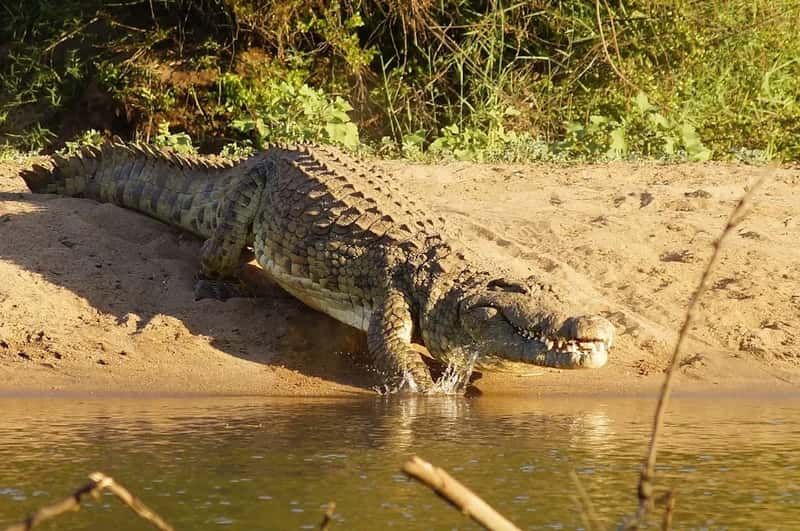
The core lesson being extracted from the slender-snouted crocodile’s story isn’t just that one obscure reptile is doing unusual things. It’s that the behavioural limits scientists assumed for an entire ancient lineage were built on incomplete data. West African crocodylians are among the most threatened and least studied crocodylian species globally – meaning the blanks in the science weren’t random. They were concentrated in exactly the places where the most unusual behaviour was happening.
Together, conservation scientists strive to overcome the challenges of biodiversity conservation in West and Central Africa to save the least-known crocodile in the world – the West African slender-snouted crocodile – from certain extinction. At the center of all of it sits the slender-snouted crocodile: the most endangered crocodile in Africa, so shy and so forest-dependent that fewer than 500 may remain, and scientists are still working out basic facts about how it lives. These aren’t ancient, simple animals. The assumption that crocodiles have been static and fully understood for millions of years is the assumption this one remote animal is quietly dismantling – in real time, in a shrinking forest, with very little time left.