
Most people assume customs officers are watching for nervous fidgeting, shifty eyes, or a bag stuffed one size too full. Turns out, when the traveler in front of them is over 60, officers are quietly reading an entirely different set of signals – ones that have almost nothing to do with looking suspicious and everything to do with looking prepared.
Some of what officers notice actually works in an older traveler’s favor. Some of it quietly works against them, and almost nobody realizes it until they’re standing at the counter watching their line move slower than everyone else’s.
Your Passport Tells a Story Before You Say a Word
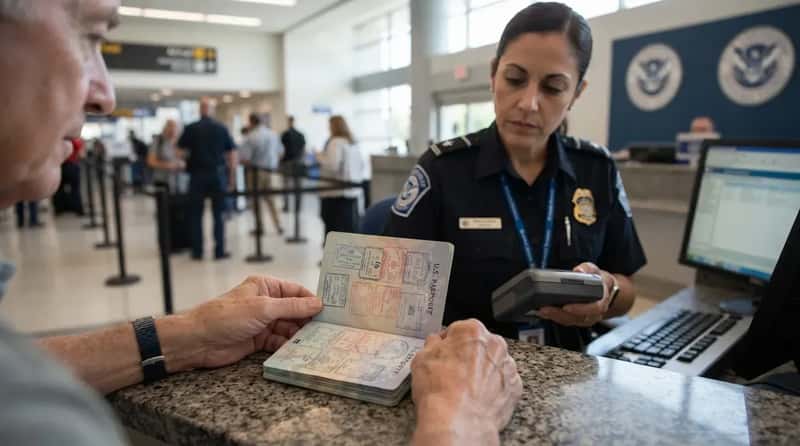
Long before an officer asks a single question, they’ve already scanned your passport history – and it speaks louder than anything you’ll say out loud. Customs officers process passport history as part of every inspection, and older travelers who show consistent, logical travel patterns generate a very different internal profile than someone with a fragmented or unusual stamp history. It’s not about how much you’ve traveled. It’s about whether your history makes sense at a glance.
Travelers over 60 who take the same cruise route annually, or show a clean record of short international trips with consistent returns, tend to get processed faster. A passport showing decades of well-traveled stamps tells an officer a story in about five seconds. A messy, erratic stamp pattern doesn’t mean guilt, but it does mean more questions, because officers are pattern-readers first and rule-enforcers second.
The Pill Organizer Mistake That Flags Honest Travelers
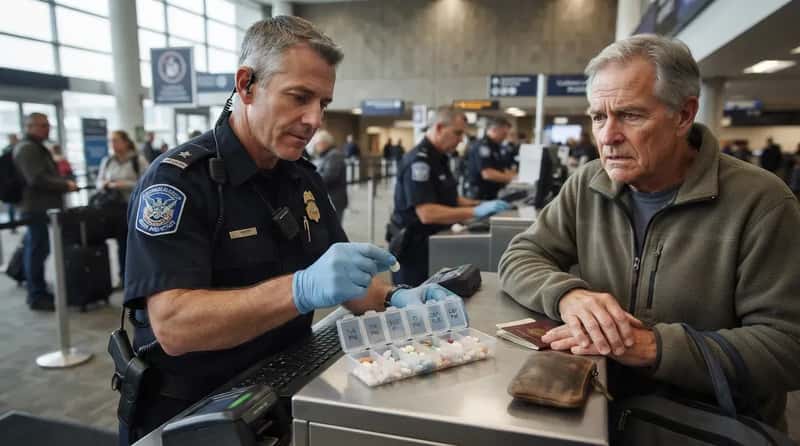
Here’s the one nobody warns you about, and it trips up otherwise perfectly compliant travelers constantly. The single most common mistake older travelers make is pulling medications out of their original containers and into weekly pill organizers before flying. The original pharmacy label is what lets a CBP officer instantly confirm the medication belongs to you.
Without that label, a legitimate prescription suddenly looks like an unidentified pile of tablets. Bringing a copy of your prescription or a brief doctor’s letter lets officers move on fast, quietly deciding whether you spend two minutes at the counter or twenty. It’s a small piece of paper standing between a routine wave-through and an uncomfortable conversation about a blood pressure prescription that’s completely legal.
Fast Facts
- Original pharmacy labels let officers confirm medication ownership in seconds
- Weekly pill organizers remove the exact label CBP relies on
- A copy of the prescription or a short doctor’s note works as a reliable backup
- Unlabeled pills can turn a two-minute stop into a twenty-minute one
Nervous Is Normal – Officers Are Trained to Spot the Difference
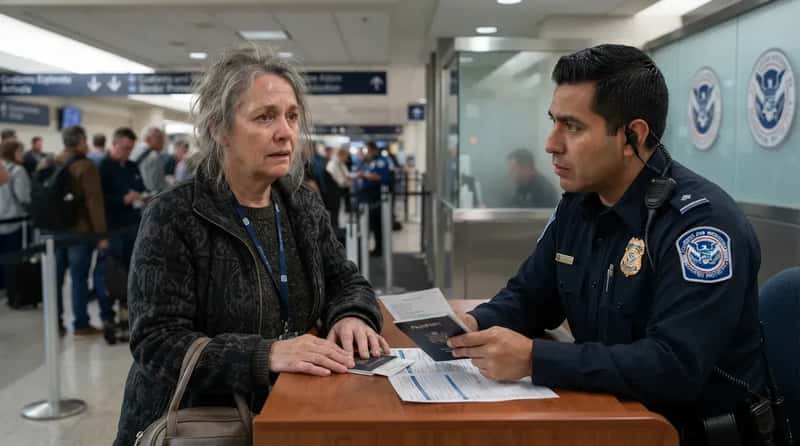
Nearly everyone tenses up at customs, and officers know it. Most people are mildly anxious at the counter; conspicuously anxious behavior is what actually flags someone. The garden-variety jitters of an older traveler exhausted from a transatlantic flight look completely different from targeted, situation-specific stress.
Officers are trained to distinguish travel-fatigue-nervous from situation-specific-nervous. They watch for visible sweating, trembling hands, or a voice that cracks the moment certain questions come up. A traveler who’s simply tired and a little slow doesn’t register the same way as someone whose composure suddenly cracks. Fatigue reads as human. A sudden shift in demeanor reads as something else entirely.
Why a Rehearsed Answer Raises More Flags Than a Messy One
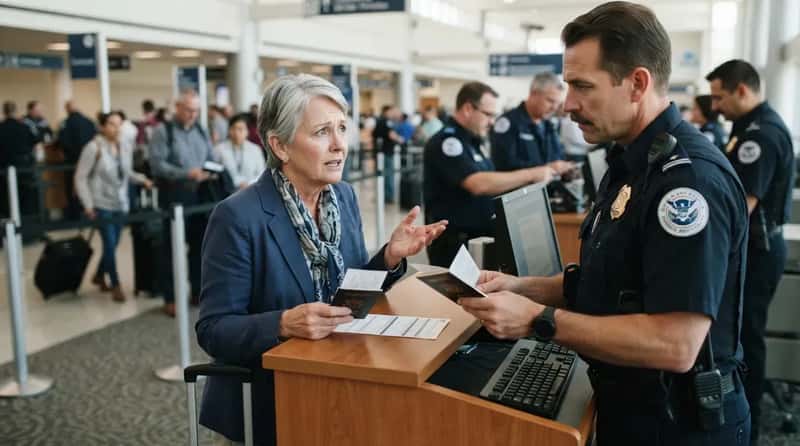
Here’s the twist that catches well-meaning travelers off guard: over-preparing your answers can actually backfire. People who have scripted their answers often appear more suspicious than people who respond naturally. An officer hears hundreds of genuine, slightly rambling answers a day – a perfectly smooth, word-for-word explanation stands out precisely because it doesn’t sound like anyone else’s.
Meanwhile, any answer that contradicts a previous answer, or contradicts the documentation itself, is exactly the kind of inconsistency officers are trained to catch – a different stated trip length than the return ticket shows, for instance. The honest fix isn’t memorizing a script. It’s simply knowing your own itinerary well enough to answer naturally, because natural and consistent will always beat polished and rigid.
Behavioral Profiling: Even Experts Don’t Fully Agree It Works
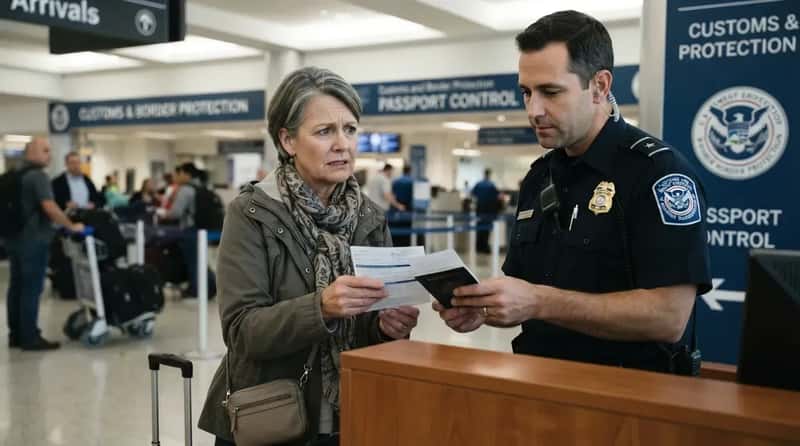
Here’s the uncomfortable part most travel articles skip entirely. The idea that officers can reliably spot deception through body language alone has real critics inside the research community. Behavioral scientists are skeptical that an agent can spot someone intending to do harm based on facial expressions or body language alone.
The numbers back up the skepticism. Of the roughly 30,000 passengers a year flagged as suspicious under one federal behavior-detection program, fewer than 1 percent were arrested – and typically for unrelated issues like drug possession or outstanding warrants, not anything resembling a security plot. The real takeaway for older travelers is that visible stress alone rarely triggers anything serious. It’s almost always stress combined with a factual inconsistency that actually matters.
The Cash Rule That Trips Up Experienced Travelers
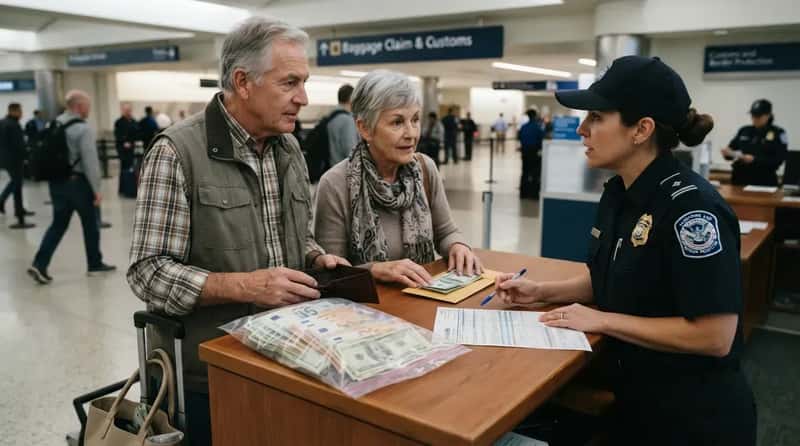
This is the one that catches even seasoned older travelers who grew up in a cash-first world. It surprises people particularly after trips to countries where carrying significant cash is still common practice. The rule itself is simple, but the details around it are not.
If the combined total of everything that could be called a monetary instrument is anywhere near $10,000, declare all of it. That threshold applies to your group total, not per person – a couple each carrying $6,000 must report the combined $12,000. Splitting cash between travel companions to dodge the limit isn’t a clever workaround; it’s called “structuring,” a separate and more serious federal offense than simply forgetting to declare. Foreign currency counts too, converted to its U.S. dollar equivalent and reported on FinCEN Form 105.
Quick Compare
- Solo traveler carrying $9,500 – no declaration required
- Solo traveler carrying $10,000 or more – must file FinCEN Form 105
- Couple carrying $6,000 each ($12,000 combined) – must declare the full total
- Splitting cash to stay under the limit – counts as “structuring,” a separate federal offense
Over-Declaring Beats Under-Declaring, Every Single Time
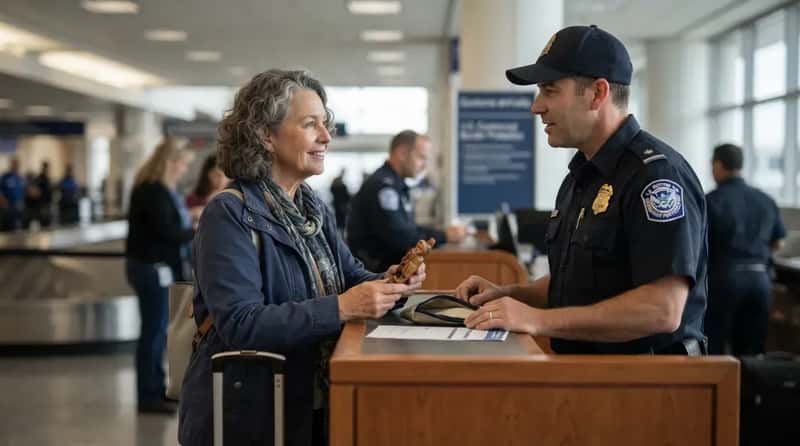
Officers repeat this to older travelers so often it’s practically a mantra: when in doubt, say something. There is no penalty for over-declaring – there is only a penalty for under-declaring. That single asymmetry solves most of the anxiety travelers feel at the counter, yet almost nobody’s told about it in advance.
Declare everything you’re unsure about, since there is no penalty for over-declaring but there are steep penalties for under-declaring.
Common guidance from customs and legal advisors
Most people don’t realize the $800 personal exemption applies to most international trips of at least 48 hours, once every 30 days, rising to $1,600 for trips involving U.S. territories like the Virgin Islands or Guam. Confusingly, duty-free shop purchases still count toward that exemption, since the “duty-free” label only refers to the foreign country’s own tax.
The Passport Expiration Detail Nobody Thinks About Until It’s Too Late
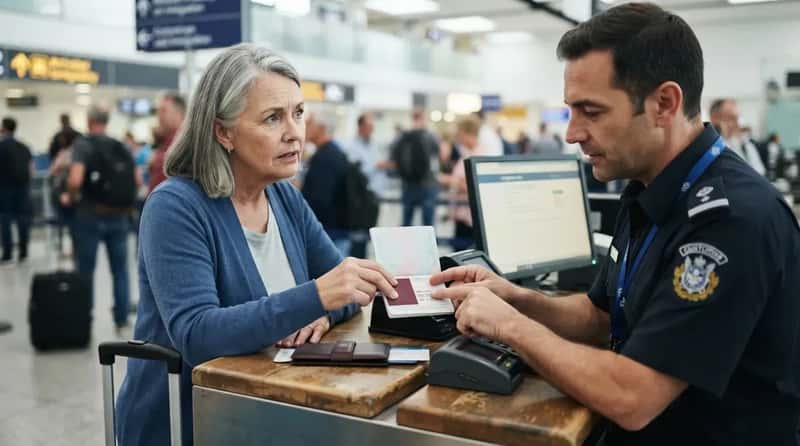
Ask a working customs officer what actually slows people down the most, and the answer isn’t drama – it’s paperwork. One of the most common mistakes travelers make, at any age, is simply forgetting about their passport expiration date.
It sounds almost too mundane to matter, yet it’s one of the biggest friction points at the counter. Older travelers, who may renew passports less frequently between big trips, are especially prone to it. If your passport is close to expiring, renewing it well ahead of time avoids the entire issue. It’s not a security flag – it’s a paperwork delay that’s completely avoidable, and officers notice instantly whether a traveler planned for it or didn’t.
Global Entry Isn’t a Skip Line – It’s a Trust Score
Many older travelers assume a Global Entry card means customs simply stops applying to them. That assumption is exactly what causes trouble. Random searches and secondary screening remain possible regardless of membership status, and the travelers who get rattled are the ones who arrived assuming the card made customs optional.
The card is really a standing measurement of trustworthiness, not a bypass. Because Global Entry is fundamentally a trust-based program, CBP is often evaluating more than the item itself – prior customs history, cooperation, disclosure, and overall pattern of conduct. Show up with declarations ready, receipts organized, and medications labeled, and Global Entry does exactly what it promises. Arrive unprepared assuming the card handles everything, and you’ll find out quickly that it doesn’t.
Worth Knowing
- Global Entry doesn’t eliminate random secondary screening
- The program weighs prior customs history and cooperation, not just the current trip
- Assuming automatic clearance is a common trip-up for members
- Organized receipts and labeled medications keep “trusted traveler” status working as intended
The TSA Policy for Travelers 75 and Older Almost Nobody Uses
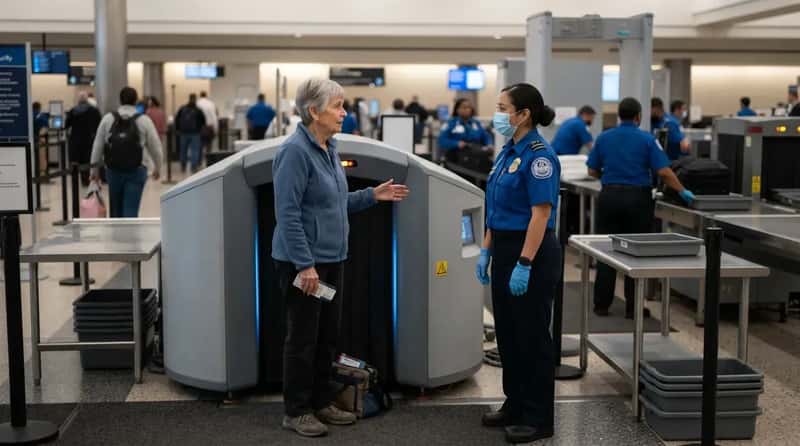
This is one of the more genuinely surprising pieces of federal policy hiding in plain sight, and it has nothing to do with customs specifically – it’s about the checkpoint before it. For passengers 75 and older, TSA policy allows an extra pass through the scanner before a pat-down is required.
Almost nobody in that age bracket knows to ask for it. That extra pass exists precisely because many alarms on older travelers are triggered by joint replacements, pacemakers, or other medical hardware, not any genuine security concern. Knowing to say “I’d like a second pass” before accepting a pat-down is a quiet piece of leverage most seniors never use. It’s official federal risk-based security policy that formally classifies older travelers as lower risk – a right worth invoking, not a courtesy worth waiting for.
At a Glance
- Travelers 75 and older can request a second pass through the scanner before a pat-down
- The rule exists because joint replacements and pacemakers often trigger false alarms
- Very few travelers in this age group know the option exists
- It’s a formal part of TSA’s risk-based screening policy, not an informal courtesy
Pacemakers, Joint Replacements, and the Alarm Nobody Explains
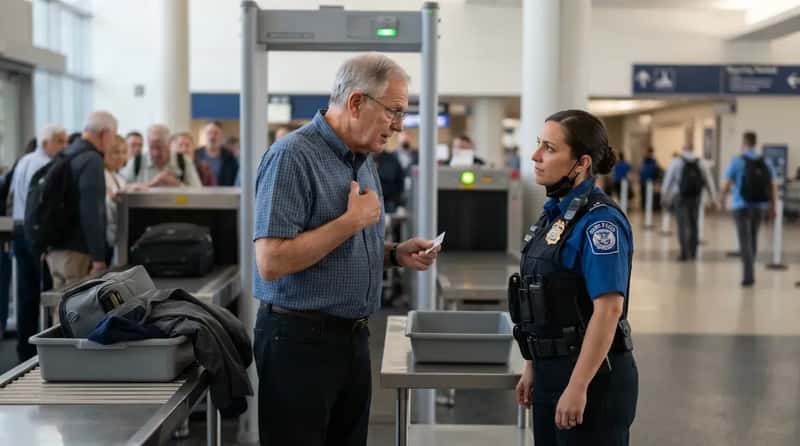
This is the detail experienced officers say matters most, and it’s almost never stated plainly to the travelers who need it. If you have a pacemaker, defibrillator, or other implanted cardiac device, disclose it before you reach the screening machine, not after it alarms.
The timing of the disclosure changes everything about how smoothly the interaction goes. Say it beforehand, and it’s a routine accommodation handled in seconds. Stay quiet and let the machine alarm first, and the same medical device suddenly triggers a longer, more invasive process built for genuine unknowns, not for a hip replacement from a decade ago. Most delays and secondary screenings that seniors experience around medications and devices happen for one simple reason: they didn’t say anything first.
The Quiet Discretion Officers Rarely Talk About
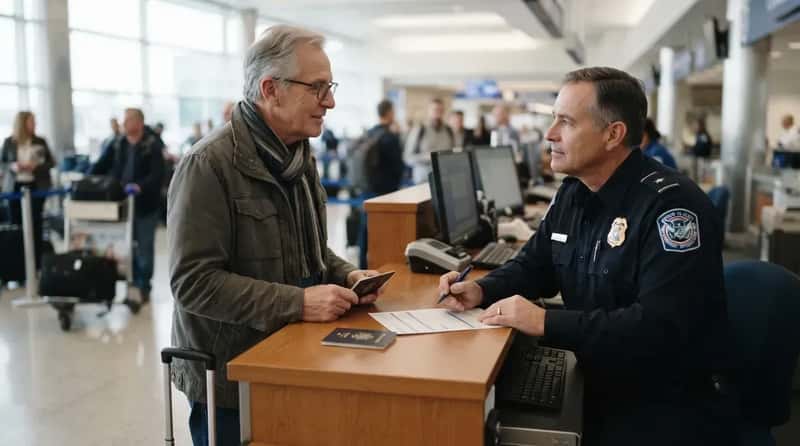
There’s one more thing officers notice that has nothing to do with rules at all – it’s tone. When an honest first-time mistake from a cooperative older traveler with a clean record crosses their counter, the outcome is almost always different from what the traveler expects. It’s not a loophole. It’s discretion, built directly into how minor violations are handled.
That discretion isn’t guaranteed, and it isn’t a right you can demand. Officers have real latitude in how they handle first-time minor disclosures from cooperative, experienced travelers, and that latitude is almost always exercised more generously when the traveler’s record is clean and their demeanor is calm and honest. It’s the quiet, unwritten variable behind every customs story that ends better than the traveler feared – and it rewards exactly the kind of steady, forthcoming behavior most people over 60 already bring to the counter without even realizing it’s being noticed.
None of this is about tricking the system or performing calmness for an audience. It’s about understanding that the counter rewards preparation and honesty far more than it punishes age, fatigue, or an honest slip-up – and that the travelers who move through fastest are usually the ones who simply knew, just a little sooner, what the officer across from them was actually paying attention to.