Mexico keeps breaking its own tourism records, and 2026 is shaping up to be one of the busiest years the country has ever seen. Between a shifting entry system, a patchwork of safety conditions that change from state to state, and a World Cup bringing millions of extra visitors through Mexico City, Guadalajara, and Monterrey, the rules of the game have quietly changed since the last time you might have packed a bag for Cancún or Oaxaca. This guide walks through what actually matters this year, from paperwork at the airport to the peso in your wallet, so you can plan with confidence instead of guesswork.
The FMM Tourist Permit Just Got More Complicated
For years, most visitors landing in Mexico could count on an automatic 180-day tourist stamp with barely a question asked. That has changed. In 2026 Mexico modified how visitor permits are issued at ports of entry, and instead of automatically granting the maximum 180-day stay, immigration officials now generally determine the length of the permit based on each traveller’s stated plans and supporting documentation, meaning you may be granted fewer days than the traditional maximum depending on your itinerary and evidence provided. The document itself, called the Forma Migratoria Múltiple or FMM, is still the paperwork that matters most at the border.
For a standard beach vacation or a week-long city break, this shift is unlikely to cause problems. For most holiday plans such as beach vacations, city tours, family visits or short road trips, this policy change should not be problematic, but if you intend to stay for extended periods or use back-to-back tourist permits, you should be prepared with proof of your itinerary, accommodation bookings, and a return or onward ticket at immigration. It is also worth knowing that in recent years several major airports have moved to a digital system, meaning many travelers no longer receive or fill out the traditional paper tourist card when arriving by air, and instead have their visitor authorization recorded electronically through the immigration system and passport stamp.
Passports, Visas, and Who Actually Needs One
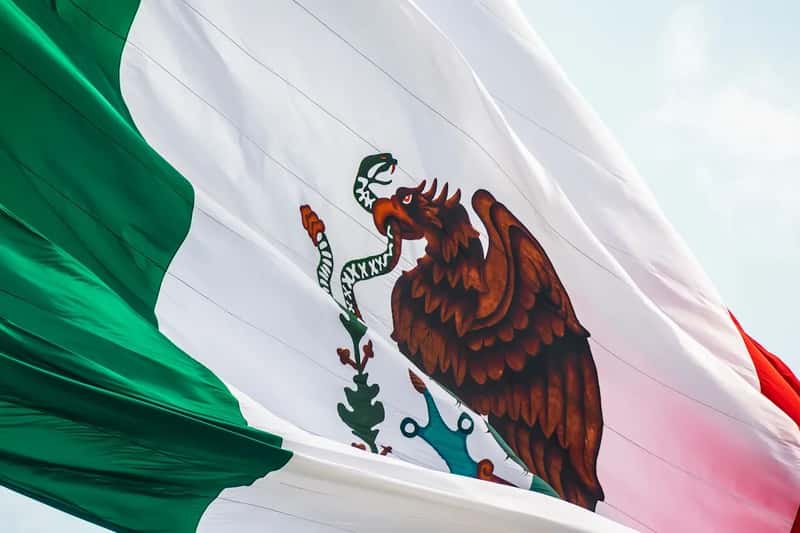
Nationality still determines almost everything at the border. The vast majority of foreigners must obtain a visa before entering Mexico, and currently only 69 countries enjoy visa-exempt status. The good news for travelers from North America and Europe is that most international visitors heading to Mexico, including citizens from the United States, Canada and countries in the European Union, do not need a traditional visa for tourist travel. Americans in particular have it easy, since travelers holding American passports are welcomed to Mexico without the need for a tourist visa in 2026 and can enjoy up to 180 days of visa-free stay.
Passport rules are stricter than many people assume, though. For all visitors, the passport must be valid for at least 6 months after the intended date of entry, and if you’re flying rather than driving across a land border, passport cards can generally be used for land or sea crossings into Mexico, but they cannot be used for international flights, so anyone flying into Mexico must have a valid passport book. Overstaying is treated more seriously than it used to be. Fines run approximately 44 USD per day of overstay, paid at the airport or border when you exit, and short overstays of one to three days are common for travelers who miscounted their days. Longer overstays are a different matter entirely, since extended overstays of multiple months can result in being detained and deported, which is rare for Western tourists but does happen, and significant overstays can result in a temporary or permanent ban on returning to Mexico.
Safety Is Regional, Not National
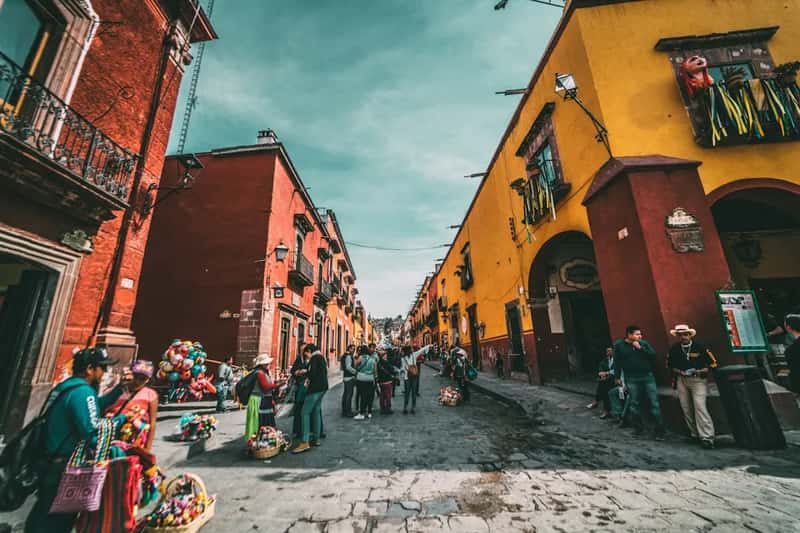
The single biggest misunderstanding travelers bring into a Mexico trip is treating the country as one safety zone. It isn’t. The US State Department issues individual state-level advisories for all 32 Mexican states on a scale of 1 to 4, and the nationwide baseline is Level 2, Exercise Increased Caution, the same level assigned to France, Germany, Italy, and the United Kingdom. As of mid-2026, six states remain under a Level 4 Do Not Travel advisory: Colima, Guerrero, Michoacán, Sinaloa, Tamaulipas and Zacatecas. Meanwhile several additional states, including Baja California, Chihuahua, Guanajuato and Jalisco, are classified as Level 3, meaning Americans should reconsider travel.
The reassuring part is that most of the places tourists actually visit sit well below those top warning tiers. Level 1 states, the lowest advisory, include Campeche and Yucatán, while tourist-zone status places Quintana Roo (Cancún, Tulum, Riviera Maya), Mexico City, Oaxaca, San Miguel de Allende, and Mérida at Level 2 with localised caveats. It also helps to understand what the risk actually looks like on the ground. Cartels do not generally target tourists since doing so draws attention that is bad for their operations, and the risks tourists face are primarily urban crime such as petty theft, express kidnapping via unlicensed taxis, drink spiking, and scams, so following standard safety practices addresses the vast majority of tourist-facing risk. Checking the specific advisory for your destination, rather than reacting to a single scary headline about the whole country, remains the smartest habit any traveler can build into their planning.
Why the State Department Advisory Still Says “Increased Caution”
Mexico’s national advisory level has not budged in years, but the language attached to it is worth reading closely. The advisory remains at a Level 2 Exercise Increased Caution warning, citing concerns about terrorism, crime and kidnapping. The State Department has been blunt about the nature of the risk. Crime in Mexico is common and can be violent, ranging from petty street crime to attacks by cartels, criminal organizations, and terrorist organizations, and there have been violent crimes in resort areas and tourist spots in Mexico.
Practical guidance from the embassy is fairly consistent from one update to the next. The State Department advises travelers to avoid traveling between cities after dark, use dispatched taxis or app-based ride services and avoid traveling alone in remote areas. It’s also worth remembering that help may not arrive quickly everywhere. The advisory notes that the U.S. government’s ability to provide emergency assistance can be limited in certain regions, particularly in remote areas where emergency services may be unavailable. Enrolling in a government travel alert program before departure is free and genuinely useful, since it puts you on a direct line to your embassy if conditions change mid-trip.
The 2026 World Cup Will Reshape Your Trip Whether You’re a Fan or Not
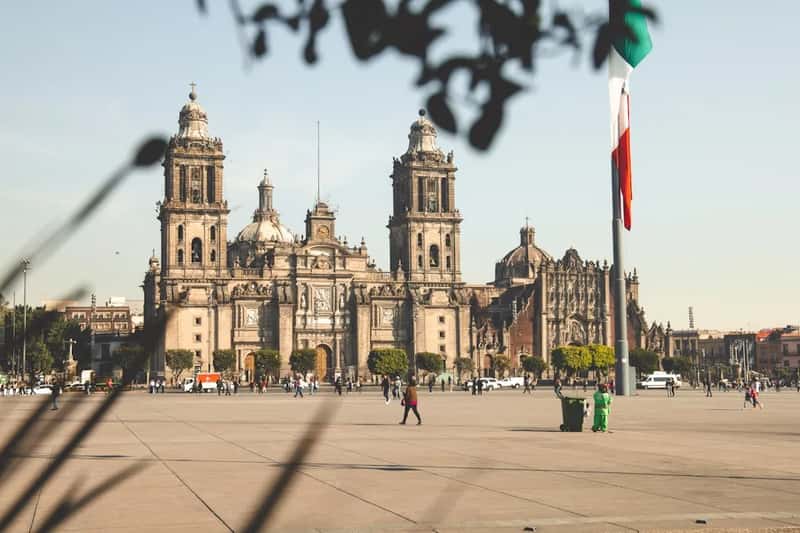
Mexico is one of three co-hosts of this summer’s FIFA World Cup, and the tournament is pulling enormous crowds through the country’s biggest cities. As one of the three host nations alongside the United States and Canada, Mexico is staging matches in three major cities: Mexico City, Guadalajara and Monterrey. The numbers involved are staggering by any measure, with the expanded FIFA World Cup featuring 48 teams, 104 matches and 16 host cities across North America, making it the largest tournament in the competition’s history.
Even travelers who have zero interest in football are feeling the ripple effects. Although Mexico hosts only three cities, Mexico City, Guadalajara, and Monterrey, it is experiencing one of the sharpest relative jumps in tourism, with hotel booking growth in Mexico City exceeding 150% compared to typical seasonal patterns, according to Mexico’s Secretaría de Turismo. That demand is stacked on top of a tourism sector that was already breaking records before the tournament even began, since Mexico’s tourism authorities and national statistics reporting point to a record setting year for inbound travel, with 98.2 million international visitors recorded across 2025. Practically speaking, that means booking flights and hotels early, expecting tighter connections between host cities, and building extra flexibility into any itinerary that overlaps with match dates.
The Peso, Your Budget, and Getting Money Right
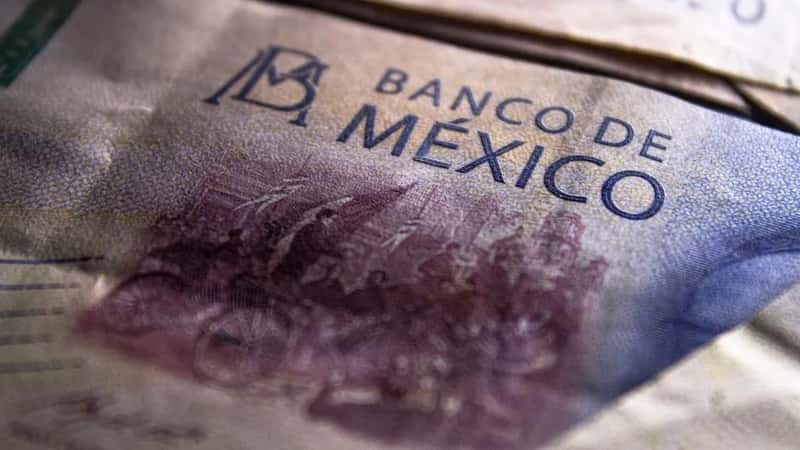
Currency planning matters more in Mexico than in many destinations because the peso has been unusually volatile. After a strong run in 2025, the peso appreciated almost 16% against the dollar in 2025, defying the expectations of many economists, analysts and other observers. That strength has largely continued into 2026, and by mid-summer the Mexican peso was trading little changed at around 17.5 per USD, as broad US dollar weakness was offset by uncertainty surrounding the USMCA review.
What this means for a traveler is fairly simple: a stronger peso makes Mexico a slightly more expensive destination than it was a few years ago, so it pays to check the current rate close to departure rather than relying on outdated conversion math. Confirming the current exchange rate before your trip, keeping a mix of small and large peso notes on hand, and using bank-affiliated ATMs rather than standalone tourist-zone machines will save both money and time. It’s also worth noting that inflation has been cooling, which is generally good news for prices on the ground, since Mexico’s annual inflation rate eased to 3.37% in June 2026, the lowest reading since December 2020, and remained within the Bank of Mexico’s target tolerance range.
Health, Insurance, and Medical Realities

Healthcare abroad rarely works the way travelers expect, and Mexico is no exception. Medicare, Medicaid, and most standard U.S. health insurance plans do not cover services provided outside the United States, costs for medical care in Mexico may be higher than expected, and most hospitals will not release patients until their bill is paid in full. Buying a standalone travel insurance policy before departure is one of the cheapest forms of protection you can add to a trip, and consular guidance consistently recommends it alongside notifying your bank of your travel dates.
There are also some region-specific health notes worth taking seriously if your itinerary strays outside the main resort corridors. The US CDC recommends certain immunizations before traveling to Mexico, and since malaria is present in certain areas of the country, US nationals are advised to bring anti-malaria medication if staying in these regions. Standard precautions around bottled water, street food vendors with high turnover, and sun exposure in coastal areas still apply, and they matter more the further you get from a major tourist hub with established infrastructure.
Smart Habits That Make Any Mexico Trip Safer
Beyond paperwork and advisories, a handful of everyday habits do more to protect travelers than any single piece of official guidance. Connectivity is one of the most underrated tools available, since having reliable mobile data on arrival means working ride-hail apps, live navigation away from misleading street signage, and the ability to reach embassies or family quickly if something changes. In popular coastal destinations, the advice is fairly consistent: book airport transfers through your hotel or a pre-arranged service, do not take unmarked taxis, and drink alcohol only in moderation.
Registering your trip with your home country’s travel alert system costs nothing and can matter a great deal if something goes wrong. Registering with your embassy’s travel alert program before departure costs nothing and gives you a direct line to help if anything goes sideways during your stay. And because 2026 is an unusually compressed year for travel demand in Mexico, it’s also worth building a little flexibility into your itinerary, especially if you’re traveling during World Cup season or peak spring and summer months when airports and popular sites are busier than usual. None of this requires paranoia, just the same situational awareness you’d bring to any large, unfamiliar city.
Bringing It All Together
Mexico in 2026 is still the country that keeps travelers coming back for its food, its coastlines, its history, and its warmth, but it is also a country in the middle of real change. Entry procedures are tightening in small but meaningful ways, safety conditions vary sharply by region rather than following a single national narrative, and a World Cup summer is compressing demand into a handful of host cities in ways that ripple out to the rest of the country. None of this should scare anyone away from booking a trip. It simply means doing the homework that used to be optional: checking your passport’s expiration date, reading the state-level advisory for your actual destination instead of the national headline, watching the peso before you exchange money, and buying real travel insurance before you fly.
The travelers who have the smoothest trips this year won’t be the ones who ignore the news out of Mexico. They’ll be the ones who read past the headlines, plan around the crowds rather than being surprised by them, and treat official government sources as their first stop rather than their last resort.