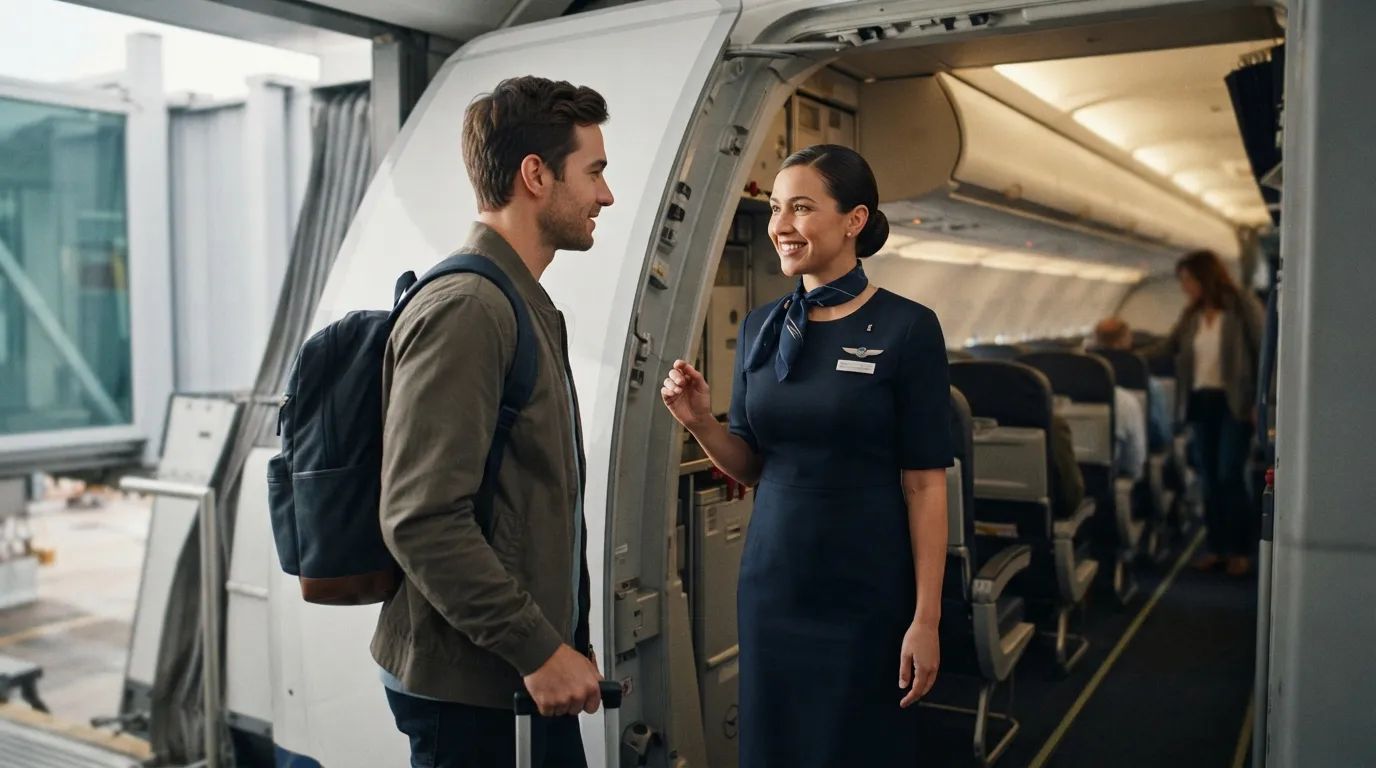
Most travelers assume flight attendants stand at that door just to smile and say hello. That’s not what’s happening at all.
The second you step onto the plane, you’ve already been read – your posture, your eyes, your shoes, even the tone of your “hi.” Veteran crew members run a silent, split-second screening on every passenger before the door even shuts.
Ten things happen in that first minute that most flyers never notice. Some are harmless. One of them could get you pulled off the plane.
#10 – Whether You Acknowledge Them at All
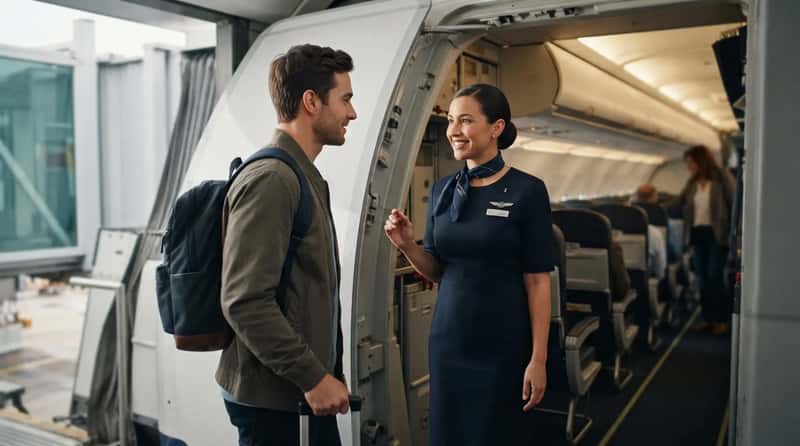
The first thing a flight attendant notices is whether you look at them when you board. A simple hello, even a small nod, tells them what kind of mood you’re in.
Walk past like they’re invisible and it reads as dismissive, even if you’re just distracted. That split-second moment is data – it tells the crew whether you’ll cooperate when it actually matters.
Good manners at the door can even earn you an extra snack or a free drink later. Avoid eye contact or act erratic, and you’ve already raised a flag.
It’s a two-way read, and most passengers have no idea it’s happening. What comes next is where it gets genuinely strange.
#9 – Signs of Intoxication Before You Even Speak
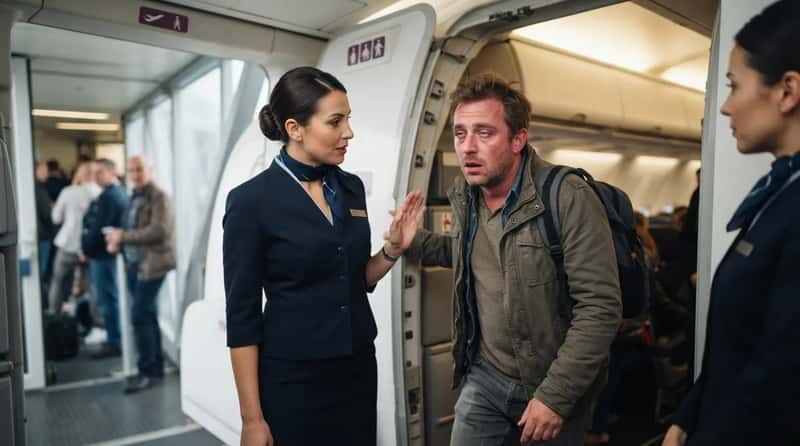
Airports are full of bars, and a nervous flyer often reaches for a stiff drink before boarding. If you’ve had one too many, the flight attendant clocks it before you say a word.
Fast Facts
- Cabin pressurization is equivalent to an altitude of 5,000 to 8,000 feet, which intensifies alcohol’s effects on the body.
- Crew members are trained to catch slurred speech, unsteady steps, and glassy eyes within seconds.
- Federal rules allow airlines to deny boarding to any passenger who appears visibly intoxicated.
Slurred speech, glassy eyes, unsteady steps – these are instant red flags. Alcohol hits harder at altitude, so a mildly tipsy passenger on the ground can turn disruptive fast in the air.
A buzz at the gate can become a full-blown medical or behavioral incident at 35,000 feet. If a crew member flags you as visibly intoxicated at the door, they can deny you boarding on the spot.
This is one of the few moments a flight attendant can physically stop you from getting on the plane – and they use it. But intoxication is just one flag on their checklist. The next one surprises almost everyone.
#8 – Your Body Language the Moment You Walk In
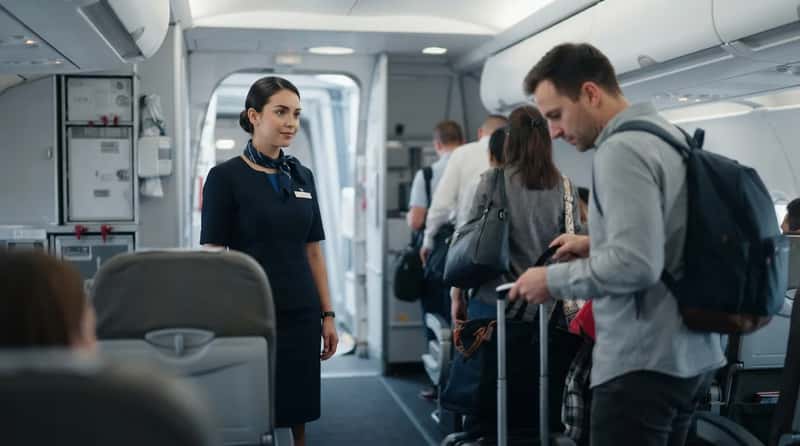
Every passenger gives off some kind of energy walking down that aisle, and flight attendants are standing right there to catch it. Some people settle quickly after the rush of boarding; others start fidgeting immediately.
That restless energy often stands out more than loud behavior. It suggests you’re uncomfortable before the flight has even started.
Crew members are trained to size up every passenger in roughly three to four seconds, scanning for anything from safety concerns to visible distress. Most people walk right past without realizing they’ve already been assessed.
Three to four seconds. That’s the entire window. Once they’ve read your body language, they move on to something far more calculated.
#7 – Whether You’re Dressed for an Emergency
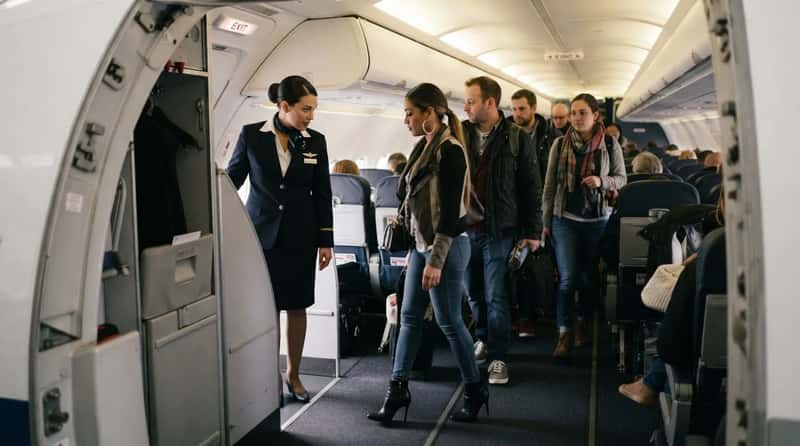
Flight attendants aren’t fashion critics, but what you’re wearing genuinely matters to them. High heels, big hoop earrings, jumpsuits, and tight clothing all get mentally noted as you board.
Worth Knowing
- FAA certification rules require that a full passenger load be able to evacuate an aircraft within 90 seconds.
- High heels, platform shoes, and loose scarves are common snag hazards on emergency slides.
- Excess layers can also slow you down and raise the risk of overheating at cruising altitude.
Excessive layering gets noticed too. It can signal someone hiding contraband or dodging luggage fees – and it can also cause overheating, dehydration, or fainting at altitude.
In an emergency evacuation, the passenger in stilettos or a full-length jumpsuit becomes a liability – to themselves and to everyone lined up behind them on the slide. Crew members are quietly calculating who can move fast and who can’t.
That calculation leads directly into the next thing they’re doing.
#6 – Who Can Help Them in a Crisis
This is the one that shocks most people. During boarding, flight attendants scan for able-bodied passengers who could help in an emergency evacuation.
Broad shoulders, an athletic build, a military or emergency-service patch, even rugged practical clothing – any of it can trigger a mental checkmark. They quietly note your seat number.
Firefighters, police officers, and people in physically demanding jobs are common picks. Off-duty pilots and flight attendants are considered ideal, since they’re already trained for emergencies.
You could be on a silent emergency shortlist and never know it. But the crew isn’t just building a response team – they’re also mapping out who might need rescuing. That’s next.
#5 – Passengers Who Look Visibly Ill
Flight attendants also watch for visible signs of illness while you board. It’s not invasive – a serious underlying condition can deteriorate fast once the cabin pressurizes and altitude climbs.
At a Glance
- Research shows in-flight medical events occur at a rate of about 39 per million passengers, or roughly 1 in every 212 flights.
- Diversions happen in about 1.7% of these cases, most often triggered by neurologic or cardiac emergencies.
- Fainting and presyncope are the single most common in-flight complaints, followed by respiratory symptoms and nausea.
Anything that looks like trouble is easier to handle on the ground than in the air. Once the doors close, options shrink fast.
The crew’s goal is to catch problems before takeoff. What they spot during boarding shapes exactly how they respond once you’re at cruising altitude – and nervous flyers get their own dedicated scan.
#4 – The Nervous Flyer in the Back of the Line
Aerophobia affects more than 25 million adults in the U.S., and flight attendants are trained to spot it right at the door.
When they say hello, they’re looking straight into your eyes. Avoid their gaze, stare at the floor, or sweat through the cold cabin air, and they’ll recognize aviophobia instantly.
Once flagged, a nervous flyer often gets extra attention – an explanation of strange takeoff noises, a few extra check-ins mid-flight, sometimes a first-name introduction to build trust.
Tell them you’re anxious, and they’ll quietly watch over you the entire flight. Most passengers suffer in silence instead. What they notice next is entirely about attitude, not anxiety.
#3 – Your Impatience Before the Plane Even Moves
Impatience shows up fast, and flight attendants notice passengers who bristle at every small delay. Irritated before takeoff usually means more complaints once the flight is underway.
Some people start pushing boundaries early – sneaking an extra bag on board, ignoring seat assignments, using a phone after being asked not to. Crew members catch every one of these moves.
There’s even a term for people who crowd the gate before their boarding group is called: “gate lice.” That reputation follows you straight onto the plane.
A single glance between two flight attendants can say everything. A difficult passenger is already known to the whole crew before the seatbelt sign turns on. What they read next is even more revealing.
#2 – How Organized You Are (It Tells Them Everything)
Flight attendants can usually tell within seconds if you’ve planned ahead or if you’re scrambling. It sounds small – it isn’t.
Quick Compare
- Organized flyer: Boarding pass ready, bag stowed fast, settled within a minute.
- Disorganized flyer: Digging through bags, blocking the aisle, needing repeated help.
- Crew takeaway: One profile gets a quick nod; the other gets flagged for extra service time.
An unprepared passenger tends to become a stressed one, and stress spreads fast in a metal tube. One person digging for a charger becomes three people standing in the aisle, and suddenly everyone’s patience is shot.
Organized passengers stay regulated – they’ve got what they need, they settle quickly, and they don’t need five small favors in the first ten minutes.
Disorganized passengers get flagged as high-maintenance before they’ve even sat down. Crew members quietly assign extra service time to these travelers before the door closes. And that brings us to the most powerful observation of all.
#1 – The Direct Eye Contact Test
This is the one flight attendants talk about the most, and almost no passenger knows it exists. There’s far more going on in that brief greeting than a simple “welcome aboard.”
“If we are greeting at the door, we notice if we are acknowledged by a smile or a returned hello,” one veteran flight attendant explained. That eye contact is a baseline check – are you present, alert, coherent, calm?
“You can tell everything about how a flight’s going to go in the first ten seconds of boarding,” another flight attendant admitted – then caught herself, like she’d said too much. Crews have spent thousands of hours reading people in tight quarters under real pressure, and it shows.
In that one second of eye contact, a trained crew member reads your sobriety, your anxiety, your mood, and your cooperativeness – all at once. You never saw it coming. Neither does almost anyone else.
The Bottom Line
Flight attendants are not just smiling faces at the door. They’re trained to read safety, security, and medical risk in passengers before the plane even pushes back.
In under sixty seconds, they’ve mapped the whole cabin – who can help in a crisis, who might cause one, who needs extra care, and who they can count on.
The most shocking part? It all starts with whether you simply say hello back. Next time you board, try it – you might be surprised what comes back.
Have you ever caught a flight attendant doing one of these? Tell us in the comments.